Being arrested in Texas can be terrifying — but you don’t have to face it alone. If you have prior convictions on your record, the stakes climb exponentially higher. Many people have heard of the "3 strikes law in Texas," but it’s not a specific statute you can look up by that name. Instead, it’s a powerful sentencing rule officially known as the Habitual Felony Offender law.
This rule, laid out in the Texas Penal Code, gives prosecutors the ability to seek a mandatory prison sentence of 25 years to life if you are convicted of a third felony. It's a situation that can feel overwhelming, but understanding your rights is the first step toward building a strong defense.
What the Texas 3 Strikes Law Means for You
Getting arrested is a frightening experience, but you don't have to go through it alone. The first step toward building a real defense is understanding your rights, especially when a new charge could activate the habitual offender rule. This law is one of the most severe tools in a Texas prosecutor's arsenal, designed specifically to put repeat offenders behind bars for a very long time.

This guide will explain this intimidating law in plain English, show you exactly how it works, and walk you through the strategic defense options available to you. We'll break down how past mistakes can be used against you in a present case and give you the knowledge you need to fight for your future.
The Foundation of the Law
The legal power behind the "three strikes" enhancement comes directly from Texas Penal Code § 12.42. This is the section that details how prior felony convictions can be used to dramatically increase the punishment for a new offense. It’s crucial to understand this doesn't just apply to violent crimes; a wide range of felonies, including common offenses like DWI or drug possession, can count as a "strike."
The consequences are life-altering. If the prosecution successfully proves you have two prior, sequential felony convictions and a jury finds you guilty of a new one, the judge has no choice. They must impose the mandatory minimum sentence.
This means that even if your new charge is a lower-level felony, like state jail drug possession or theft, you could be facing the same sentence as someone convicted of a much more serious crime.
Why You Need an Experienced Defense Attorney
Navigating a habitual offender case requires a deep and practical understanding of Texas criminal procedure and sentencing laws. The moment a prosecutor decides to pursue this enhancement, the stakes of your case skyrocket from a few years in prison to potentially the rest of your life.
Your defense must be proactive and aggressive right from the start. A seasoned criminal defense attorney will immediately begin investigating every angle of your case, including:
- The Current Allegations: The absolute best way to beat a habitual offender enhancement is to win the current case. If you aren't convicted of the new felony, the "three strikes" rule simply can't be applied. This starts with examining the arrest, evidence collection, and every step of the police procedure.
- The Validity of Prior Convictions: We will meticulously pull and review the court records from your previous cases. The goal is to find any potential legal errors—like constitutional violations or critical procedural mistakes—that could make those old convictions ineligible for use against you now.
- Negotiation with the Prosecutor: In some cases, it may be possible to negotiate with the District Attorney's office to have the enhancement notice withdrawn in exchange for a plea on the new charge. A skilled Houston criminal lawyer can often find leverage to protect you from the worst-case scenario.
Facing a third felony charge is an incredibly serious situation, but it is not hopeless. With a skilled legal team fighting for you, you have a real chance to protect your freedom.
A Look Back: The History of Texas’s Habitual Offender Law
To fully grasp how serious a habitual offender charge is, it's important to understand that this isn’t a new legal trend. Texas has been a leader in tough sentencing for a long, long time. Way before "three strikes" became a national catchphrase in the 1990s, Texas had already built one of the toughest repeat offender laws in the country.
This was a deliberate, long-standing policy aimed at one thing: getting career criminals off the streets. That history matters because it’s exactly how prosecutors see these cases today. They view the habitual offender law as more than just a statute; it’s a legal tradition with decades of court victories backing it up.
The Original Texas "Three Strikes" Law
The legal muscle behind this powerful sentencing tool comes from Texas Penal Code § 12.42. This is the statute that lays out exactly how a person's criminal record can be used to argue for a sentence of 25 years to life. It’s the engine that drives the whole concept of a "3 strikes law Texas."
What shocks most people is just how far back this law goes. Texas was a trailblazer, putting its first habitual offender laws on the books way back in 1952—decades before it became a popular idea across the nation.
Think about California's famous 1994 version, which passed with 72% voter approval after a series of tragic, high-profile crimes. The Texas law was different. It was a quieter, more methodical statute that didn’t need a public vote. It simply enforced mandatory life sentences after a third felony conviction. You can dig deeper into how Texas set this legal precedent for repeat offender statutes to see how far back these roots go.
The Supreme Court Case That Cemented It All
The sheer power of the Texas law was put to the ultimate test in a landmark U.S. Supreme Court case called Rummel v. Estelle back in 1980. This case, which started right here in Texas, is a chilling example of just how far the law can reach.
William Rummel was convicted of his third felony, which was for obtaining $120.75 by false pretenses. His first two felonies weren’t violent, either—they were minor financial crimes. But despite the small-time nature of the offenses, Texas prosecutors used the habitual offender law and sentenced him to life in prison.
Mr. Rummel fought his case all the way to the nation's highest court. He argued that a life sentence for stealing a little over a hundred dollars was cruel and unusual punishment. In a stunning decision, the Supreme Court disagreed and sided with Texas.
That ruling solidified the state's power to hand down incredibly harsh sentences to repeat offenders, even when the crimes themselves are non-violent. It confirmed that the state’s goal of stopping career criminals was a constitutionally sound reason for a life sentence. This decades-old decision is exactly why prosecutors today still feel so confident seeking these enhancements. Understanding that history is the first step in building a defense strong enough to fight back.
Understanding Which Felonies Count as a Strike
When most people hear “three strikes,” they picture a string of violent, headline-grabbing crimes. That’s a dangerous and common misunderstanding here in Texas. The reality is that our habitual offender law casts a much wider net, and you’d be surprised what kind of felonies can count as a “strike” against you.
A new felony charge for something like drug possession or even theft can suddenly become a life-altering event if you have two prior qualifying felonies on your record. These priors don't have to be related to each other or to the new charge. For example, a past burglary conviction and a felony DWI can team up to trigger that 25-to-life sentence if you get arrested for another felony.
What Makes a Felony a "Strike"
For the habitual offender law to kick in, the prosecution has to prove you have two prior felony convictions that happened sequentially. This is a specific timing requirement. The second felony offense must have been committed after the conviction for the first felony became final. The law is specifically designed to punish repeat offenders who continue to commit crimes after already being through the justice system.
The infographic below shows just how deep the roots of these tough-on-crime statutes run in Texas.
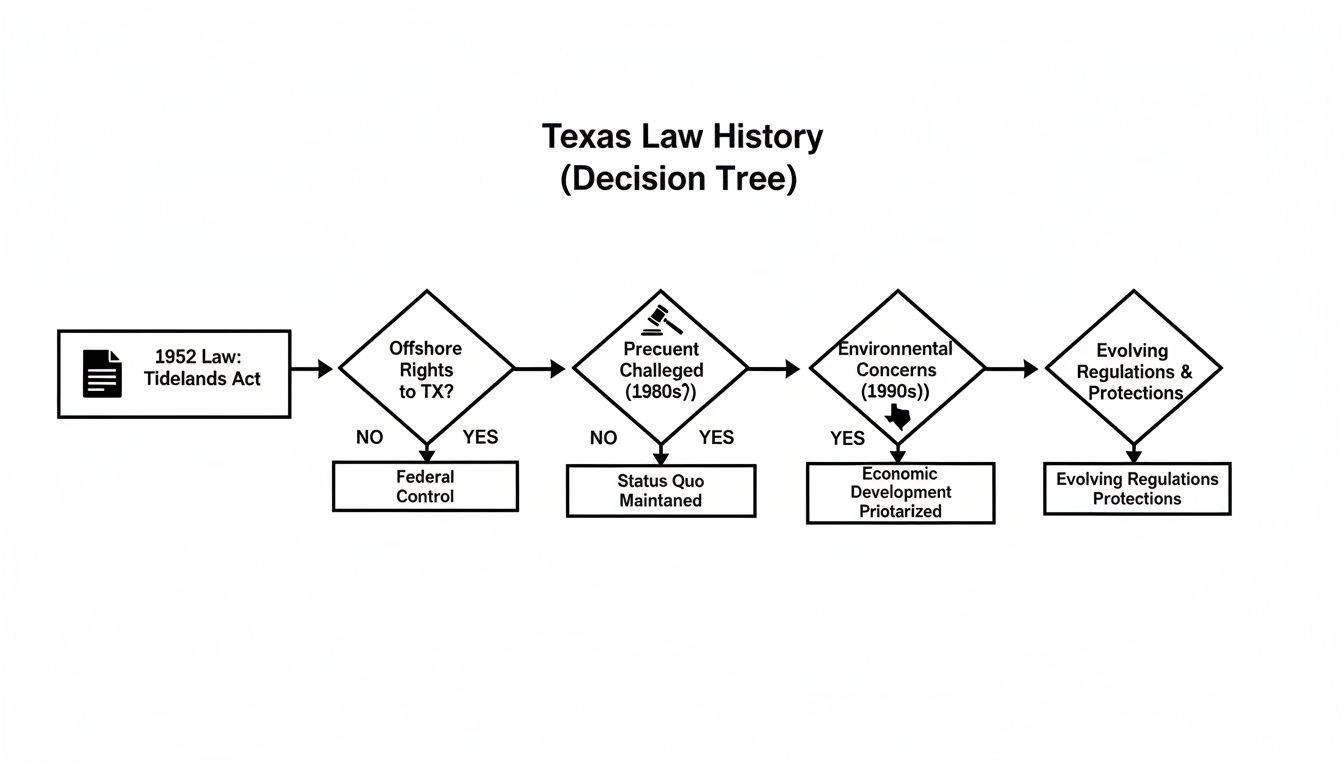
This isn't a new trend. As you can see, Texas has a long and established history of enforcing severe penalties for repeat offenses, a philosophy that was legally solidified long before it became a national movement.
Common Offenses That Qualify
The list of qualifying felonies is broad, including offenses many people might not consider serious enough to land someone in prison for life. It’s critical to understand that both violent and non-violent crimes can be used as strikes.
Here are a few examples of felonies that frequently count toward a habitual offender enhancement:
- Drug Offenses: Possession of a controlled substance, especially with intent to deliver, can easily be a felony strike.
- Theft and Property Crimes: Burglary of a habitation, theft of property over a certain value, and robbery are all common priors.
- Driving While Intoxicated (DWI): A third DWI charge in Texas is automatically filed as a third-degree felony and can absolutely serve as the final strike. An experienced Texas DWI attorney knows how high the stakes are in these cases.
- Assault Offenses: Aggravated assault or assault involving family violence can be used as prior strikes. A strong Texas assault defense is crucial.
The key takeaway here is that you do not need a history of violent crime to face a 25-to-life sentence. Two prior state jail felonies for things like theft or drug possession can be used to enhance a new third-degree felony.
This table gives a clearer picture of how prior convictions ratchet up the sentencing ranges under Texas law.
How Prior Convictions Increase Felony Sentences in Texas
| Scenario | Required Prior Convictions | New Felony Level | Enhanced Sentencing Range |
|---|---|---|---|
| Repeat Offender | One prior felony | 2nd or 3rd Degree | Range of next highest felony |
| Habitual Offender | Two prior sequential felonies | Any felony level | 25 to 99 years or life |
| Enhanced 1st Degree | One prior "3g" violent felony | 1st Degree | 15 to 99 years or life |
| State Jail Felony | Two prior state jail felonies | State Jail Felony | 2 to 10 years (3rd Degree) |
As the table shows, a criminal history doesn't just add a little more time—it completely changes the game, often transforming manageable sentences into decades behind bars.
Why Every Detail of Your Criminal History Matters
Because the consequences are so extreme, your defense attorney must meticulously analyze your entire criminal record. Determining which past felonies count as a strike requires a deep dive into old court documents and statutes. This process often involves detailed Legal Document Analysis And Data Extraction to ensure nothing is missed.
An experienced lawyer will review every single prior conviction, hunting for potential legal flaws that could disqualify it from being used against you now. This is non-negotiable when your freedom is on the line. For a clearer picture of how offenses are categorized, you can learn more about understanding the Texas Penal Code structure in our detailed guide. Recognizing the seriousness of your criminal history is the first step toward building a powerful defense.
The Harsh Reality of a Third Strike Sentence
When a prosecutor successfully uses the habitual offender law, the result is both severe and unforgiving. This isn't just about adding more years to a sentence; it's a fundamental shift that can strip away the possibility of release for decades. It's critical to understand what a 25-years-to-life sentence truly means in the real world.
This isn't a typical prison term where good behavior can knock significant time off your sentence. Under this enhancement, you're usually looking at a minimum of 25 calendar years before you can even be considered for parole.
No Reductions for Good Conduct
In many Texas criminal cases, inmates can earn "good conduct time" by following prison rules and participating in programs, which often shortens the actual time they serve. With a habitual offender sentence, that benefit is usually off the table.
The mandatory minimum of 25 years is exactly that—mandatory. This stark reality cuts across a wide spectrum of third felonies, from aggravated robbery to certain white-collar crimes like embezzlement. The law was designed to be a final stop for repeat offenders, and the sentence reflects that unforgiving philosophy.
The core purpose of the 3 strikes law in Texas is to remove individuals with a pattern of felony conduct from society for a very long time. The inability to earn early release through good conduct is a key part of what makes this sentence so incredibly harsh.
The Lifetime Impact of a Third Strike
The consequences echo far beyond the prison walls. A conviction under the habitual offender statute means you'll carry the most serious type of criminal record possible for the rest of your life. Even if you're eventually granted parole after 25 years, you will remain under the supervision of the parole board for life.
A third felony conviction can result in a mandatory 25 years to life, regardless of whether it's a first-degree murder or a felony DWI. This has been the reality since the law’s roots were planted in the 1952 habitual offender statutes. You only get a shot at parole after serving 25 flat years, with zero reductions for good behavior. It's a nightmare scenario we see every day in cases ranging from drug possession and robbery to white-collar crimes.
Why an Aggressive Defense is Non-Negotiable
The devastating finality of this sentence makes one thing clear: you need a powerful defense from day one. Your attorney's entire goal is to stop the habitual offender enhancement from ever being applied. This starts with an aggressive fight against the current charge while simultaneously challenging the validity of your prior convictions.
A successful defense can be the difference between a manageable sentence for the current charge and a mandatory quarter-century behind bars. To see how these penalties fit into the larger system, take a look at our guide on Texas sentencing policies and mandatory minimums. When the stakes are this high, that context is vital.
How We Build a Defense Against a Habitual Offender Charge
An accusation is not a conviction, even when you have a prior record. When the state files a notice to seek a habitual offender enhancement under the 3 strikes law in Texas, it can feel like the fight is already over. It’s not. This is the moment when a strategic, aggressive defense becomes more critical than ever.
Our approach immediately expands from just defending the new charge to fighting a multi-front war. The goal is to dismantle the prosecutor's case piece by piece, protecting your freedom from every possible angle. Just because the state can seek a 25-to-life sentence doesn't mean they will get it.

Step 1: Challenging the Prior Convictions
A habitual offender charge is built on the foundation of your criminal history. If we can knock out one of those foundational "strikes," the entire enhancement case collapses. This isn't about re-litigating old cases; it's about finding critical legal errors in how those past convictions were handled.
We meticulously obtain and review every document from your prior felony cases, hunting for procedural flaws that could make them invalid for enhancement purposes. This deep-dive investigation often uncovers vulnerabilities the prosecution has completely overlooked.
Potential angles of attack include:
- Constitutional Violations: Was there an illegal search or seizure? Were you denied your right to effective legal counsel? Any violation of your constitutional rights in a prior case could disqualify it.
- Improper Plea Agreements: We comb through the plea paperwork to ensure you were properly advised of your rights and that the plea was entered knowingly and voluntarily.
- Clerical and Procedural Errors: Sometimes, simple mistakes in court documents or judgments can create an opening to challenge a conviction's finality or its legal classification.
This is painstaking, detail-oriented work, but it's one of the most powerful ways to protect you from a life sentence.
Step 2: Negotiating with the Prosecution (Plea Bargaining)
In some situations, the best path forward involves direct negotiation with the prosecutor. A skilled defense attorney can often present mitigating factors about you and your case that persuade the District Attorney's office to withdraw the enhancement notice altogether.
This is not about begging for mercy. It is a strategic negotiation that highlights weaknesses in the state’s current case, presents evidence of your rehabilitation, or proposes an alternative resolution that still serves the interests of justice without resorting to a life sentence.
A successful negotiation can lead to a plea agreement for the current offense without the habitual offender enhancement. This could easily mean the difference between a manageable sentence and spending the next quarter-century or more behind bars.
Step 3: Fighting the Current Charge at Trial
At the end of the day, the most direct way to defeat a habitual offender enhancement is to win the current case. If you are found not guilty of the new felony at trial, the "3 strikes law" simply cannot be applied. It becomes legally irrelevant.
Because of this, our primary focus is always on mounting an aggressive and thorough defense against the new allegations. Our team prepares every single case as if it’s going to trial.
Our defense of the current charge involves:
- Independent Investigation: We don't just take the police report at face value. We conduct our own investigation, interview witnesses, and gather evidence to find the holes in the state's narrative.
- Pre-Trial Motions: We will file motions to suppress illegally obtained evidence, challenge questionable witness testimony, and fight to exclude anything that could unfairly prejudice a jury against you.
- Trial Advocacy: If your case goes to trial, you will have a seasoned and relentless advocate in your corner, prepared to cross-examine the state's witnesses and present a powerful case for your innocence.
An accusation is just the beginning of the story. With the right legal strategy and an unwavering defense team, you can fight back and protect your future.
Exploring Your Options for a Clean Slate
Even when a case is officially closed, a criminal record can feel like its own kind of life sentence. It shadows you, creating frustrating barriers to jobs, housing, and other opportunities you deserve. At The Law Office of Bryan Fagan, PLLC, our job doesn't end in the courtroom. We are committed to helping you move forward, and luckily, Texas law provides a few tools to help you do just that.
However, it's important to be direct about the limitations. A conviction under the habitual offender statute—the Texas 3 strikes law—is generally a permanent mark. The sheer severity of a habitual felony conviction slams the door shut on most record-clearing options for that specific offense.
Understanding Expunctions and Nondisclosures
While the habitual conviction itself might be permanent, you could have other, older charges on your record that are eligible to be cleared away. This is where legal tools like expunctions and orders of nondisclosure become incredibly valuable. They are two different legal processes, but both can help clean up your criminal history.
Expunction: This is the best possible outcome. An expunction, sometimes called an expungement, results in the complete destruction of all records related to an arrest. It's like it never happened. This is typically available for cases where charges were dismissed, you were found not guilty at trial, or you were arrested but a prosecutor never formally filed charges.
Order of Nondisclosure: This is also known as record sealing. An order of nondisclosure doesn't destroy the record, but it does hide it from public view. While law enforcement and certain state agencies can still see it, potential employers, landlords, and the general public cannot. This is often an option for people who successfully completed deferred adjudication probation.
It’s a little-known fact that Texas was actually the first state to implement a three-strikes style law, originally enacted between 1952-1974 as the Habitual Offender Statute. This was decades before the more famous laws in Washington and California swept across 26 states in the 1990s and 2000s. For Texans in major cities facing anything from manslaughter to forgery, this long-standing law turns prior offenses into potential life-altering traps. This history is exactly why having an experienced defense team is so critical.
How We Can Help You Rebuild
Even if one conviction can't be touched, clearing other eligible charges off your record can make a world of difference in your day-to-day life. Our team can perform a deep dive into your entire criminal history, hunting for every single opportunity for post-conviction relief. For more details on how this works, take a look at our guide on how to clear your record in Texas.
Clearing an old dismissal or a successfully completed deferred adjudication can open doors that were previously slammed shut. It's a critical step in reclaiming your life and proving that your past does not have to define your future.
Our comprehensive approach means we don't just focus on the immediate threat of a new charge. We look at the big picture of your life and your legal standing. Let us help you explore every available option for getting a cleaner slate and a fresh start.
Answering Your Questions About the 3 Strikes Law
When you’re facing a serious charge and have a criminal history, you need clear, direct answers, not legal jargon. Here are some of the most common questions people have about Texas's habitual offender law.
Will a Felony From Another State Count as a Strike in Texas?
Yes, it absolutely can. Prosecutors are allowed to use out-of-state felony convictions to enhance a sentence here in Texas.
However, the out-of-state crime must be legally similar to a Texas felony. A sharp criminal defense attorney won’t just take the prosecutor’s word for it. We will scrutinize every detail of that prior conviction to see if it truly qualifies under Texas law. If it doesn’t, we can challenge it and argue it should be thrown out.
Do My Prior Felonies Have to Be for Violent Crimes?
No, and this is a huge misunderstanding about the 3 strikes law in Texas. Unlike laws in other states, your prior felonies do not have to be for violent or extremely serious offenses.
For example, two prior state jail felonies for things like drug possession or theft can be used to enhance a new third-degree felony into the dreaded 25-to-life sentencing range. This trips up many people who don't realize how easily their past can come back to haunt them.
Is It Possible to Avoid the 25 to Life Sentence?
Yes, there are definitely ways to fight this devastating outcome. Your case is not hopeless just because the state has labeled you a "habitual offender," but you need an immediate and aggressive defense strategy.
The most effective approaches include:
- Fighting the New Charge: The best defense is to win the current case. If you're acquitted of this new felony, the enhancement cannot be applied. It's that simple.
- Challenging Prior Convictions: We can attack the legal validity of those old convictions. Was there a procedural mistake? Were your constitutional rights violated? If we find a flaw, we can get a prior conviction disqualified.
- Negotiating with the Prosecutor: An experienced lawyer knows how to negotiate. We can often convince the DA to withdraw the habitual offender notice as part of a plea agreement, taking that 25-to-life sentence off the table.
How Quickly Do I Need a Lawyer After an Arrest for a Third Felony?
Immediately. Do not wait. The prosecution starts building its case against you from the moment of your arrest.
The sooner you have an experienced defense attorney in your corner, the better. Early intervention is your biggest advantage. It gives your lawyer time to protect your rights, investigate the case, and start building a defense strategy before the state gains too much momentum.
If you’ve been charged with a crime in Texas, call The Law Office of Bryan Fagan, PLLC for a free and confidential consultation. Our defense team is ready to protect your rights. https://texascriminallawyer.net