Skip to content
Being arrested in Texas can be terrifying—but you don’t have to face it alone. The first thing most people do is frantically search online for a "criminal defense lawyer near me." This instinct is a crucial first step. Getting an experienced local attorney involved immediately ensures your rights are protected from the very beginning.
This initial choice can shape everything that comes next, from securing your release on bail to achieving the best possible outcome in your case.
Why Your First Call Matters After a Texas Arrest
Being arrested is disorienting and stressful. The moments that follow are often a chaotic blur, but the decisions you make in that confusion can have lasting consequences. The most important thing you can do is contact a skilled legal advocate who can step in and serve as your shield against the criminal justice system.
Your goal is to find an ally who knows the local courts, judges, and prosecutors in Texas. This isn't just about hiring any lawyer; it's about finding the right one for your specific charge, whether it's a DWI, assault, or drug possession. You need a trusted guide who can immediately start building your defense, offer clear-headed advice, and fight for your freedom.
Finding the Right Legal Advocate
The search for a lawyer can feel overwhelming. With thousands of attorneys practicing in Texas, you need to cut through the noise and find a local expert who lives and breathes Texas criminal law. These attorneys range from solo practitioners to public defenders, and the level of personal attention they can offer varies widely.
A sharp criminal defense attorney provides a few immediate, game-changing benefits:
- Protecting Your Rights: They will advise you to remain silent and ensure law enforcement does not pressure you into making statements that could harm your case. This is your constitutional right.
- Navigating the Bail Process: An experienced lawyer can argue for a reasonable bond, which can be the difference between waiting in jail and fighting your case from home. Our guide on how bail and bond work in Texas breaks this down in plain English.
- Preserving Evidence: They can get to work right away—interviewing witnesses, securing video footage, and building a defense while the details of your case are still fresh.
To help you focus your search, here are the essential qualities you should look for in a Texas criminal defense lawyer.
Key Qualities in a Texas Criminal Defense Lawyer
This table summarizes the core traits that separate an adequate lawyer from a great one. Use it as a checklist when you're making those first crucial calls.
| Quality | Why It Matters for Your Case |
|---|---|
| Local Court Experience | Knows the local prosecutors and judges, understands their tendencies, and can navigate specific courthouse procedures. |
| Specialized Focus | Concentrates on criminal law (e.g., DWI, drug charges, assault). You need an expert, not a generalist. |
| Trial-Tested Record | Has a history of taking cases to trial and winning, not just accepting the first plea deal offered. |
| Clear Communication | Explains complex legal issues in plain English and keeps you updated without you having to chase them down for information. |
| Proactive Strategy | Starts building your defense from day one instead of waiting for the prosecution to make the first move. |
Finding a lawyer with these qualities isn't just about checking boxes; it's about finding someone you can trust to handle one of the most stressful experiences of your life. Ultimately, your choice of an attorney sets the tone for your entire case. A proactive, knowledgeable lawyer doesn't just offer legal representation—they provide the reassurance and guidance you need most.
If you’ve been charged with a crime in Texas, call The Law Office of Bryan Fagan, PLLC for a free and confidential consultation. Our defense team is ready to protect your rights.
How to Vet a Lawyer's Experience and Specialization
Let’s be direct: not all lawyers are equipped to handle the pressures of a Texas criminal case. Your freedom is on the line, so you can’t afford to hire a general practitioner who only dabbles in criminal defense.
An attorney who spends most of their time drafting wills or handling car accident claims simply won’t have the specific, in-the-trenches knowledge to defend you against charges like assault under the Texas Penal Code or drug possession under the Texas Health and Safety Code. They won't know the local prosecutors, the judges' tendencies, or the unique procedural quirks of Texas law. This isn't a job for someone learning as they go.
You need a specialist. Expertise in criminal law is highly specific and absolutely critical to your defense.
Asking the Right Questions
Your first consultation is more than just a meeting; it's a job interview. You're hiring someone for one of the most important roles in your life. Don't be timid. Ask pointed questions to determine if they truly have the experience you need.
Here’s what you should ask:
- How many cases just like mine have you handled in this county (e.g., Harris, Fort Bend, Montgomery)?
- What percentage of your practice is dedicated only to criminal defense?
- Are you familiar with defending against my specific charge, whether it's a first-time DWI or a felony assault?
Vague answers are a huge red flag. If they can’t give you specifics, they probably don't have the background your case demands.
Look Beyond the Sales Pitch
A confident lawyer is great, but a proven track record is what really counts. Promises made in an office don't mean much if they can't be backed up by real results in a courtroom.
A lawyer's true value isn't in the promises they make in an office, but in the results they've secured in the courtroom. Always look for evidence of their experience.
Do your homework before you sign anything. Check their website for case results and read through client testimonials. Look for elite credentials like Board Certification in Criminal Law by the Texas Board of Legal Specialization. This certification is a mark of a genuine expert—it's not easy to obtain.
This is about choosing a real advocate, not just any attorney. Taking the time to properly vet your lawyer is just as vital as understanding the core differences between a public defender versus a private attorney.
Navigating the Texas Criminal Court Process
If you’ve just been arrested, the Texas legal system can feel like an intimidating maze. But understanding the road ahead is the best way to reduce anxiety and prepare for what’s coming. A skilled criminal defense lawyer isn't just someone who shows up for trial; they are your guide through every step of the process.
From the moment of your arrest, a legal clock starts ticking. The process moves through distinct phases, each with its own rules, deadlines, and—most importantly—opportunities for your defense.
Step-by-Step: Key Stages of a Criminal Case
The journey from arrest to a final resolution is a series of critical steps. Knowing them helps you work effectively with your attorney from day one.
Here’s a step-by-step breakdown of what you can expect:
- Arrest and Booking: This is where it all starts. Law enforcement takes you into custody, takes your fingerprints, and records your information. At this stage, it is critical to exercise your right to remain silent.
- Arraignment: This is your first appearance before a judge. They will formally read the charges against you, and you will enter an initial plea—usually "not guilty." Your attorney can also address bail at this hearing. You can learn more by reading our explanation of what happens at an arraignment hearing.
- Pre-Trial Phase: This is where the real work of your defense happens. Your attorney will file motions to challenge evidence, negotiate with the prosecutor, and investigate every detail of the state’s case against you. This phase is less dramatic than a trial but is often more important.
- Plea Bargaining: Not every case goes to trial. Your lawyer may negotiate with the prosecutor for a plea agreement, which could mean pleading to a lesser charge in exchange for a more predictable or lenient sentence. A good lawyer will advise you on whether a plea deal is in your best interest.
- Trial: If a plea agreement isn't reached, your case goes to trial. This is where your attorney presents your defense before a judge or a jury, who will ultimately decide your guilt or innocence based on the evidence.
- Sentencing: If you are found guilty or accept a plea deal, the judge will determine your sentence based on the facts of the case and Texas law.
Finding the right lawyer to guide you through this journey is the most important decision you'll make. This simple map shows the general steps for vetting one.
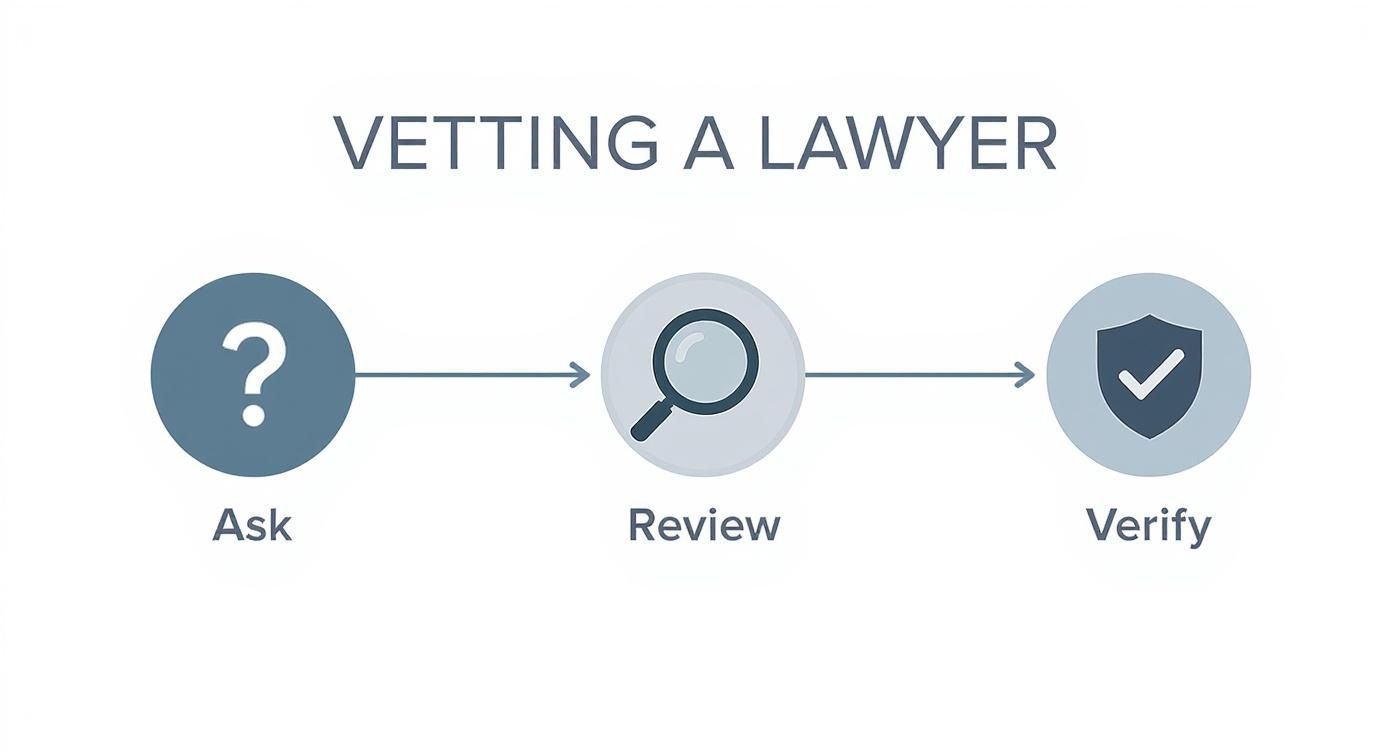
This visual breaks down the core actions you should take—asking the right questions, checking credentials, and verifying their courtroom experience. Each step is designed to ensure you find a lawyer who is truly equipped to handle the complexities of the court process and fight for you.
Making the Most of Your Initial Consultation

Think of your first meeting with a potential criminal defense lawyer as more than just a free chat. It's your one chance to interview the person you might be trusting with your freedom and your future. Don’t just walk in cold. This is your opportunity to evaluate their expertise, get a feel for their approach, and decide if they are someone you can genuinely trust.
Being prepared for this meeting can change everything. If you can, pull together whatever documents you have related to your case. This gives the attorney a clear look at your situation right from the start.
What to Bring to the Meeting
Don't worry about having a perfectly organized file, but try to gather these key items if you have them:
- Bail Paperwork: This document is crucial because it lists the official charges and any bond conditions you're already under.
- Police Reports: If you were given a copy of the offense report, bring it.
- Court Notices: Anything with dates, case numbers, or the prosecutor’s name is incredibly helpful.
In a world where the rule of law has seen a global decline, as noted by the 2025 World Justice Project Rule of Law Index, finding a truly skilled and ethical advocate is more important than ever.
The Right Questions to Ask a Potential Lawyer
Forget just asking about fees. The real value is in understanding how a lawyer thinks and operates. You need to ask direct, strategic questions to get the answers that matter.
"Based on what I've told you, what are your initial thoughts on a defense strategy for a case like mine?"
"Will you be the one personally handling my case from start to finish, or will it be passed off to a junior associate?"
"How often will I hear from you? What's your process for keeping clients updated on their case?"
Pay close attention to how they answer, not just what they say. A good lawyer will give you a realistic, straightforward assessment. They won't make grand promises or guarantee a specific outcome. This first meeting is all about finding a defender you feel you can truly count on when it matters most.
Rebuilding After Your Case Is Over
Winning your case in court feels like the finish line, but it’s often just the beginning of another challenge. Even after a dismissal or an acquittal, the public record of an arrest can linger, creating a shadow that follows you and impacts job applications, housing opportunities, and even loan approvals.
A favorable outcome in court doesn't automatically wipe the slate clean. That arrest record still exists, and it's up to you to take the next step to clear your name for good. A dedicated criminal defense lawyer can guide you through Texas's complex post-conviction relief process, ensuring a single mistake doesn't define the rest of your life.
Clearing Your Record in Texas: Expunctions and Non-Disclosures
So, how do you actually get rid of a criminal record in Texas? The law provides two powerful but very different tools. Knowing which one you may qualify for is the key to moving forward.
-
Expunction: This is the best-case scenario. An expunction legally destroys the records related to your arrest. It’s as if it never happened. Under the Texas Code of Criminal Procedure, you are generally eligible for this if your case was dismissed, you were found not guilty at trial, or you successfully completed a pre-trial diversion program.
-
Order of Non-Disclosure: If an expunction isn't an option, you may be eligible for an order of non-disclosure. This doesn't destroy the record, but it seals it from public view. This means potential employers, landlords, and the general public cannot see it. However, law enforcement and certain government agencies still can. This option is often available for people who successfully completed deferred adjudication probation for certain offenses.
The paperwork for an expunction or non-disclosure petition must be perfect. One small mistake can get your petition denied, forcing you to start the frustrating process all over again. This is where an experienced attorney is invaluable.
An arrest record shouldn't feel like a life sentence. With the right legal guidance, you can truly put the past behind you. Your fight isn't over when the judge's gavel falls; it's over when your record is finally clear.
Common Questions When Hiring a Defense Lawyer
If you’re searching for a "criminal defense lawyer near me," you are probably feeling overwhelmed with questions. Facing a criminal charge is incredibly stressful, and getting clear answers is the first step toward regaining control.
Here are a few of the most common questions people ask us across Texas, broken down in simple terms.
How Much Is This Going to Cost Me?
Let's be direct: cost is a huge concern. The final price depends on a few key factors. For example, a misdemeanor shoplifting case will cost less to handle than a complex felony drug charge. An attorney's experience and track record also play a role.
Most criminal defense lawyers structure their fees in one of two ways:
- A flat fee that covers the entire case from start to finish.
- A retainer fee paid upfront, which the lawyer then bills against at an hourly rate.
During your free consultation, a reputable lawyer will explain their fee structure transparently. You should leave knowing exactly what to expect, with no hidden surprises.
Is a Public Defender a Good Enough Option?
Public defenders are often dedicated and hardworking lawyers. The challenge isn't their skill—it's their overwhelming caseload. They are assigned to people who cannot afford a private attorney and often juggle an impossible number of cases at once. This can severely limit the time and personal attention they can dedicate to you.
When you hire a private criminal defense attorney, you choose your advocate. This ensures your case gets the focused, personalized attention it needs to build the strongest defense possible.
How Quickly Do I Need to Call a Lawyer After an Arrest?
You need to call an attorney immediately. The first few hours after an arrest are absolutely critical.
An experienced lawyer can protect you from saying something that could harm your case, ensure you understand your rights, and start gathering evidence while it's still available. The sooner your attorney gets involved, the more they can do to steer your case toward a positive outcome.
Don't wait until you have a court date or until formal charges are filed. The most effective defense work starts the moment you're in custody.
The anxiety that comes with an arrest is completely normal, but it's crucial to take action. This same principle applies whether you're looking for legal help or other resources to manage stress, like those for finding local professional support.
What If I Absolutely Can't Afford a Lawyer?
You have a constitutional right to legal representation. If you truly cannot afford to hire a private attorney, the court will appoint a public defender to represent you.
This happens at your first court appearance, called an arraignment. You will have an opportunity to inform the judge about your financial situation, and they will determine if you qualify for a court-appointed lawyer.
If you’ve been charged with a crime in Texas, call The Law Office of Bryan Fagan, PLLC for a free and confidential consultation. Our defense team is ready to protect your rights. https://texascriminallawyer.net