Being arrested for a DWI in Texas can be terrifying — but you don’t have to face it alone. It’s scary, confusing, and the potential penalties can feel overwhelming. The criminal fines alone can be steep, starting at up to $2,000 for a first offense and quickly jumping to $10,000 or more for felony charges. But here's the hard truth: that number on the court paperwork? It’s just the tip of the iceberg.
The True Cost of a Texas DWI Is More Than Just a Fine
It's easy to fixate on the maximum criminal penalty when you're facing a DWI charge. While that court-ordered fine is a major headache, it’s only one piece of a much larger and more expensive puzzle. The total financial fallout from a single DWI conviction can easily spiral into thousands of dollars over several years, putting a serious strain on your budget and your family's financial stability long after your legal case is officially closed.
Getting a clear picture of these "hidden" costs is the first critical step toward building a defense that truly protects your future.
Beyond the Courtroom Penalties
The initial fine the judge hands down is set by the Texas Penal Code, but a conviction unleashes a whole cascade of other mandatory expenses. These aren’t optional fees you can negotiate away; they are required payments you have to make to get your driving privileges back and satisfy the terms of your sentence.
These extra financial burdens almost always include:
- Court Costs and Administrative Fees: Every county court tacks on fees just to process your case, which can add hundreds of dollars to your final bill.
- Driver’s License Reinstatement Fees: Once your suspension is over, you’ll have to pay the Texas Department of Public Safety (DPS) to get your license back.
- Annual DPS Surcharges: For years after a conviction, you may be forced to pay an annual surcharge just to keep your license from being suspended again.
- Skyrocketing Insurance Premiums: A DWI conviction means filing an SR-22 with your insurance company. This alone can cause your rates to double or even triple for several years.
Aggravating Factors That Increase Fines
Certain circumstances can immediately make the charges—and the potential fines—much worse. For a first-time offender, having a Blood Alcohol Concentration (BAC) of 0.15% or higher (nearly double the legal limit) escalates the charge from a Class B to a more serious Class A misdemeanor.
This one factor automatically doubles the maximum fine from $2,000 to $4,000. It also makes all the other costs—court fees, probation, and insurance hikes—even higher, pushing the total financial damage into the tens of thousands over time. As you'll find when digging into the full consequences of DWI in Texas, these enhanced penalties are common and hit first-time offenders particularly hard.
By understanding the entire range of financial consequences—both immediate and long-term—you can see why fighting the charge with a strategic legal defense is so important.
Breaking Down a First DWI Offense
For most people, a DWI arrest is their first real run-in with the Texas criminal justice system. It's a confusing and frankly terrifying experience, filled with legal jargon and procedures you’ve never had to think about before. Understanding what you're actually up against is the first step toward getting some control back.
A standard first-time DWI in Texas is usually charged as a Class B Misdemeanor, as defined in the Texas Penal Code. That classification is a big deal because it sets the legal boundaries for the penalties you face if convicted. The number that probably jumps out at you first is the fine.
The Maximum Fine for a Class B Misdemeanor
Under the Texas Penal Code, a Class B Misdemeanor comes with a maximum criminal fine of $2,000. It's really important to catch that word: maximum. This isn't an automatic fine. A judge has the final say and can set it anywhere from $0 all the way up to that $2,000 ceiling.
But here’s the reality check: that $2,000 is just the starting point. It doesn't include court costs, probation fees, or any of the other administrative expenses that get piled onto your case. Think of the fine as the sticker price on a new car—before all the taxes, title, and dealer fees get tacked on.
When a First Offense Becomes More Serious
Not all first-time DWI offenses are treated the same. Certain factors, which the law calls "aggravating circumstances," can increase the severity of the charge and its penalties, even if it's your very first arrest.
The most common aggravating factor is a high blood alcohol concentration (BAC). If your breath or blood test shows a 0.15% BAC or higher, the charge is automatically bumped up from a Class B to a Class A Misdemeanor.
A BAC of 0.15% is nearly double the legal limit of 0.08%. From the state's perspective, this isn't just a mistake; it's a sign of extreme impairment, and they punish it with much harsher penalties right out of the gate.
This single detail has huge financial consequences. A Class A Misdemeanor carries a maximum fine of $4,000—exactly double the penalty for a standard first DWI. That one number can completely change the financial stakes of your case, making a solid defense that much more critical. Understanding all the nuances of a 1st DWI offense in Texas is essential to preparing for what's ahead.
Penalties Beyond DWI Fines in Texas
The fines are a major worry, but they are far from the only consequence of a first-time DWI conviction. The court can also hand down punishments that directly impact your freedom and day-to-day life.
A conviction for a Class B Misdemeanor DWI can also mean:
- Jail Time: You could be facing a sentence anywhere from 72 hours to 180 days in county jail.
- Driver's License Suspension: A conviction triggers an administrative license suspension that can last from 90 days up to a full year.
- Mandatory DWI Education: You'll almost certainly be required to complete a 12-hour DWI education program at your own expense.
If your charge was enhanced to a Class A Misdemeanor because of a high BAC, these penalties get worse, too. The potential jail time jumps to a maximum of one year, and you’ll likely be ordered to install an Ignition Interlock Device (IID) in your car just to drive legally. This mix of fines, fees, and other penalties shows why you have to tackle a DWI charge head-on from the very beginning.
When a Second DWI Doubles the Stakes
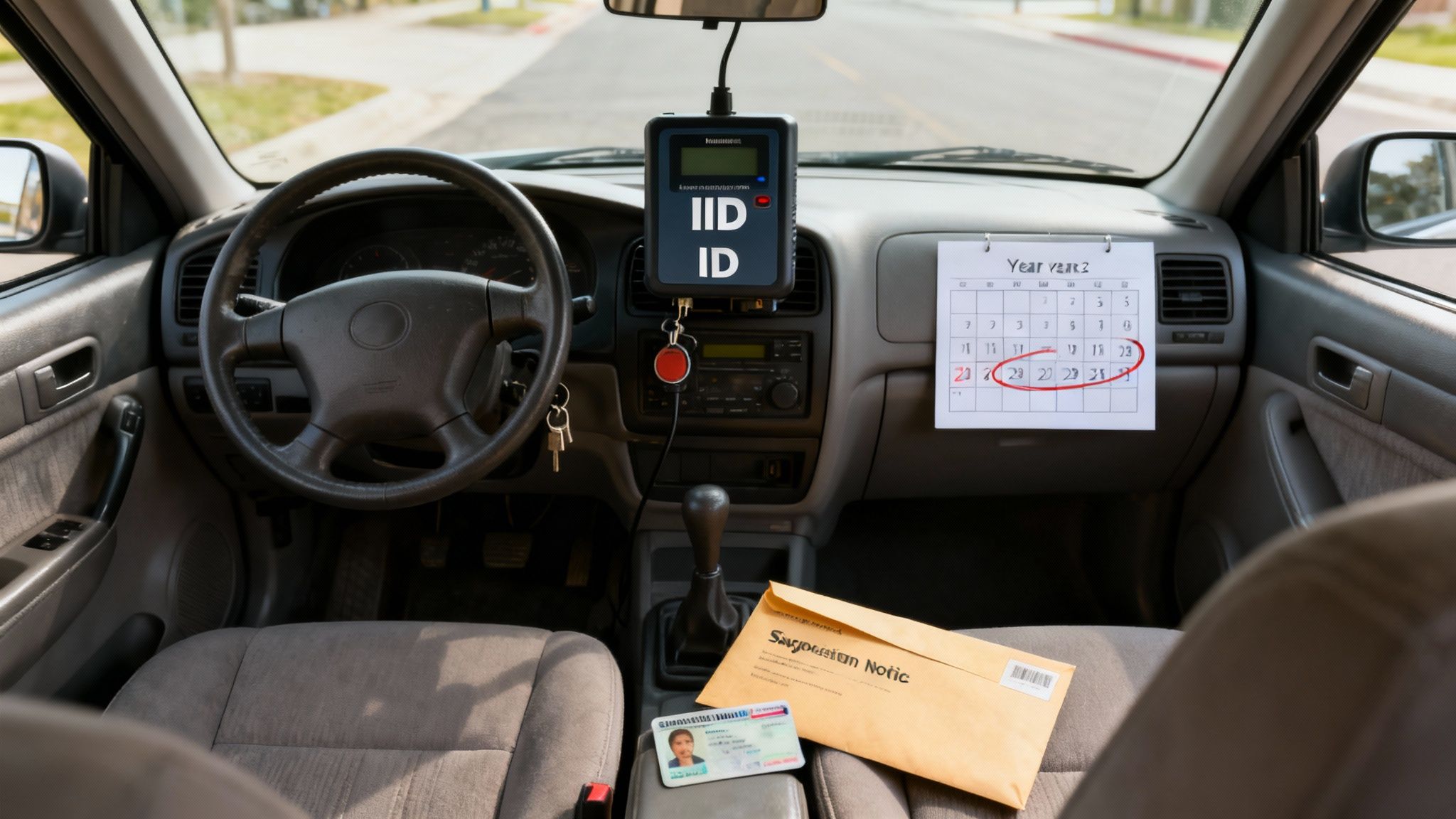
If you're facing a second DWI charge, it's critical to understand that the State of Texas doesn't see this as just another mistake. A first offense might be viewed as a lapse in judgment, but a second one is treated as a pattern of dangerous behavior. As a result, the penalties don't just increase—they escalate dramatically.
A second DWI is automatically upgraded to a Class A Misdemeanor. This legal classification isn't just jargon; it signals a much more serious fight ahead, starting with the hit to your wallet.
The Fine Doubles to $4,000
While a first-time DWI comes with a maximum fine of $2,000, a second conviction doubles that amount. The maximum criminal fine for a Class A Misdemeanor DWI jumps to $4,000. And that's just the starting point. This figure doesn't even touch the court costs, probation fees, and other expenses that will inevitably be tacked on.
This steep increase is a clear message from the courts: they are taking your case far more seriously this time around. The state’s tough stance on repeat DWI offenders is well-documented. A second charge doesn't get you sympathy—it gets you steeper fines, mandatory jail time, and a lengthy license suspension. This approach reflects a historical focus in Texas on cracking down on repeat offenders, an issue detailed in reports like this one from the Texas Department of Public Safety analyzing DWI arrest trends.
Mandatory Jail Time and a Lengthy License Suspension
Beyond the fines, a second DWI conviction brings the one thing most people fear: guaranteed jail time. This isn't just a possibility; it's a certainty.
The law requires a minimum jail sentence for a second DWI, with the range falling between 30 days and one full year in county jail. Even with a skilled attorney, avoiding jail completely is incredibly difficult once you're convicted.
Your driving privileges are also in serious jeopardy. A second DWI conviction can trigger a driver's license suspension lasting anywhere from 180 days up to two full years. Losing your license for that long can make it nearly impossible to hold down a job, manage family obligations, or simply maintain your independence.
The Ignition Interlock Device Requirement
One of the most inconvenient and costly consequences of a second DWI is the near-certainty you'll be ordered to install an Ignition Interlock Device (IID). If your prior DWI was within the last five years, Texas law makes an IID mandatory for at least one year.
An IID is a small breathalyzer hardwired into your vehicle’s ignition. Before the car will start, you have to provide a clean breath sample. It will also prompt you for random "rolling retests" while you're driving to ensure you haven't been drinking.
You bear all the costs, and they add up fast:
- Installation Fee: A certified technician has to install the device, which can run up to $200.
- Monthly Monitoring Fees: You'll lease the device and pay for its monitoring, typically costing $70 to $100 every month.
- Removal Fee: Once your time is up, you have to pay again to get it taken out.
Over a year, the IID alone can easily add another $1,000 or more to your total DWI bill. It’s more than a financial burden; it's a constant, daily reminder of your conviction. With the stakes this high, having an experienced DWI defense attorney is no longer a luxury—it's essential to protect your freedom and your finances.
Felony DWI: When the Fines Reach $10,000
When a DWI charge in Texas gets bumped up to a felony, the game changes completely. We’re not just talking about higher fines or more jail time. A felony conviction is a life-altering event that can strip you of fundamental rights and slam doors shut for good.
Understanding what pushes a DWI into felony territory is the first step toward building a defense that protects everything you’ve worked for. While a first or second offense is usually a misdemeanor, the Texas Penal Code lays out specific triggers that automatically make the charge a felony—and the consequences are severe.
Third DWI Offense: The Felony Threshold
Your third DWI arrest is a line in the sand under Texas law. If you are convicted a third time, the charge is automatically classified as a third-degree felony. That’s a massive jump from the misdemeanor status of your previous offenses.
The maximum fine skyrockets to $10,000, and that’s just the start. You'll also be on the hook for thousands more in court costs, extended probation fees, and years of DPS surcharges. A conviction also means a mandatory prison sentence of two to ten years—served in a state penitentiary, not the county jail.
DWI with a Child Passenger
The law comes down especially hard when a child's safety is on the line. Driving while intoxicated with a passenger under the age of 15 is a state jail felony, even if it’s your very first offense.
That means a single bad decision, a momentary lapse in judgment, can lead directly to:
- A fine up to $10,000.
- A state jail sentence of 180 days to two years.
- A permanent felony conviction on your record.
This charge shows just how seriously the state takes DWIs involving children. The penalties are designed to be harsh to deter this kind of reckless behavior, leaving very little room for leniency from prosecutors or judges.
Intoxication Assault and Intoxication Manslaughter
When a DWI leads to injury or death, the consequences become even more catastrophic. These aren't treated like traffic offenses; they are prosecuted as violent crimes with penalties to match.
If you cause serious bodily injury to someone else while driving intoxicated, you'll be charged with Intoxication Assault. This is a third-degree felony, carrying that same $10,000 maximum fine and a potential prison sentence of two to ten years.
If the accident results in someone’s death, the charge becomes Intoxication Manslaughter, a second-degree felony. A conviction means you’re facing two to twenty years in prison and a fine of up to $10,000. These cases are pursued aggressively, with the focus squarely on getting justice for the victim and their family. A powerful legal defense is absolutely essential.
A felony DWI conviction isn't just a legal outcome; it's a permanent label that follows you forever. It can stop you from voting, owning a firearm, or getting certain professional licenses. Finding a job or even a place to live becomes exponentially harder with a felony on your record.
These are the highest-stakes DWI cases in Texas, where your freedom and your entire future are on the line. The fines are immense, but the lifelong consequences of a felony conviction are truly immeasurable. Facing these charges without an experienced and aggressive defense team is a risk you simply cannot afford to take.
Unpacking the Hidden Costs of a DWI Conviction
When you’re staring down a DWI charge, that big number on the fine schedule—whether it’s $2,000 or $10,000—can feel like the entire financial battle. But we’ve seen it time and time again: that court-ordered fine is just the tip of the iceberg.
A conviction kicks off a domino effect of administrative fees, surcharges, and mandatory expenses that can easily dwarf the original penalty. It’s a long-term financial drain that catches too many people by surprise.
Understanding these "hidden costs" isn't just helpful; it’s critical. These aren't optional payments. They're mandatory hurdles you have to clear to satisfy the court, get your life back on track, and regain your driving privileges.
The True Financial Fallout Beyond the Fine
Once that conviction hits your record, it feels like every agency has its hand out. These costs are completely separate from the criminal fine and they stack up fast, turning what you thought was a manageable problem into a five-figure nightmare.
Here’s a look at the most common expenses that blindside people:
- Court Costs: Every county in Texas tacks on administrative fees just to process your case. This alone can add several hundred dollars to your bill.
- Probation Fees: If you get community supervision (probation), you're on the hook for a monthly fee, typically between $60 to $100, for the entire probation term.
- Mandatory DWI Classes: The court will order you to attend and pay for a DWI education program. For repeat offenders, it’s an even more intensive (and expensive) intervention program.
- Driver's License Reinstatement Fee: When your suspension is finally over, the Texas Department of Public Safety (DPS) requires you to pay a fee just to get your license back.
- Ignition Interlock Device (IID): If the judge orders an IID, you bear all the costs. That means installation fees (up to $200), plus monthly monitoring fees that hover around $80-$100.
- SR-22 Insurance: A DWI conviction forces you to file an SR-22 certificate with the state. The result? Your auto insurance premiums will skyrocket, often doubling or tripling for years.
These costs create ongoing financial pressure. If you fall behind, you could even face wage garnishment. Knowing How to Stop Wage Garnishment in Texas becomes essential for keeping your head above water.
The infographic below really puts the starting fines for felony-level DWIs into perspective. Just remember, these are only the starting point before all the other costs pile on.
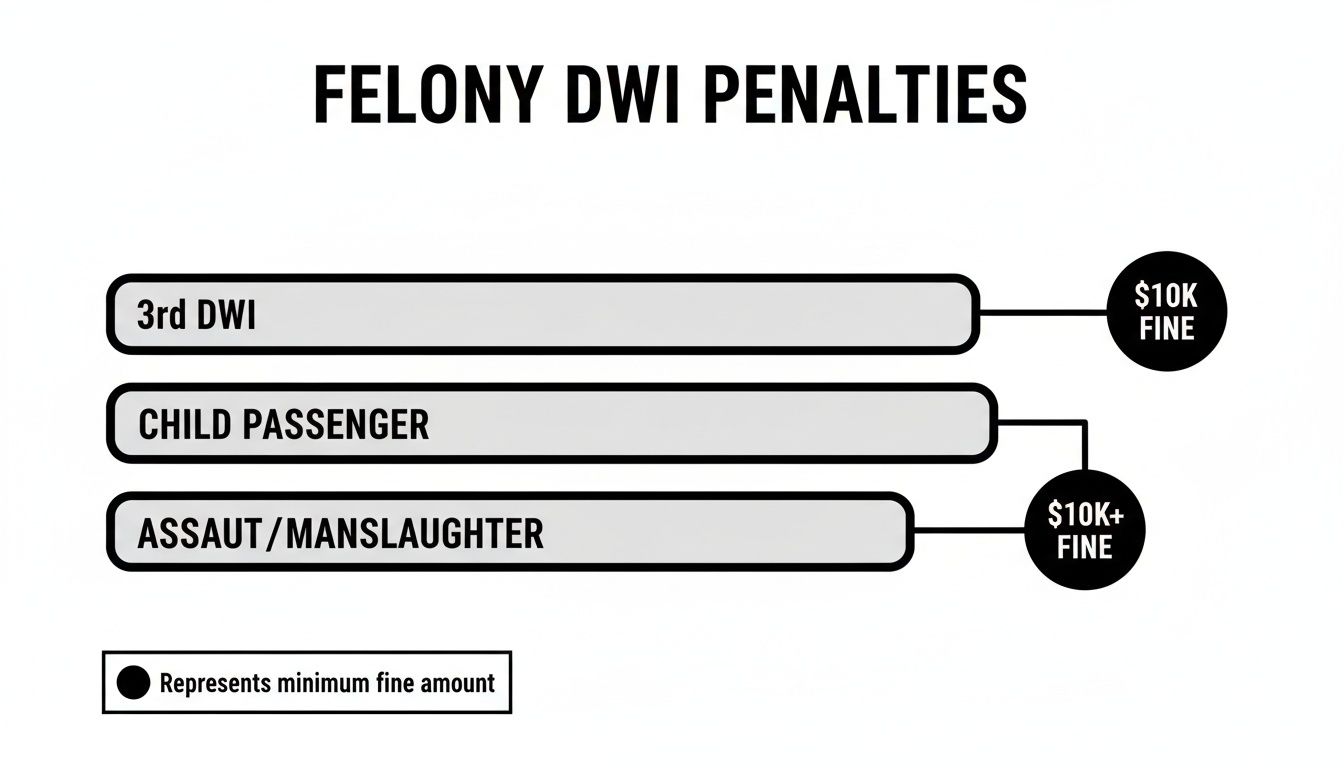
As you can see, felony convictions begin with a potential $10,000 fine. From there, the total financial damage only goes up.
How a $2,000 Fine Becomes a $10,000 Problem
Let's ground this in reality. We want to show you exactly how the costs for a standard first-time DWI can spiral out of control. The maximum criminal fine might be $2,000, but the actual hit to your wallet will be far greater.
A DWI conviction is more than just a legal problem—it's a significant financial event. The compounding effect of fees, surcharges, and increased insurance can put immense strain on any Texas family's budget for years to come.
This table gives a realistic snapshot of how quickly the expenses add up. It makes it painfully clear why that initial fine is just a small piece of the puzzle.
Example Total Cost Breakdown for a First-Time DWI in Texas
| Expense Category | Typical Cost Range |
|---|---|
| Criminal Fine | $0 – $2,000 |
| Court Costs & Fees | $300 – $600 |
| Probation Fees (1 year) | $720 – $1,200 |
| License Reinstatement | $125 |
| DWI Education Class | $100 – $200 |
| IID Costs (1 year) | $1,000 – $1,500 |
| SR-22 Insurance Increase (3 years) | $3,000 – $6,000+ |
| Estimated Total Cost | $5,245 – $11,625+ |
The numbers don't lie. A single DWI conviction is a massive financial setback, with long-term costs that stretch far beyond the initial court penalty. This is precisely why building a strong defense aimed at avoiding a conviction is the single most effective way to protect your financial future.
How a DWI Attorney Can Protect Your Financial Future
After seeing how quickly DWI costs can spiral into the tens of thousands, it's easy to feel completely overwhelmed. You might even be thinking that hiring an attorney is just one more bill you can't afford.
But here's the truth: a skilled DWI defense lawyer isn’t a cost—it’s a strategic investment in protecting your financial future from total ruin.
An experienced attorney does a lot more than just show up for your court date. We launch a full-scale investigation into your case, digging into every detail to build a defense aimed squarely at minimizing the financial damage.
Challenging the Evidence Against You
The state’s case might look bulletproof on the surface, but it's often built on a shaky foundation of evidence full of potential weaknesses. A sharp attorney knows exactly where to look for errors.
Our defense strategy involves questioning every single step of the process:
- The Traffic Stop: Did the officer have a legal reason to pull you over? If the stop was invalid from the start, any evidence they collected afterward could be thrown out completely.
- Field Sobriety Tests: These tests are notoriously unreliable. Factors like bad weather, a pre-existing medical condition, or just being nervous can easily skew the results. We challenge how the tests were administered and whether the results are meaningful.
- Breath and Blood Tests: We investigate the machine's maintenance records and the qualifications of the person who ran the test. For blood tests, we scrutinize the entire chain of custody and lab procedures to find errors that could make the results inadmissible in court.
Negotiating for a Better Outcome
When you have a strong defense, you can negotiate with prosecutors from a position of strength, not desperation. Our number one goal is always to get the charges dismissed.
When that's not possible, we fight for a plea agreement that dramatically reduces the financial fallout. For instance, we might negotiate to get the DWI charge reduced to a lesser offense like Obstruction of a Highway.
This isn't just a different name on a piece of paper. A reduced charge can mean thousands of dollars in savings—lower fines, no automatic license suspension, and dodging the outrageously expensive Ignition Interlock Device requirement.
A DWI conviction can put your personal assets at serious risk, especially if there are significant liabilities involved. It's smart to explore all your options, which might include looking into asset protection insurance to safeguard what you've worked so hard to build.
By fighting to avoid that DWI conviction, we are directly shielding you from the avalanche of hidden costs. This means preventing your insurance premiums from tripling and preserving your right to drive—which for most people is essential to earning a living.
If you need immediate help with your driver's license after an arrest, our team can provide the DWI license help you need to stay on the road while we build your case. Don't let overwhelming DWI fines in Texas take control of your future; let us fight for you.
Answering Your Questions About Texas DWI Fines
When you’re facing a DWI charge, a million questions start racing through your mind, especially about the money. How much will this really cost? Can I even afford it? We hear these concerns every day, so let’s tackle some of the most common questions our clients ask.
Can I Get a Payment Plan for My DWI Fines?
Yes, in most Texas courts, you can set up a payment plan to handle your fines and court costs. This doesn't happen automatically, though. You have to request it, and the best time is during your sentencing hearing. A judge will look at your ability to pay and can break down the total into monthly installments.
However, you must keep up with these payments. Missing even one can trigger a warrant for your arrest, turning a financial problem into a far more serious legal one.
Can I Do Jail Time Instead of Paying a Fine?
While Texas law technically allows you to "sit out" a fine by serving jail time, it’s almost always a poor choice. The credit you get for each day you spend behind bars is very low. To satisfy a significant fine, you would have to be locked up for a long time.
Think of it as a last-ditch option. The damage to your job, your family, and your life from extended jail time is almost always worse than figuring out a structured payment plan.
Will the Judge Consider My Financial Situation?
Absolutely. A judge is not supposed to set a fine that is impossible for you to pay. They have the discretion to consider your financial reality. This is where an experienced DWI attorney is critical. We can present clear evidence of your financial hardship—things like pay stubs, rent receipts, and other monthly bills—to argue for a lower fine.
This part of the sentencing hearing is crucial. A well-argued case, backed by solid documentation, can make a huge difference in the final amount you’re ordered to pay. We know how to gather what’s needed to make the strongest possible case for a reduced financial penalty on your behalf.
If you’ve been charged with a crime in Texas, call The Law Office of Bryan Fagan, PLLC for a free and confidential consultation. Our defense team is ready to protect your rights. https://texascriminallawyer.net