Being arrested for a DWI in Texas can be terrifying—but you don’t have to face it alone. One of the first things that probably flashes through your mind is the cost. It's a stressful and frightening experience, and the financial side of it only adds to the anxiety.
Let's be clear: the financial sting of a Texas DWI is significant. For a first-time offense, the criminal fine alone can be as high as $3,000. If your blood alcohol concentration (BAC) was 0.15% or higher—nearly double the legal limit—that fine can jump to $6,000.
But here's what most people don't realize: that number you see in the Texas Penal Code is just the beginning. It's only the tip of a very large and expensive iceberg. Understanding your rights and options is the first step toward protecting your future.
The True Cost of a DWI Is More Than Just a Fine
The statutory fine is just one piece of a much larger, more complicated financial puzzle. Many people are shocked to learn just how many different fees, penalties, and costs are triggered by a single DWI conviction. It’s not just one payment; it's a cascade of expenses that can feel overwhelming.
Think of the fine as the ticket price for a movie. It gets you in the door, but it doesn’t cover the popcorn, drinks, and other extras that quickly add up. A DWI conviction works the same way, triggering a whole host of mandatory expenses, each with its own price tag.
Understanding these different costs is the first step toward getting a realistic picture of what lies ahead and building a defense to protect your financial future.
A Quick Look at Potential DWI Financial Penalties in Texas
To give you a clearer idea, here’s a simplified breakdown of the primary financial penalties you might face. Keep in mind these are statutory maximums and typical ranges; the actual costs can vary based on your specific case and county.
| Offense Level | Maximum Criminal Fine | Civil Penalty (Post-Conviction) | Typical License Reinstatement Fee |
|---|---|---|---|
| First DWI | $3,000 | $3,000 | $125 |
| First DWI (BAC ≥ 0.15) | $6,000 | $6,000 | $125 |
| Second DWI | $6,000 | $4,500 | $125 |
| Third DWI (Felony) | $10,000 | $4,500 | $125 |
This table only scratches the surface. It doesn't include court costs, probation fees, ignition interlock device costs, or skyrocketing insurance premiums, which we'll cover in this guide.
Understanding the Key Financial Components
The total cost of a DWI conviction is a combination of criminal fines, administrative penalties, and other long-term financial consequences. It’s crucial to know what you’re up against.
Here are the most common expenses you should be prepared for:
- Statutory Criminal Fines: These are the base penalties set by Texas law for the specific DWI offense you're charged with.
- Court Costs and Fees: Every county court tacks on its own administrative fees for processing your case, and these can easily add hundreds of dollars.
- License Reinstatement Fees: After a license suspension, you’ll have to pay the Texas Department of Public Safety (DPS) to get your driving privileges back.
- Post-Conviction Civil Penalties: For three years after a conviction, you'll be on the hook for a hefty annual fee just to keep your license valid.
- Civil Lawsuits: In cases involving accidents or injuries, the financial fallout can be catastrophic. The costs can extend far beyond court-imposed fines and lead to multi-million dollar civil liabilities in DWI cases, especially those involving serious injury or wrongful death.
This guide will walk you through each of these costs, breaking them down in a clear, straightforward way. Our goal is to give you a realistic financial picture so you can make informed decisions as you navigate the road ahead.
Decoding the Penalties for a First DWI Offense
Getting hit with a first-time DWI charge feels like being thrown into the deep end. The language is confusing, the process is intimidating, and the fear of what comes next can be overwhelming. But the first step to taking back control is understanding exactly what you're up against, especially when it comes to the money.
The Texas Penal Code doesn't mess around with DWI penalties, and they aren't one-size-fits-all. The law draws a very clear line in the sand based on one number: your Blood Alcohol Concentration (BAC). That single data point can dramatically change your charge from a serious problem to a life-altering one.
Standard First DWI Offense Penalties
For most first-time DWIs in Texas, the charge is a Class B Misdemeanor. This is the standard charge when your BAC is over the legal limit of 0.08% but still under 0.15%.
Under Texas Penal Code Section 49.04, a conviction could land you with:
- A criminal fine up to $3,000
- Jail time anywhere from 72 hours to 180 days
- A driver's license suspension for up to a year
It's critical to understand that the $3,000 fine is just the starting point. Think of it as the sticker price—it doesn’t include all the other court costs, administrative fees, and civil penalties that will inevitably get tacked on.
Enhanced Penalties for a High BAC
Things get a lot more serious if your BAC comes back at 0.15% or higher. The law treats this as an aggravating factor, instantly escalating the entire case. It's the legal equivalent of going from a routine traffic stop to a high-speed chase—the consequences just got a whole lot bigger.
A BAC of 0.15% or more bumps the charge up to a Class A Misdemeanor. That enhancement effectively doubles the stakes.
A Class A Misdemeanor for a first DWI with a high BAC carries a maximum criminal fine of up to $6,000 and up to one year in jail.
That jump from a $3,000 max fine to a $6,000 max fine is one of the harshest financial penalties for a first offense. Prosecutors pursue these "high BAC" cases aggressively because the state sees these drivers as a much greater threat to public safety.
How a DWI Attorney Can Make a Difference
These numbers are scary, but remember: a charge isn't a conviction. Your best defense against these steep financial penalties is an experienced DWI attorney who knows how to challenge the state's case from every angle. One of the most powerful strategies is to attack the very evidence they're using against you—the BAC result itself. To dig deeper into what a first offense entails, check out our comprehensive guide on a 1st DWI offense in Texas.
A sharp lawyer will immediately start asking tough questions about the arrest:
- Was the breathalyzer machine properly calibrated and maintained?
- Did the officer who ran the test have the right certifications?
- Were blood samples handled correctly to prevent contamination?
By finding procedural mistakes or proving the chemical tests are unreliable, an attorney can get that evidence thrown out. This could mean getting the high BAC enhancement dropped, reducing the charge, or even having the entire case dismissed. Fighting the evidence isn't just about staying out of jail—it's a direct investment in protecting yourself from the financial devastation of a DWI conviction.
How Fines Escalate for Repeat DWI Offenses
If this isn’t your first DWI charge, you’re in a completely different ballgame. Texas law comes down hard on repeat offenses, and the financial penalties skyrocket right alongside the criminal charges. A prior conviction isn't just a mark on your record; it's a tool prosecutors use to hit you with much harsher consequences this time around.
This is called an enhancement. In simple terms, the state takes your old DWI conviction and uses it to “enhance” the new charge, bumping it into a more serious category. We're not just talking about a bigger fine—we're talking about life-altering penalties, including serious jail or prison time.
The Financial Jump From a First to a Second DWI
A second DWI charge in Texas is a Class A Misdemeanor. That’s a serious jump from the Class B Misdemeanor you likely faced the first time, and it immediately doubles the maximum fine.
Under the Texas Penal Code, a second DWI conviction means you’re looking at:
- A criminal fine up to $6,000.
- Jail time from 30 days to one year.
- A driver's license suspension that could drag on for two years.
That $6,000 fine is double the cap for a first offense. Before you even factor in court costs, fees, or anything else, you’re already on the hook for a much bigger financial hit. To get a full picture of what a second charge involves, you can learn more about the consequences of a second DWI offense in our guide.
When a DWI Becomes a Felony
The third time you’re charged with DWI, the stakes are dangerously high. A third DWI is automatically charged as a third-degree felony, no matter how much time has passed since your last conviction. This isn't just another step up; it's a massive leap that carries devastating consequences.
A third-degree felony DWI conviction in Texas can result in a fine of up to $10,000, plus a prison sentence of two to ten years in a state penitentiary.
This is where the financial fallout can truly cripple a family. A $10,000 fine is just the start. A felony on your record means losing your right to vote and own a firearm, and it puts up a permanent wall between you and many jobs and housing opportunities.
The True Cost of Prison Time
Beyond the fines, the real financial gut punch of a felony DWI is the loss of income. A prison sentence means you can’t work or provide for your family, wiping out your income for years. It creates a financial hole so deep that it can feel impossible to climb out of, even long after you’ve served your time.
The escalating DWI fines in Texas for repeat offenses are designed to be punitive. They also scream one thing loud and clear: you need a powerful legal defense. When you’re facing an enhanced charge, every single detail matters. An experienced DWI attorney can fight the validity of old convictions, challenge the evidence in your new case, and work to shield you from the financial ruin of a felony. Your future depends on it.
Uncovering the Hidden Costs of a DWI Conviction
When a judge hands down a criminal fine for a DWI, most people think that’s the end of it. The reality? That number is just the beginning.
A DWI conviction in Texas sets off a chain reaction of administrative fees, surcharges, and mandatory expenses that have nothing to do with the criminal court. I’ve seen countless clients get completely blindsided by these “hidden” costs, which can easily double or even triple the financial hit of the original charge.
Think of the criminal fine as the sticker price on a car. It’s the big, obvious number, but it never includes the taxes, title, and dealer fees that get tacked on at the end. A DWI works the same way. To truly understand what you’re up against, you have to look beyond the courtroom fine.
This chart shows how the base criminal fines jump with each offense, but remember—this is just the starting point.
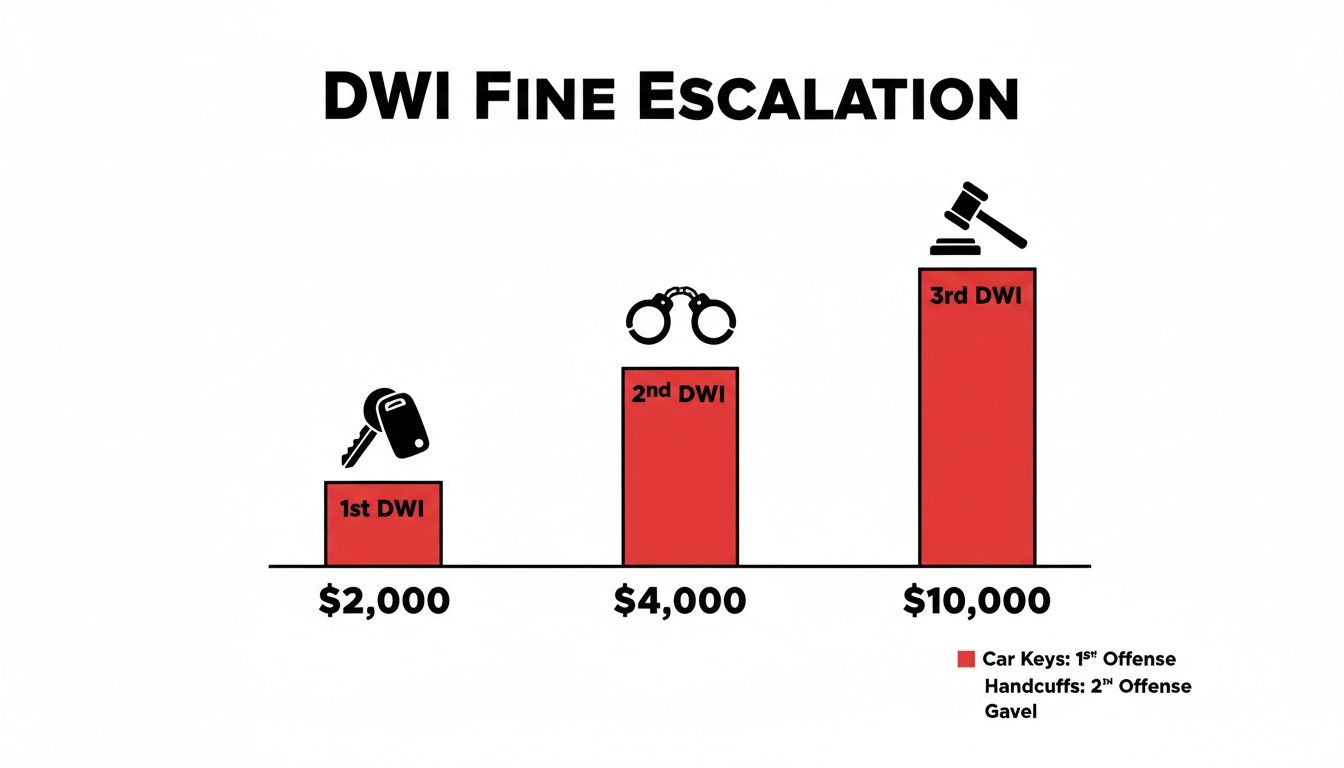
As you can see, the penalties get severe quickly for repeat offenses. Now, let’s add on all the other costs the state doesn’t advertise.
Court Costs and Administrative Fees
On top of the criminal fine, every Texas county court charges its own administrative fees and court costs. These aren’t part of your punishment; they’re just the fees required to process your case. These costs vary wildly from county to county but almost always add several hundred dollars to your final bill.
Fees for License Suspension and Reinstatement
A DWI charge puts your driver's license in immediate jeopardy. If you refuse a breath or blood test—or if your BAC is over the legal limit—the Texas Department of Public Safety (DPS) kicks off a separate civil process called an Administrative License Revocation (ALR).
You have a very narrow window to request an ALR hearing to fight this automatic suspension, and that process has its own filing fees. If you lose and your license gets suspended, you’ll eventually have to pay a reinstatement fee of $125 or more to the DPS just to get it back.
The Cost of Mandatory Programs
A conviction also means you’ll be ordered to complete certain programs, and you’ll be paying for them out of your own pocket. These are not optional.
- DWI Education Class: Most first-time offenders have to take a 12-hour DWI education course, which usually costs around $100 to $200.
- Ignition Interlock Device (IID): If the court orders an IID, you have to get a breathalyzer installed in your vehicle. Installation alone can cost up to $200, plus $70 to $100 in monthly monitoring fees. Over a year, an IID can easily add another $1,000 or more to your total bill.
The list of "extra" expenses associated with a DWI conviction is long and often surprising. Here’s a table that breaks down some of the most common costs you'll face beyond the criminal fine.
Estimated Hidden Costs Associated with a Texas DWI
| Expense Category | Estimated Cost Range | Important Notes |
|---|---|---|
| Court Costs & Admin Fees | $300 – $1,000+ | Varies significantly by county. Covers filing, processing, and other procedural fees. |
| License Reinstatement Fee | $125 | A standard fee paid to the Texas DPS to get your license back after suspension. |
| DWI Education Class | $100 – $200 | Required for most first-time offenders as a condition of probation. |
| Ignition Interlock Device (IID) | $1,000 – $1,500+ (annually) | Includes installation ( |
| Probation Fees | $60 – $100 per month | If you receive probation, you must pay monthly supervision fees for the entire term. |
| SR-22 Insurance Filing | $25 – $50 (filing) | This is the fee to file proof of high-risk insurance; the premium increase is separate. |
| Increased Car Insurance | $1,500 – $3,000+ (annually) | Your premiums will skyrocket for several years after a DWI conviction. |
| Towing and Impound Fees | $200 – $500+ | Covers the cost of getting your car back after it's towed from the scene of the arrest. |
As you can see, these hidden penalties add up fast, turning a manageable fine into a serious financial hardship. Our comprehensive DWI cost offenses guide breaks these expenses down even further. An experienced attorney can help you see the full picture and fight to minimize these costs from day one.
The Long-Term Impact on Your Insurance and Career
The true cost of a DWI conviction goes far beyond what you pay the court. While the fines and fees feel like the immediate gut punch, the financial damage that follows you for years can be far more devastating.
A conviction casts a long, expensive shadow, hitting two of the most critical areas of your life: your auto insurance and your career. These aren't temporary problems—they can dog you for years, making it harder to get to work, earn a living, and take care of your family. It’s vital to understand what's really at stake here, because fighting the charge now is a direct investment in your future.
How a DWI Conviction Impacts Your Auto Insurance
After a DWI conviction, your relationship with your insurance company changes overnight. You’re no longer just another driver; you're officially reclassified as "high-risk," and that triggers a series of expensive, mandatory requirements.
The first big change is the need to file an SR-22 certificate. This isn't insurance itself. Think of it as a special document your insurer files with the Texas DPS to prove you’re carrying the state-mandated minimum liability coverage.
An SR-22 is basically a guarantee to the state that you're financially responsible. But to insurance companies, it’s a giant red flag. It officially labels you as a high-risk driver, and your premiums will reflect that new status immediately.
This "high-risk" label gives your insurance provider all the justification they need to dramatically hike your rates. It’s not uncommon for drivers with a DWI conviction to see their auto insurance premiums double or even triple. And this isn't a one-time thing; you can expect to pay those inflated rates for three to five years, adding thousands more to your total DWI-related expenses.
When a DWI conviction sends your insurance rates through the roof, finding ways to manage those costs becomes critical. It's worth exploring practical tips to reduce insurance premiums to help ease some of that financial burden.
Your Career and Professional Future at Risk
The financial pain doesn't stop with your insurance bill. A DWI conviction puts a permanent blemish on your criminal record, which can act as a major roadblock in your professional life. In today's world, nearly all employers run background checks, and a DWI can easily get you disqualified from a long list of opportunities.
This is especially true for any job that involves driving or requires a specific level of public trust.
- Commercial Driver's License (CDL): For truck drivers, delivery personnel, or anyone who operates a commercial vehicle, a DWI is often a career-ending event. You will almost certainly lose your CDL and find it nearly impossible to get hired in the industry again.
- Professional Licenses: Nurses, pilots, real estate agents, and other licensed professionals can face disciplinary action from their state licensing boards. A conviction could lead to a suspension or even the revocation of a license you worked incredibly hard to earn.
- Company Vehicle Privileges: Many jobs require employees to occasionally drive a company car. A DWI on your record will almost certainly make you ineligible for the company's insurance policy, taking you out of the running for promotions or new positions that require it.
Even if your job doesn't involve driving, some employers may view a DWI conviction as a sign of poor judgment and choose another candidate over you. The long-term loss of income and career opportunities can ultimately dwarf all other DWI fines in Texas. Protecting your record isn't just about avoiding court fees; it's about protecting your livelihood for years to come.
How a Defense Attorney Can Minimize Your Financial Burden
Seeing the potential fines and hidden costs laid out like that can feel like a punch to the gut. But remember this: a DWI charge is not a conviction. You have the right to fight back, and hiring an experienced defense attorney is your first and most powerful move toward protecting your wallet.
Think of an attorney not as just another expense, but as a critical investment in minimizing the total financial damage of a DWI charge. It’s about safeguarding your future. At The Law Office of Bryan Fagan, PLLC, our approach is proactive and strategic. We don’t just take the state’s story at face value; we challenge it at every turn.
Challenging the Evidence Against You
The foundation of any solid DWI defense is a deep, skeptical dive into the prosecution's evidence. Sometimes, even a small procedural mistake by the police is enough to get key evidence thrown out. This completely changes the game, giving you leverage to negotiate for lower fines and penalties.
We meticulously pick apart every detail of your arrest, including:
- The Traffic Stop: Did the officer even have a legitimate reason—what the law calls reasonable suspicion—to pull you over in the first place? If not, every single piece of evidence they gathered afterward could be inadmissible in court.
- Field Sobriety Tests: These tests are notoriously subjective and often administered incorrectly. We scrutinize the officer's instructions, how they demonstrated the tests, and their evaluation of your performance to pinpoint flaws.
- Breath and Blood Tests: We immediately question the calibration and maintenance records of the breathalyzer machine. For blood tests, we examine the entire chain of custody to make sure the sample wasn’t contaminated or mishandled. We fight to keep inaccurate results out of the courtroom.
By exposing these weaknesses, we can pressure the prosecution into offering a much better deal or, in some cases, dropping the charges altogether.
Exploring Alternatives to a Conviction
A conviction is what unleashes the harshest financial storm—massive fines, crippling surcharges, and insurance rates that go through the roof. Our main goal is to help you steer clear of that outcome whenever possible.
One of the most effective tools in our arsenal is deferred adjudication. This is a special kind of probation. If you complete it successfully, the case against you is dismissed. You still pay court costs and program fees, but you avoid a final conviction, a criminal fine, and all the long-term financial pain that comes with it.
Another crucial strategy is plea bargaining. We can often negotiate with the prosecutor to get the DWI charge knocked down to a lesser offense, like reckless driving. This alone can lead to substantially lower dwi fines in Texas and a much less severe impact on your life down the road.
Your financial future is simply too important to leave to chance. A skilled attorney knows how to navigate the complex Texas legal system, spotting opportunities to get charges reduced, minimize fines, and protect your livelihood. You don't have to face this alone.
Common Questions About Texas DWI Fines
Getting hit with a DWI charge unleashes a flood of questions, most of them tied to your wallet. The legal system can feel like a maze, but getting clear answers is the first step toward finding your way out. Here are some of the most common questions our clients ask about DWI fines in Texas.
Can My DWI Fines Be Reduced in Texas?
Yes, getting DWI fines reduced is often a realistic goal. It’s not something that just happens, though—it requires a solid legal strategy.
An experienced defense attorney can often negotiate a plea agreement with the prosecutor, which might mean pleading to a lesser charge with a smaller fine. Even better, if your lawyer finds a critical flaw in the state’s case—like an unconstitutional traffic stop or a botched sobriety test—they can push to have the charges reduced or dismissed entirely. A dismissal means the fine disappears completely.
Do I Have to Pay All My DWI Fines at Once?
Not always. Many Texas courts understand that coming up with thousands of dollars on the spot is impossible for most people. Judges often allow payment plans for fines and court costs, but it’s not automatic. You have to ask for it.
Your attorney can formally request a payment plan on your behalf, helping you secure a manageable schedule. But once it's set, you absolutely have to stick to it. Missing a payment can trigger a warrant for your arrest.
Key Takeaway: The single worst thing you can do is ignore your fines. It will only snowball into more legal trouble, including possible jail time and longer license suspensions.
What Happens If I Cannot Afford My DWI Fines?
If you genuinely can't afford to pay, don't just stay silent—you need to tell the court. A judge has the power to find alternative solutions.
They can convert the fines into a certain number of community service hours. In some situations, if you can prove you are indigent (meaning you don't have the financial means to pay), the judge might even waive the fines. An attorney is critical here, as they can help you properly present your financial hardship to the court and explore these options.
If you’ve been charged with a crime in Texas, call The Law Office of Bryan Fagan, PLLC for a free and confidential consultation. Our defense team is ready to protect your rights. Learn more at https://texascriminallawyer.net.