Being arrested in Texas can be terrifying — but you don’t have to face it alone. When you're charged with a first-degree felony, it's a life-altering event. It's an overwhelming moment that puts everything you've worked for—your family, your career, your freedom—on the line. To put it simply, this is the most severe category of crime in the state, second only to a capital felony.
Understanding what this charge really means is the critical first step. It’s how you can begin to build a defense and take back some control over a situation that feels completely out of your hands. This guide is here to replace fear with knowledge, helping you understand your rights and options.
What It Means to Face a First Degree Felony Charge
Hearing the words "first-degree felony" can make your world feel like it's caving in. But you don't have to go through this alone. When the State of Texas brings this charge, it’s signaling that it views the alleged crime as one of the most serious a person can commit. The potential penalties are staggering, involving decades—or even a lifetime—in prison and massive fines.
This isn't just a legal problem; it’s a personal crisis that affects your entire life. The stress and uncertainty can be paralyzing. But it’s crucial to remember one thing: an arrest is not a conviction. The prosecution carries the heavy burden of proving every single element of its case beyond a reasonable doubt. A skilled defense attorney is your shield against the immense power of the state.
Your First Steps Toward a Strong Defense
Navigating the Texas criminal justice system isn't something you should try to figure out on your own. It demands immediate, decisive action. The choices you make in the first few hours and days after an arrest can dramatically shape the outcome of your case. Your top priority has to be protecting your constitutional rights and finding experienced legal help.
Here’s what you need to understand from the very beginning:
- The Seriousness of the Stakes: A conviction for a first-degree felony carries a potential sentence of 5 to 99 years or life in prison and a fine of up to $10,000.
- The Need for Expertise: These cases are a legal minefield. They often involve complex evidence, expert witness testimony, and prosecutors who are trained to win.
- The Power of a Proactive Strategy: A strong defense starts the moment you're charged, not weeks down the road. An attorney can get to work right away—investigating the facts, preserving crucial evidence, and challenging the state's case from day one.
This guide will break down what these charges mean, walk you through the legal process, and outline the defenses that might be available to you. The goal is to empower you to move forward with a clear understanding of your options.
Understanding the Penalties Under the Texas Penal Code
When you're facing a first-degree felony charge in Texas, the potential consequences are staggering. The Texas Penal Code spells them out in clear, plain-English terms. Understanding what's at stake is the first step toward building a strong defense. This isn't just about a fine; it's about a sentence that could change the entire course of your life.
In the eyes of the Texas criminal justice system, a first-degree felony is one of the most serious crimes a person can commit, second only to a capital felony. The penalties are designed to reflect that gravity, representing the most significant loss of liberty possible under state law.
The Standard Sentencing Range
According to Texas Penal Code §12.32, a conviction for a first-degree felony comes with a harsh and wide-ranging prison sentence. The law gives judges a clear, but severe, framework for punishment.
Here’s what that looks like in practical terms:
- Prison Sentence: The term of imprisonment starts at a minimum of 5 years and goes all the way up to a maximum of 99 years or life. This massive range gives the judge or jury immense power in deciding your fate.
- Maximum Fine: On top of prison time, you could be ordered to pay a fine of up to $10,000. This financial penalty can be imposed right alongside any term of incarceration.
A first-degree felony conviction carries the potential for a life sentence. This is not just a legal classification; it’s a direct threat to your freedom, your family, and everything you've built. Facing these stakes without an expert legal advocate is a risk no one should take.
How Aggravating Factors Increase the Stakes
The standard penalties are already severe, but certain circumstances—known as "aggravating factors"—can make things even worse. These are specific details about the alleged crime or your past that the prosecution will use to push for a harsher sentence.
Common aggravating factors include:
- Use of a Deadly Weapon: If a firearm or another deadly weapon was used or even just displayed during the felony, it can lead to a more severe punishment.
- Prior Felony Convictions: If you have a criminal history with previous felony convictions, prosecutors can use that record to enhance the charges, potentially raising the minimum sentence you face.
- Serious Bodily Injury: If the crime resulted in serious bodily injury to a victim, you can be sure the prosecution will use that to argue for a much longer prison term.
For example, recent legislative changes have elevated certain intoxication manslaughter cases to first-degree felony status if they involve multiple deaths or prior violations. This shows how the law is constantly evolving to impose stricter penalties on offenses it deems particularly serious.
A Clear Comparison of Felony Levels
To truly grasp how serious a first-degree felony is, it helps to see where it stands compared to other felony classifications in Texas. Think of it as a ladder—a first-degree felony sits at the very top. For a deeper dive, our guide explaining the full Texas Penal Code structure can provide more context.
To put it all in perspective, here’s a quick breakdown of how the different felony levels stack up in Texas.
Texas Felony Classifications at a Glance
This table compares the potential prison sentences and fines for different felony levels in Texas, helping you quickly understand where a first-degree felony stands in the hierarchy of criminal offenses.
| Felony Classification | Potential Prison Sentence | Maximum Fine |
|---|---|---|
| First-Degree Felony | 5 to 99 Years or Life | $10,000 |
| Second-Degree Felony | 2 to 20 Years | $10,000 |
| Third-Degree Felony | 2 to 10 Years | $10,000 |
| State Jail Felony | 180 Days to 2 Years | $10,000 |
Seeing the numbers side-by-side makes it undeniably clear why a first-degree felony charge demands an immediate and aggressive legal defense. The difference between a first-degree and a second-degree felony can literally mean decades spent in prison. One of an experienced attorney’s primary goals is often to fight for a charge reduction to a lesser offense, a move that can dramatically change the outcome of your entire case.
What Kinds of Crimes Are First Degree Felonies?
Knowing the penalties for a first degree felony in Texas is one thing, but understanding how these charges play out in the real world is another. These aren’t minor offenses; we're talking about accusations that allege deep, lasting harm to people and the community. The State has a massive hill to climb, as prosecutors must prove every single element of the crime beyond a reasonable doubt.
Figuring out the specific crime you’re accused of is the first step in building your defense. Each offense has its own unique recipe of "elements" that the prosecution must prove. A sharp Houston criminal lawyer will pick apart that recipe, looking for any ingredient the State can't find or prove.
Violent Crimes Against Persons
Many first-degree felonies involve extreme violence. Prosecutors pursue these charges with everything they have, and the consequences are some of the most serious in the entire Texas Penal Code. The state takes these offenses incredibly seriously, and you should, too.
A few examples of violent first-degree felonies include:
- Murder (Texas Penal Code §19.02): This is the intentional or knowing killing of another person. It can also apply if you intended to cause serious bodily injury and did something clearly dangerous to human life that resulted in a death.
- Aggravated Kidnapping (Texas Penal Code §20.04): This charge applies when someone intentionally abducts another person to hold them for ransom, use them as a shield, hurt them, or terrorize them. The "aggravated" element is what elevates it to a first-degree felony.
- Aggravated Robbery (Texas Penal Code §29.03): A robbery becomes "aggravated"—and a first-degree felony—if the person causes serious bodily injury or uses or displays a deadly weapon while committing a theft.
- Aggravated Sexual Assault (Texas Penal Code §22.021): This charge applies when a sexual assault includes aggravating factors like causing serious bodily injury, putting the victim in fear of death, or using a deadly weapon.
Serious Property and Drug Offenses
While violence is a common theme, some first-degree felonies are tied to major property crimes or high-level drug trafficking. These charges reflect the huge financial or societal damage the state believes the alleged crime caused. The severity often depends on the value of the property or the amount of drugs involved.
It’s a huge misconception that only violent acts lead to a first-degree felony charge. The reality is, a serious drug possession charge can put you in the exact same legal hot water as someone accused of a violent crime, facing the same potential life sentence.
For instance, the Texas Health and Safety Code outlines harsh penalties for drug crimes. Possessing over 400 grams of a Penalty Group 1 substance—which includes drugs like cocaine, heroin, or methamphetamine—is automatically a first-degree felony. That can mean 10 to 99 years or life in prison.
Another example is Burglary of a Habitation with Intent to Commit Another Felony (Texas Penal Code §30.02). If someone breaks into a home without permission intending to commit a felony other than theft (like an assault), the charge becomes a first-degree felony. Our firm has deep experience with Texas assault defense and related charges, which you can learn more about in our guide on burglary of a habitation charges in Texas.
Recent state data shows how common these serious offenses are. The 2025 1st Quarter Crime Report noted that while overall crimes against persons saw a small dip, hundreds of aggravated assaults were still reported—many of which could be charged as first-degree felonies. The report also highlighted that while forcible rape cases went down, child-related sex offenses actually increased. You can review the data and trends for yourself in the full quarterly crime report.
Navigating the Legal Process After an Arrest
Being arrested for a first-degree felony feels like being thrown into a legal maze with the walls closing in. The criminal justice system is complex, but knowing the path forward can make a world of difference. Think of this as a step-by-step guide to what happens after an arrest, showing you where your rights are protected and how an experienced defense attorney becomes your most critical ally.
The first few moments are chaotic. You’ll be taken to a police station for booking, a process that involves taking your fingerprints, photograph (mugshot), and personal information. The most important thing to remember here is your right to remain silent. Anything you say can—and will—be used against you.
Your First Court Appearance: The Arraignment
Within 24 to 48 hours of your arrest, you'll have your first court appearance, known as an arraignment. This is not a trial. The purpose of this hearing is for the judge to formally read the charges against you and ask for your plea. Pleading "not guilty" is almost always the right move at this point. It preserves all of your legal rights and gives your attorney the time needed to review the state's evidence and start building your defense.
The Critical Bail and Bond Hearing
Either during or right after your arraignment, a bail hearing takes place. This is where the judge decides whether to release you from jail while your case is pending and, if so, under what conditions. For a first-degree felony, the prosecutor will likely argue you're a flight risk or a danger to the community and ask for an extremely high bond.
This is where a sharp criminal defense lawyer is essential. They will argue for your release on a reasonable bond by presenting evidence of your ties to the community—your job, your family, your history. Getting you released is a top priority, as it's far easier to help build your own defense from outside a jail cell.
The image below shows some examples of the severe crimes that can kickstart this entire legal process.
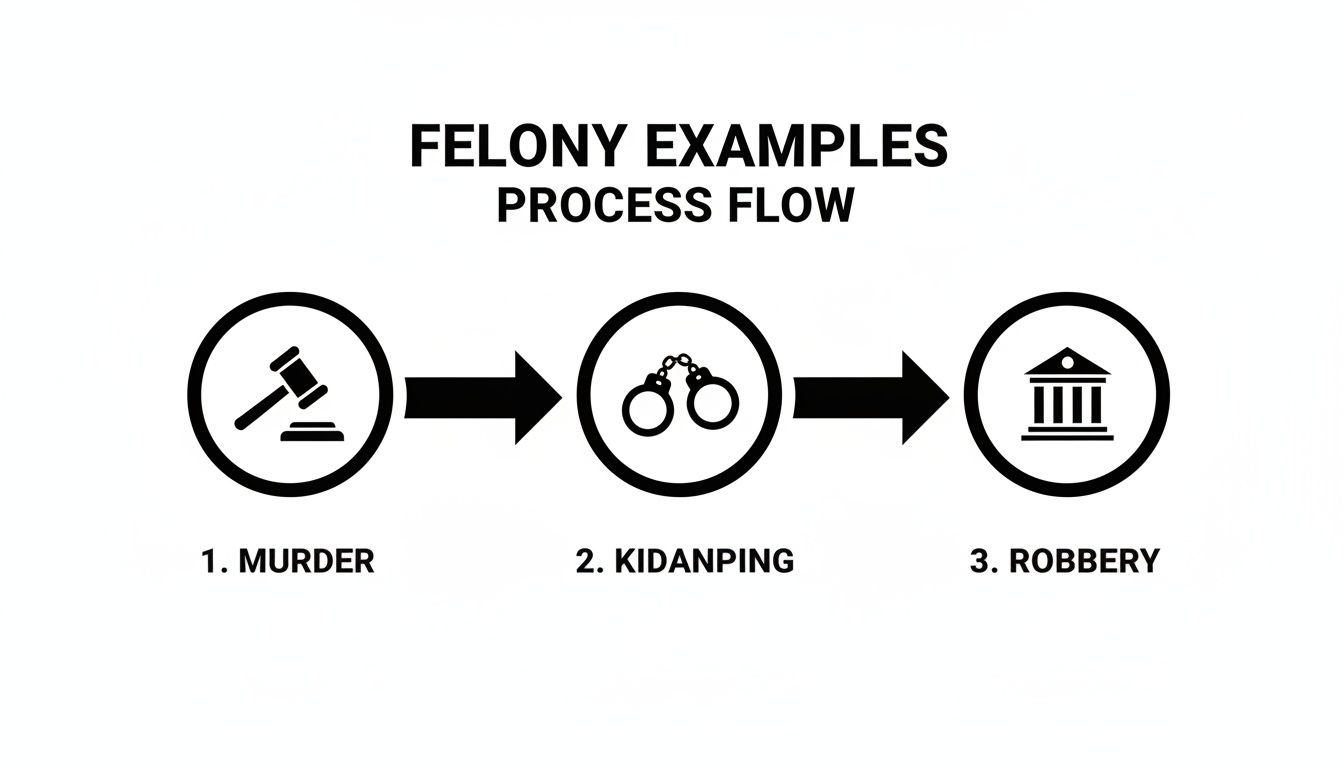
The flow from murder to kidnapping to robbery underscores just how serious the offenses are that trigger this complex journey through the justice system.
From Grand Jury to Pre-Trial Motions
Before the state can take a felony case to trial, it has to go before a grand jury. This is a group of citizens who hear a one-sided presentation from the prosecutor to decide if there’s enough probable cause to issue a formal indictment. If they agree, your case officially moves forward. Your attorney doesn't get to present your side here, but they are already planning how to challenge the state's case.
Once the indictment is issued, the pre-trial phase begins. This is where your defense team goes on the offensive. Your attorney will file pre-trial motions designed to attack the evidence against you. These motions can seek to:
- Suppress evidence that was obtained through an illegal search or seizure.
- Exclude statements you made if you weren't properly read your Miranda rights.
- Challenge the admissibility of witness testimony or unreliable forensic evidence.
A successful pre-trial motion can cripple the prosecution's case. Getting key evidence thrown out before a jury ever sees it can sometimes lead to a dismissal of the charges or a much more favorable plea offer.
Plea Bargaining Versus a Jury Trial
The vast majority of criminal cases, even the most serious ones, are resolved through plea bargaining. Your attorney will negotiate with the prosecutor to try and reach a resolution without the risk of a trial. This could mean pleading guilty to a lesser charge or agreeing to a specific sentence, potentially avoiding the gamble of a life sentence.
However, if a fair agreement can't be reached, you have a constitutional right to a jury trial. Your attorney will stand and fight for you in court—cross-examining the state's witnesses, presenting evidence in your favor, and arguing your case to a jury of your peers. Every single stage, from the moment of arrest to a potential trial, is a battleground where a skilled attorney is the most important ally you can have.
Building Your Strategic Defense Against the Charges
Remember this: an arrest is not a conviction. When you're facing a first-degree felony in Texas, it can feel like the world is collapsing. But the fight isn't over—it’s just getting started. This is the moment to move from understanding the charge to actively dismantling the prosecution's case against you. A powerful, strategic defense is your most important weapon.
The state carries the entire burden of proving its case beyond a reasonable doubt. A skilled defense attorney’s job is to pick that case apart, piece by piece. This starts with a meticulous investigation into every single detail, from the first police interaction all the way through the collection of evidence.
Scrutinizing the State's Evidence
The foundation of any solid defense is a relentless examination of the evidence. The U.S. Constitution gives you powerful protections against government overreach, and if the police violated your rights at any point, it could completely change the outcome of your case.
An experienced defense lawyer will immediately start asking the tough questions:
- Was the search legal? Did officers have a valid warrant to search your home, your car, or your person? If not, was there a legally recognized exception that applied? Any evidence found during an unconstitutional search can often be thrown out of court.
- Were you properly Mirandized? If you were in custody and being questioned by police without being read your Miranda rights, any statements you made could be suppressed and kept from the jury.
- Is the physical evidence reliable? Forensic evidence isn't foolproof. A sharp attorney knows how to challenge the chain of custody, the lab's testing procedures, and the credibility of the state’s expert witnesses.
Common Defense Strategies in Felony Cases
Beyond just challenging the evidence, several powerful defense strategies can create doubt in a jury’s mind or convince a prosecutor their case is too weak to win. Every situation is unique, but common approaches focus on asserting your innocence through facts and established legal principles.
Some of these strategies include:
- Establishing an Alibi: This is a complete defense. Proving you were somewhere else when the crime was committed means you couldn't have done it. This requires credible evidence like eyewitness testimony, location-stamped receipts, or digital data from your phone.
- Asserting Self-Defense: In cases involving violence, you may have been acting to protect yourself or others from harm. Texas law is very specific about the right to use force—including deadly force—under certain circumstances.
- Challenging Witness Credibility: Eyewitness testimony can be notoriously unreliable. Your attorney will investigate witnesses for potential biases, questionable motives, or a history of dishonesty to undermine their credibility on the stand.
When building a defense, every detail matters. This even includes the integrity of translated documents or personal records; understanding the critical importance of accuracy in legal document translation can prevent critical misinterpretations from derailing your case.
The Power of Negotiation and Lesser-Included Offenses
Not every felony case goes to a jury trial. In fact, most are resolved through skilled negotiation. A crucial concept here is the "lesser-included offense"—a crime that has some, but not all, of the elements of the more serious charge you're facing.
A key goal for any defense attorney is to expose weaknesses in the prosecution's case. By showing the prosecutor they might not win at trial, we can create leverage to negotiate for a reduction in charges from a first-degree felony to something far less severe.
For instance, your attorney might argue that while an assault occurred, the state can't prove the specific "aggravating" factors required for a first-degree felony conviction. This could open the door to a plea agreement for a second or third-degree felony instead. A reduction like that could be the difference between a life sentence and a manageable one, giving you a chance to one day rebuild your life. This strategic approach is absolutely vital when the stakes are this high.
Life After a Conviction: Navigating the Path Forward
Serving time for a first degree felony in Texas is just the beginning. The real sentence often starts the day you are released. A conviction leaves a permanent mark on your record, creating a ripple effect that touches every corner of your life for years, long after you’ve paid your debt to society. It’s a harsh reality, but knowing what’s ahead is the first step toward reclaiming your future.
A felony conviction carries what are known as "collateral consequences." Think of them as civil penalties that stick to you, making it feel like the punishment never truly ends.

These consequences are designed to be punitive, and they create massive hurdles to rebuilding a normal life.
The Lasting Impact of a Felony Record
The aftermath of a first-degree felony is severe and far-reaching. It’s not just about having a criminal record; it’s about the doors that record slams shut.
You can expect to run into obstacles like:
- Loss of Civil Rights: In Texas, a felony conviction means you lose the right to vote while incarcerated and on parole. Even after that, you permanently lose the right to own a firearm.
- Employment Barriers: Most employers run background checks. A felony conviction can automatically disqualify you from entire career fields, especially jobs that require a professional license.
- Housing Difficulties: Finding a safe place to live becomes incredibly difficult. Many landlords have policies against renting to individuals with felony records.
- Strict Supervision: Getting out of prison doesn’t mean you’re free. You’ll likely face years of strict parole or probation, governed by rigid rules. One misstep could send you right back behind bars.
The state’s own crime data shows how aggressively these cases are prosecuted. Even as crime rates fluctuate, the prison population remains high, a clear sign of how seriously the system treats these offenses. For a closer look, you can explore the latest Texas crime trends and statistics.
Is It Possible to Get a Clean Slate?
While a conviction is difficult, it's critical to remember that not every charge ends that way. An acquittal or a dismissal isn't just a win in court—it's your ticket to a fresh start. If your case ends without a conviction, Texas law gives you powerful tools for post-conviction relief to clear your name.
The single best outcome in any criminal case is one that protects your record. An acquittal or dismissal isn't just a legal victory; it's the key that unlocks the door to a future free from the shadow of a criminal accusation.
The two main ways to clear your record are expunction and record sealing (also known as an order of nondisclosure).
An expunction literally destroys the records of your arrest. It’s as if it never happened. You are generally eligible for an expunction if your case was dismissed, you were found not guilty at trial, or you successfully completed a pre-trial diversion program.
A nondisclosure order, on the other hand, seals your record from public view. While law enforcement and certain government agencies can still see it, most private employers, landlords, and the general public cannot. We put together a comprehensive guide that breaks down how to get criminal records expunged in Texas.
Neither of these options is automatic. You have to file a petition with the court, a process where an experienced attorney is absolutely essential to get it done right.
Got Questions? We Have Answers.
When you're facing a charge as serious as a first-degree felony in Texas, your mind is probably racing with urgent questions. It's confusing and terrifying. Let's tackle some of the most common concerns right now to give you some immediate clarity.
Can a First-Degree Felony Be Knocked Down to a Misdemeanor?
Being direct: it's almost impossible for a first-degree felony to be reduced straight to a misdemeanor. The gap between those two levels of crime is just too wide for a judge or prosecutor to bridge in one step.
However, that doesn't mean you're out of options. A skilled criminal defense attorney can often negotiate with the prosecution to get the charge reduced to a lesser felony, like a second or third-degree offense. This is a huge win. A reduction like this can take a potential life sentence off the table and bring it down to a much more manageable term. This kind of breakthrough usually happens when your lawyer finds critical weaknesses in the state's case against you.
What’s the Absolute Minimum Prison Time for a First-Degree Felony?
Under Texas law, the minimum prison sentence for a first-degree felony is five years. But that number can climb quickly. If the case involves certain aggravating factors, or if you have prior convictions, that minimum sentence can be "enhanced," jumping up to 10 or even 15 years before a trial even begins.
Is Getting Out on Bond Even Possible for a Charge This Serious?
Yes, getting a bond is possible, but it is never a guarantee. When setting bail for a first-degree felony, a judge has to weigh several critical factors, including:
- Your ties to the community: Do you have a family, a job, and roots here?
- Your criminal history: Is this your first brush with the law, or is there a pattern?
- The risk you pose: Is there a concern you might flee or be a danger to the public?
Your attorney’s role here is absolutely crucial. At a bond hearing, they will make a powerful argument for your release on a reasonable bond. Getting you out of a jail cell isn't just about comfort—it allows you to be an active participant in building your own defense.
If you’ve been charged with a crime in Texas, call The Law Office of Bryan Fagan, PLLC for a free and confidential consultation. Our defense team is ready to protect your rights. Learn more at https://texascriminallawyer.net.