Being arrested for a DWI in Texas can be terrifying—but you don’t have to face it alone. Your mind is probably racing with a thousand questions, but the one that likely keeps you up at night is this: "How long is this going to stay on my record?"
Let’s get straight to the point. In Texas, a DWI conviction is a permanent mark on your official criminal record. Forever. That word sounds final and terrifying, but it’s not the whole story. While the conviction itself doesn’t just fade away with time, there are legal pathways to manage its impact and give you back control over your future.
The Permanent Reality of a Texas DWI Record
From the moment you're arrested for Driving While Intoxicated (DWI) in Texas, a clock starts ticking, and a paper trail begins. This isn't just some administrative headache; it creates a public and lasting mark on your life. Understanding this from the get-go is the first step toward building a strong defense. The anxiety and uncertainty you're feeling are completely normal, but clarity is your best weapon right now.

When a court convicts you of DWI, that information becomes a permanent part of your criminal history. This isn't like a speeding ticket that you pay and forget about. It’s a serious red flag that can follow you for the rest of your life, popping up when you apply for jobs, try to rent an apartment, or seek a professional license.
What “Permanent” Really Means
A permanent record means that courts, law enforcement, and anyone with the authority to run a deep background check can see that conviction—indefinitely. This is why a DWI from 10 years ago can suddenly become a problem during a promising job interview today.
Texas law is clear: there is no automatic expiration date for a DWI conviction. However—and this is a big however—just because a record is permanent doesn't mean it has to be public forever. There are powerful legal tools that can change who sees this information and how it's used against you.
A DWI conviction is a serious matter with lasting consequences. But it is crucial to remember that a single mistake does not have to define the rest of your life. Your rights and your future are worth defending.
This is where options like an expunction or an order of nondisclosure come into play. Think of an expunction as a way to completely destroy the records of an arrest, while a nondisclosure order seals them from public view. Our comprehensive guide on how to clear your criminal record in Texas breaks these options down in more detail.
An experienced DWI attorney can dig into the specifics of your case to see if you qualify for these forms of relief, offering you a real chance at a cleaner slate.
To put it all into perspective, here’s a quick breakdown of how a DWI record can follow you over the years.
How a Texas DWI Record Affects You Over Time
This table breaks down how long a DWI impacts different aspects of your life, from official records to practical consequences.
| Record Type | How Long It Lasts | What This Means for You |
|---|---|---|
| Criminal Record | Permanently, unless expunged or sealed. | A conviction is visible to law enforcement, courts, and background checks indefinitely. This can affect jobs, housing, and professional licenses years down the line. |
| Driving Record (DPS) | Permanently for convictions; 10 years for license suspensions. | The Texas DPS keeps a record of the conviction forever. Any related license suspension stays on your driving record for a decade, impacting your insurance rates. |
| Insurance Records | 3-5 years (typically). | Expect your auto insurance premiums to be significantly higher for at least 3 years after a conviction. Some insurers may even drop your coverage. |
| Public Background Checks | Indefinitely, unless sealed. | Commercial background check companies can report a conviction forever. An order of nondisclosure is needed to stop them from sharing it. |
As you can see, the consequences aren't uniform. While some effects lessen over time, the core criminal record remains unless you take proactive legal steps to address it.
When you get hit with a DWI charge in Texas, it’s natural to see it as one big, overwhelming problem. But the reality is a little more complicated. The legal system actually creates two entirely separate records that will follow you, and each one comes with its own set of rules and headaches. Getting a handle on this difference is the first real step toward taking back control.
Think of it this way: your criminal record is like your permanent academic transcript, while your driving record is more like the school's temporary disciplinary file. One is a lifelong history of your legal standing that anyone can look up, while the other is laser-focused on your behavior behind the wheel. They're managed by different state agencies and will affect your life in very different ways.
The Criminal Record: The Lifelong Ledger
Your criminal record is the official, public account of your run-ins with the law. It’s created by the courts and police departments and spells out every detail of an arrest, the charges filed, and how the case ended—whether it was a conviction, a dismissal, or an acquittal. This is the record that employers, landlords, and professional licensing boards care about most when they run a background check.
For a DWI conviction, that entry on your criminal record is permanent. It doesn't just fall off after a few years. This is why a DWI from a decade ago can still slam the door on job opportunities, housing applications, and even getting into certain educational programs. It's a public document that lays out the legal judgment against you for all to see.
The Driving Record: A Focus on Safety
Your driving record, on the other hand, is managed by the Texas Department of Public Safety (DPS). Its main job is to keep a running tab on your history as a licensed driver. This record lists things like traffic tickets, license suspensions, and any points racked up against your license.
A DWI conviction will absolutely show up on your DPS record permanently, but its immediate impact here is all about your driving privileges and insurance costs. A DWI triggers an automatic license suspension, and that administrative penalty becomes a key part of your driving history. Insurance companies pull this record to figure out how much of a risk you are, which is why your premiums can go through the roof after a DWI.
The most critical distinction is this: your criminal record impacts your overall reputation and opportunities, while your driving record directly affects your ability to drive and how much you pay for insurance.
Dealing with the aftermath of a DWI means you have to tackle both of these records. For your driving record, the immediate fire you have to put out is the license suspension. Our firm has put together a detailed DMV DUI license suspension and reinstatement guide that walks you through the administrative side of a DWI charge.
When it comes to your criminal record, the long-term goal is to get it out of the public eye. This is where legal tools like an order of nondisclosure (record sealing) become incredibly valuable. Once you understand that you're fighting two separate battles, you and your attorney can build a much smarter strategy to protect your future from every angle.
The Lasting Consequences of a First-Time DWI
It’s easy to think a first-time DWI is just a minor hiccup—a mistake you pay a fine for and then move on. And while everyone deserves a second chance, the hard truth is that even a single DWI conviction casts a long, stubborn shadow over your life, creating obstacles you might never see coming. The immediate penalties from the court? That's just the tip of the iceberg.
Sure, the Texas Penal Code spells out the initial consequences pretty clearly: hefty fines, possible jail time, and a mandatory driver's license suspension. But the hidden costs that creep in later can be far more disruptive. These are the consequences that don't show up on a sentencing sheet but can hammer your financial stability, career, and daily life for years.

The Financial Fallout Beyond the Fines
One of the first and most painful gut punches comes from your auto insurance company. A DWI conviction instantly slaps a "high-risk driver" label on your back. It’s not uncommon to see your premiums double or even triple—practically overnight.
This isn’t a quick penalty that fades in a year or two. Those inflated rates can haunt you for 7 to 10 years, depending on your insurance provider. Think about that. Over a decade, that adds up to tens of thousands of dollars in extra costs, dwarfing the original court fine.
A DWI conviction stays on your Texas driving record for life. But for insurance purposes, it actively impacts your rates and visible driving history for 7 to 10 years. Even a decade later, you can still feel the financial sting of that one mistake every time you pay your insurance bill.
The statistics paint a sobering picture of just how common this is. In 2023, there were over 85,000 DWI arrests in Texas. A staggering 70% of those were for first-time offenses. Every single one of those individuals walked into the same long-term financial and professional minefield.
Professional and Personal Roadblocks
The ripple effects of a first-time DWI reach far beyond your wallet. That conviction on your permanent criminal record can throw up major roadblocks in almost every area of your life. For a deeper look at the initial charges, you can check out our guide on a 1st DWI offense in Texas.
Here’s a look at the kind of long-term problems a DWI can create:
- Professional Licensing: Careers that require a state license—like nursing, real estate, teaching, or commercial driving—are suddenly at risk. Licensing boards have strict character requirements, and a DWI can be enough to get a new license denied or an existing one suspended.
- Employment Opportunities: The vast majority of employers run background checks. A DWI conviction can be an automatic disqualifier for jobs involving driving, operating machinery, or handling sensitive information. Even for an office job, it can be the single factor that pushes your resume into the "no" pile.
- Housing Applications: Think you can just rent a new apartment? Landlords and property managers often run background checks on potential tenants. A criminal conviction, including a DWI, can be grounds for rejection, making it much harder to find a place to live.
- Educational Pursuits: Some colleges and universities look at criminal history during the admissions process. A DWI could impact your eligibility for specific programs, scholarships, or financial aid.
These consequences show why you have to be proactive when facing a DWI charge. It’s not just about staying out of jail; it’s about protecting your entire future. A smart legal strategy aimed at a dismissal or post-conviction relief, like an order of nondisclosure, can make all the difference in stopping one mistake from defining the next decade of your life.
How Repeat DWI Offenses Raise the Stakes
If a first-time DWI charge feels like a huge problem, a second or third one is a full-blown crisis. Texas law comes down hard on repeat DWI offenses, and the penalties don't just inch up—they skyrocket. We're not just talking about higher fines. We're talking about mandatory jail time, losing your license for years, and the very real possibility of being branded a felon for life.
You have to understand how this works. What starts as one serious mistake can quickly spiral into a legal nightmare that threatens your freedom, your job, and your future. When you're facing a repeat charge, an aggressive legal defense isn't a luxury; it's the only thing standing between you and consequences that could follow you forever.
From Misdemeanor to Felony: The Escalation Path
Texas uses a tiered system for DWI offenses, which is a formal way of saying the stakes get higher each time you're convicted. A first DWI is typically a Class B misdemeanor under Texas Penal Code § 49.04, but a second offense is a whole different ballgame.
A second DWI is automatically bumped up to a Class A misdemeanor. That’s a serious jump, and it comes with much tougher penalties:
- Mandatory Jail Time: A conviction requires a minimum of 30 days behind bars, with a maximum sentence of up to one year.
- Heavier Fines: The maximum fine doubles to $4,000.
- Longer License Suspension: You could lose your driver's license for up to two years.
This escalation isn't by accident. The state views a second offense as a pattern, and the system is designed to impose consequences that are impossible to ignore. It also pushes you dangerously close to a felony conviction with any future mistake.
The Third DWI: A Life-Changing Felony Conviction
This is where the ground completely shifts beneath your feet. In Texas, a third DWI conviction is a third-degree felony. It doesn't matter how much time has passed since your last conviction. This charge moves your case out of the county courthouse and into district court, where you face the severe, lifelong consequences of being a felon.
The penalties for a felony DWI are designed to be harsh:
- A prison sentence in the Texas Department of Criminal Justice for 2 to 10 years.
- A fine of up to $10,000.
- A driver's license suspension of up to two years.
Think about it like this: a DWI in Houston back in 2015 and another in Austin in 2020 could set you up for a felony charge in 2025. According to DPS data from 2023, Texas saw over 15,000 repeat DWI arrests, a number that's climbed 12% since 2019. This isn't just a Texas problem; you can read more about the global efforts to reduce drink driving to see the data driving these strict laws.
A felony conviction is permanent. It strips you of fundamental rights, including the right to vote (while incarcerated and on parole) and the right to own a firearm. It can also make it impossible to get many professional licenses. This is the "forever" impact that makes fighting a third DWI charge so absolutely critical.
The table below breaks down just how steeply these penalties climb.
Escalating Penalties for DWI Offenses in Texas
| Offense Level | Classification | Potential Jail Time | Maximum Fine | License Suspension |
|---|---|---|---|---|
| First Offense | Class B Misdemeanor | 72 hours to 180 days | $2,000 | 90 days to 1 year |
| Second Offense | Class A Misdemeanor | 30 days to 1 year | $4,000 | 180 days to 2 years |
| Third Offense | Third-Degree Felony | 2 to 10 years in prison | $10,000 | 180 days to 2 years |
It’s pretty clear from this breakdown: with each offense, the threat of lengthy prison time and financially crippling penalties grows exponentially. When you’re facing a second or third DWI, you aren’t just fighting a court case—you are fighting for your freedom and your future.
Legal Pathways to a Cleaner Record
Even though a DWI conviction in Texas feels permanent, it doesn't have to follow you around in public forever. The law provides a couple of powerful ways to clean up your record, offering a genuine chance to move forward. These aren't sneaky loopholes; they're legal tools designed for people who've earned a second chance.
Your path forward starts with understanding the difference between two key legal remedies: expunctions and orders of nondisclosure. They might sound similar, but they do completely different things and apply to very different situations. Getting this distinction right is the first and most important step.
Expunction: The Power to Erase an Arrest
Think of an expunction as hitting the delete button on your arrest record. When a judge grants an expunction, all government records of your arrest—from the police station to the district attorney's office—are physically destroyed. For all legal purposes, it’s like the arrest never happened.
But this isn't an option for everyone. An expunction is a powerful tool reserved for specific outcomes. You might be eligible if your DWI case ended in one of these ways:
- You were found not guilty at trial (acquitted).
- The prosecutor dismissed your case entirely.
- You successfully finished a pretrial diversion program, which led to a dismissal.
- You were arrested but the state failed to file formal charges before the statute of limitations ran out.
Because an expunction completely wipes the slate clean, it’s the most total form of relief you can get. Once it's granted, you can legally deny the arrest ever occurred on job applications, apartment leases, and pretty much anywhere else.
Orders of Nondisclosure: Sealing a Conviction from Public View
An order of nondisclosure works differently. Instead of destroying the record, it seals it from the public. Imagine putting your conviction record in a locked vault—it still exists, but the general public, including most employers and landlords, can no longer access it.
This is the main option for people who were actually convicted of a DWI. If you completed every part of your sentence, including probation and paying all your fines, you may be able to petition the court to seal your record.
An order of nondisclosure makes your DWI conviction invisible to the public. While law enforcement and a few government agencies can still see it if they have a reason, it won't show up on the background checks that impact your daily life.
Getting a nondisclosure depends on several things, like whether it was your first offense and if you followed all the rules of your sentence. For example, Texas law makes many first-time DWI offenders wait a certain amount of time—often two to five yearsafter their sentence is complete—before they can even apply. These waiting periods and application rules are tricky, which is why having a skilled attorney guide you is so important.
This flowchart shows how quickly the penalties stack up with each offense, highlighting why it's so critical to get legal help early and protect your eligibility for sealing your record down the road.
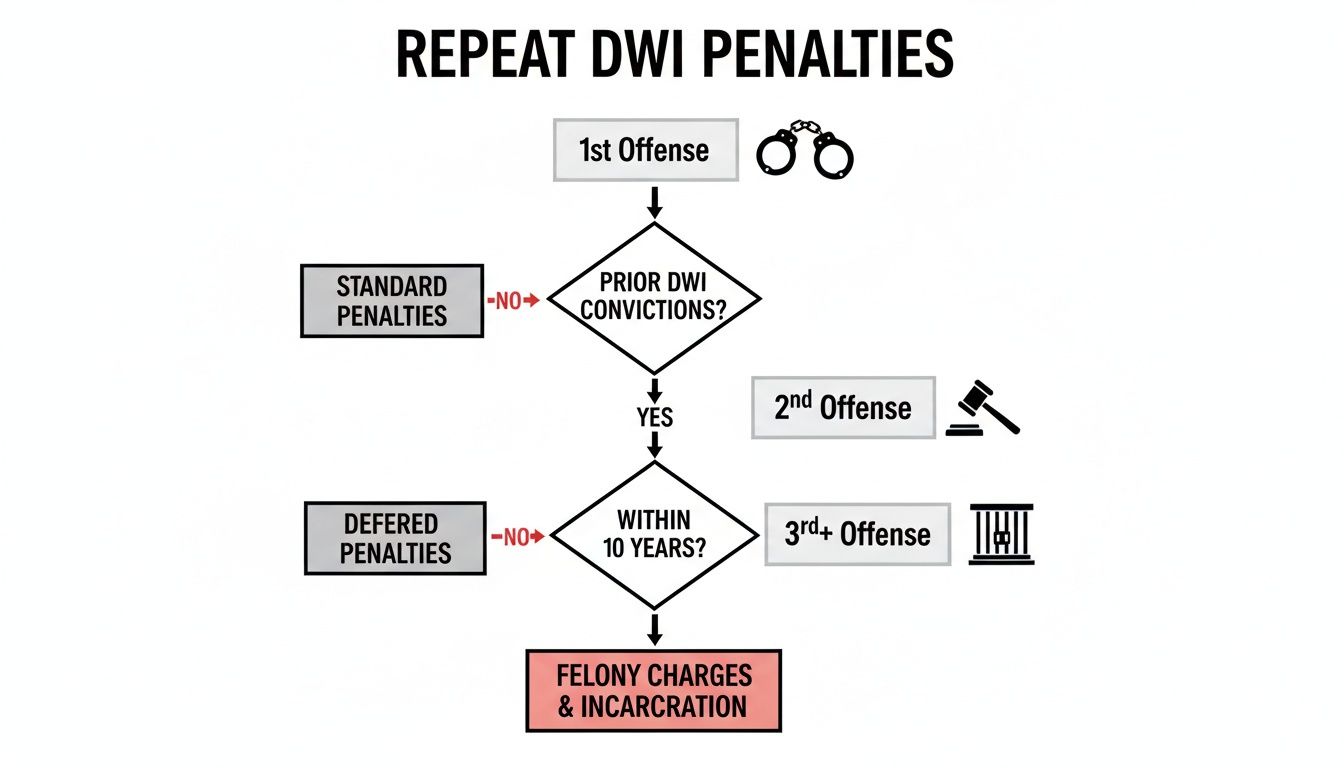
As you can see, the stakes rise fast, moving from a misdemeanor to a life-changing felony. A more serious conviction can slam the door on any chance for post-conviction relief.
Both expunctions and nondisclosures require filing a formal petition with the court and following a very precise legal process. One mistake on the paperwork or a missed deadline could get your petition denied, shutting down your opportunity for a fresh start. An experienced Texas DWI attorney can look at your case, figure out if you're eligible, and handle every step to give you the best possible shot at success.
How a DWI Defense Attorney Helps You Move Forward
Facing a DWI charge is frightening, but you absolutely do not have to go through this alone. The legal system is a maze, and the stakes for your future are incredibly high. Bringing a skilled DWI defense attorney from The Law Office of Bryan Fagan, PLLC into your corner is the single most important move you can make.
Our job is to be your shield and your guide, right from the very start. We don't just sit back and react to what the prosecutor does—we build a proactive, aggressive strategy designed to secure the best possible outcome for you. This all-in approach means we are with you at every critical turn.
Your Advocate From Arrest to Resolution
The moment you hire us, our team is on the move. We don't wait for court dates to appear on the calendar. We immediately dive into a thorough investigation of your case.
This means we're:
- Challenging the Initial Stop: Did the officer even have a legitimate reason to pull you over? If the stop was illegal, any evidence they gathered afterward could get thrown out completely.
- Scrutinizing Sobriety Tests: We pick apart the administration of field sobriety tests and breathalyzer results, looking for procedural mistakes or faulty equipment that could render the results invalid.
- Fighting for a Full Dismissal: Our primary goal is always to find the weak spots in the prosecution's case. A single hole can be enough to get the charges against you dismissed.
A huge part of a defense attorney's job is building persuasive arguments and drafting the formal documents that make or break a case. If you're curious about the details, you can learn more about how to write legal briefs that win arguments from this great resource. This kind of meticulous, behind-the-scenes work is what gives our clients an edge.
Guiding You Toward a Cleaner Future
While we fight hard in the courtroom, our focus is also on your long-term future. We know that the question keeping you up at night is, "how long does a DWI stay on your record?" That’s why our defense strategy always includes a plan for what comes after the verdict.
One mistake does not have to define the rest of your life. Our firm is dedicated to helping you move past this moment and reclaim your future with confidence and peace of mind.
If your case is dismissed or you're found not guilty, we immediately start the expunction process to have the arrest record legally destroyed. If a conviction is unavoidable, we guide you through the complex waiting periods and requirements for an order of nondisclosure to seal it from the public’s view. We handle all the petitions, court filings, and hearings, making sure every detail is managed perfectly.
Don't let a DWI charge control your destiny. Take the first step toward putting this behind you for good.
If you’ve been charged with a crime in Texas, call The Law Office of Bryan Fagan, PLLC for a free and confidential consultation. Our defense team is ready to protect your rights.
Frequently Asked Questions About Texas DWI Records
When you're dealing with the fallout of a DWI charge, the questions don't stop once the initial court case is over. In fact, that's often when the most practical concerns pop up. Here are some straightforward answers to the questions we hear most often at The Law Office of Bryan Fagan.
Can I Get a DWI Expunged If I Completed Probation?
This is a big one, and the short answer is almost always no. In Texas, successfully completing standard probation for a DWI conviction doesn't open the door to expunction. Think of an expunction as a legal eraser—it’s a powerful tool, but it's reserved for cases where an arrest never led to a final conviction.
So, who does qualify for an expunction? You might be eligible if:
- Your case was flat-out dismissed by the prosecutor.
- You went to trial and were found not guilty (acquitted).
- You finished a special pretrial diversion program that ended with a dismissal.
If you were convicted and served out your probation, that conviction is on your record. But don't lose hope. You might have another powerful path forward: an order of nondisclosure, which seals the record from the public's view.
Will a DWI Affect My Ability to Travel to Canada?
Yes, absolutely. A DWI on your record can bring your travel plans to a screeching halt at the Canadian border. Our northern neighbors view a DWI as a serious criminal offense, similar to their own impaired driving laws. This can make you "criminally inadmissible," meaning you could be denied entry right then and there.
The good news is you aren't banned for life, but you can't just show up and expect to get in. You'll need to take specific legal steps to prove you're not a risk. This could mean applying for a Temporary Resident Permit (TRP) for a single trip or, after enough time has passed, seeking what's known as Criminal Rehabilitation. Both are complex processes that require a lot of paperwork and careful timing, so it's smart to talk to an attorney long before you book any flights.
How Long Must I Wait to Apply for Nondisclosure?
The waiting period for sealing a DWI record with an order of nondisclosure isn't one-size-fits-all. The timeline depends entirely on the specifics of your sentence, as the law is designed to reward people who have paid their dues and stayed out of trouble.
For most first-time DWI offenses that are eligible, here’s how the waiting periods break down:
- Two-year wait: This applies if your sentence included a requirement to have an ignition interlock device (IID) on your car for at least six months.
- Five-year wait: This is the timeline if your sentence did not include an IID requirement.
Here's the critical part: that clock doesn't start ticking until after you’ve successfully completed every single part of your sentence. That means probation is finished, all fines are paid, and every class is done. The rules are strict, so your best bet is to consult with a DWI attorney to nail down your exact timeline and eligibility.
If you’ve been charged with a crime in Texas, call The Law Office of Bryan Fagan, PLLC for a free and confidential consultation. Our defense team is ready to protect your rights.