Being arrested in Texas can be terrifying, and the first question running through your mind is almost always, "How do I get out of jail?" The answer often comes down to the bond amount set by the court. If it's too high, you could be stuck behind bars while your case moves forward. To get your bond reduced, your attorney has to file a formal Motion to Reduce Bond and convince a judge that the initial amount is excessive. This isn't just about asking nicely; it's about presenting a strong, evidence-based case that shows your community ties, your financial reality, and why you are not a flight risk.
Understanding the Texas Bail and Bond System

The moments after an arrest are a blur of confusion and anxiety. The legal system can feel like an impossible maze, but understanding the first few steps can bring back a sense of control. It all starts with bail and bond—two words people often use interchangeably, but they have distinct meanings in the Texas criminal justice system.
Bail is the total dollar amount the court sets to ensure you show up for your future court dates. A bond is how you pay it, whether with your own money or through a third-party bail bondsman. The purpose of bail isn't to punish you before you've had your day in court; it's purely to guarantee you will return to face your charges.
Your Initial Court Appearance and Bail Setting
Shortly after your arrest, you’ll be brought before a magistrate for an initial hearing, sometimes called an arraignment. This is where your bail amount is officially set. It's a critical moment, as this initial figure becomes the baseline we work from when we fight for a reduction.
The judge must follow the rules laid out in the Texas Code of Criminal Procedure, Article 17.15. The law is clear: the bail amount should be high enough to ensure you return to court, but it cannot be used as an "instrument of oppression." In plain English, it shouldn't be set so high that it's practically impossible for you to pay.
A judge will weigh several key factors when setting your bond:
- The nature of the alleged offense: Serious charges, especially violent felonies like assault, almost always mean a higher bond.
- Your ability to make bail: The court is legally required to consider your financial situation. What’s reasonable for one person might be oppressive for another.
- The safety of the community and the victim: If the judge believes releasing you would put others in danger, the bond will be higher.
- Your ties to the community: This is a huge factor. It includes your job, your family, and how long you've lived in the area. Strong ties suggest you're not going to run.
- Your criminal history: A clean record is a major advantage. On the other hand, a history of failing to appear for court will lead to a much higher bond.
Your bond is not a pre-judgment of guilt. It is a financial guarantee meant to ensure you participate in the legal process while remaining free. Fighting for a fair bond is your constitutional right.
Common Types of Bonds in Texas
You'll likely encounter a few different kinds of bonds in Texas. Knowing your options is the first step toward getting out of jail and starting to build your defense. Finding the right lawyer is crucial; you can even see how specialized attorneys market themselves through resources that discuss criminal defense web design.
The most common option is a surety bond. This is where you pay a fee (usually around 10% of the total bail) to a bail bondsman, and they post the full amount on your behalf. Another is a cash bond, which means you or your family pays the entire bail amount directly to the court. For a deeper dive, you can learn more about how bail and bond in Texas works in our comprehensive guide.
In some situations, a judge might grant a Personal Recognizance (PR) bond. This is the best-case scenario. It allows you to be released without paying anything, based solely on your promise to return to court. PR bonds are most common for minor, non-violent offenses when you have deep community ties and little to no criminal history.
Building a Strong Case for a Lower Bond
After a judge sets that initial bond, it can feel like a final, unchangeable number. But it's often just a starting point. The next critical phase is to actively work to get that amount reduced, and this requires a smart, strategic approach. It’s not about begging for mercy; it’s about presenting clear, hard facts that prove you are not a flight risk and deserve a more reasonable bond.
To convince a judge to lower your bond, we must build a compelling case file demonstrating your stability and deep roots in the community. Think of it as painting a picture of your life—one that shows you have every reason to stay and face your charges. This means methodically gathering documents and information that serve as concrete evidence of your reliability.
Gathering Your Key Documents
The foundation of a solid argument for a bond reduction is documentation. Words alone are rarely enough. You need to provide tangible proof that you are a responsible member of society with a life to get back to. Your attorney will use these documents to systematically dismantle any argument that you might flee if released.
Start by collecting these items right away:
- Proof of Employment: Recent pay stubs, an employment contract, or a formal letter from your boss on company letterhead can be incredibly powerful. This shows the judge you have a steady job you need to return to.
- Proof of Residence: Gather utility bills in your name, a copy of your lease agreement, or mortgage statements. This establishes that you have a stable home in the area and aren't just passing through.
- Family Responsibilities: If you have children or are a caregiver for a family member, this is crucial. Collect birth certificates for your kids or a letter from a doctor detailing your role as a caregiver. It shows that other people depend on you.
This kind of evidence directly addresses the court's primary concerns. A person with a job, a home, and a family to support is far less likely to abandon their life and become a fugitive.
The Power of Community Ties and Character
Beyond official paperwork, we need to show the human side of your story. This is where your connections to the community and your personal character come into play. A judge is much more likely to grant a lower bond to someone they see as a whole person, not just another case number on their docket.
A strong network of support is one of the most persuasive tools in a bond reduction hearing. It demonstrates that you have a community ready to hold you accountable and ensure you make every court date.
This is where character letters become essential. A well-written letter from a respected member of the community can significantly influence a judge’s decision. These are not just casual notes; they are formal statements about your reputation for being trustworthy and responsible.
Consider asking people like these to write a letter for you:
- Your pastor, priest, or another religious leader
- Your boss or a long-time supervisor
- A coach or a mentor
- A respected community volunteer you've worked alongside
These letters should speak to your good character, your role in the community, and why the writer believes you will not flee. For guidance on what makes a letter effective, you can learn more about writing a character letter for court on our blog.
A Real-World Houston Example
Let's imagine you were arrested for a first-time DWI charge in Houston, and the Harris County judge set your bond at $10,000. For many families, coming up with a $1,000 non-refundable fee for a bondsman is a significant financial strain.
To fight for a reduction, we would immediately start building your case file. We'd gather your last three months of pay stubs from your job at a local shipping company, a copy of your apartment lease in The Heights, and a letter from your manager stating you are a valued employee. We would also include photos of your two young children and a letter from your mother explaining that you help care for her on weekends.
Finally, we'd secure a powerful character letter from the pastor at your church. Armed with this evidence, your attorney can walk into court and argue that the $10,000 bond is excessive. We can show that you have a job to lose, a family that depends on you, and a community that supports you—making you an excellent candidate for a lower bond or even a Personal Recognizance (PR) bond.
Filing the Motion for Your Bond Hearing
Once we've gathered all the evidence showing your solid ties to the community, it’s time to take formal legal action. This is done by filing a document called a Motion to Reduce Bond. This isn’t just a simple form; it's a persuasive legal argument filed directly with the court explaining exactly why the initial bond amount is oppressive and must be lowered.
Your attorney will draft this motion, laying out every reason that justifies a reduction. This document officially kicks off the process of getting you in front of a judge for a bond hearing and sets the stage for the arguments we’ll make in person.
What Goes into the Motion
A well-crafted Motion to Reduce Bond is much more than paperwork. It strategically presents your case by referencing specific Texas laws that support your request for a lower bond. One of the most powerful legal principles we rely on comes directly from the Texas Code of Criminal Procedure, Article 17.15.
This law makes it clear that a bond cannot be used as an "instrument of oppression." That’s a critical concept. It means a judge cannot set bail so high that it becomes a form of punishment before you’ve even had your day in court. The amount has to be fair and based on your specific situation.
The motion will detail several key arguments, including:
- Your financial inability to afford the current bond.
- Your deep ties to the community (job, family, stable residence).
- Your lack of any serious criminal history, if applicable.
- Evidence showing you are not a flight risk or a danger to the public.
By framing our request within the law, we shift the conversation from a plea for mercy to a demand for your constitutional rights.
This flow diagram shows the three pillars we use to build your case, which are then formally presented in the motion.
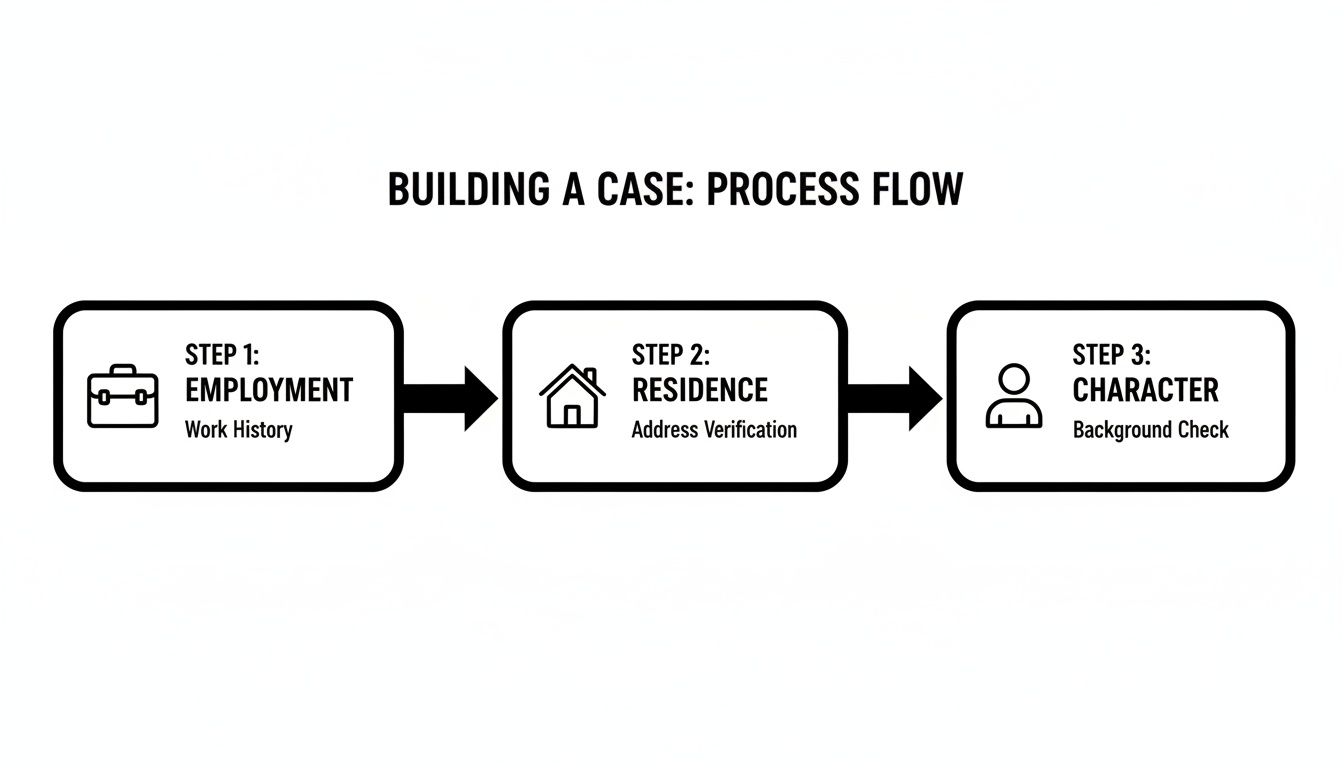
Each piece—employment, residence, and character—works together to paint a picture of a stable individual who deserves a reasonable bond.
The Bond Reduction Hearing Experience
Filing the motion leads to the main event: the bond reduction hearing. This is a formal court proceeding where your attorney argues your case before a judge, and the prosecutor gets a chance to push back. It’s completely natural to feel anxious about appearing in court, but knowing what to expect can make the process feel much less overwhelming.
The hearing itself is usually focused. The judge will have already reviewed the motion we filed. In the courtroom, you’ll see the judge, the prosecutor, your attorney, and yourself. Sometimes, family members or friends who wrote letters of support might also be there to show the court you have a strong network.
Your attorney will present the evidence we’ve gathered—pay stubs, lease agreements, character letters—and make oral arguments. The prosecutor will likely argue against the reduction, perhaps by highlighting the nature of the charge or something from your past. For a deeper dive into what this phase of your case looks like, check out our guide on what happens at a pretrial hearing.
The goal of the hearing is simple: to humanize you. We want the judge to see you as a person with a life, a family, and responsibilities—not just as a defendant defined by a police report.
In some situations, you might be asked to take the stand. If that happens, your attorney will have prepared you thoroughly. The questions are usually straightforward, focusing on your job, family, where you live, and what you can realistically afford for bail. Your honest and direct answers can make a huge difference.
Local data can also be a game-changer in these hearings. For instance, landmark bail reforms in Harris County since 2019 have proven that higher release rates do not threaten public safety. After the reforms, pretrial release rates jumped from 60% to 87%, while new criminal activity rates actually went down slightly. This powerful, local evidence shows that giving people like you a fair bond is not only just but also safe for the community.
Ultimately, the bond hearing is your best chance to fight for your freedom before trial. With a strong case and skilled legal arguments, we can make a compelling argument for a bond you can actually post.
Proven Arguments That Work in Texas Courts
To get a bond reduced, it takes more than just showing up and saying you're a good person with ties to the community. You have to give the judge a compelling, legally sound reason to lower it. This means building a powerful narrative grounded in the Texas Constitution and the Code of Criminal Procedure.
An experienced Texas criminal defense lawyer knows which arguments land in a courtroom. We don't just ask for a lower number; we construct a logical case that makes it tough for a judge to refuse. The goal is to prove the original bond is excessive, that your situation has changed, or that a smarter release plan can protect the public just as well as an impossibly high bond.
Arguing the Bond is Excessive and Unconstitutional
The most direct and powerful argument is that the current bond is simply excessive. This isn't just a legal tactic—it's your constitutional right. The Texas Constitution is crystal clear: "excessive bail shall not be required." When we walk into court, we argue that the bond isn't being used to ensure a future court appearance but as a tool of oppression. It is essentially pretrial punishment.
We prove this by showing the huge gap between what you can actually afford and the amount set by the magistrate. By presenting tax returns, pay stubs, and bank statements, we reframe the bond not as a guarantee you'll return to court, but as an unconstitutional barrier to your freedom.
A bond is not meant to keep you in jail simply because you cannot afford it. When a bond is set so high that it amounts to a detention order, it goes against the core principles of Texas law.
Highlighting a Change in Circumstances
Sometimes, life happens between the time a bond is set and the time we get in front of a judge for a hearing. When that occurs, we can argue for a reduction based on a material and substantial change in circumstances.
For example, losing a job after an arrest completely changes your ability to make a high bond. That’s a classic example. Other changes that can move the needle include:
- A serious family medical emergency that requires your presence at home.
- Getting accepted into a credible substance abuse or mental health treatment program.
- New evidence surfacing that significantly weakens the prosecutor's case against you.
Bringing these new facts to the judge’s attention gives them a solid reason to hit the reset button and re-evaluate the original bond amount, which may no longer fit the reality of your situation.
Before we dive into proposing a comprehensive release plan, let’s quickly summarize the factors a judge is weighing. This table breaks down what they're looking for and how you can prepare to address each point.
Key Factors Judges Consider for Bond Reduction
| Factor | What It Means for Your Case | How to Prove It |
|---|---|---|
| Ability to Make Bond | The court must consider your financial resources. Is the bond amount realistic for you? | Pay stubs, tax returns, bank statements, evidence of debts. |
| Nature of the Offense | How serious is the alleged crime? Was it violent? | Argue mitigating factors, highlight lack of violence or weapons. |
| Strength of Evidence | Is the state's case against you strong or weak? | Point out inconsistencies, lack of evidence, or exculpatory facts. |
| Community Ties | Do you have roots in the community that make you less of a flight risk? | Proof of local employment, family residence, letters of support. |
| Criminal History | Have you been arrested before? Do you have a history of failing to appear in court? | Emphasize a clean record or a history of compliance with court orders. |
| Public Safety | Is there a risk to the victim or the community if you are released? | Propose restrictive conditions like GPS monitoring or no-contact orders. |
Having solid proof for each of these categories is what separates a weak request from a persuasive, professional argument that a judge will take seriously.
Proposing a Comprehensive Release Plan
Instead of just asking for a lower dollar amount, a much smarter strategy is to walk into court with a complete release plan. This shows the judge you’re taking the situation seriously and are willing to accept supervision to mitigate any concerns about public safety or flight risk. When preparing for your bond hearing, having accurate documentation is key; using legal transcription services can help ensure you have precise records of any past hearings or depositions.
A solid plan might include agreeing to conditions such as:
- GPS ankle monitoring to track your exact location.
- Mandatory check-ins with a pretrial services officer.
- A strict, court-ordered curfew.
- An ignition interlock device installed in your car for DWI cases.
- Submitting to random drug or alcohol testing.
By proactively offering these solutions, you're giving the judge a practical way to say "yes." You’re showing that a lower bond, combined with these non-financial conditions, accomplishes the court's goals without keeping you locked up just because you cannot afford to get out.
This isn't just theory—it works. Data from bail reform initiatives across the country prove it. For example, New York’s 2020 bail reform eliminated cash bail for most misdemeanors and non-violent felonies. The results? 24,000 fewer people had bail set over two years, saving families an estimated $104 million. More importantly, re-arrest rates actually dropped from 50% to 44%, proving that less restrictive conditions do not make communities less safe. This hard data gives us a powerful, fact-based argument that alternatives to high cash bonds are both effective and responsible.
What Happens After Your Bond Hearing

The hearing is over, and the judge has made a decision. The moments that follow can bring a wave of relief or a sinking feeling of disappointment, but what's crucial is knowing what to do next. The judge's decision directly impacts the next phase of your case and your ability to fight the charges from outside a jail cell.
No matter the outcome, this isn't the end of the road. It’s simply the next step in a long legal journey. Understanding your options in each scenario keeps you proactive and focused on the main goal: your freedom.
If Your Bond Is Reduced or Granted
This is the outcome we fight for. If the judge agrees to lower your bond to an affordable amount, the next step is posting it to get you released. You can either pay a cash bond directly to the court or, more commonly, hire a bail bondsman who will charge a non-refundable fee based on the new, lower amount.
An even better result is a Personal Recognizance (PR) bond. This means the judge is releasing you on your written promise to show up for all future court dates—no money down. A PR bond is a powerful signal that the evidence we presented about your community ties and low flight risk was compelling.
If the Judge Makes a Partial Reduction
Sometimes, judges look for a middle ground. They might not grant the full reduction we asked for but will still lower the bond significantly. While it might not feel like a complete win, any reduction can make a world of difference. It could bring the bondsman's fee from an impossible number down to something your family can manage.
The moment the judge rules, your attorney will help you assess if the new amount is workable. If it is, we move forward with getting the bond posted. If it's still too high, we start planning our next strategic move.
When the Motion to Reduce Bond Is Denied
Hearing a judge deny your motion is tough, but it is not the final word. You are not out of options. An experienced defense attorney knows this is often when the real fight begins, and we can turn to more advanced legal tools.
One of the most powerful is filing a writ of habeas corpus. This isn't just another motion; it's a separate legal action that challenges the constitutionality of your confinement. We argue that the excessive bond violates your rights under Texas law, forcing the court to justify why you're being held on a bond you clearly cannot afford.
A denied motion isn't a dead end. It's a signal to escalate our legal strategy and continue fighting for your freedom through every available avenue.
It's also important to know that bond can be revisited if there's a material change in your circumstances. For example, losing a job while incarcerated or a new family health emergency could be grounds to file another motion down the line.
Finally, we use these hearings to educate the court. Bail reform data from Harris County and across the country clearly shows that lower bonds do not compromise public safety. In fact, re-arrest rates often stay the same or even drop. We use these facts to argue that a fair bond is not just compassionate—it's a responsible, evidence-based decision. You can learn more about these bail reform findings and how they support bond reductions.
Getting out of jail is absolutely critical. It lets you help with your own defense, keep your job, support your family, and prove to the court that you're a responsible member of the community.
Common Questions About Reducing Bond in Texas
Working through the bond reduction process always brings up a lot of questions. You're juggling legal deadlines, courtroom rules, and your own personal situation all at once. Below, we’ve put together some straightforward answers to the questions our clients ask us most often when trying to lower their bond in Texas.
How Many Times Can I Ask for a Bond Reduction?
In Texas, you can file a motion to reduce your bond more than once, but there’s a condition. Your best shot at success comes when you can show a "material and substantial change" in your circumstances since the last hearing.
For example, if you lost your job after the first bond hearing and now have no way to pay the original amount, that’s a significant change that a judge will take seriously. Simply filing the same motion over and over without any new information isn't going to get you very far. You need to give the judge a fresh, compelling reason to reconsider their initial ruling.
Can My Family Testify at My Bond Hearing?
Yes, and they absolutely should if possible. Having family, friends, an employer, or even a pastor testify in person can be incredibly powerful. Live testimony often carries more weight than a written letter because the judge can see their sincerity and hear the conviction in their voice firsthand.
They can speak to things like:
- Your character and whether you’re a trustworthy person.
- Your deep roots in the community and strong family connections.
- Their willingness to help make sure you show up for every single court date.
When your loved ones are in the courtroom, it helps paint a complete picture of who you are—a person, not just a defendant. That personal touch can be extremely persuasive.
What if the Judge Denies My Request?
It's definitely discouraging to hear a judge deny your motion, but it's not the end of the road. You still have options, and a good Houston criminal lawyer will already have a Plan B in mind.
One of the most effective next steps is filing a writ of habeas corpus. This is a more complex legal move that argues the bond amount is unconstitutionally excessive under Texas law. In simple terms, it challenges the state to legally justify why you're being held on a bond that’s effectively impossible for you to pay.
A denied motion isn't a final defeat. It's a signal to escalate your legal strategy and keep fighting for your constitutional right to a reasonable bond.
How Long Does the Bond Reduction Process Take?
The timeline really depends on the county and how backed up the court's calendar is. Once your attorney files the Motion to Reduce Bond, it usually takes anywhere from a few days to a couple of weeks to get a hearing on the schedule.
Your lawyer will push to get that hearing set as quickly as possible. We know that every day you spend in jail is a day away from your family, your job, and your ability to help us build the strongest defense possible for your case.
If you’ve been charged with a crime in Texas, call The Law Office of Bryan Fagan, PLLC for a free and confidential consultation. Our defense team is ready to protect your rights.