Being arrested in Texas can be terrifying — but you don’t have to face it alone. At The Law Office of Bryan Fagan, PLLC, we guide everyday Texans through every step of the criminal process. You have rights, and you have options. Understanding whether you’re facing a misdemeanor vs felony Texas charge is the first step toward protecting your future.
What Happens When You Are Charged With a Crime in Texas
Getting arrested kicks off a legal journey that can feel confusing and overwhelming. From the jail cell to the courtroom, each stage matters. Whether you’re facing a Class C traffic ticket or a First-Degree Felony, knowing how the process works helps you make smart decisions.

Key Distinctions at a Glance
| Characteristic | Misdemeanor | Felony |
|---|---|---|
| Potential Incarceration | Up to 1 year in county jail | 180 days to life in state prison |
| Typical Fines | Up to $4,000 | Up to $10,000 or more |
| Court Jurisdiction | County or Municipal Court | District Court |
| Right to Bear Arms | Usually retained after sentence | Lost upon conviction (Texas Code §46.04) |
| Voting Rights | Retained | Lost until sentence complete |
Understanding the Initial Court Process
After your arrest, you’ll go through an arraignment where charges are read and you enter a plea. Missing a court date can trigger a warrant—see the potential consequences of a failure to appear in court. From arraignment to sentencing, every hearing matters.
Step-by-Step Guide: From Arrest to Sentencing
-
Arrest & Booking
• You’re taken into custody and processed. Your fingerprints and photo are taken.
• If it’s a DWI under Texas Penal Code §49.04, call a Texas DWI attorney right away. -
Arraignment & Bail Hearing
• Charges are formally read. You enter “not guilty” or “no contest.”
• Judge sets bail. A bail bond can get you home faster—ask about our bail bond resources. -
Discovery & Pre-Trial
• You review the state’s evidence. Your lawyer can file motions to suppress illegally obtained evidence.
• You may qualify for pretrial diversion on certain misdemeanors (deferred adjudication). -
Plea Bargaining
• Prosecutors often offer a deal to avoid trial. We negotiate to reduce charges or penalties in cases like theft (Penal Code §31.03) or simple assault (Penal Code §22.01). -
Trial
• Jury or bench trial decides guilt. Your Houston criminal lawyer will challenge evidence and witness testimony. -
Sentencing
• If convicted, the judge imposes fines, jail, or prison time. You may also face probation, community service, or treatment programs. -
Post-Conviction Relief
• After sentencing, explore expunction or nondisclosure to clear or seal your record. See our guide on how to clear your record in Texas.
Understanding Texas Misdemeanor Classes and Penalties
Texas sorts misdemeanors into Class C, Class B, and Class A. Each level brings tougher penalties and lasting effects on your record.

Class C Misdemeanors
• Maximum Fine: $500
• Examples: Speeding ticket, public intoxication, disorderly conduct.
• Court: Municipal or Justice Court.
Though no jail time, a conviction stays on your record. Even a traffic ticket can affect a background check.
Class B Misdemeanors
• Jail Time: Up to 180 days in county jail
• Fine: Up to $2,000
• Examples: First-offense DWI (BAC under .15), theft of $100–$750, possession of up to 2 ounces of marijuana.
• Court: County Court at Law
A DWI charge can cost your license and your livelihood. Talk to a Texas DWI attorney to discuss your defense.
Class A Misdemeanors
• Jail Time: Up to one year in county jail
• Fine: Up to $4,000
• Examples: Assault causing bodily injury, second DWI offense, theft of $750–$2,500.
• Court: County Court at Law
Class A convictions carry real jail time and high fines. If you’re facing assault charges, see our Texas assault defense page.
Navigating the Severity of Texas Felony Charges
Felony charges in Texas are split into five levels. Each one has serious penalties and long-term impact.
State Jail Felony
• Prison Time: 180 days to 2 years
• Fine: Up to $10,000
• Examples: Theft of $2,500–$30,000, possession of 1–4 grams of cocaine.
Third-Degree Felony
• Prison Time: 2 to 10 years
• Fine: Up to $10,000
• Examples: Third DWI (§49.09), stalking, choking assault.
Second-Degree Felony
• Prison Time: 2 to 20 years
• Fine: Up to $10,000
• Examples: Aggravated assault causing serious injury, burglary of a habitation.
Learn more in the full annual report and its findings on felony trends.
First-Degree Felony
• Prison Time: 5 to 99 years or life
• Fine: Up to $10,000
• Examples: Murder, aggravated robbery, aggravated sexual assault.
Capital Felony
• Punishment: Life without parole or death penalty
• Example: Capital murder, like killing a police officer.
For an in-depth overview, read what a felony is in Texas.
How the Court Process Differs for Misdemeanors and Felonies
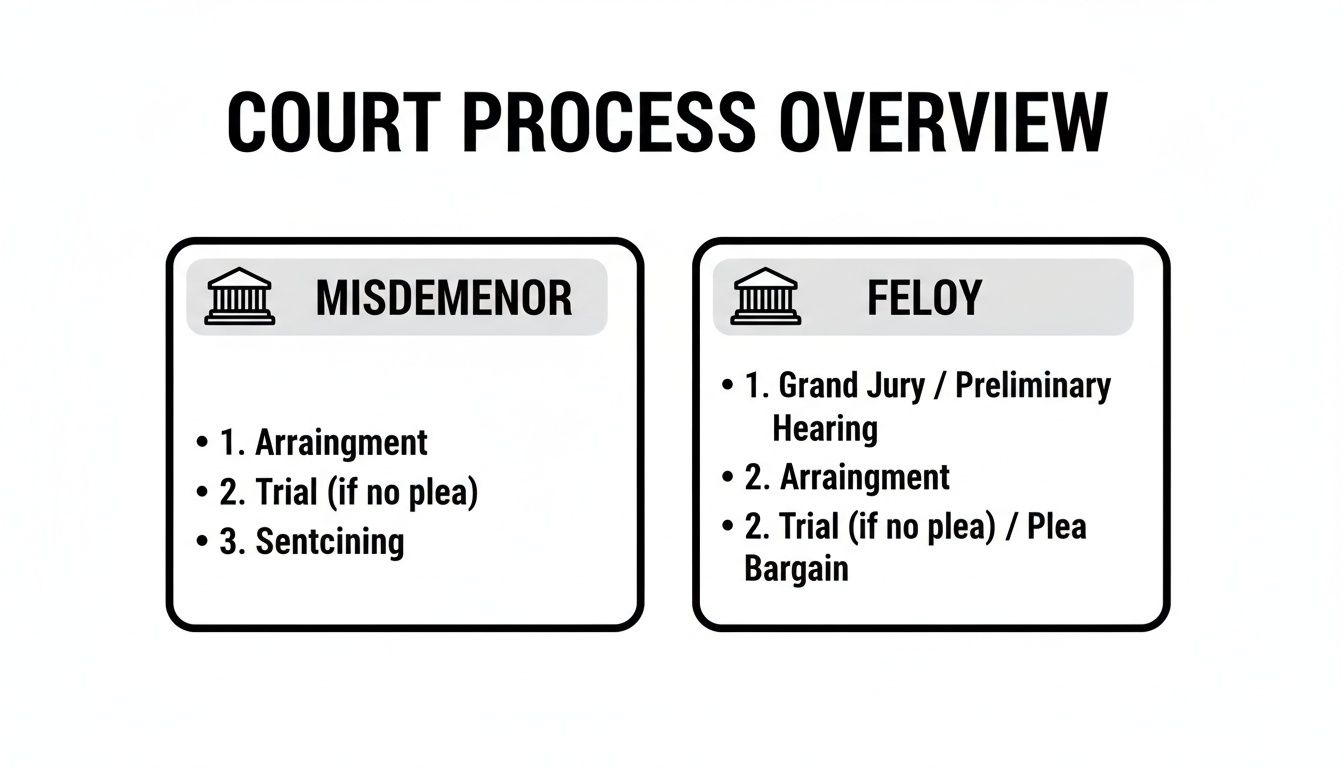
Misdemeanor cases stay local; felonies go to District Court. Only felonies require a grand jury indictment.
- Misdemeanors: Handled in Municipal or County Courts. Charges are filed by “information” or “complaint.”
- Felonies: Must go before a grand jury. A “true bill” indictment is needed to proceed.
The grand jury is your constitutional protection against weak felony charges. You and your lawyer are not present, but your rights matter at every stage.
The Long-Term Consequences of a Conviction
A conviction follows you—at work, in housing, and even immigration. A felony conviction can be a “crime of moral turpitude,” triggering deportation under Texas law.
| Impact Area | Misdemeanor | Felony |
|---|---|---|
| Right to Vote | Retained | Lost until sentence complete |
| Firearm Rights | Retained (except domestic violence) | Permanently lost, except limited long-gun exceptions |
| Professional Licenses | May be affected | Often revoked or denied |
| Jury Service | Retained after sentence | Permanently disqualified |
Fighting your charge isn’t just about avoiding jail—it’s about protecting your future.
Options for Clearing Your Criminal Record in Texas
Expunction: Wiping the Record Clean
Expunction erases your arrest and charge as if it never happened. You can answer “no” on job and housing applications. Eligibility often requires a dismissal, acquittal, or pardon.
Nondisclosure: Sealing the Record
An order of nondisclosure seals your record from public view. Law enforcement can still see it, but most employers and landlords cannot. It’s ideal after completing deferred adjudication.
For help, see how to clear your record in Texas.
Common Questions About Texas Criminal Charges
Can a Misdemeanor Charge Be Upgraded to a Felony?
Yes. Aggravating factors—prior convictions, serious injury, or use of a deadly weapon—can bump a misdemeanor to a felony under Texas Penal Code §§49.09, 22.02.
Will I Lose My Job if I'm Convicted of a Misdemeanor?
It depends. A Class C like a speeding ticket likely won’t. But a DWI or theft can cost your professional license or job. Employers and boards check backgrounds closely.
How Do Previous Convictions Affect a New Charge?
Prior convictions trigger “enhancements.” A new felony sentence can skyrocket if you have one or more prior felonies—up to 25 years to life for habitual offenders.
If you’ve been charged with a crime in Texas, call The Law Office of Bryan Fagan, PLLC for a free and confidential consultation. Our defense team is ready to protect your rights. https://texascriminallawyer.net