Skip to content
Being arrested in Texas can be terrifying — but you don’t have to face it alone. While a misdemeanor is less severe than a felony, a conviction carries serious consequences like potential jail time, steep fines, and a criminal record that can follow you for years. These charges cover a wide range of offenses, from a simple traffic ticket to more serious allegations like a first-time DWI or assault. Understanding what you are up against is the first step toward building a strong defense and protecting your future.
What to Do After a Texas Misdemeanor Charge
One minute, life is normal. The next, you're sitting in the back of a police car, trying to make sense of what just happened. Being arrested and charged with a crime in Texas is a terrifying and disorienting experience. The legal system feels intimidating and confusing, and it's completely natural to feel anxious about what comes next.
But you don't have to face this alone.
While it's tempting to think a misdemeanor is something you can just pay a fine for and forget, that's a huge mistake. Pleading guilty, even to what seems like a minor charge, creates a permanent criminal record that can haunt your future. Taking immediate, deliberate action is the key to protecting your rights.

Your Immediate Priorities After an Arrest
From the moment of your arrest, every decision you make is critical. Your first priorities should be protecting your legal standing and avoiding any missteps. The most important thing is to stay calm and remember that you have rights—specifically, the right to remain silent and the right to an attorney.
Here are the absolute first steps you should take:
- Exercise Your Right to Remain Silent: Politely tell law enforcement you will not answer any questions without your lawyer present. You only have to provide basic information like your name and address. Nothing more.
- Do Not Resist Arrest: Even if you feel the arrest is unfair, comply with the officer's instructions calmly. Resisting can tack on new, more serious charges and will only make your situation worse.
- Contact a Criminal Defense Attorney Immediately: This is, without a doubt, the most important move you can make. An experienced lawyer can advise you on what to say (and not say), start investigating your case right away, and fight for you at your bail hearing.
A common misconception is that a misdemeanor charge is "no big deal." However, even a Class C misdemeanor conviction can show up on background checks, putting job applications, housing opportunities, and professional licenses at risk.
Getting a handle on the legal road ahead is vital. A knowledgeable attorney will help you make sense of the charges, explain your options clearly, and replace that feeling of uncertainty with a solid, actionable plan. From navigating bond conditions to getting ready for your first court appearance, having an expert guide is invaluable. To get a better sense of the process, you can learn how to prepare for a court hearing in our detailed guide.
Understanding Texas Misdemeanor Classes and Penalties
When you're facing a misdemeanor charge in Texas, it's easy to feel overwhelmed. The Texas Penal Code breaks these offenses down into three distinct levels: Class A, Class B, and Class C. Think of it like a ladder—the higher you climb from C to A, the more serious the potential consequences become.
Figuring out which level your charge falls into is the first critical step, as it tells you exactly what you’re up against. Each class comes with its own specific range of penalties, from a simple fine to serious jail time, ensuring the punishment is designed to fit the crime.
Class C Misdemeanors: The Lowest Level
Class C misdemeanors are the least severe offenses you can be charged with in Texas. They're usually handled with a citation, much like a traffic ticket, and you won’t face any jail time. But that doesn't mean you should just brush them off.
Here’s the catch: simply paying the fine for a Class C ticket results in a final conviction on your permanent criminal record. Common examples of Class C misdemeanors include:
- Public intoxication
- Disorderly conduct
- Possession of drug paraphernalia
- Minor in possession of alcohol
- Most routine traffic violations
The absolute maximum penalty for a Class C misdemeanor is a fine of up to $500. While there's no threat of jail, that conviction can still appear on background checks and cause problems for future job or housing applications. A good Houston criminal lawyer can often negotiate a dismissal or a deferred disposition to keep your record completely clean.
Class B Misdemeanors: A Big Step Up
A Class B misdemeanor is a much more serious charge that carries the very real possibility of jail time. This is the category where you’ll find many common offenses, and a conviction here can seriously disrupt your life.
Under the Texas Penal Code, a Class B misdemeanor is punishable by:
- Up to 180 days in a county jail
- A fine of up to $2,000
- Or a combination of both jail time and a fine
Some frequent examples of Class B misdemeanors are a first-offense DWI, possession of two ounces or less of marijuana, criminal trespass, and theft of property valued between $100 and $750.
Class A Misdemeanors: The Most Serious Category
Class A misdemeanors are the highest level of misdemeanor offenses in Texas. They carry the most severe penalties you can face short of a felony charge and often involve actions that caused bodily injury or significant property loss.
The potential penalties for a Class A misdemeanor are double those of a Class B:
- Up to one full year in a county jail
- A fine of up to $4,000
- Or a combination of both jail time and a fine
Common examples include assault causing bodily injury, a second DWI offense, burglary of a vehicle, and theft of property valued between $750 and $2,500. It’s worth noting that while Texas has seen a major 57% drop in burglary rates over the last decade, misdemeanor property crimes like these remain a big focus for law enforcement.
Facing a Class A or B charge is a critical situation. The prospect of spending time in jail makes it essential to start building a strong defense from day one. A conviction can haunt you long after you've paid the fines or served the time.
To make these differences crystal clear, here’s a quick side-by-side comparison.
Texas Misdemeanor Classes at a Glance
This table breaks down the penalties and common examples for each misdemeanor class in Texas, helping you see the landscape at a glance.
| Misdemeanor Class | Maximum Jail Time | Maximum Fine | Common Examples |
|---|---|---|---|
| Class C | None | $500 | Public Intoxication, Traffic Tickets, Disorderly Conduct |
| Class B | 180 Days | $2,000 | First DWI, Possession of <2 oz. Marijuana, Criminal Trespass |
| Class A | 1 Year | $4,000 | Assault with Bodily Injury, Second DWI, Burglary of a Vehicle |
Getting a handle on these categories is the foundation of understanding your case. For a deeper look into the specifics of these classifications, you can learn more about the classes of misdemeanors in Texas in our detailed guide. Knowing what’s at stake is the first step you and your attorney will take to prepare the strongest defense possible.
Navigating the Criminal Court Process in Texas
When you’re charged with a misdemeanor, the path through the Texas criminal court system can feel like a maze. It’s intimidating and confusing, but understanding each step can demystify the process and empower you to face what’s ahead. The journey follows a structured sequence, and a skilled defense attorney is your best guide for every single turn.
This graphic breaks down the general progression of misdemeanor charges, from the least severe Class C offenses that often start with a simple ticket, all the way up to serious Class A charges that carry life-altering penalties.
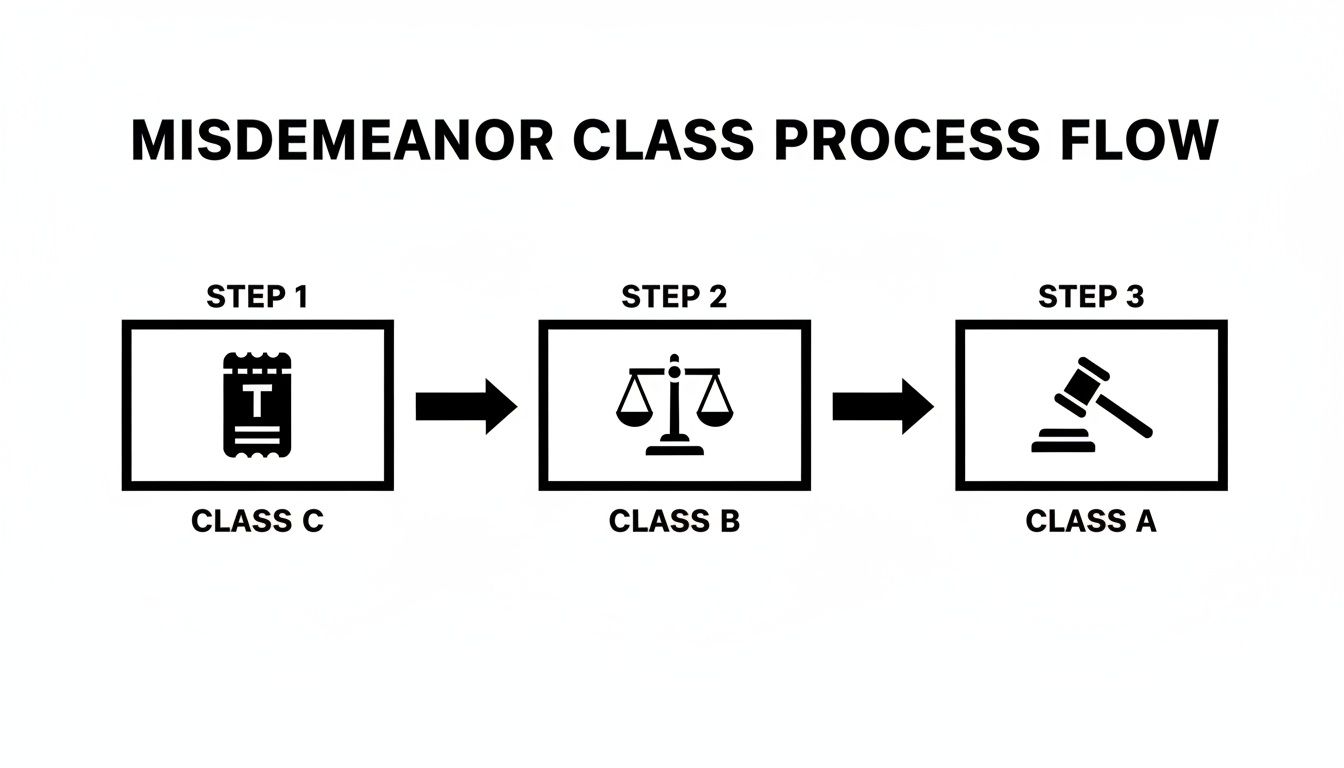
As you can see, the legal complexity and potential consequences ramp up fast. A Class C ticket is one thing, but anything more serious demands a real legal defense.
The Initial Steps: Arrest and Booking
It all starts with an arrest. Once you're taken into custody, you’ll be brought to a local jail for booking. This isn't a dramatic interrogation; it's an administrative procedure where an officer records your personal information, takes your fingerprints and a mugshot, and inventories your personal property.
After booking, you're typically held until your first court appearance, known as an arraignment. This is a critical window of time. Remember two things: you have the right to remain silent, and you have the right to an attorney. Use them.
Your First Court Appearance: The Arraignment
Your arraignment is your first time in front of a judge, and it usually happens quickly—within 24 to 48 hours of your arrest. Several key events happen during this brief but important hearing:
- Formal Charges: The judge officially reads the charges filed against you.
- Rights Explained: You are formally advised of your constitutional rights, including the right to a lawyer.
- Plea Entry: You'll be asked to enter a plea: "guilty," "not guilty," or "no contest." Pleading "not guilty" is almost always the right move at this point. It preserves all your legal options and gives your attorney time to review your case.
- Bail Set: The judge determines the conditions for your release from jail, which usually involves posting a bail bond.
The bail amount hinges on the severity of the offense, your criminal history, and whether the court sees you as a flight risk. A good lawyer can step in right away and argue for a reasonable bond on your behalf.
Your arraignment sets the stage for your entire case. Having an experienced criminal defense lawyer by your side from this very first hearing is crucial to ensuring your rights are protected and a strong defense strategy is established immediately.
Gathering the Facts: The Discovery Phase
After the arraignment, your case moves into the discovery phase. This is the formal process where your attorney obtains all the evidence the prosecutor has against you. Think of it as seeing the other side’s hand before you play your cards.
This evidence can include a wide range of materials:
- Police Reports: The officer's official narrative of what happened.
- Witness Statements: Accounts from anyone who claims they saw the incident.
- Video Footage: Dashcam or bodycam videos from the arresting officers.
- Lab Results: Reports from breath or blood tests in a DWI case, or drug analysis in a possession case.
Your attorney will comb through every piece of evidence, looking for weaknesses in the prosecution's case, violations of your rights (like an illegal search), and any opening for a strong defense. In cases involving non-English speakers or foreign documents, professional legal document translation services may be needed to ensure every detail is presented accurately in court.
Resolving the Case: Plea Bargaining
The vast majority of criminal cases in Texas—including most misdemeanors in texas—are resolved through plea bargaining, not a dramatic courtroom trial. This is a negotiation between your defense attorney and the prosecutor. The goal is to reach a favorable deal that avoids the risk, stress, and expense of a trial.
A sharp negotiator can often secure a plea agreement that results in:
- Dismissal of Charges: The absolute best outcome, where the case is dropped completely.
- Reduced Charges: Pleading to a less serious offense with lighter penalties.
- Lighter Sentence: Agreeing to a specific, reduced punishment like probation instead of jail.
Your attorney will walk you through the pros and cons of any offer from the prosecutor. The final decision to accept or reject a plea bargain is always yours, but with an expert's guidance, you can make it an informed one.
Building a Defense for Common Misdemeanor Charges
Getting charged with a crime feels like the end of the road, but it’s really just the beginning of the legal process. A charge is not a conviction. The prosecution has the entire burden of proof, meaning they have to convince a judge or jury that you are guilty "beyond a reasonable doubt."
That’s an incredibly high legal bar to clear, and a skilled criminal defense attorney knows exactly where the cracks in the prosecution's case are likely to appear. A solid defense starts by digging into the facts—scrutinizing police reports, challenging witness statements, and picking apart every piece of evidence. The best defenses are often found in the details the state overlooks.
Defending Against DWI Charges
Driving While Intoxicated (DWI) is one of the most frequently prosecuted misdemeanors in Texas. To get a conviction, a prosecutor must prove you were operating a motor vehicle in a public place while intoxicated. This gives your Texas DWI attorney several key angles to build a powerful defense.
It all starts with the traffic stop. Did the officer even have a legal reason to pull you over in the first place? If not, any evidence they gathered after that—including a breathalyzer test—could be thrown right out of court.
We also take a hard look at the Standardized Field Sobriety Tests (SFSTs). These tests are notoriously unreliable and have to be administered under very specific conditions to be valid. On top of that, we challenge the maintenance, calibration records, and results of any breathalyzer or blood test equipment used. A machine that isn't working right can't produce a reliable result.
Strategies for Theft and Shoplifting Cases
When it comes to theft charges under Texas Penal Code, Chapter 31, the prosecutor has to prove you intentionally took property with the intent to permanently keep it from its owner. That one word—intent—is everything.
A strong defense often revolves around showing you had no criminal intent. For example, did you simply forget about an item at the bottom of your shopping cart while you were distracted by your kids? An honest mistake isn't a crime. Proving it was an accident can get the whole case dismissed.
Other common defense strategies for theft include:
- Mistaken Identity: Grainy security footage and unreliable eyewitnesses can easily lead to the wrong person being accused. We can argue you weren't the one who committed the theft.
- Ownership or Right to Possession: If you genuinely believed the property was yours or that you had a right to it, that completely negates the element of theft.
Responding to Assault Charges
An assault charge, especially "assault causing bodily injury," is a serious Class A misdemeanor. The prosecution’s job is to prove you intentionally, knowingly, or recklessly caused physical harm to someone else.
The most common and powerful defense against an assault charge is self-defense. Under Texas assault defense principles, you have every right to use reasonable force to protect yourself from harm. Your attorney can build a case showing that you believed you were in immediate danger and only used the force necessary to stay safe.
It's crucial to remember that your side of the story matters. In many assault cases, there are conflicting accounts of what happened. Our job is to present a clear, compelling narrative that establishes your actions were justified.
Fighting Drug Possession Charges
To convict you of drug possession, the prosecutor has to prove two things: that you knowingly and intentionally possessed a controlled substance. This is often much harder for them to do than it sounds.
The first line of defense is usually to challenge the legality of the search and seizure. Did the police have a valid warrant? Did they have probable cause to search your car, your home, or your person? If your Fourth Amendment rights were violated, any evidence they found can be suppressed, which often forces the prosecutor to drop the entire case.
Even if the search was legal, they still have to prove the drugs were yours. If you were in a car with other people or in a shared apartment, we can argue that you didn't have exclusive control over the substance, raising doubt about who it really belonged to.
While case filings go up and down, Texas courts handle these charges every single day. In 2020, for instance, new misdemeanor filings dipped to about 208,024 new cases statewide. That figure included approximately 52,308 misdemeanor DWI cases alone, which shows you just how common these offenses are. You can dig deeper into these statistics in the official court activity report.
No matter what you've been charged with, the foundation of a winning defense is a proactive and strategic approach. By examining every piece of evidence and challenging the prosecution's story, we can work to protect your freedom and your future.
The Hidden Consequences of a Misdemeanor Conviction
When the judge’s gavel falls, it might feel like the end of the road. But for most people, that ruling is just the beginning of a whole new kind of struggle. A misdemeanor conviction in Texas doesn’t just disappear after you pay the fines or finish probation—it creates a permanent criminal record that can follow you for the rest of your life.
These are what lawyers call “collateral consequences,” and they’re the hidden penalties that creep into your daily life in ways you’d never expect. Many people are shocked to discover how a single conviction can slam doors shut that were once wide open. This isn't about scaring you; it's about being realistic about the stakes and understanding why fighting your charge is so critical.
How a Record Can Derail Your Career
One of the most immediate and damaging consequences of a misdemeanor conviction is its impact on your ability to make a living. Today, the vast majority of employers run background checks as a standard part of the hiring process. When a conviction for theft, assault, or even a DWI pops up, it often means your application goes straight to the shredder.
And the fallout doesn't just stop with finding a new job. A conviction can put your current career in jeopardy, especially if you hold a professional license.
- Professional Licensing: Think about fields like nursing, real estate, teaching, or commercial driving. Many state licensing boards have strict rules about criminal records. A conviction could lead to the suspension or even permanent revocation of a license you worked incredibly hard to earn.
- Promotions and Security Clearances: If your job requires a security clearance or you’re up for a big promotion, another background check is likely. A new conviction could easily disqualify you from taking that next step in your career.
Personal Freedoms and Opportunities on the Line
Beyond your job, a misdemeanor record can throw up serious roadblocks in other parts of your life, limiting your opportunities and even taking away some of your fundamental rights. The ripple effects can touch everything from where you live to your ability to protect your family.
The term "misdemeanor" is dangerously misleading. While it's a lesser charge than a felony, the conviction carries a lifelong stigma that can get in the way of securing housing, getting a loan, or even volunteering at your child's school.
Here are just a few of the personal consequences you could be up against:
- Housing Applications: Landlords almost always run background checks on potential tenants. A record, particularly for something like assault or drug possession, can make it incredibly difficult to find a safe place to live.
- Immigration Status: For non-U.S. citizens, the stakes are incredibly high. A conviction for certain misdemeanors in Texas, such as theft or family violence, can trigger deportation, get your naturalization application denied, or prevent you from re-entering the country.
- Firearm Rights: Under both state and federal law, a conviction for certain misdemeanors—especially those involving domestic violence—can result in a lifetime ban on owning or possessing a firearm.
These hidden penalties are exactly why it's so important to fight your charges from day one. An aggressive defense isn't just about avoiding jail or fines; it's about preventing a criminal record that could hold you back for years. The good news is that even with a record, there may be a path forward to getting a clean slate.
How to Clear Your Record with Expunction and Nondisclosure
A past mistake shouldn't have the power to define your entire future. If you've been through the Texas criminal justice system for a misdemeanor, you might have a real shot at a clean slate. The state gives you two main legal tools to make that happen: expunction and an order of nondisclosure. Knowing the difference is the first step toward putting the past behind you for good.
An expunction is the absolute gold standard of record clearing. Think of it as a complete and total erasure of the arrest from your history. When a judge grants an expunction, every record of the incident held by government agencies is ordered to be physically destroyed. Legally, it’s as if the arrest never happened.
An order of nondisclosure works a bit differently. Instead of wiping the record out of existence, it seals it from public view. This means private employers, landlords, and nosy neighbors won't see it on a typical background check. However, law enforcement and certain state licensing agencies can still access the sealed record under specific circumstances.

Who Is Eligible for an Expunction
Getting an expunction is tough, and the rules are very specific. It’s generally reserved for cases where the justice system ultimately agreed you weren't guilty or shouldn't have been charged in the first place. You may be able to have your arrest record completely destroyed if your case ended in one of these ways:
- You were acquitted at trial (meaning the judge or jury found you "not guilty").
- Your case was outright dismissed by the prosecutor.
- You were arrested but never formally charged with a crime.
- You successfully completed a Pre-Trial Intervention (PTI) or similar diversion program.
If your situation falls into one of these buckets, you have a strong chance of clearing your name completely. The process involves filing a detailed petition with the court and attending a hearing to make your case.
Who Qualifies for Nondisclosure
An order of nondisclosure is the go-to option for people who successfully completed deferred adjudication for a misdemeanor. Deferred adjudication is a special kind of probation where the judge holds off on finding you guilty. If you jump through all the hoops and complete your supervision, the case is dismissed, and you walk away without a final conviction.
While a dismissal through deferred adjudication is a great outcome, the arrest record still exists and can be seen by the public. An order of nondisclosure is the legal step you must take to seal that record from prying eyes.
But here’s the catch: not everyone who finishes deferred adjudication is eligible. Certain offenses, especially those involving family violence, are permanently disqualified. There are also mandatory waiting periods you have to get through before you can even file the petition.
An experienced attorney can dig into the details of your case to figure out if and when you can pursue this powerful remedy. To learn more, you can check out our in-depth guide on how to clear your record in Texas.
Common Questions About Texas Misdemeanors
If you’re facing a misdemeanor charge, your mind is probably racing with questions. That's completely normal. Below, we've answered some of the most common questions we get from people in your exact situation. Our goal is to cut through the legal jargon and give you the straightforward answers you need right now.
Can I Get a Misdemeanor Off My Record in Texas?
Yes, in many situations, you can absolutely clear your name. The justice system offers a couple of different ways to wipe the slate clean, depending on how your case ends.
If your case was dismissed entirely or you were found not guilty at trial, you may be eligible for an expunction. This is the best-case scenario—it’s like the arrest never happened because all related records are physically destroyed.
If you successfully completed a program called deferred adjudication, you can often seek an order of nondisclosure. This seals your record from the public, meaning most employers and landlords will never see it. An experienced attorney is the best person to look at the details of your case and tell you which path makes the most sense.
Do I Really Need a Lawyer for a Class C Misdemeanor?
It’s an incredibly smart move. It's tempting to think of Class C offenses like traffic tickets or public intoxication as minor annoyances, especially since there’s no jail time. Many people just pay the fine to get it over with.
Here’s the catch: paying that fine is the same as pleading guilty. It leaves you with a permanent conviction on your criminal record. That conviction will show up on background checks for years, potentially costing you jobs or housing opportunities down the road. A good lawyer can almost always find a better solution, like negotiating for a dismissal or a deferred disposition that keeps your record clean.
What Is the Difference Between Probation and Deferred Adjudication?
This is a critical distinction that trips a lot of people up. While they might feel similar day-to-day, their long-term impact on your life is completely different.
With standard probation (which is officially called "community supervision"), you are found guilty of the crime. The conviction is final and permanent. It’s on your record for good.
Deferred adjudication, on the other hand, is a game-changer. The judge essentially puts your case on hold and postpones a finding of guilt while you complete a probationary period. If you follow all the rules and finish successfully, the case is dismissed. You were never convicted. This is huge because it keeps the conviction off your record and often makes you eligible to have the whole thing sealed later on.
If you’ve been charged with a crime in Texas, call The Law Office of Bryan Fagan, PLLC for a free and confidential consultation. Our defense team is ready to protect your rights.