Being arrested in Texas can be a terrifying and disorienting experience — but you don’t have to face it alone. The legal system is complex, the stakes are high, and the person you choose to defend you can make all the difference. But how do you know if an attorney is the right fit? How can you be sure they have the experience, strategy, and commitment to protect your rights and secure the best possible outcome? It starts by asking the right questions during your initial consultation.
Many top law offices streamline their initial client contacts to ensure every inquiry is handled professionally and efficiently, often using dedicated legal intake services for law firms to manage the process. This means that from your very first call, you should feel heard and respected. Once you are speaking with an attorney, being prepared with specific questions is your most powerful tool. This guide provides a comprehensive list of crucial questions to ask a criminal defense attorney, designed to empower you with the information needed to make a confident choice.
Each question is broken down to explain why it matters, what a strong answer sounds like, and what follow-ups you should consider, especially if you're facing common charges like DWI, assault, or drug possession in Houston, Dallas, Austin, or San Antonio. This is not just a generic checklist; it's a strategic roadmap to finding a trusted legal advocate who can guide you through this challenging time. By using this list, you can cut through the sales pitches and evaluate a lawyer’s actual ability to defend your case, protect your future, and bring you peace of mind. Your freedom is on the line, and the right hire begins with the right conversation.
1. What Are the Charges Against Me and What Do They Mean Under the Texas Penal Code?
Understanding the precise nature of the charges against you is the first and most critical step in building a strong defense. When you're sitting in a consultation, this is one of the most important questions to ask a criminal defense attorney. A capable lawyer will do more than just name the offense; they will break down the complex language of the Texas Penal Code into clear, understandable terms.
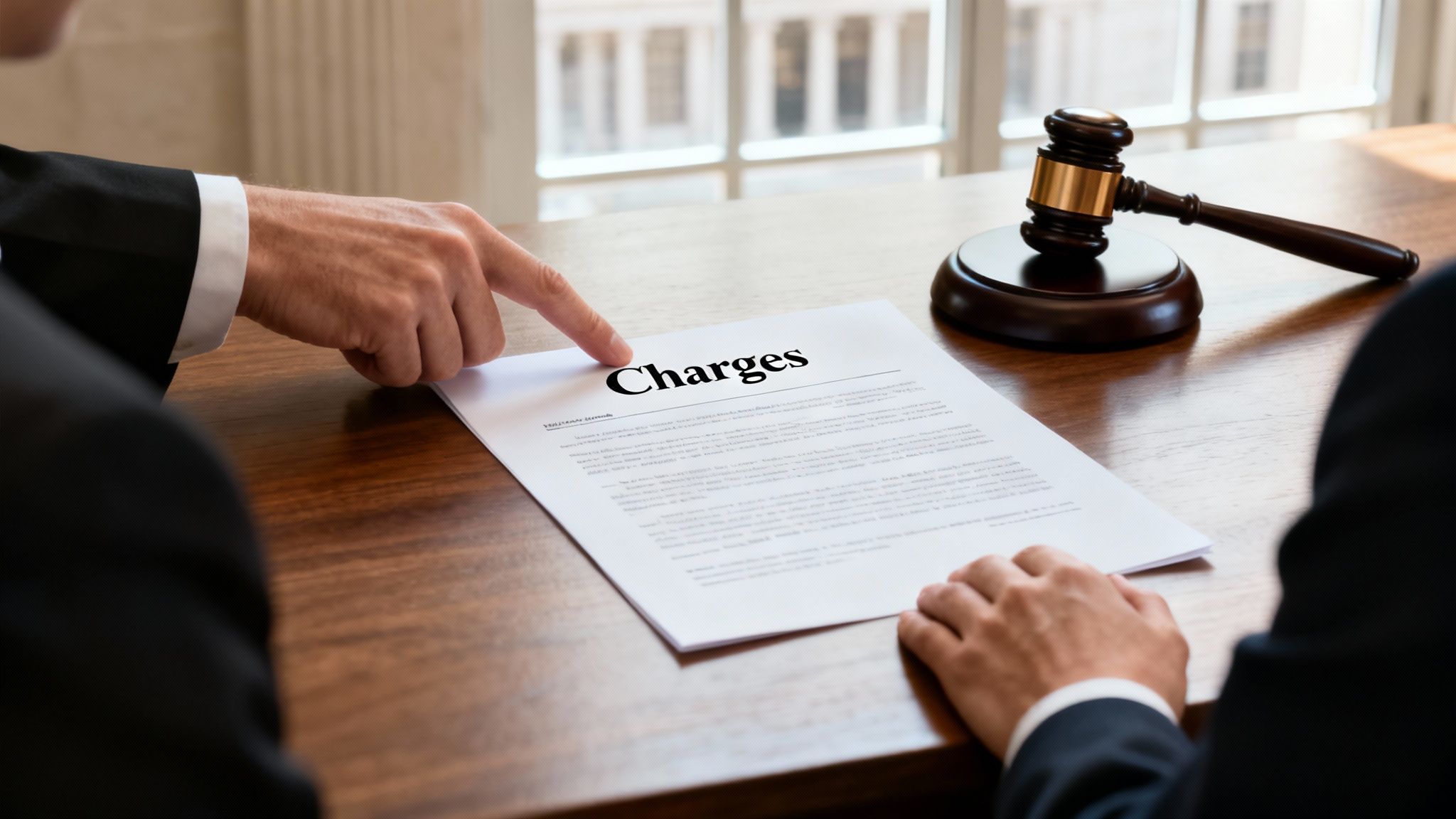
This foundational knowledge empowers you to understand what the prosecution must prove, what potential penalties you face, and how to evaluate any plea offers that may come your way. It sets the stage for every strategic decision that follows. If any evidence or documentation is in a language other than English, it's also a good time to ask how the firm handles these situations. Getting accurate legal document translation solutions is essential to ensure every detail of your case is fully understood.
Why This Question Matters
Knowing the charge is just the beginning. You need to understand its classification (misdemeanor or felony), the specific "elements" the state must prove beyond a reasonable doubt, and the corresponding punishment range. For example, a DWI charge under Texas Penal Code § 49.04 can be a Class B misdemeanor or a third-degree felony depending on your prior history, dramatically changing the potential consequences.
What a Good Answer Looks Like
A strong answer will be detailed and specific to your situation. The attorney should patiently walk you through:
- The Elements of the Crime: A clear list of facts the prosecutor must prove for a conviction. For a theft charge, for instance, they must prove you unlawfully took property with the intent to deprive the owner of it.
- The Penalty Range: The minimum and maximum jail time, fines, and other consequences associated with the charge's classification (e.g., Class A Misdemeanor vs. State Jail Felony).
- Potential Enhancements: How your criminal history or specific facts of the case (like using a weapon) could increase the severity of the charge and its penalties.
Smart Follow-Up Questions
- Can you provide a simple chart showing the penalty ranges for my specific charge?
- Are there any mandatory minimum sentences I should be aware of?
- How does my personal background specifically impact these charges under Texas law?
- Is it possible for this charge to be negotiated down to a lesser offense?
2. What Is Your Experience With Cases Similar to Mine?
While a law license qualifies an attorney to practice criminal defense, it doesn't guarantee they have the specific, hands-on experience needed to effectively handle your unique case. This is one of the most vital questions to ask a criminal defense attorney because the answer reveals their familiarity with the landscape you're about to navigate. An attorney with deep experience in your specific charge and jurisdiction brings invaluable insight into local prosecutors, judicial tendencies, and proven defense strategies.
This specialized knowledge can be the difference between a favorable outcome and a devastating conviction. For instance, a Houston criminal lawyer who regularly handles DWI cases will be intimately familiar with the Harris County District Attorney's policies, the reliability of local breathalyzer equipment, and the best arguments to make before specific judges. Their experience is a direct advantage to you.
Why This Question Matters
General criminal law experience is good, but specialized experience is better. The defense for a white-collar fraud charge is vastly different from that for a family violence assault allegation. An attorney with a track record of successfully defending cases like yours has likely already encountered the evidence, arguments, and procedural hurdles you will face.
This practical experience means they won't be learning on your case. They will know which motions to file, which evidence is most vulnerable to challenge, and how to negotiate effectively with prosecutors who know their reputation.
What a Good Answer Looks Like
A confident and experienced attorney will provide a direct and detailed response. They should be able to clearly articulate:
- Specific Case Experience: They will discuss the volume and types of cases they have handled that are similar to yours (e.g., first-offense DWI, felony drug possession, etc.).
- Jurisdictional Familiarity: They should confirm their experience working in the specific court and county where your case is filed, mentioning their familiarity with the local system.
- A Balanced Perspective: An honest lawyer will discuss a range of outcomes, including dismissals, acquittals, and favorable plea agreements, rather than just promising a win.
Smart Follow-Up Questions
- How many jury trials have you handled for this specific type of charge?
- What percentage of your practice is dedicated to cases like mine?
- Are you familiar with the prosecutor assigned to my case?
- How do you stay updated on changes to Texas laws that affect my charges?
3. What Are My Realistic Options: Plea Deal vs. Trial?
One of the most critical questions to ask a criminal defense attorney is about the strategic paths your case can take. Every criminal charge in Texas presents a fundamental choice: negotiate a plea agreement with the prosecution or take your case to trial. A seasoned attorney will objectively lay out both options, helping you understand the potential benefits and significant risks of each path.
This conversation is not about making a quick decision but about gaining clarity. Your lawyer should analyze the strength of the prosecutor's evidence, the credibility of witnesses, and even the tendencies of the local courts and judges in Houston, Austin, or Dallas. This detailed assessment empowers you to make a calculated choice that aligns with your personal goals and tolerance for risk, rather than one based on fear or uncertainty.
Why This Question Matters
The decision between a plea deal and a trial is arguably the most important one you will make in your case. A plea bargain offers certainty and a potentially reduced sentence, but it requires admitting guilt. A trial offers the chance for complete acquittal, but it also carries the risk of a harsher sentence if you are convicted. Understanding the specific pros and cons of plea bargaining in your situation is essential before you commit to a strategy.
What a Good Answer Looks Like
An experienced attorney will provide a balanced, evidence-based analysis, not a guaranteed outcome. Their answer should include:
- A Frank Assessment: A clear breakdown of the strengths and weaknesses of the prosecution's case against you, as well as the strengths of your defense.
- Plea Bargain Scenarios: A discussion of what a likely plea offer from the prosecutor might look like (e.g., reduced charges, probation instead of jail time) and the collateral consequences of accepting it.
- Trial Risks and Rewards: An honest evaluation of your chances of winning at trial versus the potential sentence you could face if a jury finds you guilty. For example, a conviction for an enhanced DWI at trial could carry a much longer prison sentence than a negotiated plea.
Smart Follow-Up Questions
- Based on your experience with similar cases, what is the probability of a conviction if we go to trial?
- What are the deadlines for accepting a plea offer from the prosecutor?
- Can you compare the estimated legal costs for a plea negotiation versus a full trial?
- How would a conviction at trial versus accepting this plea deal differently affect my job, housing, or professional licenses?
4. How Will You Challenge the Evidence Against Me?
A conviction requires the state to present credible evidence proving every element of a crime beyond a reasonable doubt. A key part of any strong defense is proactively attacking that evidence. Asking a criminal defense attorney how they plan to challenge the prosecution’s case moves beyond abstract strategy and into the concrete tactics that can lead to a dismissal or a "not guilty" verdict.

This question reveals an attorney's technical knowledge and experience with the rules of evidence and constitutional law. A skilled lawyer will analyze every piece of the state's case, from the initial traffic stop to the final lab report, looking for procedural errors, constitutional violations, or scientific inaccuracies that can be used to your advantage. This proactive approach can lead to evidence being suppressed, meaning the jury never even gets to see it.
Why This Question Matters
Evidence is the foundation of the prosecution's case. If that foundation is weak or cracked, the entire case can crumble. Your attorney should be able to identify these weaknesses, whether it's an illegal search of your vehicle, improperly handled forensic samples, or a coerced confession. Understanding their plan to challenge evidence shows you they are thinking critically and preparing to fight, not just process a plea deal.
What a Good Answer Looks Like
A confident answer will detail specific potential challenges based on the facts you've provided. The attorney should explain legal concepts like "motions to suppress" in plain English and connect them directly to your situation. For a DWI case, they might discuss:
- Challenging the Stop: Questioning if the officer had reasonable suspicion to pull you over in the first place, as an illegal stop can invalidate all subsequent evidence.
- Contesting Test Results: Identifying issues with breathalyzer calibration records or the chain of custody for a blood sample, which could render the results unreliable.
- Questioning Witness Testimony: Pointing out inconsistencies in officer reports or a witness's ability to accurately identify a suspect.
Smart Follow-Up Questions
- Based on my case, what are the most likely pieces of evidence we can get suppressed?
- What is the deadline for filing a motion to suppress evidence in my case?
- Will we need to hire an expert witness, like a toxicologist, to challenge the state's technical evidence?
- How does successfully suppressing one piece of evidence impact the rest of the prosecution's case?
5. What Are the Potential Sentences and Long-Term Consequences?
Beyond the immediate stress of a criminal charge, the most pressing concern is often the potential impact on your future. Asking a criminal defense attorney about potential sentences and long-term consequences is crucial for making informed decisions. A conviction in Texas carries penalties far beyond fines and jail time; it can affect your career, family, and fundamental rights for years to come.

Understanding the full scope of what's at stake allows you to weigh the risks of going to trial versus accepting a plea bargain. It’s about seeing the complete picture, not just the statutory punishment range. An attorney should explain both the official penalties and the hidden, "collateral" consequences that follow you long after the case is closed.
Why This Question Matters
Knowing the potential sentence is just one part of the equation. A first-time DWI, for example, might carry up to 180 days in jail, but it also triggers a driver's license suspension and can jeopardize a professional license. These "collateral consequences" can include difficulty finding housing, loss of firearm rights, and for non-citizens, serious immigration issues including deportation. A thorough understanding of Texas sentencing policies and rehabilitation strategies is essential for a complete defense.
What a Good Answer Looks Like
A compassionate and knowledgeable attorney will provide a comprehensive overview of all potential outcomes, including:
- Direct Penalties: The specific range of jail or prison time, fines, and court costs associated with your charge. This includes how prior convictions could create enhancements.
- Probation Terms: A detailed explanation of what community supervision (probation) would look like, including mandatory classes, community service, and regular check-ins.
- Collateral Consequences: A clear list of long-term impacts, such as effects on your professional license (nursing, real estate, etc.), your right to own a firearm, future employment opportunities, and potential custody issues in family law.
Smart Follow-Up Questions
- Can you explain the best-case, worst-case, and most likely sentencing outcomes for my specific case?
- Which of these consequences are permanent, and which can be addressed later through expunction or non-disclosure?
- How does the judge in this specific court typically sentence cases like mine?
- If I am not a U.S. citizen, what are the exact immigration risks I face with this charge?
6. How Do You Handle Bail, Bond, and Pretrial Release?
Being arrested is disorienting, and the immediate aftermath can feel overwhelming. Securing a release from jail is often the first and most urgent priority, as it impacts your job, your family, and your ability to assist in your own defense. This is why one of the most critical questions to ask a criminal defense attorney is how they manage this crucial pretrial phase.
An experienced lawyer knows that swift action is necessary. They understand the procedures for bail hearings, how to argue for bond reductions, and the factors that judges in Texas consider when setting release conditions. Their goal is to get you out of custody as quickly and affordably as possible, preventing unnecessary incarceration while your case is pending.
Why This Question Matters
Your freedom before trial is not just a matter of comfort; it is a strategic advantage. Pretrial detention can make it difficult to communicate with your attorney, gather evidence, and maintain employment and family stability. An attorney who acts decisively on bail matters can protect your constitutional presumption of innocence and ensure you can fight your case from a position of strength, not from behind bars.
What a Good Answer Looks Like
A confident answer will detail the attorney’s immediate action plan. They should explain their process for filing motions and negotiating with prosecutors to secure your release under the least restrictive conditions.
- Immediate Action: The attorney should describe how their firm handles emergency bail representation, often available 24/7. They will explain how they get to work immediately upon being hired to arrange for your release.
- Strategic Approach: They will outline how they build a case for your release by highlighting your ties to the community, such as employment, family responsibilities, and lack of a significant criminal history.
- Knowledge of Local Courts: The lawyer should demonstrate familiarity with local judges and their tendencies regarding bail for specific offenses, whether it’s a Texas DWI attorney for a case in Houston or a drug possession case in Dallas.
Smart Follow-Up Questions
- How quickly can you file a motion to reduce my bond?
- What documents should I provide to show my ties to the community?
- What are common bond conditions for a charge like mine, and can any of them be negotiated?
- If electronic monitoring is required, can you argue for a less restrictive alternative?
7. What Is Your Fee Structure and What Does It Include?
Discussing money can be uncomfortable, but understanding an attorney's fee structure is absolutely essential to avoid future surprises and financial stress. When you are looking for a lawyer, this is one of the most practical questions to ask a criminal defense attorney. A transparent lawyer will clearly explain their billing model, what services are covered, and what potential extra costs could arise.
This conversation ensures you can make a financially sound decision and understand the full investment required for your defense. Clarity on costs from the outset builds trust and allows you to focus on your case, not on unexpected invoices.
Why This Question Matters
Criminal defense costs can vary significantly based on the case's complexity. A simple misdemeanor will cost far less than a complex felony trial. You need to know if you're paying a flat fee that covers everything through trial, an hourly rate where costs can escalate, or a hybrid model. Understanding what is included, such as investigator fees or expert witness costs, is crucial for budgeting and comparing different law firms.
What a Good Answer Looks Like
A trustworthy attorney will provide a written fee agreement and patiently explain every detail. They should not rush this conversation. The answer should clearly outline:
- The Billing Method: A detailed explanation of whether they charge a flat fee (e.g., $4,000 for a first-offense DWI case), an hourly rate (e.g., $300/hour for a complex white-collar case), or another arrangement.
- What's Included: A specific list of services covered by the primary fee, such as all court appearances, legal research, filing motions, and negotiations with the prosecutor.
- Potential Additional Costs: An itemized list of expenses not included in the main fee. This often includes things like private investigator fees, expert witness testimony, court filing fees, and costs for obtaining records.
- Payment Terms: A clear schedule for payments, whether it's an upfront retainer, a payment plan, or other arrangements. They should also explain their policy on refunds if the case resolves faster than expected.
Smart Follow-Up Questions
- Could you provide me with a written fee agreement to review before I make a decision?
- What is the estimated total cost if this case goes all the way to a jury trial versus resolving with a plea agreement?
- Do you offer payment plans or any financing options?
- If new evidence or charges appear, how would that affect the fee structure we've discussed?
8. How Will You Communicate With Me Throughout the Case?
Facing criminal charges in Texas is an overwhelming experience, and the uncertainty of what happens next can be one of the most stressful parts. Clear, consistent communication from your legal team is essential for your peace of mind and for building a strong, collaborative defense. This is one of the most practical yet critical questions to ask a criminal defense attorney during your initial meeting.
A good attorney understands that an informed client is an empowered client. They will have a clear system for keeping you updated on every development, from new evidence discovered to plea negotiations with the prosecutor. This transparency builds trust and ensures you are never left in the dark about the status of your case, allowing you to make well-informed decisions at every stage.
Why This Question Matters
The legal process is often slow, with long periods of seeming inactivity between court dates. Without a defined communication plan, this waiting game can cause immense anxiety. Establishing expectations upfront prevents frustration and ensures you understand how and when you will receive information. You need to know who your primary point of contact is, their preferred communication method (email, phone, client portal), and what their typical response time is.
What a Good Answer Looks Like
An experienced attorney will welcome this question and provide a specific, structured answer. They should outline their firm’s communication protocol, which may look something like this:
- Designated Contact: Clearly identifying the attorney, paralegal, or case manager who will be your primary point of contact for routine questions.
- Update Schedule: Committing to a regular update schedule, such as weekly or bi-weekly emails, especially during active phases like discovery review or plea bargaining.
- Method of Communication: Explaining how they share information. Many modern firms use secure client portals to share documents, while others rely on email for non-urgent updates and phone calls for significant developments.
- Emergency Access: Providing clear instructions for how to reach them or someone on their team after hours in case of a genuine emergency related to your case.
Smart Follow-Up Questions
- Who is my main point of contact at the firm?
- What is your firm’s policy on returning calls and emails? What is a reasonable response time to expect?
- Will I be notified before every court appearance, even if my presence isn't required?
- How will you share and explain discovery documents (like police reports or videos) with me?
9. Can You Help With Expunction or Record Sealing After Resolution?
A positive outcome in your criminal case is a huge relief, but the goal is often more than just avoiding conviction; it's about reclaiming your future. This is why one of the most forward-thinking questions to ask a criminal defense attorney is about their ability to clear your record after the case is resolved. A skilled attorney understands that the fight isn't over until your reputation is restored.
This conversation is about your long-term well-being. Securing an expunction or an order of nondisclosure (record sealing) can prevent a past mistake from affecting future job applications, housing opportunities, and professional licenses. It's the final step in putting a difficult chapter behind you for good.
Why This Question Matters
Not every criminal case outcome qualifies for record clearing, and the Texas laws governing eligibility are complex. You need an attorney who can analyze your specific situation from the beginning and advise on a strategy that preserves your eligibility for post-case relief.
An expunction effectively destroys the records of your arrest, allowing you to legally deny it ever happened. A nondisclosure seals the record from the public, though it remains visible to certain government and licensing agencies. Understanding the difference is crucial. You can learn more about how expungement and nondisclosure in Texas compare and what might be right for you.
What a Good Answer Looks Like
A knowledgeable attorney will provide a clear, realistic assessment of your options for clearing your record. They should be able to explain:
- Eligibility Requirements: Whether your specific charge and the likely outcome (dismissal, acquittal, deferred adjudication) will make you eligible for an expunction or nondisclosure.
- The Process and Timeline: A step-by-step overview of filing the petition, the required waiting periods under Texas law, and how long the process typically takes.
- The Firm's Experience: Confirmation that they handle these post-conviction matters themselves and have a track record of successfully clearing client records.
Smart Follow-Up Questions
- Based on my case, what is the statutory waiting period before we can file?
- What are the total costs, including filing fees, for an expunction versus a nondisclosure?
- How will a nondisclosure affect a background check for a job in my specific industry?
- If my case is dismissed, will you automatically begin the expunction process for me?
10. What Are My Constitutional Rights During Investigation and Trial?
Your constitutional rights are not just abstract legal principles; they are a powerful shield protecting you from government overreach. Understanding these rights, such as those guaranteed by the Fourth, Fifth, and Sixth Amendments, is crucial because many criminal cases are won or lost based on what happens long before a trial begins. An experienced attorney will not only defend you in court but also educate you on how to assert your rights effectively during an investigation.
This is one of the most vital questions to ask a criminal defense attorney because asserting your rights can prevent the police from gathering evidence against you. Knowing when to refuse a search, when to remain silent, and when to demand a lawyer can fundamentally change the outcome of your case. An attorney's guidance helps you exercise these rights without unnecessarily escalating a situation with law enforcement.
Why This Question Matters
Violations of your constitutional rights can lead to the suppression of illegally obtained evidence, weakening the prosecution's case significantly. For example, if police conduct an illegal traffic stop in Houston and find evidence, a successful motion to suppress that evidence could lead to the entire case being dismissed. Understanding your rights empowers you to avoid common mistakes, like consenting to a search or making incriminating statements without a lawyer present.
What a Good Answer Looks Like
A dedicated attorney will provide a clear, practical explanation of the rights most relevant to your specific situation. Their answer should include:
- Fourth Amendment Rights: An explanation of your protection against unreasonable searches and seizures, including when police need a warrant and when you can legally refuse a search of your car or home.
- Fifth Amendment Rights: A detailed breakdown of your right to remain silent to avoid self-incrimination and what it means to be read your Miranda rights.
- Sixth Amendment Rights: A discussion of your right to a lawyer, a speedy trial, and the right to confront witnesses against you.
- Case-Specific Scenarios: How these rights apply to your charge, whether it's challenging the probable cause for a DWI stop in Austin or suppressing statements made during an interrogation in a Dallas Texas assault defense case.
Smart Follow-Up Questions
- Can you give me a script for how to respectfully refuse a search or decline to answer questions?
- At what specific point in the process must the police read me my Miranda rights?
- Are there common rights violations you see in cases like mine in this county?
- If my rights were violated, what is the process for getting that evidence thrown out?
10-Point Comparison: Questions to Ask a Criminal Defense Attorney
| Question / Topic | 🔄 Complexity | ⚡ Speed / Efficiency | 📊 Expected Outcomes | 💡 Ideal Use Cases & Tips | ⭐ Key Advantages |
|---|---|---|---|---|---|
| What Are the Charges Against Me and What Do They Mean? | 🔄 Moderate — statutory elements & enhancements | ⚡ Quick to explain initially; may change with discovery | 📊 Clarifies legal exposure and plea/trial options | 💡 Request plain-language summary; ask about mandatory minimums | ⭐ Clarifies penalties, defenses, and strategy |
| What Is Your Experience With Cases Similar to Mine? | 🔄 Low — factual question, requires verification | ⚡ Fast to answer; validating records takes time | 📊 Predictive value for likely outcomes and strategies | 💡 Ask for case stats, county/trial experience, references | ⭐ Reveals local knowledge and proven tactics |
| What Are My Realistic Options—Plea Deal vs. Trial? | 🔄 High — evidence analysis and risk assessment | ⚡ Plea negotiations are faster; trials are time‑intensive | 📊 Informed trade‑off between certainty and acquittal chance | 💡 Request honest probability estimates and plea deadlines | ⭐ Enables strategic, risk‑aligned decision making |
| How Will You Challenge the Evidence Against Me? | 🔄 High — motions, expert analysis, procedural work | ⚡ Often time‑consuming; may delay proceedings strategically | 📊 Potential suppression or weakening of prosecution proof | 💡 Ask how each evidence item will be attacked; list expert needs | ⭐ Can exclude key evidence and lead to dismissal |
| What Are the Potential Sentences and Long-Term Consequences? | 🔄 Moderate — statutory ranges plus collateral effects | ⚡ Sentencing analysis is prompt; collateral planning is ongoing | 📊 Realistic sentence expectations and life‑impact assessment | 💡 Request written guidelines; check licensing/immigration effects | ⭐ Informs plea strategy and long‑term planning |
| How Do You Handle Bail, Bond, and Pretrial Release? | 🔄 Moderate — procedural hearings and negotiations | ⚡ High priority; actions often yield quick release results | 📊 Possible bail reduction or release on favorable conditions | 💡 Contact attorney immediately; prepare employment/family docs | ⭐ Prevents unnecessary pretrial incarceration |
| What Is Your Fee Structure and What Does It Include? | 🔄 Low — administrative but variable by case complexity | ⚡ Quick to state; totals may change with added services | 📊 Budget clarity and expectations for incurred costs | 💡 Get detailed written fee agreement; ask about extras | ⭐ Prevents surprise billing and enables budgeting |
| How Will You Communicate With Me Throughout the Case? | 🔄 Low — establish protocols and response expectations | ⚡ Frequency depends on attorney; can be regular | 📊 Improved client confidence and timely decisions | 💡 Set preferences in writing; agree on emergency contacts | ⭐ Builds trust and keeps client informed |
| Can You Help With Expunction or Record Sealing After Resolution? | 🔄 Moderate — eligibility rules and filing procedures | ⚡ Filing is straightforward but often delayed by waiting periods | 📊 Potential removal or sealing of records; restored opportunities | 💡 Ask about eligibility, waiting periods, and costs | ⭐ Restores privacy and employment/licensing prospects |
| What Are My Constitutional Rights During Investigation and Trial? | 🔄 High — nuanced constitutional law analysis | ⚡ Immediate relevance during encounters; ongoing at trial | 📊 Protection against unlawful searches, statements, admissions | 💡 Request written rights summary; learn when to remain silent | ⭐ Preserves suppression and due‑process remedies |
Take the Next Step: Your Defense Starts with a Conversation
Facing a criminal charge in Texas can feel like your world has been turned upside down. The path forward seems uncertain, and the weight of the consequences is immense. This guide provided a comprehensive list of questions to ask a criminal defense attorney, moving you from a position of anxiety to one of empowerment. You are now equipped to cut through the noise and find a legal advocate who truly understands your situation and has the skill to protect your future.
This isn't just about hiring a lawyer; it's about finding a strategic partner. The questions we've covered are your tools to evaluate more than just a resume. They help you gauge an attorney's practical experience, strategic thinking, and dedication to your specific case, whether you're dealing with a first-time DWI in Houston or complex felony charges in Dallas.
Key Takeaways: Your Blueprint for Choosing a Defender
As you prepare for your initial consultations, keep these core principles at the forefront of your mind. They represent the most critical takeaways from our discussion and will be your compass in selecting the right representation.
- Experience is Specific, Not General: Don't settle for a lawyer who has simply "practiced criminal law." You need someone with a proven track record handling cases just like yours, in the very courthouse where your case will be heard. Asking about their experience with specific charges, from assault family violence under Texas Penal Code § 22.01 to drug possession under the Texas Health and Safety Code, is non-negotiable.
- Strategy Trumps Guarantees: The best attorneys don't promise outcomes; they explain processes. A strong answer to questions about case strategy will involve a detailed plan for dissecting the prosecution's evidence, filing pretrial motions to suppress evidence, and preparing a compelling defense narrative. This demonstrates competence and a realistic approach to your defense.
- Communication is the Foundation of Trust: A brilliant legal mind is useless if you are left in the dark. The questions about communication protocols, response times, and who will be your primary point of contact are essential. You deserve a legal team that keeps you informed, respects your input, and is available to answer your questions during one of the most stressful times of your life.
- Transparency in Fees Prevents Future Surprises: Your focus should be on your defense, not on worrying about hidden costs. A reputable attorney will provide a clear, written fee agreement that details exactly what is covered. Understanding whether they use a flat fee, hourly rate, or retainer structure is a crucial part of making an informed financial decision.
By mastering these concepts, you transform the consultation from a passive interview into an active investigation. You are not just a potential client; you are the CEO of your own defense, and you are hiring the most critical member of your team. The insights you gain from asking these targeted questions to ask a criminal defense attorney will be the deciding factor in securing a positive resolution. Answering these questions with confidence and clarity is the first step an attorney takes in earning your trust and demonstrating their ability to navigate the complexities of the Texas justice system. Your freedom, your reputation, and your future are on the line, and the right advocate makes all the difference.
If you’ve been charged with a crime in Texas, call The Law Office of Bryan Fagan, PLLC for a free and confidential consultation. Our defense team is ready to protect your rights. For a free and confidential consultation to discuss your case and how our defense team can protect your rights, contact the Law Office of Bryan Fagan PLLC today.