When people begin researching robbery fingerprint evidence Texas, it usually means fingerprints have become a central issue in a criminal case. Maybe a store was robbed, and investigators lifted prints from a counter. Maybe a weapon was recovered with latent impressions. Or perhaps someone was arrested because their fingerprints matched evidence found at the scene. In Texas robbery investigations, fingerprint evidence can either solidify a prosecution’s case—or raise serious questions about how that evidence was collected and interpreted.
Fingerprint analysis carries a powerful reputation. Jurors often assume that if fingerprints match, the case is closed. However, the reality behind robbery fingerprint evidence Texas is far more nuanced. From how prints are collected to how they’re analyzed and presented in court, there are technical, scientific, and procedural layers that determine how much weight those prints truly carry.
In this guide, we’ll break down how fingerprint evidence works in Texas robbery cases, how investigators collect and analyze it, how defense attorneys challenge it, and why even seemingly definitive fingerprint matches can become legally complicated. Through real-life examples and practical courtroom insights, you’ll gain a clear understanding of how robbery fingerprint evidence Texas plays out in actual criminal proceedings.
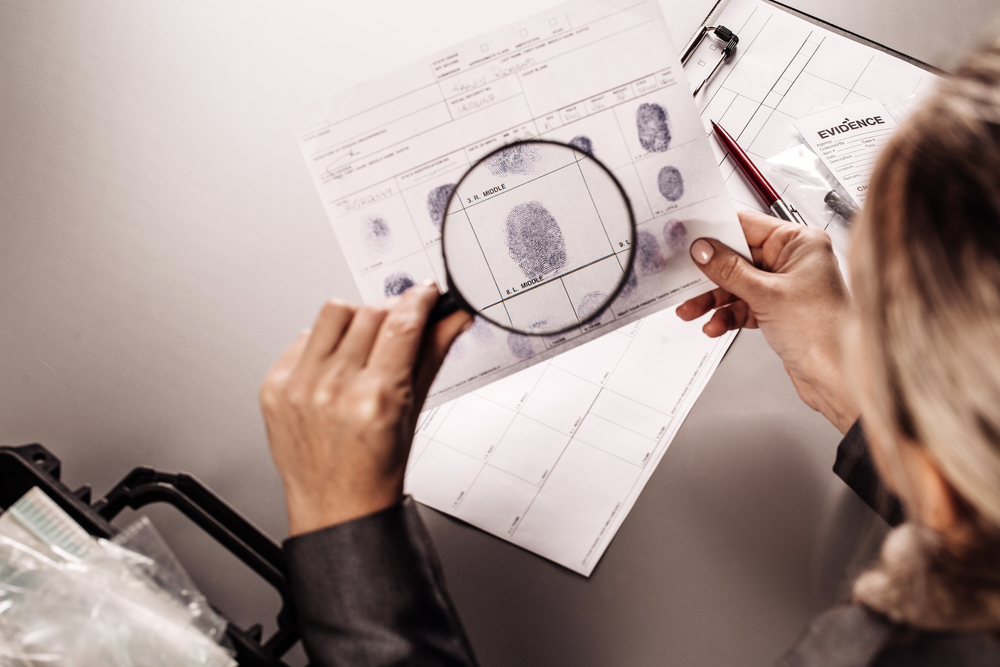
Why Fingerprints Matter in Robbery Cases
Physical Evidence vs Eyewitness Testimony
Robbery cases often unfold quickly. A suspect enters a store, demands money, and leaves within minutes. In some situations, eyewitness testimony becomes the primary evidence. However, eyewitness accounts can be unreliable due to stress, lighting, and perception errors. In the chaos of a robbery, victims may focus more on a weapon than on the suspect’s face, and that intense stress can distort memory. As a result, what feels certain in the moment may later prove incomplete or inaccurate when examined closely in court.
That’s where robbery fingerprint evidence Texas enters the picture. When investigators search for something more objective than human memory, fingerprints often become the focal point of the case. Because prints can remain on surfaces long after a suspect leaves, they offer a tangible connection that doesn’t rely on recollection alone.
Unlike memory, fingerprints are physical evidence. They don’t rely on recall or interpretation in the same way witness testimony does. When a fingerprint is lifted from a surface at a robbery scene, it can tie a suspect directly to that location and potentially strengthen a robbery charge. For prosecutors, this physical link can appear far more persuasive than testimony alone when presenting their case to a jury. For defense attorneys, however, the presence of a fingerprint opens up questions about how and when that contact actually occurred, and whether it truly proves involvement in the alleged crime.
But here’s the key: fingerprints only prove contact—not timing, intent, or context. And that distinction matters.
How Investigators Collect Fingerprint Evidence in Texas
From Crime Scene to Lab
When law enforcement responds to a robbery scene, they search for latent fingerprints—those not visible to the naked eye.
The process typically involves:
- Dusting surfaces with fingerprint powder
- Using chemical processing for porous materials
- Applying alternate light sources
- Photographing lifted prints
- Preserving prints with adhesive lifts
In robbery fingerprint evidence Texas cases, officers often target:
- Door handles
- Cash registers
- Counters
- Weapons
- Note papers
- Vehicles
Every step in the collection process must follow protocol. Improper handling can compromise admissibility in court.
Real-Life Scenario: The Gas Station Counter Print
In Houston, a late-night robbery occurred at a convenience store. The suspect demanded cash and fled. No mask, but no clear surveillance image either.
Investigators dusted the counter and discovered a latent fingerprint. Weeks later, the print matched a suspect in the Automated Fingerprint Identification System (AFIS).
The prosecution relied heavily on robbery fingerprint evidence Texas to secure charges.
However, during trial, defense counsel argued that the suspect had visited the store earlier that day and touched the counter legally. The fingerprint proved contact—but not involvement in the robbery.
This scenario illustrates how context shapes the interpretation of fingerprint evidence.
Understanding AFIS and Database Matching
Technology Behind Fingerprint Identification
Texas law enforcement agencies use AFIS to compare latent prints against vast databases of known fingerprints.
AFIS:
- Digitally scans prints
- Compares ridge characteristics
- Identifies potential matches
- Produces candidate lists for expert review
Importantly, AFIS does not declare guilt. It narrows possibilities. A trained fingerprint examiner must confirm the match manually.
In robbery fingerprint evidence Texas cases, AFIS matches often trigger arrests—but they still require expert validation.

The Role of the Fingerprint Examiner
Human Judgment in the Process
Fingerprint identification involves analyzing:
- Ridge endings
- Bifurcations
- Pattern formations
- Points of similarity
Unlike DNA analysis, fingerprint matching does not require a fixed number of matching points in Texas. Instead, examiners rely on professional judgment.
This introduces subjectivity.
Defense attorneys often challenge robbery fingerprint evidence Texas by questioning examiner training, methodology, and potential bias.
Latent vs Known Prints
What’s the Difference?
Latent prints are those collected from a crime scene. Known prints come from suspects or databases.
Comparisons involve:
- Quality assessment
- Ridge clarity
- Partial prints
- Smudging or distortion
Partial prints can be especially problematic.
In robbery fingerprint evidence Texas cases, partial prints may lead to debate over whether the match is truly reliable.
Chain of Custody Issues
Protecting Evidence Integrity
Every piece of fingerprint evidence must follow a documented chain of custody from collection to courtroom, especially in cases governed by Texas robbery law, where evidentiary standards are closely scrutinized.
If documentation is incomplete or inconsistent, defense counsel may argue:
- Evidence tampering
- Cross-contamination
- Mishandling
In one Texas robbery case, fingerprint evidence was excluded because the officer failed to log the transfer properly.
Chain of custody can make or break robbery fingerprint evidence Texas cases, as courts require strict compliance with procedural safeguards before allowing such evidence to support a robbery charge.
Can Fingerprints Be Planted?
A Common Defense Argument
Although rare, defense attorneys sometimes argue that fingerprints were transferred or planted unintentionally.
Secondary transfer can occur when:
- Someone touches an object after contacting another person
- Evidence is handled without gloves
- Surfaces are not properly secured
While planting evidence is serious misconduct, contamination is more common than jurors realize.
Courts scrutinize robbery fingerprint evidence Texas when contamination risks exist.
Fingerprint Evidence and Timing Problems
Contact Doesn’t Equal Guilt
Fingerprints only prove that a person touched an object at some point.
They do not show:
- When the contact occurred
- Why the contact occurred
- Whether the contact was innocent
In a retail robbery case, a suspect’s print was found on a display case. Surveillance later showed he visited the store days earlier as a customer.
Timing uncertainty weakened the prosecution’s robbery fingerprint evidence Texas argument.
Real-Life Example: The Loaned Vehicle
In Dallas, a robbery suspect’s fingerprint was found inside a getaway vehicle.
However, the defendant argued he had borrowed the car weeks earlier for legitimate reasons.
The prosecution claimed the print tied him to the crime. The defense argued the print proved only past contact.
The jury ultimately acquitted.
This case highlights how robbery fingerprint evidence Texas must be viewed within broader factual context.
Expert Testimony in Robbery Fingerprint Evidence Texas Cases
Explaining Complexity to Jurors
In court, fingerprint experts testify about:
- Collection methods
- Comparison procedures
- Certainty levels
- Error rates
Defense attorneys may cross-examine by questioning:
- Subjective interpretation
- Confirmation bias
- Lab accreditation standards
Because jurors often view fingerprint evidence as definitive, expert testimony plays a critical role in shaping perception.
Error Rates and Scientific Criticism
Fingerprint Analysis Under Scrutiny
Although widely accepted, fingerprint analysis has faced scientific criticism.
Concerns include:
- Lack of standardized matching thresholds
- Human interpretation bias
- Limited peer-reviewed validation
- Known cases of misidentification
While rare, wrongful convictions involving fingerprint errors have occurred nationwide.
Courts evaluating robbery fingerprint evidence Texas must consider reliability carefully.
When Fingerprint Evidence Is the Only Evidence
Strength vs Vulnerability
Some robbery cases rely almost entirely on fingerprint evidence.
Without:
- DNA
- Video
- Confessions
- Eyewitness identification

The fingerprint becomes central.
In these cases, the strength of robbery fingerprint evidence Texas determines the entire prosecution.
Defense attorneys often focus heavily on challenging methodology in such scenarios.
When Fingerprints Strengthen Other Evidence
Corroboration Power
Fingerprint evidence often works alongside:
- Surveillance footage
- Witness testimony
- Cell phone records
- Confessions
When multiple forms of evidence align, robbery fingerprint evidence Texas gains credibility.
In combined evidence cases, fingerprints often serve as reinforcing proof rather than sole proof.
Fingerprints on Weapons
A High-Impact Factor
If fingerprints are found on:
- Firearms
- Knives
- Demand notes
The evidentiary impact increases.
However, even then, defense attorneys may argue:
- The weapon was handled previously
- The object was shared
- Secondary transfer occurred
Robbery fingerprint evidence Texas remains subject to interpretation—even when found on weapons.
Challenging Robbery Fingerprint Evidence Texas in Court
Strategic Defense Approaches
Defense strategies may include:
- Motion to suppress improperly collected evidence
- Daubert challenges to expert methodology
- Highlighting partial print limitations
- Questioning chain of custody
- Presenting alternative explanations
Even strong fingerprint evidence can be weakened through strategic litigation.
The Psychological Impact on Jurors
The “CSI Effect”
Television crime dramas have shaped public expectations.
Jurors often believe fingerprint evidence is infallible.
Attorneys must educate jurors that robbery fingerprint evidence Texas is powerful—but not flawless.
Explaining limitations can introduce reasonable doubt.

Final Thoughts: The True Weight of Robbery Fingerprint Evidence Texas
Robbery fingerprint evidence Texas plays a major role in criminal investigations and prosecutions. However, fingerprints prove contact—not necessarily guilt. Collection methods, timing questions, chain of custody, expert interpretation, and contextual evidence all influence how that contact is understood.
When handled properly, fingerprint evidence can strengthen a robbery case significantly. When mishandled or overstated, it can unravel under cross-examination.
Understanding the complexities behind robbery fingerprint evidence Texas helps defendants, attorneys, and jurors approach these cases with clarity rather than assumption.
Because in the courtroom, even the smallest ridge pattern can carry enormous weight—but only when interpreted correctly.