Being arrested for a DWI in Texas can be terrifying—but you don’t have to face it alone. The path forward isn't just about punishment; it often involves education and rehabilitation. A huge part of this process is completing state-mandated Texas DWI classes, which are designed to help you understand the dangers of impaired driving while satisfying court requirements. Choosing to enroll early shows the court you're taking this seriously—it's one of the best first steps you can take to protect your future.
Understanding Your Next Steps After a Texas DWI Arrest

The moments after a DWI arrest can be a blur of confusion and anxiety. You are suddenly thrown into a complex legal system, facing potential jail time, heavy fines, and the loss of your driver's license. It's disorienting, but you are not alone, and understanding what’s ahead is the best way to regain control.
One of the first things you will almost certainly have to deal with is a requirement to complete a DWI education or intervention program. These classes aren't just another box to check off a list; they are a fundamental piece of the legal puzzle in Texas. The state sees these courses as a crucial tool for preventing future offenses by ensuring people understand the grave consequences of getting behind the wheel while intoxicated.
Why DWI Classes Are a Priority
Courts and prosecutors look for signs that you are taking accountability for your actions. By making the decision to enroll in a required DWI class—even before a judge officially orders you to—you send a powerful message. It demonstrates responsibility and a commitment to ensuring this never happens again.
This proactive approach can make a real difference in your case:
- Shows Accountability: It immediately tells the judge and prosecutor you grasp the seriousness of the charge.
- Strengthens Negotiations: Your attorney can leverage your enrollment as a bargaining chip during plea negotiations, which could lead to more favorable terms.
- Helps Reinstate Your License: Completing the right class is often a non-negotiable step to getting your driving privileges back.
- Fulfills a Key Condition: It knocks out a mandatory part of probation or sentencing early, helping you stay on the right side of the law and avoid further penalties.
The legal journey after an arrest can feel like a maze. To help you get your bearings, our guide on what to do after a DWI arrest offers a clear checklist of immediate actions to protect your rights. Navigating all these requirements, from court dates to completing your Texas DWI classes, is far more manageable with an experienced legal guide in your corner. Our goal is to arm you with the information and the defense you need to move forward.
Decoding the Different Types of Texas DWI Classes

If a judge orders you to take a DWI class, it’s easy to assume they’re all the same. They’re not. Texas has a tiered system of courses, each designed for a different situation, with its own specific curriculum, length, and purpose. The class you'll be assigned hinges on the facts of your case—whether it’s your first offense, if you have prior convictions, or if other factors were involved.
A first-time offender might only need a basic educational course, while someone with a prior conviction will face a much more intensive intervention program. Knowing the difference is essential for understanding what the court expects and making sure you satisfy your legal requirements correctly.
To help you get a clear picture, here is a quick overview of the most common programs you'll encounter.
Overview of Common Texas DWI Education Programs
This table breaks down the key features of the DWI classes most often required in Texas.
| Program Name | Typical Attendee | Program Length | Focus of Curriculum |
|---|---|---|---|
| DWI Education (DWI-E) | First-time offenders | 12 hours | Education on laws, risks, and prevention strategies. |
| DWI Intervention (DWI-I) | Repeat offenders (2nd DWI or more) | 32 hours | Therapeutic intervention and lifestyle change. |
| Texas Drug Offender Ed. (TDOEP) | Offenders arrested for drug-related charges | 15 hours | Drug abuse, addiction, and legal consequences. |
Each program serves a distinct purpose, from foundational knowledge to in-depth behavioral intervention. Let’s dive a little deeper into what each one entails.
The Standard 12-Hour DWI Education Program (DWI-E)
For most people facing a first-time DWI charge in Texas, the DWI Education Program (DWI-E) is the starting point. This is a 12-hour course focused on educating you about the serious risks and consequences of driving while impaired. The goal isn't intensive therapy but to arm you with critical information.
In plain English, the curriculum covers:
- Texas DWI Laws: A clear look at the legal and financial penalties you’re facing.
- Alcohol and Your Body: How alcohol actually affects your judgment, coordination, and reaction time.
- Patterns of Abuse: Helping you spot problematic drinking habits before they become a larger issue.
- Creating a Prevention Plan: Teaching you practical strategies to avoid getting behind the wheel intoxicated again.
Completing this class is almost always a mandatory condition of probation. It is also required to get your driver’s license reinstated. Think of it as the court’s way of making sure you have the knowledge to make better choices.
The Intensive 32-Hour DWI Intervention Program (DWI-I)
If this is not your first DWI charge, the court will almost certainly require something much more involved. Enter the DWI Intervention Program (DWI-I), often called the "repeat offender" program. This is a tough, 32-hour course designed for individuals with a history of DWI offenses.
This program goes beyond basic facts and figures. Its purpose is to intervene in what the state sees as a pattern of dangerous behavior.
The DWI-I program is less about learning facts and more about a therapeutic process aimed at creating real, lasting lifestyle changes. It encourages participants to take a hard look at their choices and the impact those choices have on their lives and the community.
The curriculum is far more personal and in-depth. It focuses on digging into the root causes of repeat offenses through intensive group discussions, self-evaluation exercises, and creating a detailed, personal plan to stay sober and avoid re-offending. A formal substance abuse evaluation often goes hand-in-hand with this process to create a complete picture for the court.
The Texas Drug Offender Education Program (TDOEP)
Sometimes, a DWI arrest involves substances other than alcohol, like marijuana, prescription pills, or other controlled substances. Under the Texas Penal Code, driving while intoxicated can refer to impairment from alcohol, drugs, or a combination. If drugs were a factor in your case, the court will likely order you to complete the Texas Drug Offender Education Program (TDOEP). This is a 15-hour class specifically built around drug-related offenses.
This program is tailored to address drug use directly, covering topics like:
- The specific legal consequences for drug possession and driving under the influence of drugs.
- The physical and psychological effects of different substances.
- Understanding the cycle of drug abuse and addiction.
- Finding resources for treatment and long-term support.
Completing the right course is a critical piece of resolving your case. Texas has used these programs for decades to reduce repeat offenses, and the courts rely on them heavily. Getting it wrong can mean violating your probation or delaying your license reinstatement, so it's vital to know exactly which program applies to you.
Why Texas Courts Take Impaired Driving So Seriously
To build a solid DWI defense, you first have to understand why Texas judges and prosecutors are so tough on these cases. It's not just about punishment—it's about public safety. They see the devastating aftermath of impaired driving every day, and that reality shapes every decision they make.
When you're standing in that courtroom, the judge doesn't just see you. They see a reflection of a massive statewide problem that leads to thousands of injuries and hundreds of preventable deaths every year. Your case is being heard in that context, and recognizing this is the first step toward navigating the system effectively.
The Sobering Statistics Behind DWI Enforcement
The numbers don't lie, and in Texas, they paint a grim picture that explains the state's aggressive stance on DWI. Law enforcement isn't just handing out tickets; they're responding to a genuine public safety crisis. Choosing to enroll in a Texas DWI class before the court tells you to is a powerful way to show that you understand this—and that you want to be part of the solution.
Here’s what the court is thinking about:
- A Leading Cause of Death: Impaired driving is a primary factor in traffic fatalities across the state.
- Predictable Tragedies: Accidents spike at certain times and places, which is why enforcement is so targeted.
- The Ripple Effect: Every crash impacts families, first responders, and the entire community.
This is not meant to scare you. It's meant to give you a clear-eyed view of what a prosecutor is up against when they look at your file.
A Look at the Numbers
Between 2014 and 2023, Texas reported that over 37% of all traffic fatalities involved a driver under the influence of alcohol or drugs. These deaths aren't random; they peak between 2 a.m. and 3 a.m. on weekends, right after the bars close. You can dive deeper into these trends in this detailed report on Texas DWI offender education and recidivism.
What’s truly telling is that even when traffic volume plummeted in 2020, impaired driving fatalities went up. This proved to lawmakers and judges that the problem is rooted in behavior, not just the number of cars on the road.
This stark reality is exactly why judges look so favorably on proactive steps like completing a DWI class. It shows you recognize the gravity of the charge and are taking concrete action to ensure you never become one of those statistics.
How This Knowledge Strengthens Your Defense
Once you understand why the courts are so strict, you and your attorney can build a much smarter defense. Instead of just reacting to the prosecution, you can take control of the narrative by demonstrating responsibility from day one.
When you walk into court having already enrolled in a DWI education program, you send a clear message. You’re not making excuses or downplaying what happened. This simple act of accountability can be incredibly persuasive.
It changes the entire narrative. You’re no longer just another defendant on the docket; you're someone who has acknowledged a mistake and is already working to fix it. That shift can make a world of difference during plea bargaining and sentencing, potentially opening the door to better outcomes like reduced penalties. A skilled DWI attorney knows exactly how to leverage these proactive steps, turning what might feel like a chore into a strategic advantage for your defense.
How to Enroll in and Complete Your Required DWI Course
Getting a court order for a DWI class can feel like one more mountain to climb, but the process is more straightforward than it looks. From finding a state-approved provider to getting that completion certificate into the right hands, every step matters. Missing a deadline isn’t a minor slip-up; it can trigger an automatic suspension of your driver's license.
This flowchart gives you a bird's-eye view of how things typically escalate, often landing people in a situation where these courses become mandatory.
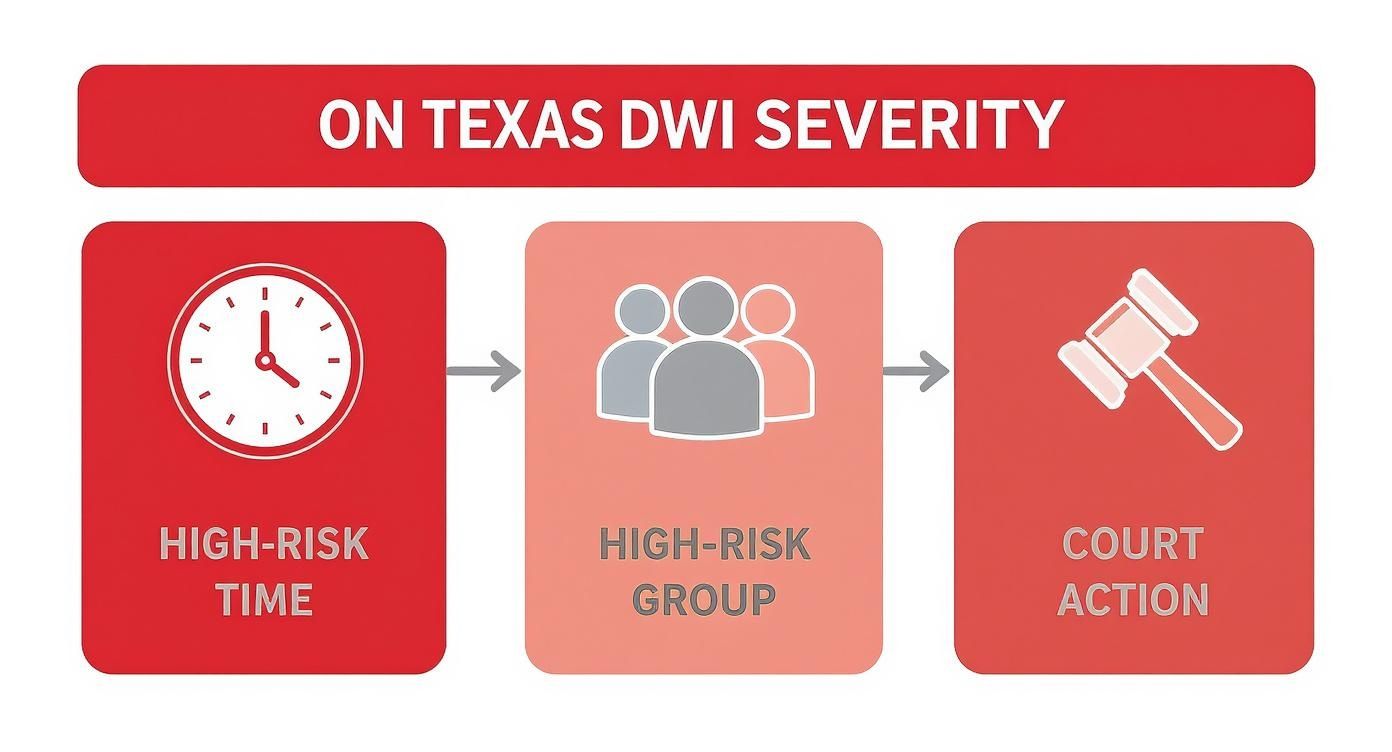
As you can see, high-risk behaviors often lead straight to court intervention. That makes completing these classes a non-negotiable part of resolving your case. Following the enrollment process correctly helps you meet your legal obligations without adding more stress and puts you in a much better position for a favorable outcome.
Step 1: Find a State-Approved Provider
First things first: you must find a program certified by the Texas Department of Licensing and Regulation (TDLR). This is an absolute must. The court will reject a certificate from an unapproved course, so do not cut corners here. The TDLR keeps an official online database of licensed providers, which is the only place you should be looking.
You'll find providers offering the standard 12-hour DWI Education course or the more intensive 32-hour DWI Intervention program. Costs for these Texas DWI classes usually fall somewhere between $80 and $200, but this can vary depending on the provider and location.
It’s a good idea to call a few different providers to compare their schedules and prices before you sign up. This way, you can find a class that works for your budget and your schedule, making it easier to get it done on time.
Step 2: Decide Between Online and In-Person Classes
For a long time, Texas required DWI education to be done in a classroom. The rules have relaxed, and some TDLR-approved providers now offer the 12-hour DWI-E class online.
Before you click "enroll," think about these factors:
- Court Approval: This is the big one. Always confirm with your attorney or the court that an online class will satisfy your specific legal requirements. Some judges still insist on an in-person course.
- Convenience: Online classes give you more flexibility. If you have a demanding job or getting around is a challenge, this can be a great option.
- Engagement: Some people learn better in person. The direct interaction with instructors and others in a similar situation can be more impactful and help the material sink in.
Keep in mind that the 32-hour DWI Intervention program for repeat offenders is almost always an in-person requirement. Its intensive, therapeutic style just doesn't translate well to an online format.
Step 3: Understand Your Deadlines and Submit Proof
This is where you absolutely cannot drop the ball. You will be given strict deadlines for both enrolling in and finishing your DWI course. The court usually sets these dates as a condition of your bond or probation, and the Texas Department of Public Safety (DPS) sets them for your driver’s license.
Missing a DPS deadline—typically 180 days from your conviction date—can mean an automatic suspension of your driving privileges, regardless of what the court ordered. It is entirely on you to make sure your completion certificate is filed with both the court and the DPS.
Once you finish the course, you will receive a certificate of completion. Make copies right away. You’ll need to submit the original to the court clerk and send another copy to the DPS to prove you’ve met their requirements.
For some extra perspective, it can be helpful to look into resources on navigating court-ordered driving school, as the procedures often have similarities. An attorney is invaluable here; they can make sure all the paperwork is filed correctly and on time, preventing a simple administrative error from turning into a major legal headache.
How Completing a DWI Class Can Help Your Case
Finishing your required Texas DWI class isn't just about checking a box for the court or the DMV. It’s a strategic move—one that can genuinely improve the outcome of your case. Taking the initiative to enroll and complete it early shows the prosecutor and judge that you take this situation seriously and are committed to doing the right thing.
This single action can change how your case is perceived. You’re no longer just another defendant; you're someone actively taking steps toward rehabilitation. Your attorney can leverage this proactive stance as a powerful tool at every stage of the legal process, from arraignment to plea bargaining and sentencing.
A Powerful Tool for Negotiation
When your attorney walks into a room to negotiate with the prosecutor, having your DWI class completion certificate in hand is a major advantage. It’s tangible proof that you’re accountable. That simple piece of paper can be the key to unlocking plea bargain options that might not have been on the table otherwise.
From the prosecutor’s perspective, their primary goal is public safety and preventing repeat offenses. By completing an educational course, you’re directly addressing their biggest concern. You've shown you understand the risks of impaired driving and have already taken the court-mandated steps to ensure it doesn't happen again.
This can lead to some very real benefits, like:
- Reduced Charges: In some situations, a prosecutor might be willing to reduce a DWI to a lesser offense, like obstruction of a highway.
- Lighter Penalties: It could pave the way for agreements on lower fines, less community service, or a shorter probation period.
- Avoiding Harsher Sanctions: Proactive compliance can sometimes help you avoid extra requirements, like an ignition interlock device.
Influencing Sentencing and Court Perception
If your case proceeds to sentencing, the judge’s perception of you is everything. Judges have a lot of discretion when it comes to penalties. When they see you’ve already completed your DWI class, it sends a strong, clear message of remorse and responsibility.
Completing your DWI class ahead of schedule shows respect for the court and the legal process. It proves you’re not waiting to be told what to do—you’re taking ownership of the situation. This can be a deciding factor when a judge is weighing whether to impose minimum or maximum penalties.
This positive impression can directly influence the terms of your sentence. A judge might be more inclined to grant a shorter probation term, reduce court-ordered fines, or even waive certain conditions because you’ve already proven you’re committed to compliance.
The Path to Reinstating Your License and Clearing Your Record
Let's be clear: completing your Texas DWI class is often a non-negotiable requirement for getting your driver’s license back. The Texas Department of Public Safety (DPS) simply will not reinstate your driving privileges until they receive proof of completion. Finishing the course as soon as you can is the fastest way to get back on the road and regain your independence.
Beyond the immediate benefits, completing your class is a critical step for your long-term future. If you are ever in a position to clear your record, this will be a key piece of the puzzle. An attorney can help you determine if you qualify for post-conviction relief, and you can learn more by reading our guide to expunging a DWI in Texas. This process is vital for anyone looking to fully move past a conviction and restore their good name.
Frequently Asked Questions About Texas DWI Classes
Navigating the world of court-ordered classes after a DWI charge can feel overwhelming. You’ve got a lot on your plate, and the requirements can seem confusing. Below, we’ve tackled some of the most common questions we hear every day to give you some clarity and help you figure out your next steps.
Can I Take My Texas DWI Class Online?
This is easily one of the first questions people ask, and the short answer is: maybe. For the standard 12-hour DWI Education (DWI-E) course that most first-time offenders are required to take, the state does certify some providers to offer it online. This can be a huge help if you're juggling a demanding job or don't have reliable transportation.
But here’s the most important part: you can’t just sign up for the first online course you find. Before you enroll in any online Texas DWI class, you absolutely must confirm with your attorney or the court that an online certificate will be accepted in your specific case. Some judges firmly believe the in-person experience is more effective, so they will not approve an online option.
For the more intensive 32-hour DWI Intervention (DWI-I) program for repeat offenders, an in-person class is almost always required because it’s a therapeutic, group-focused program. The bottom line: always double-check with your lawyer before you pay for anything.
What Happens If I Miss My Completion Deadline?
Ignoring your completion deadline is a serious mistake that can quickly turn a manageable situation into a legal nightmare. The court and the Texas Department of Public Safety (DPS) will give you a firm deadline to turn in your certificate of completion. Missing that date triggers a whole new set of problems.
Here’s what you’re facing if you miss that cutoff:
- Automatic Driver’s License Suspension: The DPS will suspend your license for non-compliance, and it will stay that way until they have proof you finished the class. This is a separate suspension from anything the court ordered.
- Probation Violation: If the class was a condition of your probation, missing the deadline means you’ve violated your terms. The judge could then revoke your probation entirely and order you to serve jail time.
- A Warrant for Your Arrest: Probation violations often lead directly to the court issuing a warrant. The last thing you want is to get pulled over for a minor traffic stop and end up in handcuffs.
If you have a legitimate reason you can’t meet the deadline, don’t just let it slide. Call your attorney immediately. A good lawyer can get in front of the judge, file a motion for an extension, and show that you’re making a good-faith effort to comply, which can help you avoid these serious penalties.
Procrastination is your worst enemy here. It can turn a simple requirement into a full-blown legal crisis. Be proactive and talk to your attorney the moment you think you might have an issue finishing on time.
Does Completing a DWI Class Get My Charge Dismissed?
This is a very common myth. While finishing your DWI class is a critical and positive step, it will not automatically get your charge dismissed. It’s better to think of it as a single, powerful piece of your overall defense strategy, not a magic wand.
When you successfully complete your course, you’re showing the court and the prosecutor that you’re taking this seriously. Your attorney can then use that to your advantage in a few key ways:
- As a Negotiating Tool: It gives your lawyer leverage when trying to work out a better plea deal with the prosecutor, which could mean reduced charges or lighter penalties.
- To Influence Sentencing: It sends a positive message to the judge, who may be more inclined to give you favorable sentencing terms if you are ultimately convicted.
- As Part of a Larger Strategy: In some Texas counties, completing a DWI class is a mandatory first step to even be considered for a pretrial diversion program. These programs, if completed successfully, can lead to a dismissal.
Ultimately, getting a DWI charge dismissed is a tough legal battle that depends on the unique facts of your case, the evidence against you, and the skill of your defense attorney. Completing your class is a vital part of that fight, but it is almost never the single reason a case gets thrown out.
If you’ve been charged with a crime in Texas, call The Law Office of Bryan Fagan, PLLC for a free and confidential consultation. Our defense team is ready to protect your rights.