Discovering there’s an active warrant for your arrest in Collin County, Texas can be terrifying — but you don’t have to face it alone. Whether you stumbled upon it during a background check or received a notice in the mail, your world can feel like it’s grinding to a halt. The good news is, you are not the first person to go through this, and there is a clear path forward.
What to Do the Moment You Discover an Active Warrant in Collin County

The dread hits you like a ton of bricks. Your first thought is probably a mix of panic and confusion: "A warrant? For me? How?" These feelings are completely normal, but you can’t let panic paralyze you. It’s time to shift from shock to a proactive strategy, and that starts with understanding exactly what you're up against.
A warrant isn’t just a strongly worded letter. It’s a legal order, signed by a judge, giving law enforcement the authority to arrest you on sight. It will not expire or simply go away on its own.
Arrest Warrants vs. Bench Warrants: What’s the Difference?
Not all warrants are created equal, and knowing the type you're dealing with is a critical first step. In Texas, warrants generally fall into two categories:
- Arrest Warrants: These are what most people think of. A judge issues an arrest warrant after police present evidence (known as "probable cause") suggesting you committed a new crime. This could be anything from a theft or assault investigation where a detective has built a case against you.
- Bench Warrants: These come directly from the judge's "bench," usually because you failed to do something the court ordered. Common reasons include missing a court date, not paying a fine, or failing to complete mandatory community service. A "Capias" warrant is a specific and very common type of bench warrant.
Finding out you have a warrant is a shock, but it is a solvable legal problem. With a trusted guide and the right approach, you can confront this head-on and aim for the best possible outcome.
Why Do People Get Warrants in Collin County?
Warrants are issued for many reasons, from minor traffic-related issues to serious felony charges. In Collin County, active warrants are a constant focus for local law enforcement. As one of the fastest-growing counties in the nation, with a population now well over 1.1 million, the sheer volume of court cases and potential warrants has grown with it.
The Collin County Sheriff's Office and courts manage a massive number of judicial records. You can get a sense of the scale by looking at the official county portal. You can explore the Collin County Judicial Online Search for more details.
A warrant doesn’t automatically mean you will be found guilty. It is simply the start of a legal process. How you respond in the initial hours and days is critical.
Let’s be clear: ignoring a warrant is the worst move you can make. An active warrant means you could be arrested at any time or place—during a simple traffic stop, at work, or even at home in front of your family. This guide is designed to replace that anxiety with a clear plan, showing you how smart, proactive decisions can protect your rights and your future.
How to Safely Confirm an Active Warrant in Collin County

Before you can make a plan, you need the facts. The very first step is to confirm whether a warrant actually exists and to understand exactly what it’s for. The key is to gather this information without alerting law enforcement or accidentally walking into an arrest.
Your best and safest starting point is almost always online. Collin County provides public tools that let you search for court records from a distance. This is the most private and secure way to get the information you need.
Using the Collin County Judicial Online Search Portal
The official county website is your most trustworthy resource. The Collin County Sheriff’s Office maintains a public resources page that includes an Active Warrants Report and other critical data. You can see the full range of their public-facing services on the Collin County Sheriff's services page.
The main tool you’ll be using is the Judicial Online Search. It’s a powerful database that lets you look up active cases across District, County, and Justice Courts.
Here’s a step-by-step guide on how to use it:
- Go to the Judicial Search Page: Locate the Collin County Judicial Online Search tool.
- Enter Your Name: Use your full, legal name. If nothing comes up, try slight variations or nicknames, as clerical errors can happen.
- Analyze the Results: If there’s a match, you’ll see a case record. Look closely for the case number, the specific charge (the offense), the court it’s filed in, and, most importantly, the bond amount.
This portal is incredibly useful because it often links directly to inmate records and other case details, giving you a comprehensive view of the situation right from the source.
Interpreting the Information You Find
Seeing a case record tied to your name can be jarring. Let’s break down what these terms mean for you. The charge tells you the specific crime you're being accused of, which dictates the severity of the situation. The bond amount is the money the court requires to secure your release from jail after you've been arrested and processed.
What if the bond is listed as $0.00 or is blank? This doesn't mean you’re off the hook. It typically means a judge hasn't set a bond yet. A criminal defense attorney can file a motion to get a reasonable bond set, which is a critical step in protecting your freedom.
Crucial Insight: The information you find online is your foundation. It gives you and your attorney the facts needed to build a strategy, whether that involves arranging a quick "walk-through" surrender or preparing to fight the charge itself.
The Dangers of Checking for a Warrant in Person
You might feel the urge to just call the Collin County Sheriff's Office or walk in and ask if you have a warrant. We strongly advise against doing this. It seems like the most direct route, but it’s loaded with risk.
If you show up at the sheriff’s department in McKinney and they confirm an active warrant, deputies have a legal obligation to arrest you on the spot. Your simple inquiry instantly turns into you being booked into the Collin County Jail. You completely lose control of the situation.
Calling isn’t much safer. While they won't arrest you over the phone, you’ve now put yourself on their radar and may have confirmed your contact information, potentially escalating their efforts to serve the warrant.
To help you decide on the best approach, let's compare the different methods for checking on a warrant.
Comparing Warrant Search Methods in Collin County
The way you choose to find out about a warrant can have significant consequences. Each method comes with its own set of risks and benefits.
| Method | Pros | Cons | Best For |
|---|---|---|---|
| Online Judicial Search | • Discreet and private • Accessible 24/7 from anywhere • Provides detailed case info |
• Potential for data entry errors • May not reflect most recent updates |
Initial, safe discovery. This should always be your first step to gather facts without risk. |
| Hiring an Attorney | • Completely risk-free for you • Attorney can verify info discreetly • Provides immediate legal advice |
• Involves a professional fee | The safest and most strategic option. Best for anyone who suspects a warrant and wants to create a plan. |
| Calling the Clerk/Sheriff | • Direct access to information | • High risk of alerting law enforcement • They may not provide full details over the phone |
Not recommended. The risk of escalating the situation far outweighs any potential benefit. |
| Visiting in Person | • Get a definitive yes/no answer | • Extreme risk of immediate arrest. You will be taken into custody if a warrant exists. | Never recommended. This is the surest way to get arrested on the spot without a plan. |
As the table shows, starting your search online and then immediately contacting an attorney is by far the most secure and strategic path. An experienced lawyer can often confirm a warrant on your behalf without raising any red flags, giving you the time and space to decide on your next move.
Decoding Your Warrant: Misdemeanor, Felony, or Capias
So you've confirmed there's an active warrant out for you in Collin County. That discovery is a gut-punch, but before panic sets in, you must figure out exactly what kind of warrant it is. The word "warrant" is scary, but not all of them carry the same weight or demand the same response.
Figuring out the specific type of warrant is the first step in building a smart defense. Is this a minor issue that can be cleared up quickly, or is it something that could jeopardize your future? The answer changes everything about what you should do next.
The Two Main Categories: Misdemeanors and Felonies
In Texas, crimes—and the warrants that come with them—are defined by the Texas Penal Code and fall into two main buckets: misdemeanors and felonies.
Misdemeanor Warrants: These are issued for less severe offenses like simple assault, theft of something of low value (shoplifting), or a first-time DWI. While you absolutely must take them seriously, the penalties are generally limited to fines, probation, or up to one year in county jail.
Felony Warrants: These are reserved for the most serious crimes. A felony warrant could be for anything from aggravated assault and burglary to serious drug possession charges. Here, the stakes are dramatically higher, with potential sentences that include years—or even life—in a state prison.
A warrant for a forgotten traffic ticket (a Class C Misdemeanor) is a world away from a warrant for a first-degree felony. One might be a headache to resolve, while the other demands an immediate, aggressive legal defense.
Understanding Specialized Warrants
Beyond the basic misdemeanor and felony split, you might run into a few other specific types of warrants in Collin County. Each one has its own set of rules, and it’s crucial to know what you’re dealing with.
One of the most common is a Capias warrant. This is a type of bench warrant a judge issues when you have failed to follow a direct court order, like missing a court date or not finishing the terms of your probation.
A Capias warrant is basically the judge telling law enforcement, "This person ignored a court order. Go find them and bring them to my courtroom." It’s not for a new crime; it’s about forcing you to show up and comply.
For example, if you were ordered to pay a fine from an old case but missed the deadline, the judge can issue a Capias to have you arrested. If you’re trying to get a handle on this specific situation, you can learn more about what a Capias charge means and how to handle it.
Another serious type is a "blue warrant," which is exclusively for parole violations. If a parole officer believes someone has broken the rules of their release, they can get a blue warrant issued. These are tough because there’s often no bond available, meaning you could be held in jail until a hearing takes place.
Knowing the exact nature of your warrant—whether it’s for a new felony, a minor misdemeanor, or a Capias for a missed court date—is the bedrock of your entire defense. An experienced attorney can look at the details and tell you exactly what you're up against.
Your First Moves After Discovering a Warrant
Finding out there’s an active warrant with your name on it in Collin County is a gut-punch moment that demands quick, smart decisions. What you do in the next 24 to 48 hours can set the entire tone for your case. Here's your first and most important rule: never, ever ignore a warrant.
Hoping it will just go away is a losing strategy. A warrant doesn't expire. Instead, it hangs over your head, waiting to turn a routine traffic stop into a public and embarrassing arrest. Taking control of the situation starts now.
The Smart Surrender: A "Walk-Through"
One of the most powerful first moves you can make is what we call a "walk-through" surrender. This isn't just turning yourself in blindly; it's a carefully orchestrated process, managed by your attorney, to dramatically reduce your time in custody and sidestep the humiliation of a surprise arrest.
Here’s a step-by-step of how it works:
- Your lawyer contacts the Collin County Sheriff's Office to arrange a specific time for you to come in.
- We have all necessary bond paperwork filled out and ready to file the moment you arrive.
- You "walk through" the booking process—getting fingerprinted and having a mugshot taken—and are typically released in just a few hours, not days.
A walk-through puts you in the driver's seat. It demonstrates to the court that you are taking the matter seriously and are not a flight risk, which can create goodwill from the very beginning.
This proactive move shows law enforcement you’re cooperating, which immediately de-escalates things and prevents them from having to hunt you down.
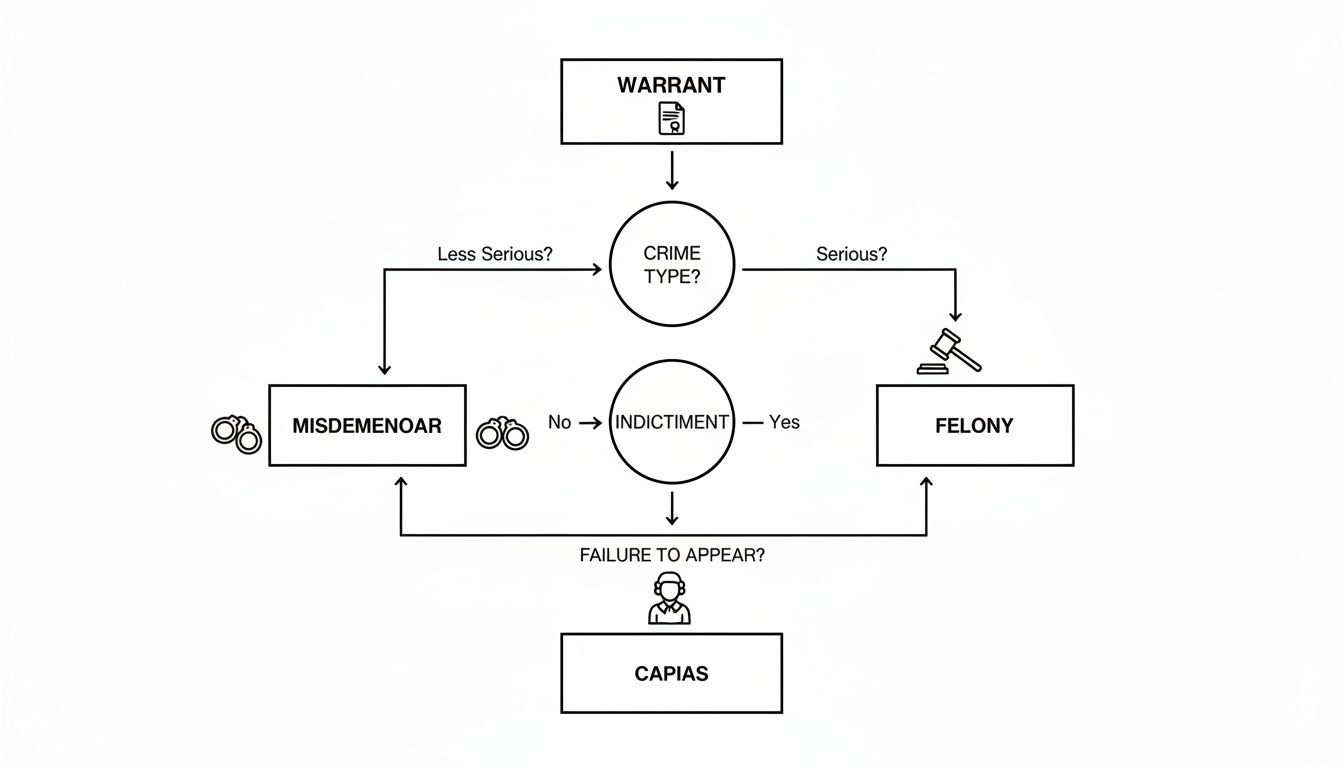
As the flowchart shows, whether you’re facing a warrant for a misdemeanor, a felony, or a Capias matter, your initial legal moves are critical.
Posting Bond to Secure Your Freedom
Most warrants come with a pre-set bond amount. Let's be clear: bond is not a punishment or a fine. It’s simply a financial promise to the court that you’ll show up for all your required court dates. You generally have a couple of ways to post it:
- Cash Bond: You pay the entire bond amount directly to the court. If you make all your court appearances, you get this money back when the case is over (minus administrative fees).
- Surety Bond: This is the more common route. You hire a bail bond company and pay them a non-refundable fee, usually 10-15% of the total bond. The company then posts the full amount for you.
This is where a criminal defense attorney becomes invaluable. We can connect you with a trustworthy bondsman and, in some situations, file a motion to argue for a lower bond amount. For less serious offenses, we might even successfully argue for a Personal Recognizance (PR) bond, which means you’re released on your written promise to appear, with no money down. Securing a PR bond can save your family thousands of dollars right off the bat.
Can the Warrant Be Recalled?
In certain cases, it's possible to get the warrant recalled or withdrawn by the judge. A recall is the best-case scenario—it essentially cancels the warrant, allowing you to skip the booking process entirely.
A warrant recall is most likely to succeed when there’s been a clerical mistake or if we can prove you were never properly notified of your court date. For instance, if the court summons was mailed to an old address, your lawyer can present that evidence to the judge. The rules around court notifications are complex, and if your warrant was issued because you missed a court date, it's critical to act fast. For more on that, you can check out our guide on what to do if you miss a court date in Texas.
Getting a warrant recalled isn’t guaranteed, but it’s an option a good attorney will always explore first. If we succeed, you avoid arrest completely and can focus on fighting the underlying charge.
Building Your Defense Beyond the Warrant
Getting a Collin County warrant cleared is a huge relief, but it’s only the beginning. Think of the warrant as the fire alarm; the criminal charge itself is the fire you still have to put out. A conviction can trail you for years, affecting everything from your job and housing to your professional license.
The focus must shift immediately from the threat of arrest to building a rock-solid defense against the state’s allegations. A good legal team gets to work right away, protecting your rights and examining the prosecutor's case from every possible angle.
A Deep Dive Into the Evidence
First, we need to see exactly what evidence the state has against you. Your attorney will file a Motion for Discovery, a formal legal demand that forces the prosecutor to hand over every piece of evidence in their file. This includes:
- Police Reports and Officer Notes: We hunt for inconsistencies, procedural errors, and statements that don’t line up.
- Witness Statements: We dig into what witnesses claim they saw, looking for potential bias, contradictions, or memory gaps.
- Body Cam and Dash Cam Footage: We watch it frame-by-frame to see if the officer's written report matches what actually happened.
- Forensic Evidence: Whether it's a lab result in a drug case or physical evidence in an assault charge, we scrutinize how it was collected and whether the conclusions are scientifically sound.
This deep dive is all about finding the weak spots. Did the officer have a legal reason to pull you over in the first place? Were you read your Miranda rights before being questioned? Every crack we find in their case is leverage for you.
A strong defense is built on details. By taking the prosecution's case apart piece by piece, we can often find the key to getting charges reduced or dismissed entirely.
Negotiating From a Position of Strength
Once we have a full picture of the evidence—and its flaws—your attorney can begin negotiations with the prosecutor. This is a strategic negotiation where we lay out the weaknesses in their case and show them the risks they run by taking it to trial.
For instance, if a crucial piece of evidence came from an illegal search, we can file a Motion to Suppress. If a judge agrees the search violated your constitutional rights, that evidence gets thrown out. Suddenly, the prosecutor’s "slam dunk" case might fall apart. Presenting this possibility during negotiations often leads to a much better outcome, like a full dismissal or a reduction to a lesser charge.
If your case does head toward a trial, knowing how to prepare for trial and win your case is absolutely essential. We prepare every single case as if it’s going in front of a jury. That level of readiness sends a powerful message to the other side: we will not back down.
Looking Toward the Future: Expunctions and Record Sealing
Even when a case is resolved in your favor, its ghost can haunt your public record. That’s why a smart defense strategy always includes planning for post-conviction relief. In Texas, we have powerful legal tools designed to help you wipe the slate clean.
Two of the most important are:
- Expunctions: An expunction (or expungement) is a court order that results in the complete destruction of your arrest records. If your case was dismissed or you were found not guilty, you may be eligible to have every record of the incident permanently erased as if it never happened.
- Orders of Nondisclosure: If you successfully completed deferred adjudication probation, you might be able to get an Order of Nondisclosure. This doesn't destroy the record, but it seals it from the public, meaning it won’t show up on most background checks.
These remedies aren’t automatic. You have to formally petition the court, and the process has strict rules. An experienced criminal defense attorney near you can guide you through it, making sure you seize every opportunity to protect your reputation and future.
Common Questions About Collin County Warrants
That sinking feeling in your stomach when you discover an active warrant is something we see all the time. Getting straight answers is the first step to getting your life back on track. Here are the most common questions our criminal defense team gets, answered in plain English.
How Long Does a Warrant Stay Active in Collin County?
This is a huge point of confusion. Let's be clear: in Texas, an arrest warrant does not expire. It stays active forever, or until you are arrested, you turn yourself in, or an attorney convinces the court to recall it.
That means an old warrant from years ago can pop up during a simple traffic stop. The result? An immediate, public, and embarrassing arrest. Time won't make a warrant disappear; only taking action will.
Can I Be Arrested for a Collin County Warrant in Another County?
Yes, without a doubt. When a Collin County judge signs a warrant, it gets entered into statewide and national law enforcement databases—the Texas Crime Information Center (TCIC) and the National Crime Information Center (NCIC).
This system gives any police officer, anywhere in Texas or even out of state, the ability to see your active warrant. If you're pulled over in Houston or stopped at an airport, the officer will see the Collin County warrant and has the authority to arrest you on the spot. You'll then sit in a local jail awaiting extradition back to Collin County, a process that can take days or weeks.
An active warrant follows you everywhere. It’s not a local problem but a nationwide liability that can disrupt your life at any moment.
If I Just Pay the Fine, Will the Warrant Go Away?
While it might feel like the quickest fix, just paying the fine is often a huge mistake, especially for traffic tickets and other Class C misdemeanors. When you pay that fine, you are legally admitting guilt. The result is a final conviction on your permanent record.
That conviction has consequences. It can add points to your driver's license, which can raise your insurance rates or even trigger a license suspension. An attorney can almost always negotiate a much better outcome, like a dismissal or deferred disposition, which keeps the charge off your record entirely.
What Is a Walk-Through and How Does It Help?
A "walk-through" is a pre-arranged surrender that your attorney coordinates directly with the jail. It’s a powerful way to take control of a stressful situation. Instead of waiting for the police to show up at your job or home, you handle it on your own terms.
The main benefit is avoiding a public, surprise arrest. Your lawyer prepares the bond paperwork ahead of time. You go to the jail at a scheduled time, complete the booking process, and get released—often in just a few hours. A walk-through shows the court you're taking responsibility and allows you to face the charge with your dignity intact.
If you’ve been charged with a crime in Texas, call The Law Office of Bryan Fagan, PLLC for a free and confidential consultation. Our defense team is ready to protect your rights. Schedule your consultation here.