Skip to content
An old arrest record can feel like a ball and chain, holding you back long after a case is closed. While many Texans know an expunction can unlock a fresh start, the potential cost often causes them to pause. If you're feeling anxious about a past mistake, know that you have options and you don't have to face this alone.
Let's get straight to it: the all-in cost to expunge a record in Texas typically falls between $2,000 and $3,500, covering both attorney and court fees.
Understanding the Investment in Your Future

Being arrested in Texas can be terrifying, but you don't have to let the aftermath define you. The legal path to clearing your name is called expunction, and it literally destroys the records of an arrest or charge. Think of it as hitting the reset button, legally erasing a past mistake so you can move forward without it dragging you down.
But an expunction isn't a simple form you fill out. It's a formal civil lawsuit filed against every state agency holding your records, and it demands absolute precision. That price tag reflects the detailed, meticulous legal work needed to get it done right the first time.
Breaking Down the Primary Costs
When you look at the total cost of an expunction, it really boils down to two main expenses:
- Attorney Fees: This is what you pay for the legal expertise required to navigate the maze of the Texas Code of Criminal Procedure. It covers drafting and filing your petition, communicating with the courts, and representing you.
- Filing and Administrative Fees: These are the non-negotiable costs the court charges to file your lawsuit. It also includes the fees for officially serving notice to all the government agencies that are required to destroy your record.
Over the past decade, these costs have crept up. Today, attorney fees generally run between $1,500 and $3,000. On top of that, court filing fees will add another $300 to $450, depending on which Texas county handled your case.
To give you a clearer picture, here’s a quick summary of what to expect.
Estimated Expunction Costs in Texas at a Glance
| Expense Category | Typical Cost Range | What It Covers |
|---|---|---|
| Attorney Fees | $1,500 – $3,000 | Legal strategy, petition drafting, filing, court representation, and communication with state agencies. |
| Court Filing & Service Fees | $300 – $450 | The mandatory cost to file the civil lawsuit and officially notify all parties involved. |
| Total Estimated Cost | $2,000 – $3,500 | The combined, all-in price for a standard expunction process from start to finish. |
This table gives you a solid baseline, but remember that every case is unique. The complexity of your situation and the county where you file can nudge these numbers up or down.
Getting a handle on the full scope of the process is your first step. Our complete guide on how to get your criminal record expunged breaks down the entire legal journey. This isn't just a fee; it's a direct investment in reclaiming your opportunities and your peace of mind.
Decoding Your Attorney Fees
When you start looking into getting an expunction, you’ll quickly realize the biggest line item is almost always the attorney's fee. It might feel like a hefty price tag, but what you're really paying for isn't just someone to fill out forms. You're investing in a trusted guide with years of legal experience to navigate a tricky process and give you the peace of mind that comes from knowing it’s being handled correctly the first time.
Think of it this way: an expunction is a full-blown civil lawsuit. One tiny mistake on the petition or a missed deadline can get your case thrown out for good. The cost to expunge a record in Texas is a direct reflection of the meticulous, high-stakes work required to win that lawsuit and permanently clear your name.
What Does the Attorney Fee Actually Cover?
The fee you pay an experienced criminal defense attorney covers all the critical behind-the-scenes work needed to completely erase your record. They handle every single step, making sure nothing falls through the cracks so you can focus on moving forward.
Here’s a look at what’s really going on:
- Eligibility Deep Dive: Before anything else, your lawyer will dig into your case to make 100% sure you qualify under the strict rules of the Texas Code of Criminal Procedure. This is a crucial first step—it stops you from spending good money on a case that’s dead on arrival.
- Drafting the Lawsuit: Next, they’ll draft a precise, legally sound "Petition for Expunction." This isn't just a form; it's a formal legal document that has to be perfect. Any error can cause major delays or even get your petition flat-out rejected.
- Hunting Down Every Record: A huge part of the job is identifying every single government agency that has a copy of your arrest record. We’re talking local police, the sheriff’s office, the county prosecutor, and even state-level agencies like the Texas Department of Public Safety. Each one has to be officially served with the lawsuit.
Understanding Fee Structures
Most reputable law firms, including The Law Office of Bryan Fagan, PLLC, handle expunctions on a flat fee basis. This is a massive advantage for you because it gives you total cost certainty right from the start.
With a flat fee, you know the exact cost of legal representation upfront. There are no surprise hourly bills or unexpected charges, allowing you to budget for your future without financial uncertainty. This structure ensures your legal team is focused on achieving the best outcome efficiently, not on tracking hours.
That flat fee covers all the essential legal work, from our first conversation to the moment a judge signs the final order to destroy your records. It puts us on the same team with the same goal: to get your expunction done as smoothly and effectively as possible. This fee isn't just a legal expense; it's the engine that drives the whole process forward and gets you that clean slate you deserve.
Navigating Court and Administrative Fees
Beyond what you pay your attorney, the path to a clear record comes with several mandatory government fees. Think of these as the non-negotiable costs of doing business with the legal system. Understanding them upfront is key to building a realistic budget for the cost to expunge a record in Texas.
The whole process officially kicks off the moment your lawyer files a "Petition for Expunction." This is the civil lawsuit that formally asks a judge to order the destruction of your criminal records. Just filing this document triggers a fee that goes directly to the district clerk’s office.
This infographic shows you all the work that goes into your case before we even get to the courthouse steps.
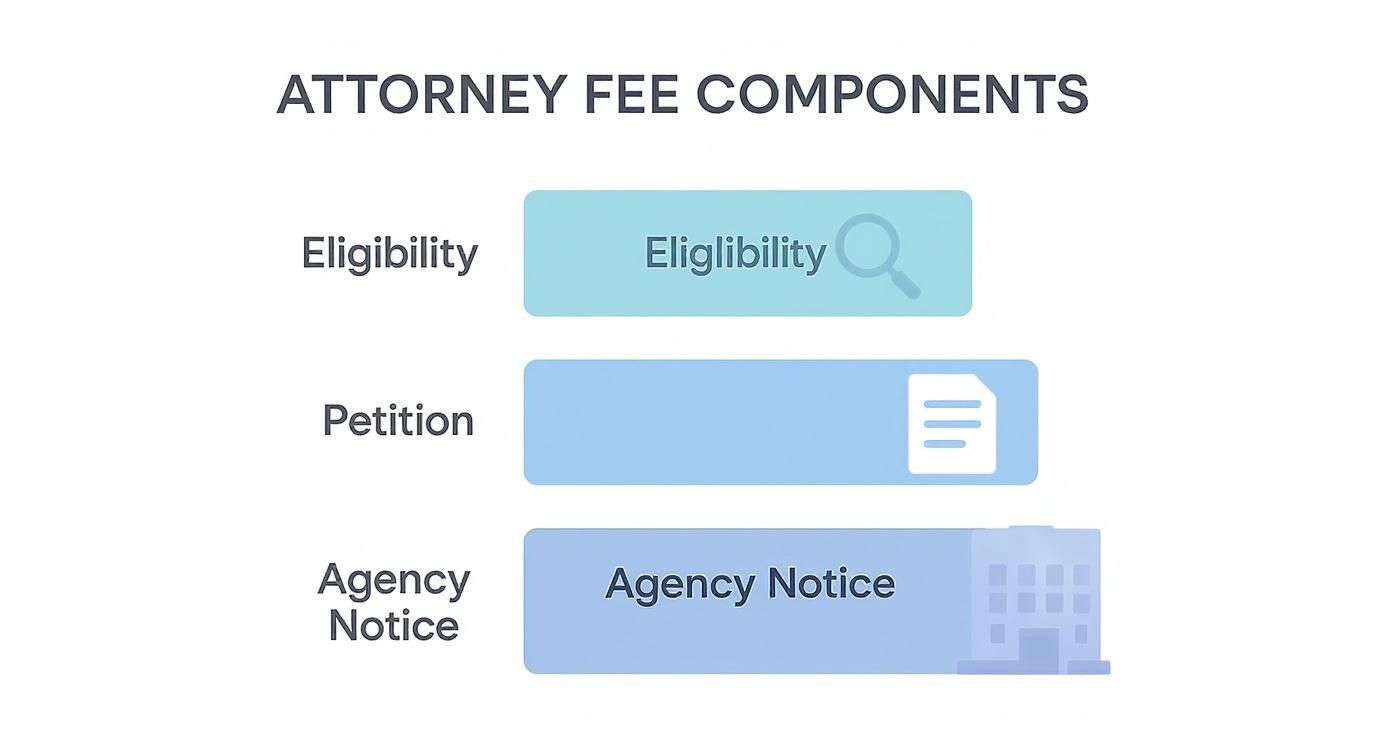
As you can see, a huge amount of legal legwork—from checking if you're even eligible to drafting the petition itself—is already done before that first filing fee is ever paid.
How Location Impacts Filing Costs
Here’s something that catches a lot of people by surprise: court filing fees aren't the same everywhere in Texas. The price tag depends entirely on the county where your original case was filed. These differences can be pretty significant and will directly bump your total expenses up or down.
For example, filing your petition in Harris County might cost you around $350, but head over to Tarrant County, and you could be looking at a fee closer to $325. It might not seem like a massive difference, but it's a perfect example of why you can't rely on a one-size-fits-all estimate.
These local variations are exactly why it's so important to get a quote based on your specific case. To get a feel for how these local rules and costs play out in the real world, you can learn more about the specific process for an expungement in Harris County, Texas.
To give you a clearer picture, here’s a quick look at how filing fees can vary across some of the major counties in Texas.
Sample Court Filing Fees Across Texas Counties
| Texas County | Approximate Filing Fee | Notes |
|---|---|---|
| Harris County | $350 | One of the higher fees in the state, reflecting a major metropolitan area. |
| Dallas County | $340 | Very similar to Harris County in terms of cost. |
| Tarrant County | $325 | Slightly less expensive than its larger neighbors. |
| Bexar County | $315 | San Antonio's county comes in a bit lower. |
| Travis County | $355 | Austin's fees are often among the highest due to local court costs. |
As the table shows, there's no single statewide price. These fees are set at the county level, and they can change, so it's always best to confirm the current amount for the specific jurisdiction where you need to file.
Other Essential Administrative Expenses
The court filing fee is usually the biggest administrative cost, but it's definitely not the last one. For an expunction order to be legally binding, every single government agency that has a copy of your record needs to be officially notified.
This means paying for a few other required services:
- Process Server Fees: These typically run $75 to $100 per agency. This fee pays a certified professional to physically hand-deliver a copy of the lawsuit to each "respondent"—like the local police department, the sheriff's office, and the district attorney.
- Certified Copies: Once the judge signs the final expunction order, you’ll need to buy certified copies from the clerk. These are the official documents with the court's seal that serve as your proof that the record has been ordered destroyed.
These court and administrative fees are unavoidable hurdles in the process. By budgeting for them from the very beginning, you can ensure there are no financial surprises on your journey to a clean slate.
Preparing for Unexpected Expunction Costs
Even with a clear, flat-fee agreement from your attorney, the legal system can sometimes throw a curveball. It’s important to understand what potential complications might pop up so the total cost to expunge a record in Texas doesn't catch you by surprise and derail your fresh start.
In a perfect world, your expunction petition sails right through the court system without a single issue. But sometimes, a government agency—usually the District Attorney's office—decides to file an objection to your request to have the records destroyed.
That one move can change the entire dynamic of your case.
When an Objection Changes the Game
An objection from the DA instantly transforms what was a straightforward administrative filing into a full-blown contested hearing. This means your lawyer can't just file the paperwork and wait for the judge’s signature. They now have to prepare for a court hearing to argue your case, presenting evidence and legal arguments to convince the judge to grant the expunction over the state's opposition.
This kind of additional legal work usually isn't covered by a standard flat fee. A contested hearing can easily add several hours of work, including:
- Legal Research: Diving deep into case law to build a rock-solid argument against the DA’s objection.
- Court Preparation: Getting you ready for the hearing and gathering all the necessary documents or testimony.
- Courtroom Advocacy: Standing up in court to formally argue your case before the judge.
Contested hearings are the most common reason for unexpected costs in an expunction case. While they don't happen in every case, it’s a possibility you need to be aware of, especially if your original charge was for a more serious offense.
The Challenge of Complex and Old Records
Another thing that can bump up the cost is the complexity of the record itself. If your arrest record is very old or involves multiple charges spread across different jurisdictions, your legal team will have to put in more time on the front end just to track everything down.
Think of it as an investigative phase. Your attorney is hunting for records that might be scattered across various city, county, and state agencies, some of which might still be using older, non-digital filing systems. This extra legwork is critical to make sure every single record is identified and included in your petition—miss one, and the whole expunction could fail.
Finally, don't forget the little administrative expenses that can add up. These include fees for getting certified copies of court documents, paying for notary services, or sending legal notices via certified mail. They may seem minor, but budgeting for these incidentals gives you a much more complete financial picture of the entire process.
Why Low-Cost Expunction Services Are Risky
When you start researching the cost to expunge a record in Texas, you’ll inevitably run into ads for cheap, do-it-yourself expunction services. These online companies promise a clean slate for just a few hundred bucks, and honestly, it can sound like a fantastic deal. But before you jump on what looks like a bargain, you need to understand the immense risk you’re taking.
An expunction isn’t just some simple form you download, fill out, and mail in. It's a formal civil lawsuit, and it’s governed by a very specific set of rules under the Texas Code of Criminal Procedure. The process demands absolute precision—from how the legal petition is written to making sure every single government agency holding a copy of your records is properly notified.
The Dangers of a Flawed Petition
Cutting corners with a cut-rate service can backfire in the worst way. A tiny error—a misspelled name, a missed deadline, or forgetting to serve the right law enforcement agency—can be fatal to your case. If the judge spots any flaw in your petition, they can, and very likely will, deny your request for an expunction.
A denial is often permanent. Unlike other legal issues where you might get a do-over, a denied expunction petition frequently slams the door shut on clearing that record forever. The money you tried to save could end up costing you the one and only chance you had to wipe your slate clean.
This isn’t a gamble you want to take. The difference between a fresh start and a permanent denial often boils down to legal expertise.
The Security of Professional Representation
Hiring a dedicated criminal defense law firm gives you a layer of security that a cheap online service just can’t offer. A real, experienced attorney knows the intricate legal landscape and takes full responsibility for getting every last detail right the first time around.
Here’s what that professional approach actually looks like:
- Thorough Eligibility Verification: We make sure you actually qualify for an expunction before a single piece of paper is filed.
- Precise Legal Drafting: We craft a flawless petition that meets every single statutory requirement, leaving no room for judicial rejection.
- Comprehensive Agency Notification: We do the legwork to identify and properly serve every single entity that has your record—from local police to state agencies you’ve never even heard of.
Choosing an experienced legal team takes the guesswork out of the process and drastically cuts down the risk of a permanent denial. Think of it as an investment in certainty, ensuring your path to a fresh start is handled with the professionalism it truly deserves.
Financial Options If You Cannot Afford an Expunction

Let's be honest—the path to a clean slate shouldn't be blocked by your bank account. If the cost to expunge a record in Texas feels out of reach, don't lose hope. You have practical options. The desire for a fresh start is something everyone understands, and there are ways to make it happen financially.
Many client-focused law firms, ours included, know that most people don’t have thousands of dollars sitting around for an unexpected legal expense. That’s exactly why we offer flexible payment plans. These arrangements break down the total cost into manageable monthly installments, taking the pressure off of coming up with one large lump sum.
This approach ensures you can get professional legal help without having to settle for a risky, low-cost alternative or, worse, giving up entirely. To help cover those payments, you might also look into strategies for generating extra income online to bridge the gap.
Reducing Costs with an Affidavit of Indigency
Beyond payment plans for the attorney fees, Texas law offers a powerful tool if you're facing serious financial hardship: a court document called an Affidavit of Indigency.
This is simply a sworn statement you file with the court, declaring that you don’t have the money to pay the required court filing and service fees. In short, you're asking the judge to waive these government costs based on your income and financial situation.
If the judge approves your affidavit, it can slash the overall cost of your expunction, potentially saving you several hundred dollars in mandatory fees. This legal tool is designed to ensure justice isn't only for those who can afford it.
An approved Affidavit of Indigency can be the key that unlocks the expunction process for someone who thought it was out of reach. It directly addresses the non-negotiable court fees, leaving only the attorney's fee to manage.
This is just one example of where having a good lawyer makes a real difference. Thinking about the differences between a public defender vs. a private attorney can also clarify why investing in a dedicated firm—one that offers these kinds of client-focused solutions—is so valuable. Our goal isn't just to handle your case; it's to give you the knowledge and financial flexibility you need to clear the hurdles and reclaim your future.
Your Top Questions About Expunction Costs, Answered
When you’re thinking about the money side of clearing your record, a lot of specific questions pop up. It’s completely normal. To help you get a better handle on things, here are some straight answers to the most common concerns we hear about the cost to expunge a record in Texas.
How Long Does the Expunction Process Take After I Pay?
Once you’ve hired an attorney and paid the initial fees, you can generally expect the entire expunction process to take between four to six months. It’s not an overnight fix, and there’s a good reason for that.
This timeline covers everything from A to Z: drafting and filing the official petition, serving all the different government agencies involved, waiting for the legally required response window to close, and finally, getting that signed order from the judge.
Can I Get a Refund if My Expunction Is Denied?
Typically, no. The attorney fees you pay are for the legal work, time, and expertise poured into your case—not for a guaranteed outcome. This is exactly why it’s so important to hire an experienced criminal defense lawyer who does their homework before taking your money.
A good, reputable attorney won’t even take your case unless they’ve thoroughly vetted your eligibility and believe you have a very strong chance of success. This approach protects you and your investment from the start.
The real value of a skilled attorney isn't just filing paperwork. It's their commitment to only taking on cases that are positioned to win. By confirming you qualify under the Texas Code of Criminal Procedure before filing, they ensure your money is spent wisely on a real path to a clear record.
Is the Cost to Seal a Record Different from an Expunction?
Yes, there's usually a noticeable difference in cost. Sealing a record, which in Texas is officially called an Order of Nondisclosure, often costs less than a full expunction.
The main reason is that the legal lifting for a nondisclosure can be less complex and demanding. But don't let cost be the only factor. The best route for you depends completely on the details of your criminal history. An expunction completely destroys the record, while a nondisclosure just hides it from public view.
If you’ve been charged with a crime in Texas, call The Law Office of Bryan Fagan, PLLC for a free and confidential consultation. Our defense team is ready to protect your rights. Learn more at https://texascriminallawyer.net.