Being arrested in Texas can be terrifying—but you don’t have to face it alone. Your world can feel like it's spinning out of control. One moment, life is normal; the next, you’re facing arraignments, court dates, and a paralyzing fear of what comes next. While friends and family offer support, the single most important decision you can make for your future is hiring the right criminal defense attorney.
This isn’t just about finding someone with a law degree. It's about finding an advocate who knows the local courts, has real experience with your specific charge—whether it’s a DWI, assault, or drug possession—and can guide you through the maze of the Texas criminal justice system. Your lawyer is your shield and your strategist, protecting your rights from the very beginning.
Your First Move After a Texas Arrest
A strong defense doesn't wait for the prosecutor to make the first move. It starts the moment you're in trouble. An experienced attorney gets to work immediately, often before formal charges are even filed.
Here’s what a proactive lawyer does right away:
- Preserves crucial evidence that can disappear over time.
- Contacts witnesses while their memories are still sharp and reliable.
- Represents you during police questioning to make sure you don’t accidentally say something that hurts your case.
This isn't just damage control; it's about building a foundation for the best possible outcome.
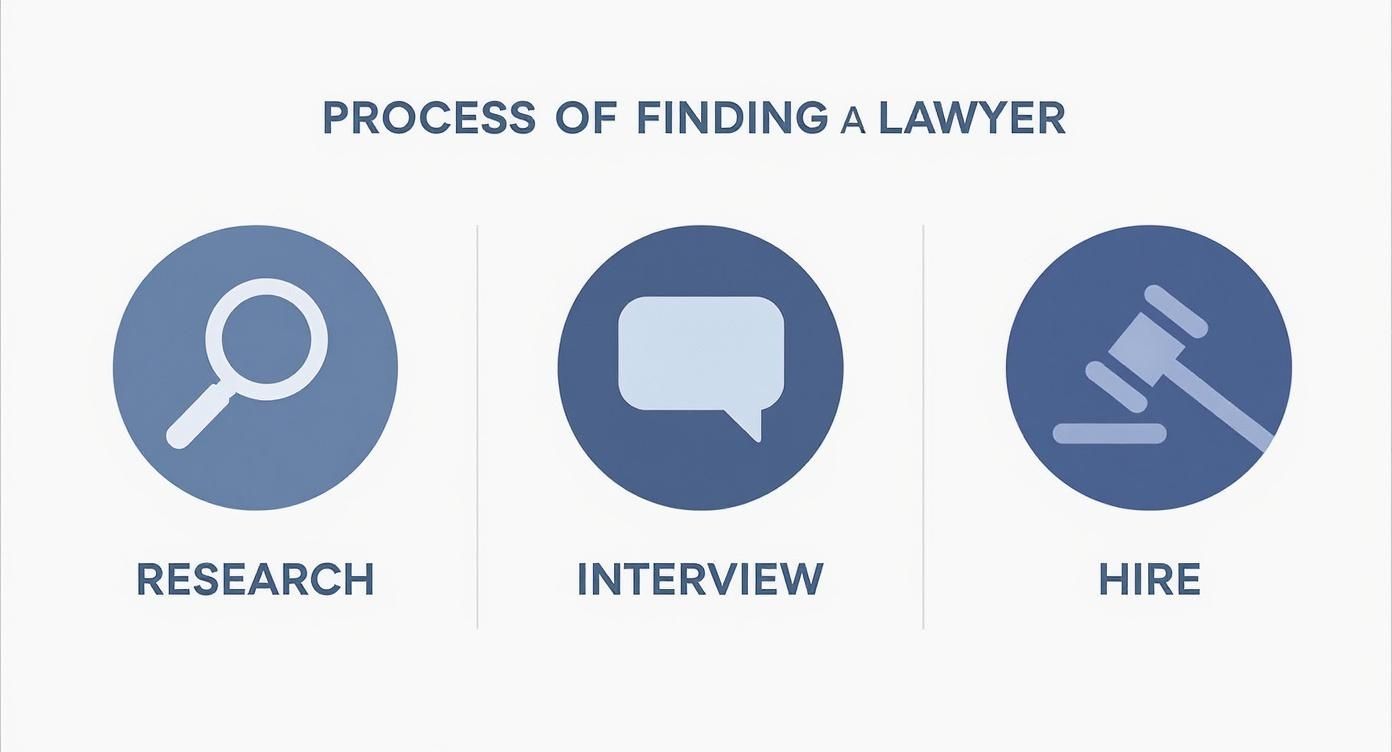
The roadmap is straightforward: research, interview, and then hire. This approach ensures you find an attorney who isn't just qualified on paper but is the right fit for you and the unique facts of your case.
Of course, before you can focus on your defense, you need to get out of jail. To learn more about that critical first step, check out our guide on how bail and bond in Texas works and what you should expect. Every decision you make in these early hours matters.
Key Qualities of an Effective Texas Criminal Defense Lawyer
As you start your search, it helps to know what separates a good lawyer from a great one. The table below breaks down the essential traits you should be looking for during your consultations.
| Quality | Why It Matters for Your Case |
|---|---|
| Local Courtroom Experience | Knows the judges, prosecutors, and local procedures, which can be a huge advantage. |
| Specific Case-Type Expertise | Has a proven track record handling cases just like yours (e.g., DWI, drug charges). |
| Clear Communication Style | Explains complex legal issues in plain English and keeps you informed every step of the way. |
| Aggressive but Realistic Strategy | Fights hard for you but also gives you an honest assessment of your options and potential outcomes. |
| Accessibility and Responsiveness | You can actually get them on the phone, and they respond to your questions in a timely manner. |
Think of this as your checklist. The right attorney won't just tick one or two boxes; they'll embody all of these qualities, giving you the confidence that your case is in the best possible hands.
What a Good Lawyer Really Means in Criminal Defense
When you’re looking for a good criminal lawyer, it’s easy to get sucked into the idea of a flashy trial attorney with a perfect, undefeated record. But the reality of the Texas criminal justice system is far more nuanced. A "win" isn't always a dramatic "not guilty" verdict in a packed courtroom.

The truth is, an attorney who only takes on slam-dunk cases might have a higher "win" percentage, but they may lack the battle-tested experience you need for a complex fight. A truly skilled lawyer often takes on the toughest cases—the ones where the evidence seems stacked against their client—because they know how to find the cracks in the prosecution's argument.
That experience, gained from fighting in difficult positions, is exactly what you need when your future is on the line.
Negotiation Skills Are Often More Important Than Trial Theatrics
The vast majority of criminal cases in Texas—and across the country—are resolved long before a jury is ever selected. They end through strategic negotiations, motions to suppress evidence, and carefully crafted plea agreements.
This is where a lawyer’s reputation and relationships with local prosecutors and judges become incredibly valuable. An attorney who is known for being prepared, professional, and tough—but fair—can often achieve remarkable results for their clients without ever stepping foot into a trial.
A great outcome might be getting a felony charge like Possession of a Controlled Substance under Texas Health and Safety Code § 481.115 reduced to a misdemeanor. Or it could be securing a deferred adjudication that keeps a conviction off your record, or even convincing the prosecutor to dismiss the case entirely due to weak evidence.
These resolutions protect your reputation, your freedom, and your future. They also pave the way for post-conviction relief options like expunctions and record sealing down the road. And they all happen because of skillful work done behind the scenes.
Rethinking the "Win-Loss" Record
Statistics from a 2019 Pew Research study show that 90% of criminal defendants in the U.S. pleaded guilty, with only 2% of cases being dismissed. This highlights the fact that a good criminal lawyer is often a master negotiator who secures favorable plea deals, charge reductions, or outright dismissals.
A lawyer’s real track record is found in their ability to achieve these kinds of life-changing outcomes. It’s about their creativity in finding solutions and their dedication to minimizing the long-term impact of an arrest.
While a private attorney often has more resources and time to dedicate to your case, the key is finding an advocate with the right kind of experience. Understanding the differences between a public defender vs. a private attorney can help you decide which path is best for your specific situation.
Ultimately, the best lawyer for you is the one who understands that a "win" means securing the best possible result for your unique circumstances and protecting what matters most.
Where to Begin Your Search for a Defense Attorney
Knowing where to start looking for a defense attorney can feel overwhelming, like staring up at a mountain with no clear path. But if you break it down, the process becomes much more manageable. Going beyond a simple Google search is absolutely essential if you want to find genuinely qualified legal help.

Your first stop should always be the State Bar of Texas. This isn't just a suggestion; it's a critical first step. This official resource lets you instantly verify that an attorney is licensed and in good standing. More importantly, it gives you a public record of any disciplinary actions taken against them—a crucial piece of information you will never find in a paid ad.
Leveraging Referrals and Professional Directories
Personal referrals from trusted friends or family who have been through a similar ordeal can be pure gold. A firsthand account of an attorney's communication style, courtroom presence, and dedication provides a kind of insight you just can't get anywhere else. That said, remember that every single case is unique, so what worked for them might not be the perfect fit for your specific situation.
When you turn to online legal directories like Avvo or Super Lawyers, treat them as a starting point, not the final word. These sites are fantastic for building an initial list of potential candidates, but you have to know how to read between the lines of their ratings and reviews.
Look for patterns. Do former clients consistently praise a lawyer for things like:
- Clear and frequent communication?
- Making them feel heard and respected during a stressful time?
- Demonstrating a deep, practical knowledge of the local court system?
These details often paint a much more accurate picture of an attorney's practice than a simple star rating ever could.
The Importance of Local Expertise
Texas law is the same across the state, but the way it's applied can vary dramatically from one county courthouse to the next. The unspoken rules, the personalities, and the tendencies of prosecutors and judges in Harris County can be a world away from those in Montgomery or Fort Bend County.
An attorney with deep, hands-on experience in the specific court where your case will be heard has a distinct advantage. They understand the local landscape and can anticipate how a certain prosecutor might handle a case like yours.
This isn't a minor detail; it's a massive strategic asset. A lawyer who knows the players—the judges, the DAs, the court staff—can navigate the system far more effectively, which can directly impact the outcome of your case. Finding a skilled criminal defense lawyer near you who regularly practices in your jurisdiction should be at the very top of your priority list.
By combining official verification from the State Bar with solid personal referrals and a critical eye on professional directories, you can build a strong, well-vetted shortlist. This initial legwork ensures you’re only spending your time and energy consulting with attorneys who are genuinely qualified to handle your defense.
Crucial Questions to Ask in Your Consultation
The initial consultation isn't just a free chat—it's your one chance to interview the person you might be trusting with your future. This is no time to be timid. You need to leave that meeting with a crystal-clear picture of who they are, how their firm operates, and what you can honestly expect.

Think of it like a job interview where you're the one doing the hiring. The goal is to collect real, tangible information that helps you stack up potential attorneys against each other and make a decision you feel good about. Don't hesitate to ask tough, direct questions. A confident lawyer will respect your diligence and give you straight answers.
Questions About Their Specific Experience
General "criminal defense" experience is fine, but it’s not enough. Your case has its own unique facts, and you need an attorney who has handled charges just like yours, preferably in the same courthouse where your case will be heard.
Get right into the nitty-gritty of their background:
- How many cases similar to mine have you actually handled? Be specific. Ask about your exact charge, whether it's a first-time DWI under Texas Penal Code § 49.04 or a family violence assault allegation under § 22.01.
- What percentage of your practice is dedicated to criminal defense? You want someone who lives and breathes this stuff, not a general practitioner who dabbles in criminal cases on the side.
- How familiar are you with the prosecutors and judges in [Your County]? Knowing the key players in the courthouse where your case is filed is a massive strategic advantage.
- Who is actually going to handle my case? This is a big one. You need to know if the senior partner you're meeting with will be your main point of contact, or if your file is going to be handed off to a junior associate you’ve never met.
Understanding Their Strategy and Communication
Once you’ve got a feel for their experience, you need to dig into how they'll approach your case and keep you in the loop. Vague promises are a huge red flag. You want to hear about their process and their commitment to keeping you informed.
A lawyer’s communication style is one of the most critical factors in the attorney-client relationship. If they are hard to reach or unclear during the consultation, it's a preview of what you can expect throughout your case.
Ask them point-blank about their methods:
- Based on what I've told you, what's your initial take on my case?
- What are the potential best- and worst-case scenarios here?
- How will you and your office keep me updated as my case moves forward?
- What’s the best way to reach you (phone, email, text), and how long does it usually take to get a response?
Clarifying Fees and the Scope of Representation
Before you walk out that door, you must have an ironclad understanding of the financial side of things. Surprise legal bills add a whole new layer of stress to an already overwhelming situation.
Get absolute clarity on these points:
- Do you charge a flat fee or an hourly rate for a case like this?
- What does that fee actually cover? Does it include pre-trial motions, negotiations, and going all the way to trial?
- Are there other potential costs I need to budget for, like hiring an investigator or an expert witness?
- Can I get a written fee agreement that lays out everything we just talked about?
To help you get a better read on the attorneys you meet, it’s useful to know what good signs look like versus what should set off alarm bells. Here’s a quick checklist to keep in mind.
Consultation Checklist Spotting Green and Red Flags
| Green Flags (Positive Signs) | Red Flags (Warning Signs) |
|---|---|
| Answers questions directly and patiently. | Guarantees a specific outcome (e.g., "I'll get this dismissed"). |
| Asks you detailed questions about your case. | Rushes the meeting or seems distracted. |
| Clearly explains their fee structure and provides a written agreement. | Vague about costs or pressures you to pay upfront immediately. |
| Has verifiable experience with similar cases in your local court. | Talks more about their past wins than your current problem. |
| Explains both the strengths and weaknesses of your case. | Dismisses your concerns or makes you feel uninformed. |
| Sets realistic expectations about the legal process and timeline. | Communicates poorly; doesn't return calls or emails promptly. |
| You feel heard and respected during the conversation. | You leave feeling more confused or anxious than when you arrived. |
Paying attention to these signals during your consultation does more than just help you find a qualified lawyer. It helps you find an advocate you can trust and work with effectively, which is exactly what you need when facing the Texas justice system.
Asking these questions will empower you to move beyond a gut feeling and base your decision on concrete facts. It’s the surest way to find a Houston criminal lawyer who is not just qualified on paper but is the right fighter for you.
How to Evaluate an Attorney's Track Record
When you’re staring down a criminal charge, the first question everyone wants to ask a lawyer is, "What's your win-loss record?" It seems like a perfectly logical question. But in the world of Texas criminal defense, it's one of the most misleading things you could possibly ask.
Think about it. A lawyer who only takes on slam-dunk, open-and-shut cases might have a nearly perfect "win" rate. But do they have the grit and creativity to fight for you when the evidence is stacked against you? Probably not.
On the other hand, a seasoned attorney who isn't afraid to take on the toughest cases—the ones with ugly facts and challenging evidence—might not have a flawless record on paper. But their experience fighting from the trenches is exactly what makes them a powerhouse advocate. Their real track record isn’t a simple percentage; it’s hidden in the results they grind out for clients in situations just like yours.
Look for Relevant Experience, Not Just Wins
Forget the win-loss percentage. It’s a vanity metric. Instead, your focus should be on their direct, hands-on experience with your specific type of charge. You're trying to gauge their strategic thinking and see how they’ve navigated similar legal minefields before.
A much better approach is to ask pointed, specific questions that reveal their real-world skills:
- Can you walk me through some outcomes you've secured for clients facing a [your charge, e.g., DWI or Assault]?
- What’s your experience filing a motion to suppress evidence in a case like this one?
- How have you successfully negotiated with prosecutors in this specific county to get charges reduced or dismissed?
An attorney's answers here will tell you far more than any statistic ever could. They peel back the curtain on how a lawyer thinks, strategizes, and actually fights. The truth is, most criminal cases are won or lost based on the unique facts, the available evidence, and the lawyer's skill in negotiation. You can learn more about why a lawyer's case record isn't the best measure on avvo.com.
The Gold Standard: Board Certification
While on-the-ground experience is king, there is one credential that serves as a powerful, objective signal of true expertise: Board Certification in Criminal Law by the Texas Board of Legal Specialization.
This isn't some weekend seminar certificate. Getting Board Certified is a grueling process. An attorney has to prove substantial, documented experience in criminal law, pass a ridiculously hard exam, and earn positive peer reviews from judges and other lawyers. It's the ultimate seal of approval from the State Bar.
When you see that an attorney is Board Certified, you know you’re not just hiring a lawyer; you’re hiring a specialist whose knowledge and skills have been rigorously tested and verified. It's one of the strongest assurances of quality you can find and should be a massive factor in your decision.
Making Your Final Decision with Confidence
You’ve done the research, sat through the consultations, and asked the hard questions. Now it’s time to make a choice. While a lawyer’s track record and legal knowledge are non-negotiable, your final decision should hinge on something just as important: your relationship with them.
You’re about to walk through one of the most stressful experiences of your life. You absolutely must have a defender you can trust completely.
Think back to the consultations. Did you feel like the attorney was actually listening to what you had to say? Or were they just waiting for their turn to talk? A good lawyer makes you feel heard, respected, and understood from the very first meeting. Trust that gut feeling.
Balancing Skill with Communication
The best advocates are more than just sharp legal tacticians; they’re also clear communicators. They need to be able to take a dense, confusing section of the Texas Penal Code and break it down into plain English you can actually follow.
You should never walk out of a conversation feeling more confused than when you walked in.
Your attorney is your guide through an intimidating system. Real confidence comes from understanding your options, and that understanding only comes from an advocate who takes the time to explain everything clearly.
Ultimately, you’re not just hiring a lawyer—you’re hiring a partner for your defense. Choose the Houston criminal lawyer who not only has the qualifications on paper but also gives you the confidence to face what’s ahead.
Common Questions We Hear About Choosing a Lawyer
Navigating the legal system is overwhelming, and it's natural to have a lot of questions. Below are some straightforward answers to the questions we hear most often from people facing criminal charges in Texas.
Should I Hire a Private Lawyer or Use a Public Defender?
This is a tough, personal decision, and it often boils down to your financial situation. Let's be clear: public defenders are some of the most dedicated, hardworking lawyers out there. They see a massive volume of cases, which gives them an incredible amount of courtroom experience. They are an essential part of our justice system.
A private attorney, however, can almost always dedicate more time, attention, and resources specifically to your case. Instead of juggling hundreds of files, they can focus on the unique details of your situation. The most important thing, though, is to evaluate any lawyer—public or private—on their experience, communication style, and the strategy they propose for your defense.
How Much Does a Good Criminal Defense Lawyer Cost in Texas?
Costs can swing wildly depending on the lawyer's reputation, the firm's resources, and—most importantly—the complexity of your case. A simple misdemeanor DWI, for example, will cost far less than a serious felony charge that's headed for a jury trial and requires months of investigation.
Many experienced criminal defense firms in Texas, including ours, use a flat-fee structure. This is a huge benefit for you. It gives you a clear, upfront understanding of the total cost, so you aren't blindsided by surprise hourly bills down the road. We are always transparent about fees during our free initial consultation.
What Is a Board Certified Criminal Law Attorney?
Think of it like this: any doctor can practice medicine, but you'd want a specialist for heart surgery. Board Certification is similar. It's an official recognition that a lawyer is an expert in their field.
Board Certification by the Texas Board of Legal Specialization is a mark of exceptional expertise. It means an attorney has handled a high volume of criminal cases, passed a rigorous exam, and earned positive reviews from the judges and fellow lawyers who have seen them in action.
While it's not required to practice law, Board Certification is one of the strongest indicators of an attorney's skill and dedication. When your freedom is on the line, it's a powerful credential to look for.
If you’ve been charged with a crime in Texas, call The Law Office of Bryan Fagan, PLLC for a free and confidential consultation. Our defense team is ready to protect your rights. https://texascriminallawyer.net