Skip to content
Losing custody of your child is a gut-wrenching experience, especially if it’s tied to a criminal charge like DWI or family violence. The path to getting them back can feel overwhelming, but it begins the moment the judge's order is made. Right now, your most important job is to prove that you are responsible, compliant, and completely focused on providing a safe and stable home for your child.
Your First Moves After Losing Custody
The hours and days after a judge takes away your custody rights can be a blur of shock, anger, and despair. But it’s crucial to understand that a court order isn't always the end of the story. Think of it as the start of a process where your actions from this moment forward are building the case to get your child back.
Make no mistake, the court and Child Protective Services (CPS) will be watching you. Your compliance—or lack thereof—is the very first piece of evidence you will submit in your fight to regain custody.
Think of that court order as your rulebook. Every single requirement, from supervised visits to mandatory classes, is a test. Failing to follow even one part gives the other side a powerful argument: that you aren't taking this situation seriously.
Follow Every Court Order to the Letter
Your number one priority is to read, understand, and obey every word of the court's temporary orders. These aren't suggestions; they're legally binding commands. Violating them can have devastating consequences for your case and your ability to regain custody.
Judges often include specific requirements you absolutely must follow:
- Respect Protective Orders: If a protective order is in place under Texas Family Code Chapter 85, you must follow it perfectly. This means zero contact—no calls, texts, emails, or social media interactions. The only exception is if the court specifically allows communication through an approved app. Any violation could lead to new criminal charges.
- Show Up for Visitation: If you are granted supervised visitation, be on time, every time. Be engaged and positive with your child. This is not the time to badmouth the other parent or discuss the legal case. Your focus is your child, period.
- Enroll in Mandated Programs Immediately: Did the judge order parenting classes, anger management, or a substance abuse evaluation (often called a Battering Intervention and Prevention Program or BIPP)? Don't wait. Sign up right away, attend every session, and get your certificate of completion. This shows the court you're proactive, not just checking a box.
Pro Tip: Perfect compliance is your most powerful weapon. It sends a clear message to the judge that you respect the court's authority and are committed to doing whatever it takes to be reunited with your child. It's non-negotiable.
Keep Your Cool and Communicate Smart
Your emotions are running high. That’s understandable. But letting them control your actions will only hurt your case. You must stay calm and business-like in every interaction, especially with the other parent.
If you have to communicate, only use court-approved platforms like OurFamilyWizard or TalkingParents. These apps create an official, documented record that your lawyer can use in court.
Keep your messages short, factual, and centered on the child’s logistics and well-being. Do not get drawn into arguments or trade accusations. This shows the judge you have the maturity to co-parent, which is a huge factor in their final decision. If your case involves allegations of family violence, it’s also critical to understand your support options. You can learn more about the resources provided by domestic violence shelters in your area.
These first moves set the entire tone for the legal fight ahead. By demonstrating unwavering compliance and emotional discipline, you start building a powerful narrative for the judge—one of a parent who is ready to provide a safe, loving home. This isn’t just about following rules; it's about actively proving you are the parent your child needs and deserves.
Navigating the Texas Legal System to Modify Custody
If you're ready to get your kids back, you need a game plan. In Texas, that plan involves navigating the family court system, and your primary tool is a legal document called a Petition to Modify the Parent-Child Relationship. This is your formal request to the court, asking it to take a fresh look at your custody order because things have changed—for the better.
But you can't just walk into court and ask for a do-over. The judge needs a legally valid reason to change the existing order. Your entire case will hinge on proving a "material and substantial change in circumstances" has occurred since the last order was signed, as required by the Texas Family Code.
This isn't just legal jargon. It’s the key to getting your case heard. You have to show the court that something significant has shifted, making the old arrangement no longer in your child's best interest.
What Is a Material and Substantial Change?
A "material and substantial change" isn't a small tweak in your life. It’s a significant, provable transformation that directly affects your ability to be the parent your child needs. The court wants to see black-and-white evidence that the problems that led to you losing custody are gone, and you now provide a stable, safe home.
So what does that look like in the real world? Here are a few examples that judges respond to:
- Finishing Probation: Successfully completing probation for a past offense—like a DWI or an assault—proves you've paid your debt to society and are no longer under the court's supervision.
- Getting a Stable Home: Moving from a temporary living situation into a long-term, safe home with a room for your child is a massive indicator of stability.
- Completing Treatment Programs: Graduating from a drug or alcohol treatment program, especially when backed up with clean drug tests, shows you've tackled a root issue head-on.
- Clearing Your Record: Getting a past criminal charge sealed through an order of nondisclosure or wiped clean with an expunction is one of the most powerful signals you can send. It tells the judge that the past is truly in the past. To see if this is an option, check out our guide on family violence expungement in Texas.
Losing custody over a criminal charge is a terrifying experience, but it doesn't have to be a life sentence. The good news is that most custody cases don't turn into an all-out war in a courtroom. In fact, around 90% of custody disputes nationwide are settled through mediation or negotiation. This should give you hope.
Your journey back to your child starts with disciplined, proactive moves long before you step into a courtroom. The infographic below lays out the core pillars of a strong custody modification case.
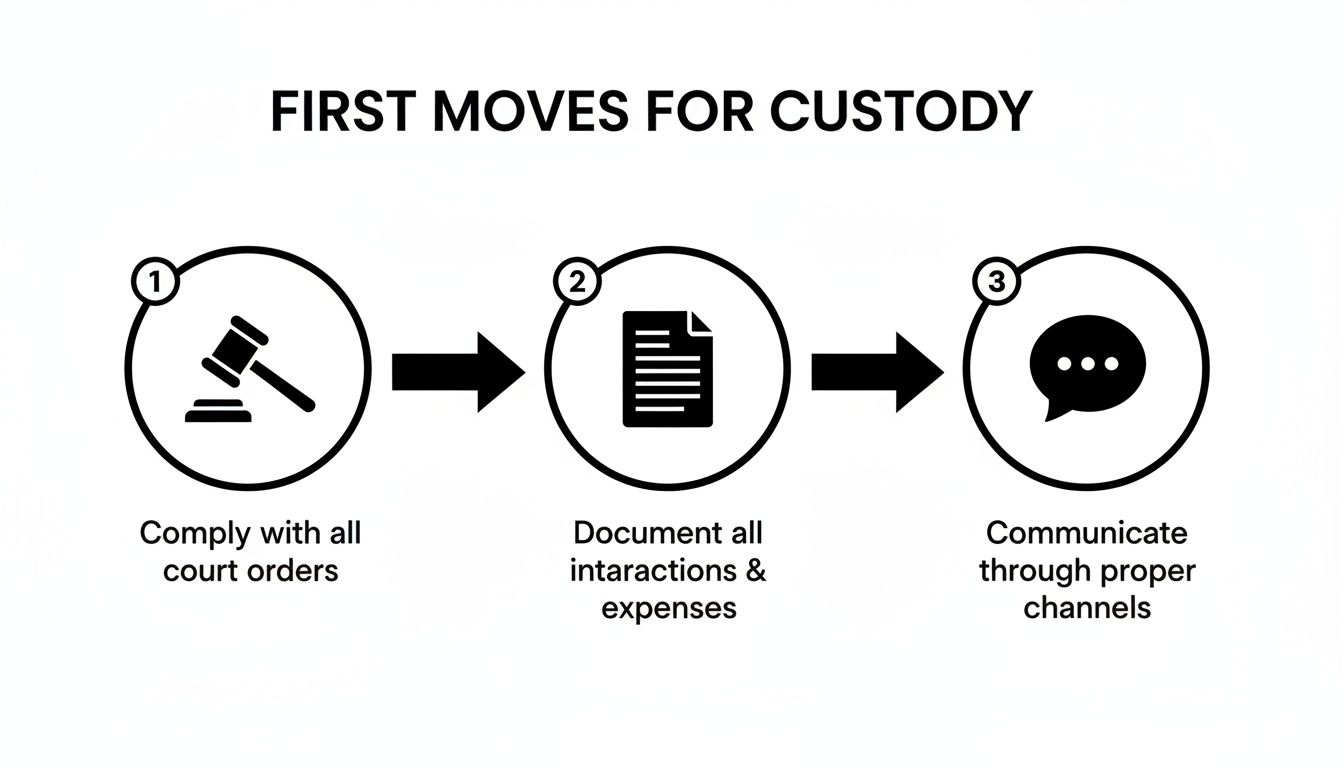
The bottom line? You have to start living like the parent you want the judge to see you as, starting today.
Who You Will Encounter in Court
When you file to modify custody, you’re not just talking to the judge. The courtroom has a cast of characters, and knowing their roles is key to playing your part effectively.
A Texas court's only job in a custody case is to determine what is in the "best interest of the child." This is the legal standard judges must follow. Every person involved, from the judge to the attorneys, views your case through this lens. Your goal is to show them that being with you aligns with that best interest.
You will almost certainly meet an amicus attorney. This lawyer doesn't work for you or the other parent; the court appoints them to be the eyes and ears for the child. Their job is to investigate the situation and report back to the judge on what they believe is in the child’s best interest.
The amicus will interview you, the other parent, your child (if they're old enough), teachers, and counselors. Their recommendation carries enormous weight with the judge, so treat them with honesty and respect. Being difficult or uncooperative with the amicus is a fast way to sink your own case.
This process is complicated, and the stakes couldn't be higher. Getting guidance from an experienced Austin modification lawyer is critical. From filing the petition correctly to representing you in mediation and hearings, having the right attorney in your corner can make all the difference.
How to Prove You Are a Fit Parent

In a Texas family court, what you say matters, but what you can prove matters more. To regain custody, you have to build a powerful case showing the judge that you are a stable, loving, and capable parent. The court’s decision will hinge on what is in your child's “best interest,” and that requires seeing, not just hearing, that your life has changed for the better.
Think of it this way: you’re not just arguing your case; you’re demonstrating a new reality. Every document, certificate, and character reference is a piece of the puzzle that shows a judge the complete picture of your transformation.
Demonstrating Stability Through Documentation
A judge’s first concern is always your child’s safety and stability. The quickest way to address this is with black-and-white proof that you have the fundamentals of a stable life completely sorted out. Your attorney will help you present this evidence, but it’s up to you to start gathering it now.
Here’s what you need to collect:
- Proof of Employment: Get recent pay stubs or an official employment verification letter. This shows a steady income and proves you can financially support your child.
- Proof of Safe Housing: A signed lease or mortgage statement is essential. Go a step further and take pictures of your home, especially a clean and welcoming bedroom for your child, to show it’s a safe environment.
- Financial Records: Bank statements can illustrate responsibility. Consistent income and sensible spending habits are strong counters to any claim that you are financially unstable.
This isn’t just busywork. This paperwork is your tangible proof that you’ve built a secure foundation for your child.
Showcasing Your Rehabilitation Efforts
If you lost custody because of a criminal charge, substance abuse, or anger management issues, proving your rehabilitation is non-negotiable. The judge needs to see that you’ve done the hard work to fix the problem that led to this situation. Your actions will always speak louder than courtroom promises.
A judge will always look for proactive change. Simply saying you've changed isn't enough. You must provide official documentation that shows you've put in the work to better yourself for your child.
Gather every certificate and completion letter you have. These documents are powerful testaments to your commitment to turning things around.
Key Rehabilitation Documents:
- Certificates from parenting classes
- Completion letters from anger management courses or a BIPP
- Proof of graduation from a substance abuse treatment program (think AA/NA attendance logs or letters from sponsors)
- Results from a history of clean drug and alcohol tests
And if you’ve successfully had a past criminal charge sealed, that’s a game-changer. Learning more about getting an order of nondisclosure in Texas is a great first step. Sealing your record shows the court that the state has legally recognized your clean slate.
To make this process clearer, here is a checklist of the documents and evidence you should focus on gathering. Having these items organized and ready will give your attorney a huge head start in building your case.
Evidence Checklist for Your Custody Modification Case
| Evidence Category | Specific Examples | Why It's Important |
|---|---|---|
| Financial Stability | Recent pay stubs, employment verification letter, bank statements, tax returns. | Proves you have a steady income and can provide for your child's needs. |
| Housing Stability | Signed lease or mortgage, utility bills in your name, photos of the home (especially the child's room). | Shows you have a safe, stable, and appropriate home for your child. |
| Personal Rehabilitation | Certificates from parenting or anger management classes, AA/NA logs, letter from a sponsor. | Demonstrates you have actively addressed the issues that led to the custody loss. |
| Health & Sobriety | Clean drug/alcohol test results, reports from a therapist or counselor. | Provides objective proof of your commitment to sobriety and mental well-being. |
| Character & Support | Notarized letters from employers, mentors, pastors, or community leaders. | Offers third-party validation of your positive changes and good character. |
| Criminal Record | Documents showing completion of probation, dismissal of charges, or an Order of Nondisclosure. | Shows the court you have resolved past legal issues and are moving forward. |
Organizing your evidence using a checklist like this ensures you don't miss a single piece of proof that could sway the judge's decision in your favor. It’s about building an undeniable case, piece by piece.
The Power of Character Witnesses
While documents are the foundation, human testimony can be what ultimately convinces a judge. You need to line up credible people who can speak to your character and the positive changes they’ve seen with their own eyes. These aren’t just friends saying nice things; they are individuals who can give specific, compelling examples of your fitness as a parent.
Think about asking for a written, notarized letter or having them ready to testify in court.
Who to Ask for a Character Reference:
- Your Employer or Supervisor: They can speak to your reliability and work ethic.
- Your Counselor or Therapist: They can offer professional insight into your personal growth and commitment to your mental health.
- A Sponsor or Program Leader: A letter from a sponsor can be a powerful endorsement of your sobriety and recovery.
- Community Leaders: A pastor, a coach, or a respected community figure who knows you and your child can speak to your positive role in the community.
Your goal is to surround the judge with overwhelming proof from every possible angle—financial, personal, and social. You need to show that you aren't the person you were when custody was lost, but a parent who can now provide the safe, stable, and nurturing home your child deserves.
The Importance of Rehabilitation and Financial Stability

When you walk into a Texas courtroom fighting to get your kids back, especially after a run-in with the law, the judge is looking for one thing: proof. They need to see, without a doubt, that you've fundamentally changed and that the parent standing before them is not the same one who lost custody.
This isn’t about just saying the right things. It's about showing the court you’ve built a new, stable life where your child can be safe and cared for. Proving that comes down to two key areas: your personal rehabilitation and your financial stability. They aren't just line items on a checklist; they're the bedrock of your entire case.
Showing Your Commitment Through Rehabilitation
If a DWI, drug possession charge, or another mistake was part of what led to losing custody, demonstrating your rehabilitation is non-negotiable. It’s absolutely essential. Showing that you're committed to a healthy future is your best shot at proving you're a fit parent. A good first step is understanding what addiction recovery entails.
The court needs to see concrete, documented evidence that you’ve addressed the problem and it won’t happen again. Words are cheap. Action is everything.
Actionable Steps for Proving Rehabilitation:
- Finish Every Court-Ordered Program: If a judge ordered you into counseling, anger management, or substance abuse treatment, you need to finish it. Get a certificate of completion and show up with perfect attendance and a positive report from the provider.
- Go Above and Beyond: Don't just do the bare minimum. If you finish a required program, keep going. Staying in therapy or a support group like AA/NA sends a powerful message that this is a true lifestyle change, not a temporary fix to win your case.
- Get Your Criminal Case Resolved: This is a huge one. Showing the judge that your criminal case is closed—whether that means a dismissal, successfully completing probation, or getting your record sealed—proves you've truly put the past behind you.
A judge will always be more impressed by consistent action over time than by last-minute efforts. Building a long-term record of sobriety, stability, and compliance is the best way to prove you’ve turned a corner for good.
Financial Responsibility as a Measure of Commitment
Your financial health is another area the judge will put under a microscope. At its core, being a fit parent means being able to provide for your child. This isn’t just about having a job—it’s about showing you’re responsible, can plan for the future, and are committed to your child's well-being.
Paying your child support is one of the most powerful ways to prove this. Even if you aren't seeing your child, you are still legally and morally obligated to support them. In a judge's eyes, a parent who consistently pays child support on time is a parent who puts their child first. Period.
The numbers don't lie. In 2024, the U.S. child support program collected a massive $29.5 billion, and 97% of that money went straight to families. This shows just how seriously the system takes financial responsibility—and how favorably courts look on parents who meet their obligations.
Being financially ready means you are:
- Paying Child Support: Every single payment, on time and in full. Keep meticulous records of every check, receipt, or bank transfer.
- Holding Down a Stable Job: Show that you can maintain steady employment. If you switch jobs, be ready to explain how it was a step up or a move toward greater stability.
- Managing Your Money: A simple budget goes a long way. It proves to the court you know how to manage your resources and can provide a stable home environment.
By tackling your personal rehabilitation and financial stability head-on, you're not just telling the court you've changed—you're proving it with undeniable facts. You're showing them you've not only overcome past issues but have also built a secure, stable, and loving foundation for your child's future.
Presenting Your Case Effectively in Court

The months of hard work are behind you—you’ve followed every court order, meticulously gathered your evidence, and proven your stability. Now comes the final, most crucial step: the court hearing. This is your one opportunity to stand before the judge and personally demonstrate your transformation.
More than just reciting facts, this is your chance to show that you are the capable, loving parent your child needs and deserves.
Walking into a courtroom is nerve-wracking for anyone. The key is turning that anxiety into focused energy. How you act, what you say, and even how you dress will send powerful signals to the judge about your respect for the law and your commitment to regaining custody.
Making a Strong First Impression
First impressions in a courtroom are immediate and powerful. Long before you ever say a word, the judge is forming an opinion based on your appearance and demeanor.
Think of it like the most important job interview of your life. Dress professionally. You don’t need an expensive suit, but your clothes must be clean, conservative, and respectful. Business-casual attire is almost always a safe bet.
Courtroom etiquette is non-negotiable. Stand when the judge enters or leaves the room. Always address the judge as “Your Honor.” Your phone should be turned completely off—not just on vibrate. These small acts of respect signal that you understand the gravity of the situation.
Testifying with Honesty and Poise
When it’s your turn to testify, your composure is everything. Your attorney will have spent hours preparing you for the questions you’ll face, but the moment is still intense. The goal is simple: remain calm, speak clearly, and be completely honest.
You will absolutely be questioned about the past mistakes that led to you losing custody. It’s emotional and difficult, but you must stick to the facts. Getting defensive or argumentative, especially during cross-examination, will only hurt your case.
Here’s how to handle it:
- Answer Only the Question Asked: Don't volunteer extra details or wander off on tangents. Your answers should be short, direct, and truthful.
- Stay Calm Under Pressure: The other lawyer’s job is to rattle you. Take a breath before you answer. If you don't understand a question, it's perfectly fine to ask for it to be rephrased.
- Pivot to Your Progress: While you have to answer for the past, look for opportunities to highlight the positive changes you’ve made. For instance, if asked about a past drug problem, you can state, "Yes, that was an issue, which is why I successfully completed a six-month treatment program and have been sober for over a year."
Your testimony is not the time for emotional outbursts or for blaming the other parent. It is your single best chance to calmly and maturely present the facts of your rehabilitation and prove you are ready to be a parent again.
Your attorney is your advocate in that courtroom. We will be right there with you, objecting to improper questions and making sure your full story is told in a compelling way. Our goal is to have you walk out of that hearing having convinced the judge that returning your child to your care isn't a risk—it's what is truly in their best interest.
Common Questions About Regaining Custody in Texas
The path to regaining custody is often clouded by questions and uncertainty. It’s completely normal to have a long list of concerns about what lies ahead. We've heard them all from parents in your exact shoes.
Let's clear the air. This section provides direct answers to the most frequent questions we encounter. The goal here is to give you a realistic picture of the process so you can focus on the fight to rebuild your family.
How Long Does a Custody Modification Case Take?
This is usually the first question on every parent’s mind: "How long is this going to take?" And the honest answer is, it depends. There’s no magic number because every single family's situation is different. If you and the other parent agree on the changes, an uncontested modification might be resolved in just a few months.
However, if the other parent objects to the change, the case becomes "contested," and the timeline will stretch out considerably. Several things can cause delays:
- The Court's Docket: Major county courts in places like Harris or Dallas are incredibly busy, and simply getting on the calendar can take time.
- The Discovery Process: This is the formal stage where both sides exchange evidence, documents, and information. It can easily take several months on its own.
- Court-Ordered Evaluations: If a judge orders a psychological evaluation or a full-blown custody evaluation, this will add significant time and expense to your case.
Realistically, a contested case can take anywhere from six months to well over a year. Your attorney will be able to give you a much better estimate once they dig into the specific facts of your case.
What if the Other Parent Fights the Modification?
It's more common than not for the other parent to resist a custody change. If they formally fight your petition, your case is officially "contested." This almost always means you'll have to argue your case in front of a judge at a final trial.
This is where all your hard work gathering evidence really pays off. You’ll need to present concrete proof of your rehabilitation, your financial stability, and the safe home you’ve established. The other parent gets their chance to present their side and try to poke holes in your story.
This is the moment an experienced attorney is most critical. We can anticipate their arguments, cross-examine their witnesses, and build a compelling narrative for the judge that proves modifying the order is truly in your child's best interest.
If your case is contested, don't lose heart. The judge’s job isn't to punish you for past mistakes. It's to decide what is best for your child right now. Your consistent, documented positive changes are your single most powerful weapon.
Does a Child's Preference Matter in Texas?
Yes, but it's not as simple as a child getting to pick which parent they live with. According to Section 153.009 of the Texas Family Code, a child who is 12 years of age or older can file a document with the court. In it, they can name the parent they’d prefer to have the exclusive right to decide where they live.
If this happens, the judge is required to interview the child in private. However—and this is a big however—the child’s preference is not the final word. It's just one piece of the puzzle. The judge will weigh the child's wishes against all the other evidence about their best interest. A judge absolutely can, and frequently does, rule against a child's stated preference if they believe the other parent provides a safer or more stable environment.
How Will My Past Criminal Record Affect My Case?
A past criminal record is a serious hurdle, there's no sugarcoating it. If it involves family violence, drugs, or a recent DWI, you can bet the judge will scrutinize it. They will need to be convinced that you’ve taken full responsibility and that whatever led to that charge is no longer a threat to your child.
But having a criminal record is not an automatic "no." The key is demonstrating what you’ve done since the offense. It's all about showing a clear pattern of positive change.
Your attorney will help you highlight things like:
- Successful completion of probation or parole.
- A solid history of sobriety, proven with clean drug or alcohol tests.
- Full resolution of the criminal case, especially if it ended in a dismissal or you were able to get your record sealed with an order of nondisclosure.
The more time and positive actions you can put between that old offense and your custody hearing, the less weight it will carry. The story of your rehabilitation is the one that truly matters.
If you’ve been charged with a crime in Texas, call The Law Office of Bryan Fagan, PLLC for a free and confidential consultation. Our defense team is ready to protect your rights. Schedule your consultation today.