In Texas, falling behind on Rent-A-Center payments is often a civil problem, not a felony. But if the situation is treated as theft and the property value is $2,500 to less than $30,000, it can generally be charged as a state-jail felony, with higher felony levels above that depending on value.
If you're reading this after missed payments, collection calls, or a warning that police may get involved, you're probably asking the right question for the wrong reason. Individuals in this position typically aren't trying to steal anything; rather, they are dealing with job loss, illness, a move, or bills they couldn't keep up with. The legal issue usually turns on whether the facts look like inability to pay or intentional refusal to return property.
That distinction matters. Owing money isn't the same as committing theft. But ignoring notices, keeping the item after a formal demand, hiding it, selling it, or making it impossible to recover can give prosecutors facts they may try to use as evidence of criminal intent.
If you want a plain-English explanation of felony levels, this overview of what counts as a felony in Texas gives the broader framework.
A Frightening Question Facing Many Texans
You rent a refrigerator, couch, or TV because your family needs it now. Then work slows down, hours get cut, or a medical bill hits. You miss a payment, then another, and before long a collector or store employee uses the word "felony." That is the moment many Texans stop thinking about late payments and start worrying about arrest, jail, and a record that follows them for years.
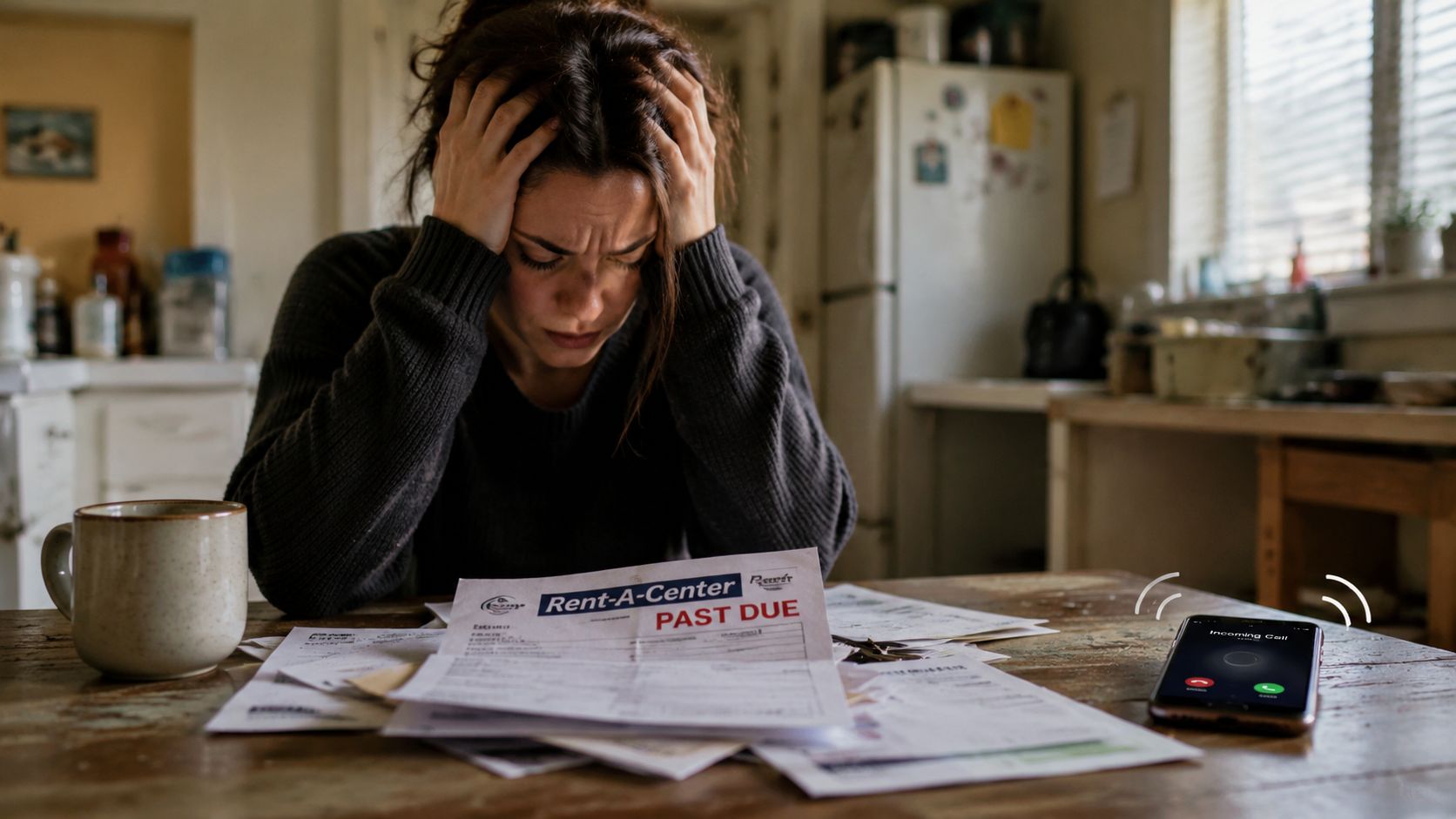
That fear is real. In Texas, a theft case can become a felony based on the value of the property involved. If you need a broader overview of charging levels, this guide on what counts as a felony in Texas explains the general framework. For readers comparing charge levels in other states, this overview of California criminal charge distinctions shows how these categories are discussed elsewhere, even though Texas law controls a Texas case.
The first practical point is simple. Missed payments alone do not prove theft.
What matters in a criminal investigation is intent. Prosecutors need facts they can point to and say this was not just financial trouble. They look for evidence that a person meant to keep the property, hide it, sell it, give false information about where it was, or make recovery difficult after a clear demand for return. That is very different from a person who fell behind because life got expensive and chaotic.
This distinction decides many of these cases. A client who says, "I lost my job and could not catch up," is describing a hardship problem. A police report that says, "the renter stopped answering, moved the item, and denied having it," gives the State something very different to work with.
Early facts matter a lot. Text messages, payment history, notices, move-out dates, repair records, and proof that you tried to communicate can help show inability to pay rather than criminal intent. On the other hand, angry messages, inconsistent explanations, or careless statements to police can hand the prosecution arguments it did not have before.
If this situation is unfolding in your life, panic usually makes it worse. A careful response can still protect you.
Civil Debt vs Criminal Theft The Critical Distinction
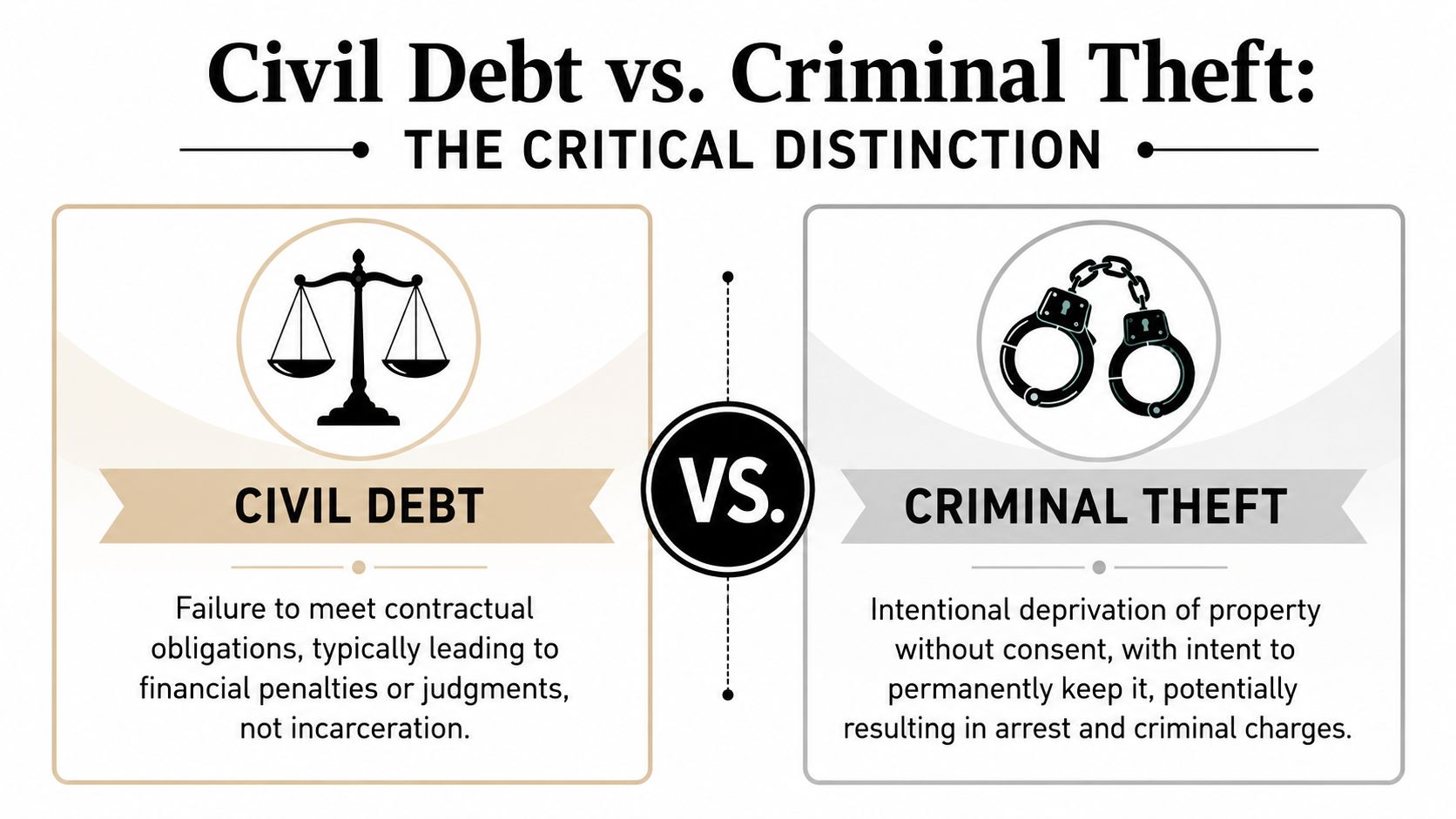
When people ask, "Is it a felony to not pay Rent-A-Center?", they're usually mixing together two very different legal problems.
One is a civil debt problem. The other is a criminal theft allegation.
What a civil debt case looks like
A civil case is about money, contracts, and return of property. The company says you agreed to make payments or return the item, and you didn't do that. The usual remedies are collection efforts, repossession, a lawsuit, or a judgment.
A federal case and related legal commentary make this distinction important. The better question is often not whether you "can go to jail," but whether prosecutors can prove intent to deprive rather than a missed payment caused by hardship, as discussed in this analysis of civil debt versus theft-style criminal exposure.
What a criminal theft case looks like
A criminal case requires more than being behind. Prosecutors try to prove a state of mind. In plain English, they want to show you knowingly or intentionally kept property without the owner's effective consent and meant to deprive the owner of it.
That is the dividing line. If you still had the item, were reachable, were trying to work something out, or were willing to return it, those facts can matter a great deal. If the facts suggest concealment or deliberate nonreturn, the risk rises.
Here is a simple comparison:
| Issue | Civil debt | Criminal theft |
|---|---|---|
| Core question | Did you break the agreement? | Did you intend to deprive the owner of the property? |
| Typical remedy | Collection, repossession, lawsuit | Arrest, prosecution, criminal record |
| Focus of proof | Contract terms and missed payments | Intent, possession, notice, and conduct |
If you want a broader comparison from another jurisdiction, this resource on California criminal charge distinctions is useful for understanding how criminal classifications work in general, even though Texas law controls a Texas case.
Facts that often help one side or the other
Some facts usually support a civil reading of the case:
- You stayed in contact: You answered calls, explained the hardship, or tried to schedule return.
- You still had the property: The item was available to be picked up or returned.
- You made good-faith efforts: You asked for more time, partial payment options, or a pickup arrangement.
Other facts create more danger:
- You disappeared: You moved and didn't update contact information.
- The item can't be found: The property was sold, pawned, or given away.
- You made damaging statements: Messages suggesting you planned to keep it no matter what can be used against you.
For anyone dealing with charges at this level, a Texas Criminal Defense Lawyer handles defense across the full range of Texas misdemeanor and felony charges. In theft-related cases, that includes examining whether the facts fit a civil dispute better than a criminal one.
If you want more detail on how Texas treats these allegations, this page on felony theft in Texas is a useful companion.
How Texas Law Treats Rent-to-Own Disputes
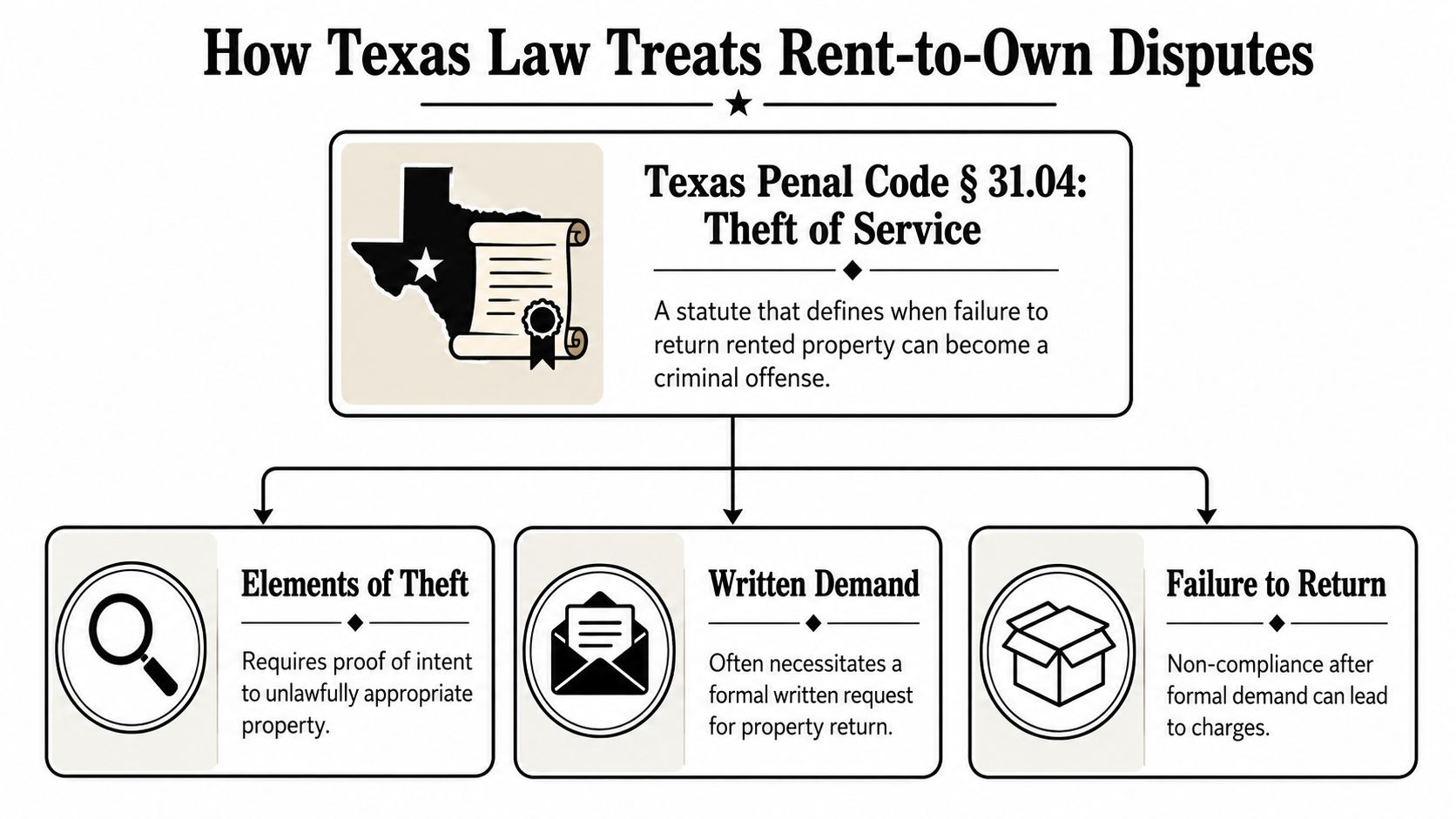
Texas doesn't decide this issue based on whether the company is Rent-A-Center, Aaron's, or another rent-to-own business. Texas looks at the conduct alleged, the value of the property, and whether the facts support criminal intent.
Why value matters in Texas
Verified Texas legal commentary explains that whether nonpayment becomes a felony can depend on how prosecutors classify the conduct and the value of the property involved. Under Texas law, theft of property valued at $2,500 to less than $30,000 is generally a state-jail felony, $30,000 to less than $150,000 is generally a third-degree felony, $150,000 to less than $300,000 is generally a second-degree felony, and $300,000 or more is generally a first-degree felony. Lower-value theft may be charged as misdemeanors, as explained in this Texas rent-to-own and felony threshold discussion.
That means two people can both miss payments and face very different exposure. A lower-value item may place the case in misdemeanor territory if prosecutors file a theft case at all. A higher-value package of furniture or electronics can create felony exposure.
How prosecutors try to frame the case
In plain English, prosecutors usually need a theory that goes beyond "you didn't pay." They need a story they can tell a judge or jury about intentional nonreturn or unlawful keeping of the property.
They often look at things like:
- Possession after demand: Did you keep the item after being asked to return it?
- Your communications: Did you promise return, then vanish?
- Location of the property: Was it available, hidden, transferred, or gone?
- Your conduct after default: Did you cooperate, stall, or block recovery?
A criminal case is built from behavior, not just an unpaid balance.
Texas lawyers often talk about statutes such as Texas Penal Code § 31.03 for theft and, in some rental contexts, Texas Penal Code § 31.04 for theft of service. The exact charge depends on the prosecutor's theory and the facts. The important point for you is practical: the State must prove more than financial trouble.
What doesn't work when the pressure rises
People under stress often make the same mistakes.
- Ignoring certified mail: If a formal demand arrives and you do nothing, the company may argue you intended not to return the property.
- Telling different stories: Inconsistent explanations can be used to attack your credibility.
- Getting rid of the item: Selling or pawning the property creates obvious problems for the defense.
By contrast, documentation helps. Payment records, text messages, proof of address changes, repair issues, and efforts to arrange pickup can all matter.
If you're trying to understand the consumer side of financing pressure in Texas, this guide to Texas consumer loans can help you see the broader context. It doesn't control a criminal case, but it does help explain why many people end up in payment trouble without any criminal intent at all.
Where criminal procedure enters the picture
Once police get involved, the case follows the normal criminal path. That may mean investigation first, then arrest or a summons, then a first court appearance, bond conditions, and later settings.
If charges are filed, your case may move through:
- Arrest or formal charge
- Magistration or arraignment-type appearance
- Discovery and evidence review
- Plea negotiations or pretrial motions
- Trial if no resolution is reached
- Sentencing if there is a conviction or plea
If the case is reduced, dismissed, or resolved favorably, you may also have options later involving expunction, nondisclosure, or other record-related relief depending on the result and your history.
A Common Scenario How a Dispute Escalates to Charges
Start with a common Texas scenario. You rent a washer and dryer. Then your hours at work are cut. You miss one payment. The store calls. You mean to deal with it, but you're trying to keep the lights on and catch up on rent.
At first, this is usually handled like a collection problem. Across major U.S. rent-to-own markets, the historical pattern is that missed payments are often handled first through civil remedies, but some states criminalize failure to return leased goods. Verified legal reporting notes, for example, that Alabama's rent-to-own theft statute makes the offense a Class C felony if the value exceeds $500, and Florida uses a lower line where merchandise worth more than $300 can trigger felony charges after a certified demand letter and a 30-day presumption of fraudulent intent if the item is not returned, as described in this rent-to-own criminal exposure overview.
That out-of-state history matters for one reason. It shows how quickly a company may shift from trying to collect money to trying to frame nonreturn as a crime.
The turning points that change the case
The next stage is where facts start to harden.
You stop answering. Then you move. The store's letters go to your old address. A representative says the item wasn't available when they tried to recover it. Maybe a family member put it in storage. Maybe it was left with someone else. Maybe it broke and you never reported that. None of those facts automatically prove guilt, but they create room for suspicion.
Now add one more fact. You sent a text saying, "I'm keeping it till I can pay when I want." That kind of statement can become a prosecution exhibit.
Silence gets interpreted. Missing property gets interpreted. Angry texts get interpreted.
How police and prosecutors read the file
By the time law enforcement sees the complaint, the file may not say "customer had a rough month." It may say "property not returned," "customer unreachable," and "location unknown." That summary is dangerous because it sounds less like debt and more like intentional deprivation.
This is why people are often shocked when an officer calls or appears at the door. They thought they had a billing dispute. The report in front of police may describe a theft case.
The criminal process after that point
Once a case reaches that stage, the process can move fast:
- Initial contact or arrest: Police may ask you to come in, give a statement, or they may arrest you if a warrant has been issued.
- First appearance: A magistrate or judge addresses bond and basic conditions.
- Charging review: The prosecutor decides what offense, if any, fits the facts.
- Negotiation or litigation: Some cases are resolved through return of property, restitution discussions, or plea negotiations. Others need motions, factual investigation, or trial.
If there is a conviction, sentencing follows. If there is no conviction, you may be able to pursue record-clearing options later. In some cases, even after a completed sentence, post-conviction relief or record-related remedies may become part of the long-term strategy.
What to Do Immediately if You Are Facing Charges
If police have called you, if a warrant may exist, or if you've already been arrested, your next few steps matter more than anything you've done so far.
What you should do first
Start here:
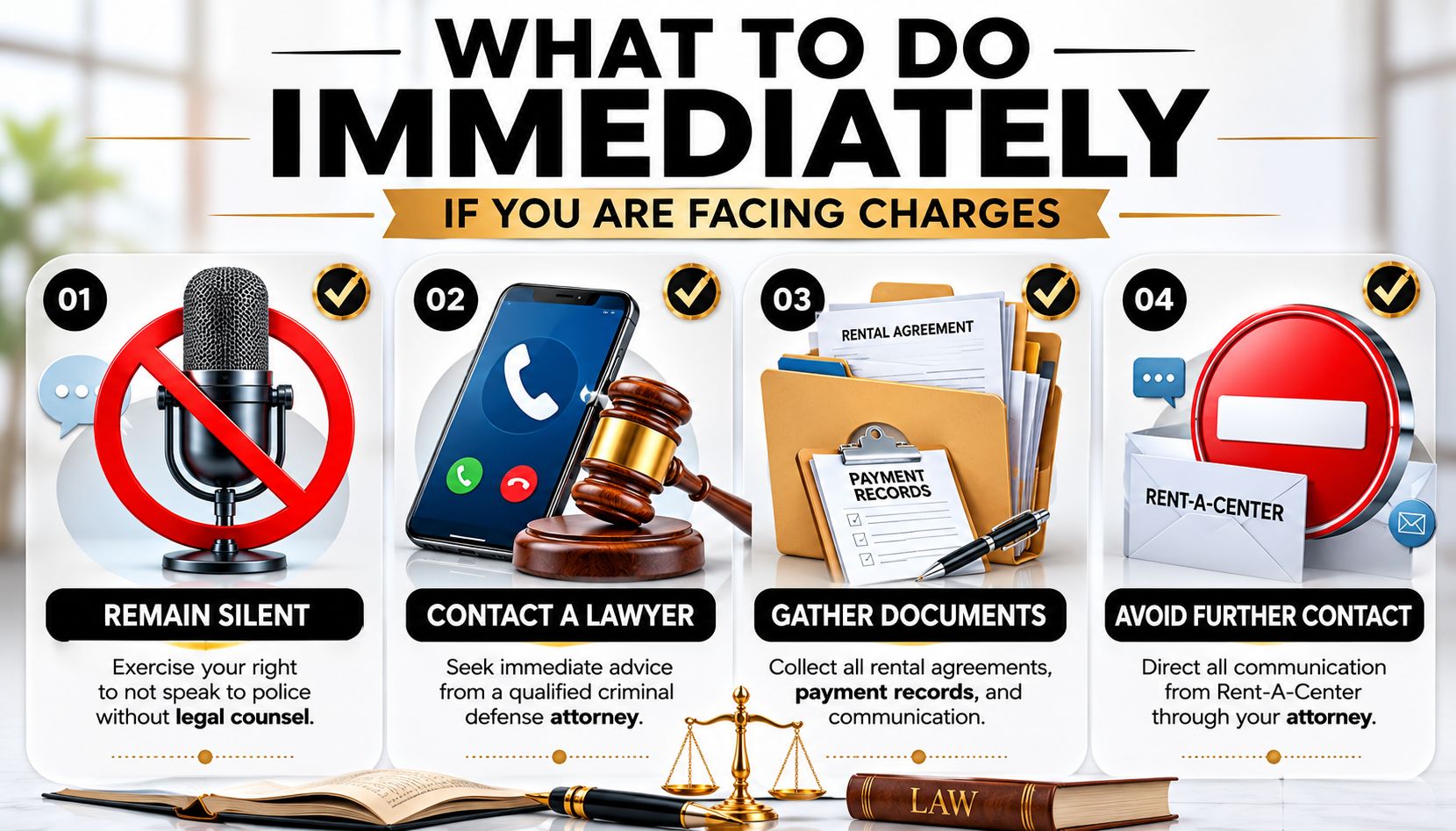
- Stay quiet with police. You have the right to remain silent. Use it. Explanations given under stress often fill gaps in the State's case.
- Save every document. Keep the rental agreement, payment records, call logs, texts, emails, letters, and proof of address changes.
- Locate the property. If the item still exists, your lawyer needs accurate information about where it is and what condition it's in.
- Get legal advice before contact. Don't call the store or officer to "clear things up" on your own.
This article on what to do immediately after getting arrested in Texas is a useful starting point if the case has already moved beyond an investigation.
What you should not do
People trying to fix things quickly often create new problems.
- Don't lie about where the item is: A false statement can damage your defense more than the missed payment itself.
- Don't destroy messages or paperwork: Missing evidence can be treated as consciousness of guilt.
- Don't hand over a written statement: Written explanations become evidence.
- Don't assume return alone ends the case: It may help, but once a criminal file exists, only the prosecutor controls whether charges move forward.
"I was going to explain everything" is one of the most common sentences defense lawyers hear after the damage is done.
Defenses a lawyer may explore
Every case depends on its facts, but common defense themes include the following.
Lack of criminal intent. This is often the center of the case. If you fell behind because you couldn't pay, stayed in contact, or tried to arrange return, that may support a civil interpretation rather than a criminal one.
Improper notice or weak proof. If the company's records are incomplete, if the communication history is messy, or if the timeline doesn't support intentional nonreturn, those weaknesses matter.
Value disputes. If the State's grading depends on value, the way the property is valued can affect charge level and negotiating position.
Good-faith efforts to resolve the matter. Evidence that you tried to catch up, return the item, or work out pickup can help rebut the claim that you meant to deprive the owner.
What happens after the arrest stage
If you've already been arrested, the path usually includes court appearances, evidence review, plea bargaining, and sometimes trial. Many theft-related cases are resolved before trial, but not all of them should be. Sometimes the right move is to challenge intent, challenge proof, or challenge the legal theory itself.
If a case ends in dismissal, no-bill, acquittal, or another qualifying result, you may later be able to seek expunction or record sealing. If there is a conviction, some clients later need help with post-conviction relief or strategies to reduce long-term damage. The right plan depends on the exact outcome.
Protect Your Future with a Strong Defense
The biggest mistake in a rent-to-own criminal case is treating it like "just a bill." Once the facts are framed as intentional nonreturn, the risk changes. In Texas, value can push a case into felony territory, and prosecutors will focus hard on conduct that they say shows intent.
The good news is that these cases are often more defensible than people think. A missed payment is not the same thing as theft. Proof of hardship, proof that the property remained available, weak notice evidence, and inconsistent company records can all matter. So can your words. So can your silence.
If charges have been filed, your case will move through the same criminal system as other theft cases. That means bond issues, court settings, plea discussions, possible trial, and sentencing exposure if the case isn't resolved. It also means there may be options later involving expunction, nondisclosure, or other relief, depending on how the case ends.
You don't need to guess whether your situation is a debt dispute or a criminal allegation with real felony exposure. You need a careful review of the documents, the communication history, the location of the property, and what the State can prove.
If you've been charged with a crime in Texas, call Law Office of Bryan Fagan PLLC for a free and confidential consultation. Our defense team is ready to protect your rights.