Skip to content
Being arrested and facing a prison sentence in Texas can be terrifying — but you don’t have to face the future alone. When a loved one is incarcerated, the thought of their release brings a mix of hope and anxiety. The idea of parole—a conditional, supervised release from prison before a sentence is fully served—is a bridge back to society. But it's a bridge with very specific rules you have to follow.
Your Guide to Navigating Parole in Texas

When a loved one is behind bars, you're probably filled with questions about how parole works in Texas, who makes the decisions, and what you can do to help. We understand. The journey is full of uncertainty, and our goal is to give you clear, straightforward answers.
This guide will walk you through every step of the process. We’ll break it all down in plain English, helping you understand your rights and options without drowning you in confusing legal jargon.
Understanding the Basics of Parole
First things first: parole is not an automatic right. It's a privilege granted by the Texas Board of Pardons and Paroles. This is a seven-member panel, appointed by the governor, that holds the power to decide if an incarcerated person is ready to reenter society under supervision. Their decision is discretionary, meaning they are never required to grant parole, even when someone is technically eligible.
This is a key difference from probation, which is a sentence given by a judge as an alternative to prison time. If you're unsure about the two, you can get a clearer picture by reading our guide explaining the difference between parole and probation in Texas.
The Purpose of Parole in the Texas Justice System
The parole system in Texas exists for a few critical reasons. It’s designed to manage the state's large prison population while giving individuals who have shown genuine rehabilitation a second chance. The system has evolved over the years, constantly trying to balance public safety with effective correctional strategies.
A major turning point came in 1996 when the legislature gave the Board of Pardons and Paroles more authority to control releases. This allowed them to make discretionary decisions on cases that were previously mandatory releases, which had a significant impact on parole grant rates and prison population management. You can learn more about this history and its effects by reviewing this Robina Institute report.
At its heart, the idea behind parole is that successful reintegration is a win for everyone. It creates a structured path for people to become productive, law-abiding members of the community, which ultimately makes the public safer and reduces the chances of them reoffending.
Throughout this guide, we'll explain who is eligible, what the Board is looking for, and how you can put together the strongest case possible for yourself or a loved one. Our mission is to demystify the system and give you the knowledge and confidence to face what's ahead.
Determining Your Eligibility for Parole
The first question every family asks is simple: "When can they come home?" It’s the most pressing concern, but in Texas, the answer isn’t always straightforward. There's no single formula for parole eligibility.
Instead, the calculation depends on the specific crime, the sentence length, and whether "good time" credits apply. Understanding this math is the first step toward building a roadmap for a potential release.
The Two Main Paths to Parole Eligibility
Texas law creates two different tracks for parole eligibility, and the track you are on changes everything. The first is for most standard, non-aggravated felonies. The second, much stricter path is reserved for serious violent crimes known as "3g offenses."
The difference between these two paths is huge. It directly controls how much of a sentence an inmate must physically serve, day-for-day, behind bars before they even get a chance for their case to be reviewed by the Parole Board.
For many standard felonies, an inmate’s eligibility date is calculated using a mix of "flat time" (actual days served) and "good time" (credits earned for good behavior). For the most serious offenses, however, good time credits don't count toward parole eligibility at all. That distinction is critical.
This system has created a large population of inmates awaiting a decision. At the end of fiscal year 2018, a staggering 79,552 inmates in the Texas Department of Criminal Justice (TDCJ) were eligible for parole—about 55% of the entire prison population. Yet, grant rates have historically been low, which is why there is so much discussion about parole reform. You can find more details in this report on Texas parole trends.
What Are 3g Offenses?
The term "3g offense" is a bit of legal shorthand. It comes from a former section of the Texas Code of Criminal Procedure (Art. 42.12, Sec. 3g), which is now found in Art. 42A.054. These are some of the most serious felonies in Texas.
A conviction for one of these crimes automatically puts you on the stricter parole track. It's also important to know that if a judge or jury makes an "affirmative finding" that a deadly weapon was used during any felony, that can also push the offense into the 3g category.
Common examples of 3g offenses include:
- Murder
- Aggravated Robbery
- Aggravated Sexual Assault
- Sexual Assault of a Child
- Trafficking of Persons
For these offenses, an individual must serve half (50%) of their sentence in flat time before becoming eligible for parole. Good time credits do not apply to speed up this timeline. It's a stark contrast to standard felonies, where eligibility can arrive much sooner.
Key Takeaway: A "3g" or aggravated offense designation means you must serve a much larger portion of your sentence—day-for-day—before the Parole Board will even consider your case.
Parole Eligibility Timelines in Texas
Let's break down exactly how different these two paths are. The table below shows the calculation methods side-by-side so you can see the fundamental difference in how Texas counts time toward parole.
| Offense Type | Calculation Method | Example |
|---|---|---|
| Standard Felony | Calendar time served + good time credits must equal one-fourth (25%) of the sentence (or 15 years, whichever is less). | On a 20-year sentence, eligibility is reached when flat time plus good time equals 5 years. |
| 3g Aggravated Offense | Must serve one-half (50%) of the sentence in calendar time (up to a maximum of 30 years). Good time credits do not apply to eligibility. | On a 20-year sentence, the individual must serve a full 10 years before becoming eligible. |
As you can see, the nature of the conviction is everything. For someone convicted of a 3g offense, the path to a parole hearing is twice as long. This reality makes every action taken while incarcerated—every class, job, and disciplinary report—that much more critical for building a strong case when the time finally comes.
The Texas Parole Review Process Explained
Many people imagine a parole hearing takes place in a courtroom, with a judge and lawyers arguing a case. The reality in Texas is much different. The parole review isn't a single event but a long, quiet administrative process that happens almost entirely behind the scenes.
Understanding how this process works—from the initial interview to the final vote—is the first step in building the strongest possible case for release.
The journey starts about six months before an inmate’s parole eligibility date. This is when the Texas Department of Criminal Justice (TDCJ) begins compiling the official parole case file, the single most important document the Board will review.
The Role of the Institutional Parole Officer
The first official contact in the process is with the Institutional Parole Officer (IPO). Think of the IPO as the Board's fact-finder inside the prison. Their job isn’t to be your advocate; it's to gather all the required information and present it to the Parole Board.
The IPO will conduct a detailed interview with you, asking about the offense that led to your incarceration, your conduct while in prison, and—critically—your plans for life on the outside. Everything from that interview, along with your entire institutional history, goes into your case file.
What Goes Into the Parole Case File
The parole case file is a complete history of your life before and during your time with TDCJ. It’s the primary, and often only, document the Board studies before making its decision.
This file is incredibly detailed and typically includes:
- Criminal History: A full breakdown of the current offense and any prior convictions.
- Institutional Adjustment: Your complete record, including disciplinary actions, work history, and any educational, vocational, or treatment programs you've completed.
- Victim Statements: Any letters or official statements provided by victims of the crime.
- Support Letters: Letters from family, friends, community leaders, or potential employers who are advocating for your release.
- Your Reentry Plan: A concrete plan explaining where you will live, how you will find work, and what kind of support system you have waiting for you.
This flowchart shows how the type of offense is the starting point for calculating your eligibility, which happens long before the review process even begins.
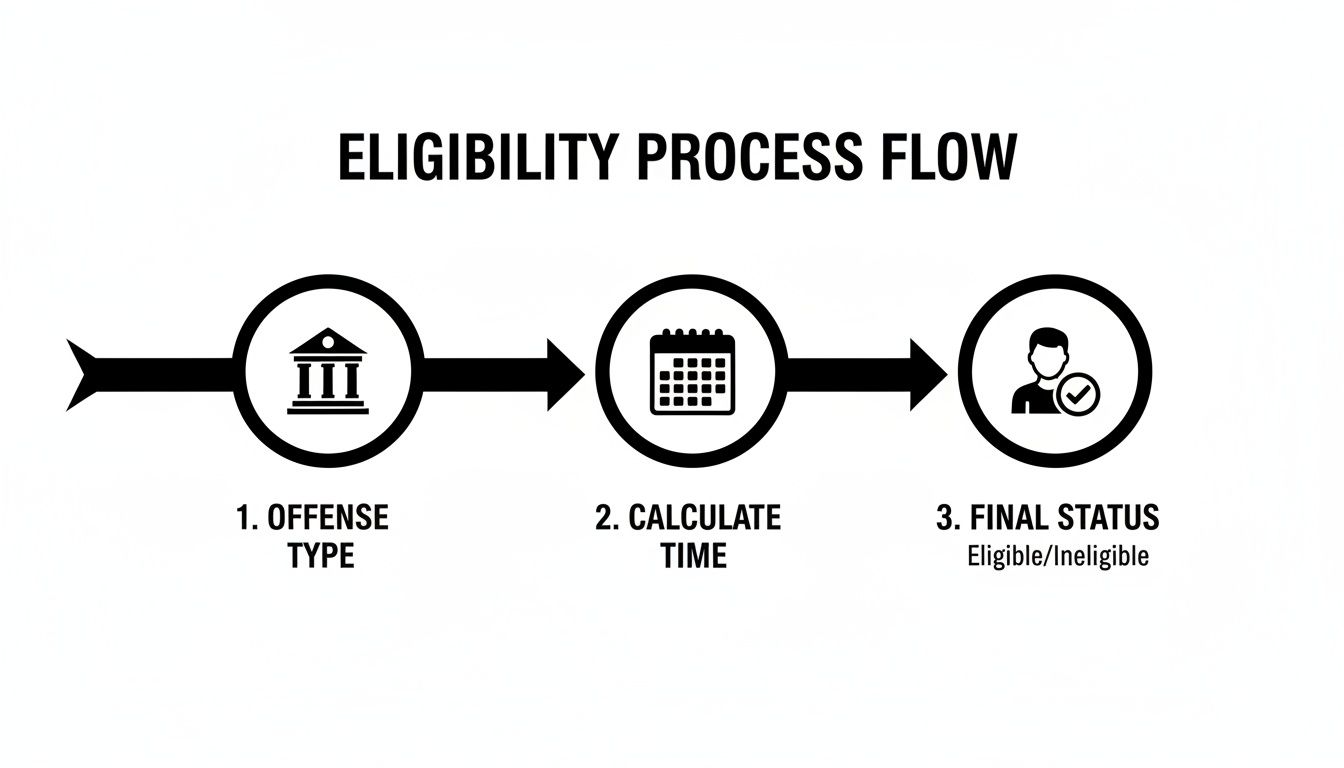
As the visual shows, the specific offense dictates how time is calculated, which ultimately determines your final eligibility status for parole in Texas.
The Parole Panel Vote
After the IPO finalizes the case file, it's sent electronically to a Parole Panel. In Texas, this is a three-person panel of Board members or Parole Commissioners who will vote on your case. They don’t meet in a conference room to debate; each member reviews your file independently and casts their vote digitally.
You do not attend this "hearing." Your case is decided based entirely on the documents in your file. This is why a professionally prepared parole packet is so critical—it's your chance to speak directly to the panel and tell your story of rehabilitation.
The panel members weigh all the information, from the severity of the offense to your efforts at rehabilitation. They use a set of Parole Guidelines and a risk assessment score to guide them, but they have complete discretion to make the final decision. A majority vote—two out of three—is all that’s needed to either approve or deny parole.
This entire process underscores a vital point: what you do before the review is what matters most. While you can't be in the room when the vote happens, a compelling and thorough parole packet, often prepared with the help of an experienced attorney, can act as your voice, making a powerful argument on your behalf when it counts.
How to Build a Compelling Parole Packet

When the Texas Board of Pardons and Paroles reviews a case, the inmate isn't in the room. This makes the parole packet the single most important tool you have. It’s your one and only chance to speak directly to the decision-makers.
Think of it as your personal advocate. It’s the story of who you are today—not just who you were when the offense occurred. A weak, disorganized packet suggests you aren't ready. But a strong, compelling one can make all the difference, proving you've done the hard work and are a solid candidate for release.
What to Include in Your Parole Packet
Your parole packet should be a professional, well-organized portfolio showcasing your journey toward rehabilitation. Every single document needs a purpose. It should be easy for the Board members to read and understand the progress you've made and the plans you have for the future.
A powerful packet will always contain these key elements:
- A Personal Narrative: This is a letter from you. It needs to express genuine remorse for the crime and, more importantly, detail the specific steps you've taken to change while incarcerated.
- Letters of Support: These are powerful testimonials from family, friends, mentors, clergy, and potential employers who can speak to your character and readiness.
- Proof of Rehabilitation: Don't just say you've changed—show them. Include certificates from educational courses, vocational training, substance abuse classes, and any other program you've completed.
- A Detailed Reentry Plan: This is a concrete, step-by-step plan that proves you have a stable, supportive environment to return to.
Crafting Powerful Letters of Support
Support letters are a vital piece of the puzzle, but not all letters carry the same weight. The best ones come from a variety of sources and focus on specific, positive traits and, crucially, concrete offers of future support. They should never make excuses for the crime.
A letter that says, "I have a job waiting for him as a welder starting on his release date," is far more powerful than a letter that just says, "He’s a good person who deserves another chance."
The goal is to show the Board you have a strong, reliable network ready to help you succeed on the outside. When you ask people to write for you, give them clear guidance. Many of the same principles apply as when writing a character letter for court.
Showcasing Your Reentry Plan
The Board needs assurance that you won't just be released back into the same environment that led to trouble. A detailed reentry plan is your opportunity to show them you are prepared for life beyond prison walls.
Your plan should clearly answer these critical questions:
- Where will you live? Provide the exact name and address of the family member or friend you'll be living with. You need a support letter from this person confirming the arrangement.
- How will you support yourself? Include letters from potential employers or lay out a detailed plan for your job search. Make sure to highlight any vocational skills you’ve gained.
- What is your support system? List the family members, mentors, and counselors who have committed to helping you stay on the right path.
This kind of proactive planning demonstrates foresight and responsibility—two qualities the Board is always looking for. A solid plan can dramatically improve your odds.
While parole is never a guarantee, a well-prepared packet gives you the best possible shot. Parole grant rates in Texas have climbed significantly from a low of just 17% in 1997, proving that real change and strong preparation can make a difference. In 2020, the success rate for those completing parole was 69%, up from 63% the year before, showing that many who earn release go on to successfully reintegrate.
Understanding Life on Parole and Revocation
Winning parole is a huge victory, but it's important to understand that your sentence isn't over. Think of it less as finishing the game and more like starting a new level with a different set of rules. Life on parole in Texas means strict responsibilities and close supervision. Knowing these rules is the key to protecting your freedom and successfully finishing your sentence in the community.
Once released, you'll be assigned a parole officer who serves as both your supervisor and your guide. Your relationship with this officer and your commitment to following every single condition are what will keep you out of prison.
The Standard Rules of Parole
Every person granted parole in Texas must agree to a list of standard conditions. These rules aren't negotiable—they form the foundation of your supervised release. They are put in place to ensure public safety while helping you get back on your feet.
While the exact wording can differ, the core requirements are almost always the same:
- Regular Reporting: You must check in with your parole officer exactly as directed, whether weekly, monthly, or on another schedule.
- Maintain Employment: You are required to find and keep a legitimate job. The Board sees steady work as a cornerstone of rehabilitation.
- Stay Drug-Free: You must abstain from all illegal substances and will be subject to random drug and alcohol tests.
- No New Arrests: This one is simple. Committing any new crime, even a minor one like theft or drug possession, is a serious violation.
- Geographic Restrictions: You must remain within a specific county or area and get permission from your officer before you travel outside of it.
These conditions create a tight framework for accountability. A single misstep can trigger serious consequences.
Special Conditions the Board Can Add
On top of the standard rules, the Board of Pardons and Paroles can impose special conditions tailored to your specific case. These are extra requirements based on your criminal history, personal background, or risks the Board has identified.
Think of special conditions as personalized assignments meant to address the root causes of your past actions. They are designed to give you targeted support and monitoring to help you succeed.
Some of the most common special conditions include:
- GPS Monitoring: Wearing an ankle monitor that tracks your location 24/7.
- Required Counseling: Attending mandatory classes for substance abuse, anger management, or sex offender treatment.
- Ignition Interlock Device: For anyone with a DWI history, this device is installed in your car and prevents it from starting if it detects alcohol on your breath.
- No-Contact Orders: A strict prohibition on contacting victims or co-defendants from your original case.
Breaking a special condition is taken just as seriously as violating a standard rule.
What Happens When You Are Accused of a Violation
If your parole officer believes you've broken a rule, they can request a "blue warrant." This is a specific type of arrest warrant issued by the Parole Board that you cannot bail out of. Once a blue warrant is active, you will be arrested and held in the county jail until a revocation hearing can be held.
This is a critical moment. The hearing will determine your future. It is not a new criminal trial, so the standard of proof is much lower. The hearing officer only needs to find a "preponderance of the evidence" that you violated a condition—a much easier bar to clear than "beyond a reasonable doubt." If you're facing a potential violation, it's helpful to understand the consequences of a probation violation, as the parole revocation process has many similarities.
If the hearing officer finds you violated a condition, the Board can either modify your parole with even stricter rules or revoke it completely. Revocation means you are sent back to prison to serve out the rest of your original sentence. This is why taking the rules seriously is absolutely vital to your freedom.
Frequently Asked Questions About Texas Parole
When a loved one is incarcerated, the Texas parole system can feel like a maze of confusing rules. It’s natural for you to have urgent questions, fueled by anxiety and a desire for clear answers.
We've heard these concerns from countless families. Below, we cut through the legal jargon to answer the most common questions about the parole process, giving you the practical information you need.
What Happens If Parole Is Denied?
Getting a parole denial is a tough blow, but it’s not the end of the road. When the Board of Pardons and Paroles denies a case, they issue a written notice explaining why and set a future review date.
Most often, this is a "Set Off 1," meaning the next review will be in one year. For more serious offenses, however, the Board can push that date out as far as five years.
That denial notice is your roadmap. The reasons the Board gives—whether it's the nature of the crime, behavior while incarcerated, or a weak reentry plan—are the exact issues you need to address for the next review. An experienced parole attorney can use that feedback to help you build a much stronger, more focused parole packet, tackling the Board's concerns head-on to improve the odds of success.
Can a Lawyer Really Help My Parole Case?
Absolutely. While you aren’t required to hire a lawyer for the parole review process, doing so provides a significant strategic advantage. A skilled parole attorney knows precisely what the Board is looking for and, just as importantly, what they don’t want to see.
A dedicated attorney will:
- Compile a professional, comprehensive parole packet that tells a compelling story of rehabilitation, accountability, and readiness for a second chance.
- Communicate directly with the Board's staff to ensure your packet was received and is part of the official file for review.
- Advocate for you or your loved one by strategically highlighting personal growth, positive achievements, and a solid plan for the future.
- Offer invaluable guidance to you and your family, bringing clarity and peace of mind to a long and stressful waiting game.
Hiring a lawyer sends a powerful message to the Board: this opportunity is being taken seriously, and there's a strong, organized support system on the outside ready to help.
What Is the Difference Between Parole and Mandatory Supervision?
This is a major point of confusion for many families. The easiest way to think about it is that discretionary parole is a choice the Board makes, while mandatory supervision is based on a math formula.
Parole is a privilege. It's granted when the Board, using its discretion, decides an inmate has earned the opportunity to be released and has shown they are ready to rejoin society.
Mandatory supervision, on the other hand, is supposed to happen automatically. It kicks in when an inmate’s calendar time served (“flat time”) plus their accrued “good time” credits add up to equal the full length of their sentence.
But there's a huge catch. The Board has the power to review these cases and veto the release if they vote that the inmate’s release would endanger the public. So, while parole has to be earned with a persuasive case, mandatory supervision is calculated by the calendar but can still be taken away by the Board.
Can I Seal My Record After Parole?
Successfully completing parole is a monumental achievement. It’s the final step in paying a debt to society, and the natural next question is whether you can finally put the past behind you by clearing your criminal record.
Unfortunately, after a final felony conviction that leads to a prison sentence, an expunction—the complete destruction of the record—is not an option in Texas.
However, you might be eligible for an order of nondisclosure. This legal process "seals" your record, hiding it from public view for most private background checks, like those run by potential employers or landlords. This is a key step toward rehabilitation. Eligibility depends heavily on the original offense, and there are specific waiting periods you must meet after completing your sentence.
An attorney can review the specifics of your case to see if sealing your record is a realistic option to help you fully and finally move on with your life.
If you’ve been charged with a crime in Texas, call The Law Office of Bryan Fagan, PLLC for a free and confidential consultation. Our defense team is ready to protect your rights. Visit us at https://texascriminallawyer.net.