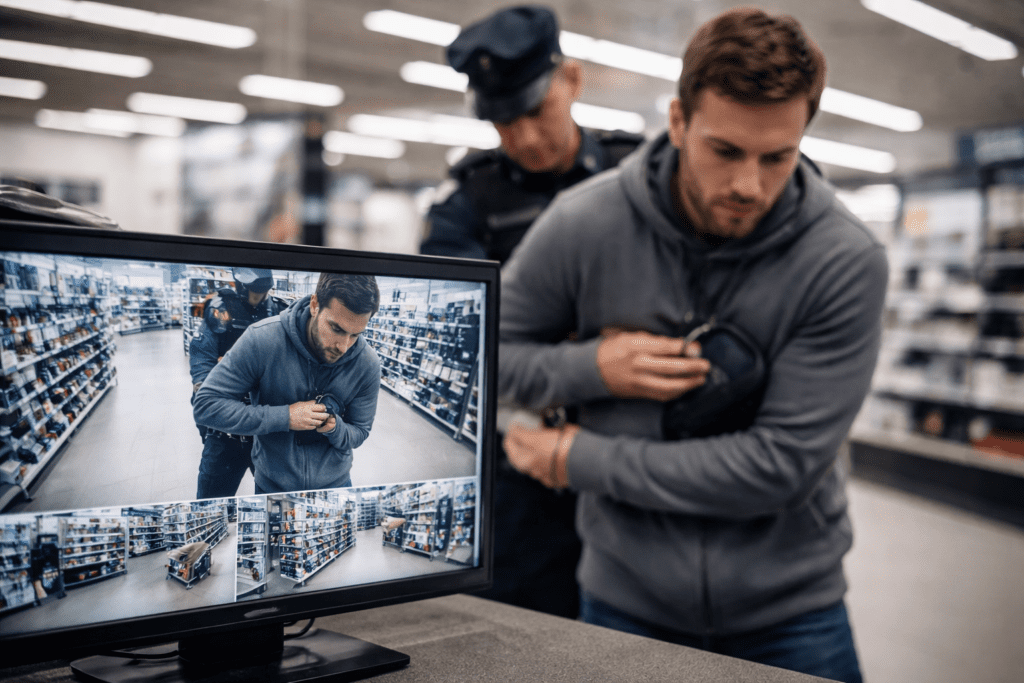
Robbery surveillance evidence Texas cases often hinge on what a camera captured—or failed to capture—and robbery surveillance evidence Texas strategies can reshape how a case is viewed in court. Many people assume video footage tells a clear and complete story. In reality, footage can raise as many questions as it answers. What seems obvious at first glance may become uncertain when examined frame by frame. This shift happens because visual evidence depends heavily on context and clarity. It also means that interpretation plays a larger role than most people expect.
Picture a convenience store in Houston. A robbery is reported late at night. Surveillance cameras record the event. Law enforcement reviews the footage and identifies a suspect. At first, the case appears straightforward. Then the defense examines the same footage. Details emerge—lighting issues, unclear angles, timing gaps. Suddenly, the narrative becomes less certain. This reevaluation often changes how the evidence is perceived. It also opens the door to alternative explanations.
That shift is where video evidence becomes powerful. It moves the case from assumption to analysis. From that point, every detail in the footage matters.
Understanding how robbery surveillance evidence Texas works helps explain why footage is not just evidence—it is interpretation. This awareness helps individuals look beyond surface-level conclusions. It also shows why careful review is essential in these cases.
Why Surveillance Footage Matters in Robbery Cases
Surveillance footage often becomes one of the most influential pieces of evidence. It provides a visual account that can support or challenge testimony. Because of this, it often plays a central role in legal arguments.
In robbery surveillance evidence Texas cases, video can:
- Place someone at the scene
- Show actions during the incident
- Capture interactions between individuals
Each of these elements contributes to building a timeline of events in a robbery charge case. Together, they help create a clearer picture of what may have occurred.
However, footage does not always provide a full picture. Important details may be missing or unclear. This limitation can affect how the evidence is interpreted in a robbery charge situation.
From an analytical standpoint, surveillance video offers visual data—but interpretation determines its impact. The way the footage is analyzed can shape the entire case. This makes critical evaluation essential when assessing a robbery charge.
The Assumption That Video Is Always Accurate
Many people believe that cameras do not lie. This assumption gives video evidence a strong initial impact. However, it does not always reflect the full reality.
While footage records events, it does so within limits. These limits can affect how clearly events are captured. They also influence how the footage is understood.
In robbery surveillance evidence Texas situations, those limits include:
- Camera angle
- Lighting conditions
- Resolution quality
- Frame rate
Each of these factors can affect what is visible. Together, they determine the quality and reliability of the footage.
Each of these factors can affect what is visible. Poor lighting or low resolution can obscure key details. As a result, important elements may not appear clearly.
As a result, the same footage may lead to different conclusions depending on how it is analyzed. Different perspectives can produce different interpretations. This variability highlights the importance of careful review.
Real-Life Scenario: A Blurry Identification
Consider a case in Dallas.
A robbery occurs in a parking lot. The only evidence is surveillance footage from a nearby building. The video shows a figure approaching the victim, but the image is grainy.
At first, the prosecution claims the suspect matches the person in the video.
During review, the defense highlights:
- Lack of clear facial features
- Similar clothing worn by others in the area
- Limited visibility due to lighting
This creates doubt.
This is a common robbery surveillance evidence Texas scenario where clarity becomes the central issue.
The Role of Camera Angles
Camera placement affects perception.
In robbery surveillance evidence Texas cases, a camera may:
- Capture only part of the scene
- Miss key moments
- Distort distances or movement
For example:
- A camera positioned high above may not show facial details
- A side angle may obscure important interactions
These limitations influence interpretation.
Timing and Gaps in Footage
Surveillance systems do not always record continuously.
Some operate on motion detection or have delays.
In robbery surveillance evidence Texas situations, gaps may:
- Omit critical moments
- Interrupt sequences of events
- Create uncertainty about timing
Even a few seconds can matter.
Understanding these gaps is essential when evaluating the footage.

Real-Life Style Example: Missing Moments
Imagine a case in Austin.
The video shows a suspect entering a store and leaving shortly afterward. However, the moment of the alleged robbery is not clearly visible.
The defense argues:
- The key action is not captured
- The sequence of events is incomplete
This raises questions about what actually occurred.
This example shows how robbery surveillance evidence Texas can depend on what is missing as much as what is present.
Identifying Individuals in Footage
Identification is one of the most contested aspects of surveillance evidence.
In robbery surveillance evidence Texas cases, factors affecting identification include:
- Image clarity
- Distance from the camera
- Movement speed
Even when footage exists, identifying a specific person may not be straightforward.
This creates opportunities for both sides to argue their position.
Clothing and Appearance as Evidence
Prosecutors often rely on clothing or physical features.
For example:
- A suspect wearing similar clothing
- Matching height or build
However, these factors can be misleading.
In robbery surveillance evidence Texas situations:
- Clothing is common and easily duplicated
- Physical characteristics may overlap among individuals
This makes identification less certain.
The Role of Expert Analysis
In some cases, experts analyze footage.
They may:
- Enhance video quality
- Examine frame-by-frame sequences
- Interpret movement patterns
In robbery surveillance evidence Texas cases, expert testimony can:
- Support or challenge conclusions
- Provide technical explanations
However, even expert analysis has limits.
Analytical Perspective: Evidence vs Interpretation
From an analytical standpoint, surveillance footage is raw data.
The meaning of that data depends on interpretation.
Courts evaluate:
- What the footage shows
- What it does not show
- How reliable the interpretation is
In robbery surveillance evidence Texas cases, the distinction between observation and assumption becomes critical.
Challenging Surveillance Evidence
Defense strategies often focus on questioning the reliability of footage.
This may involve:
- Highlighting poor quality
- Identifying inconsistencies
- Pointing out missing context
In robbery surveillance evidence Texas situations, these challenges can create reasonable doubt.
Even strong-looking footage can weaken under scrutiny.
Real-Life Scenario: Conflicting Interpretations
Consider a case in Fort Worth.
The prosecution argues that the footage shows the defendant committing the robbery.
The defense argues:
- The person cannot be clearly identified
- The actions are open to interpretation
Both sides use the same footage—but reach different conclusions.
This demonstrates how interpretation shapes outcomes.
The Importance of Context
Footage alone rarely tells the full story.
Context matters.
This includes:
- Events before the recording
- Actions after the recording
- Surrounding circumstances
In robbery surveillance evidence Texas cases, context helps explain what the footage represents.
Without context, interpretation becomes incomplete.
The Impact on Jury Perception
Although ALR hearings do not involve juries, criminal trials do.
In those cases, surveillance footage can strongly influence perception.
Jurors may:
- Trust visual evidence more than testimony
- Form conclusions quickly
However, careful analysis can challenge those impressions.
Emotional Impact of Video Evidence
Video can feel persuasive.
Seeing an event unfold creates a strong impression.
In robbery surveillance evidence Texas situations, this emotional impact can:
- Influence decision-making
- Shape initial reactions
Understanding this helps balance emotion with analysis.
Long-Term Implications of Surveillance Evidence
The use of surveillance footage affects:
- Case outcomes
- Defense strategies
- Legal standards
Each of these areas evolves as video evidence becomes more common in courtrooms. Together, they shape how cases are argued and decided over time.
As technology evolves, its role continues to grow. New tools improve video clarity and analysis. However, they also introduce new challenges in interpretation and reliability.
Common Misconceptions About Video Evidence
Several misconceptions exist.
Some believe:
- Video always provides clear answers
- Footage cannot be challenged
- Identification is certain
Each of these beliefs simplifies a much more complex reality. In practice, video evidence often requires careful review.
In reality, each of these assumptions has limits. Footage can be unclear, incomplete, or open to interpretation. This makes it important to question what is actually shown.
Understanding these limits is essential. It helps prevent overreliance on visual evidence. In many cases, it leads to a more balanced evaluation.
Practical Takeaways
To evaluate surveillance evidence effectively:
- Focus on clarity and quality
- Examine timing and gaps
- Consider alternative explanations
These steps help create a more complete analysis.

Conclusion
Robbery surveillance evidence Texas cases show that video footage is powerful—but not absolute. While it can provide critical insights, its meaning depends on how it is interpreted and analyzed. This distinction is important when evaluating its role in a case. It reminds us that evidence must be examined carefully.
By understanding how surveillance evidence works, individuals can better evaluate its role in a case and recognize that what is seen is only part of the story. This awareness supports more informed decision-making. Over time, it also leads to a clearer understanding of how evidence shapes legal outcomes.