Being accused of a theft crime in Texas can be terrifying, but you don't have to face it alone. The first thing you need to know is that the law puts a timer on the prosecutor. This deadline is called the statute of limitations, and it’s a critical part of your defense. For most misdemeanor theft cases, that clock runs out in two years. For the majority of felony theft cases, it’s five years.
Once that time is up, the state generally loses its chance to charge you forever. Understanding your rights is the first step toward protecting your future.
Understanding The Prosecutor's Ticking Clock

Think of the statute of limitations, set by the Texas Code of Criminal Procedure, as a ticking clock that starts the moment an alleged crime occurs. Prosecutors have a limited window to build their case and formally file charges against you.
This isn't just a legal technicality; it’s a fundamental protection designed to ensure fairness. The rule exists to prevent the state from ambushing you with old, stale accusations years down the road, long after evidence has been lost, witnesses have vanished, and memories have faded.
If that clock runs out before the state files its case, it’s game over for the prosecution on that specific offense.
Why This Deadline Is a Powerful Defense
The statute of limitations is more than just a procedural rule—it's a powerful shield. One of the very first things an experienced criminal defense attorney will do is scrutinize the timeline of the allegations against you. If the deadline has passed, they can file a motion to have the entire case thrown out.
This protection is absolute. It doesn’t matter what evidence the prosecutor claims to have. If they were too late to file, the case cannot move forward.
But here’s the key: the specific time limit depends entirely on the severity of the alleged theft. The value of the stolen property is what separates a misdemeanor from a felony, and each category gets its own deadline. To get a better handle on this, you can learn more about how the Texas Penal Code classifies offenses in our detailed guide. These classifications are the roadmap for figuring out which statute of limitations applies to your situation.
A statute of limitations is designed to protect you from having to defend against charges when the basic facts have become obscured by the passage of time. It ensures that prosecutions are based on fresh, reliable evidence.
Grasping this concept is your first step toward building a solid defense. Now, let’s break down the specific timelines for each level of theft in Texas, look at what can "pause" the clock, and see how this defense works in a real courtroom.
How Texas Law Classifies Theft Charges
To get a grip on the statute of limitations for theft in Texas, you first have to understand how the state classifies the crime itself. It all boils down to one simple factor: the value of the property or service someone allegedly stole. That number is what separates a minor misdemeanor from a life-altering felony.
The Texas Penal Code sets up a ladder of offenses, and the penalties climb higher as the value of the stolen property goes up. Getting this classification right is the bedrock of any solid defense because it doesn’t just set the prosecutor's deadline—it shapes the entire legal strategy from day one.
Many people think all theft is the same in the eyes of the law, but it’s not. There’s a world of difference between shoplifting a candy bar and embezzling a company's payroll, and that difference is spelled out in these classifications.
Misdemeanor Theft Offenses
Misdemeanor theft charges are reserved for lower-value property. Don't let the "misdemeanor" label fool you; these charges still pack a punch. A conviction can mean fines, jail time, and a permanent criminal record that follows you around, making it harder to get a job or even rent an apartment.
Here’s how Texas law breaks down misdemeanor theft by value:
- Class C Misdemeanor: This is the lowest level, covering theft of property or services valued at less than $100. Think of it as a common shoplifting charge for a small item.
- Class B Misdemeanor: The value here jumps to $100 or more but less than $750.
- Class A Misdemeanor: This is the most serious misdemeanor, for theft valued at $750 or more but less than $2,500.
And remember, this isn’t just about physical property. These charges also apply to theft of services—like walking out on a restaurant bill.
Felony Theft Offenses
The second that stolen property value crosses the $2,500 threshold, the charge escalates to a felony. Felony convictions bring much heavier consequences, including serious prison time, crushing fines, and the loss of fundamental civil rights, like the right to vote or own a firearm.
The felony classifications for theft are laid out like this:
- State Jail Felony: Theft of property valued at $2,500 or more but less than $30,000.
- Third-Degree Felony: Theft of property valued at $30,000 or more but less than $150,000.
- Second-Degree Felony: Theft of property valued at $150,000 or more but less than $300,000.
- First-Degree Felony: This is the most serious charge, reserved for theft of property valued at $300,000 or more.
These distinctions are absolutely critical because they are directly tied to the statute of limitations. For most misdemeanor thefts in Texas, prosecutors have two years to file charges. For most felonies, that window extends to five years. Certain offenses, like theft by a public servant, can stretch the deadline even further. Given that Texas courts handled a staggering 324,259 misdemeanor cases and 208,024 felony cases in just one recent fiscal year, understanding these timelines is essential for anyone facing an accusation.
Understanding the classification of your charge is the first step toward building your defense. An experienced attorney will immediately analyze the alleged value to confirm the charge is appropriate and to determine the exact statute of limitations deadline.
Factors That Can Escalate Charges
The dollar amount isn't the only thing that matters. Certain situations can automatically bump a theft charge to a more serious level, no matter how little was allegedly stolen. For example, if you have prior theft convictions on your record, what looks like a simple misdemeanor can suddenly become a felony.
The nature of the act itself can also change the crime entirely. While theft is about taking property without consent, adding force or the threat of force turns it into a completely different—and far more serious—offense. It's vital to understand the key differences between theft and robbery in Texas, because the charges, penalties, and statutes of limitation are not the same. An attorney can help you make sense of exactly what you’re up against and why.
When The Prosecution's Clock Starts And When It Pauses
The statute of limitations for theft in Texas isn't always a simple countdown. Knowing exactly when the prosecutor's clock starts ticking—and what can legally pause it—is a critical detail that can make or break your case.
Typically, the countdown begins the day the alleged theft happened. But the law is smart enough to know that not all crimes are discovered right away. This is where the legal nuances become incredibly important for your defense.
The Discovery Rule Exception
Think about complex theft cases, like embezzlement or fraud. The crime might not be obvious from day one. Someone could be siphoning funds from a company for months or even years before anyone catches on.
To account for this, Texas law sometimes applies what’s known as the “discovery rule.” This rule says the statute of limitations clock doesn't start until the victim discovers the theft or reasonably should have discovered it. This can give prosecutors a much longer window to file charges, long after the actual crime took place.
Tolling The Statute Of Limitations
Beyond the discovery rule, certain events can legally "toll," or pause, the statute of limitations clock. Picture hitting the pause button on a stopwatch. The timer stops running and only resumes once the reason for the pause is over.
The most common reason for tolling the clock in a criminal case is when you are out of the state.
Under Texas Code of Criminal Procedure, Article 12.05, any time you are absent from the state, that time is not counted in the period of limitation. This is to prevent someone from committing a crime and then simply leaving Texas to wait out the clock.
This flowchart breaks down the standard time limits for the two main categories of theft charges.
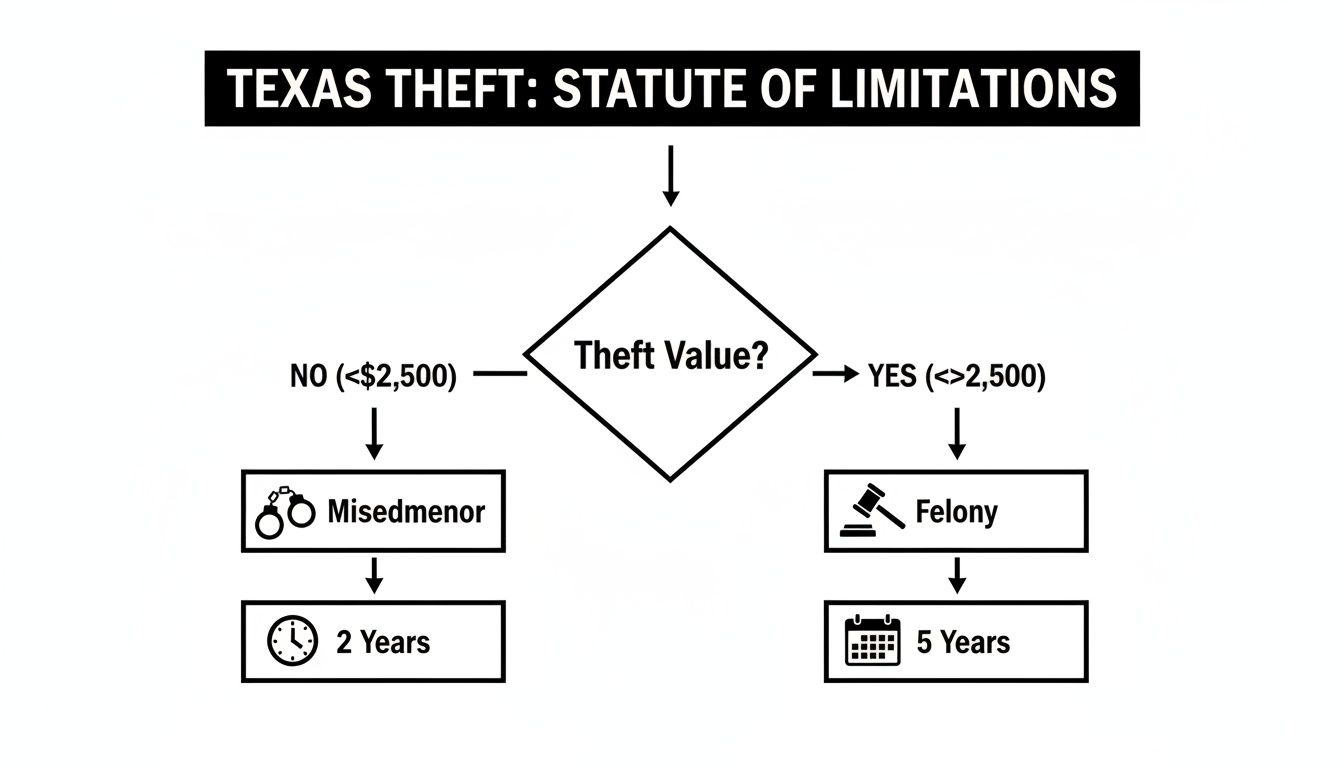
This is your starting point: a two-year deadline for most misdemeanors and a five-year deadline for most felonies. These are the default timers before any tolling or discovery rule exceptions come into play.
How An Attorney Investigates The Timeline
A sharp criminal defense attorney will dig into the timeline of your case to see if the state has missed its deadline. It’s a meticulous process. Here is the step-by-step guidance you can expect:
- Pinpointing the Offense Date: First, they establish the exact date the alleged theft occurred.
- Checking the Filing Date: Next, they find the precise date the prosecutor formally filed charges.
- Investigating Tolling Events: They’ll investigate whether you were out of state or if other circumstances could have legally paused the clock.
- Applying the Discovery Rule: If the case involves a hidden crime, your attorney will analyze when the alleged victim reasonably could have discovered it.
These aren't just minor technicalities; they are foundational to building a solid defense. For instance, the rules for tolling the clock can differ from those in other criminal cases, and it's important to understand how the statute of limitations in Texas assault cases may have different nuances.
If your lawyer finds that the prosecution filed charges even one day past the legally permitted deadline, they can file a motion to dismiss your case. If the judge agrees, the case is over. Period. This is one of the most powerful defenses you have, and it all comes down to a careful examination of the calendar.
Using The Statute Of Limitations As A Powerful Defense
Knowing the statute of limitations isn’t just about memorizing a legal rule. It’s about recognizing you have a powerful shield in your corner. If a prosecutor tries to file theft charges after the legal deadline has passed, your case shouldn't even get off the ground.
This isn't some minor technicality or a "loophole." It’s an absolute defense guaranteed by Texas law. When it’s used correctly, it can end a case before it ever sees the inside of a courtroom, saving you from the stress, expense, and uncertainty of a full-blown trial.
How The Defense Works In Court
So how does this actually play out in real life? When your attorney spots that the statute of limitations has run out, they take decisive legal action by filing what’s called a Motion to Dismiss. This is an official legal document that formally asks the judge to throw out the charges completely.
The motion lays out a clear, no-nonsense argument:
- The Date of the Alleged Offense: This establishes exactly when the clock started ticking.
- The Date Charges Were Filed: This shows when the prosecutor officially took action.
- The Applicable Time Limit: Your lawyer will cite the specific Texas law that sets the two-year or five-year deadline for your case.
- The Legal Argument: It all comes together here, explaining that because the state missed its deadline, it has lost the legal authority to prosecute you for that crime.
A hearing is scheduled where your attorney argues the motion before the judge. The prosecution gets a chance to respond, maybe by claiming an exception like the discovery rule applies or that the clock was tolled. This is where having a sharp, experienced Houston criminal lawyer becomes absolutely critical.
The Power Of A Successful Motion
If the judge agrees with your attorney and grants the dismissal, the impact is immediate and permanent. The case is tossed out. The legal battle is over.
This is where the legal principle of "double jeopardy" kicks in. It prevents the state from turning around and trying to charge you again for the same crime once the case has been dismissed on these grounds. It’s a final, decisive victory.
It means you are legally cleared of the accusation. You walk away without a conviction, without having to face a jury, and without the threat of this specific charge ever hanging over your head again. In the criminal justice system, this is one of the most complete and powerful wins you can get.
Why You Need An Experienced Attorney Immediately
Here’s something you can’t afford to miss: you can't just sit back and expect the prosecutor or the court to apply this defense for you. The statute of limitations is an affirmative defense, which means it’s on your team to actively raise it and prove it. If you don't assert it, you could lose this crucial protection forever.
An experienced criminal defense attorney will immediately get to work, scrutinizing every date and detail of your case. They'll dig through police reports, witness statements, and official court documents to piece together a precise timeline. This is the kind of meticulous work that uncovers opportunities to dismantle the state's case from the ground up.
A successful motion to dismiss based on the statute of limitations for theft in Texas can secure your freedom without forcing you through a long, draining trial. It underscores just how important it is to act fast and hire a lawyer who knows how to use every tool the law provides. Your future could depend on it.
What To Do If You Are Accused Of Theft

Being accused of theft in Texas is terrifying. It’s an experience that can leave you feeling completely lost and panicked, but the steps you take right after an accusation are critical for protecting your rights and your future.
Your single most important priority is to stay calm and exercise your right to remain silent.
Don't try to explain your side of the story to the police. It’s a natural impulse, but anything you say—even if you believe you are innocent and are just trying to clear things up—can and will be used against you. Your first and only call should be to an experienced criminal defense attorney.
Practical Advice: Immediate Steps To Protect Yourself
Getting a lawyer involved right away is the single most powerful move you can make. A skilled attorney acts as your shield, making sure your constitutional rights are respected from the very beginning. They will handle all communications with law enforcement for you, preventing any missteps that could seriously harm your case.
Here is the step-by-step guidance you need to follow:
- Politely Decline to Answer Questions: If the police question you, you can and should state, "I am exercising my right to remain silent, and I would like to speak with my attorney."
- Do Not Consent to a Search: You are not obligated to consent to a search of your property, like your car or your home, if they don’t have a warrant.
- Contact a Defense Attorney Immediately: The sooner you have legal representation, the better your chances are of getting a positive outcome.
Your attorney will immediately start digging into the details of the accusation. This includes a thorough analysis of the timeline to see if the statute of limitations for theft in Texas has expired. If it has, that could lead to a complete dismissal of the charges against you.
Building Your Defense And Planning For The Future
Once you have a lawyer, they will begin crafting a strategic defense. This involves reviewing every piece of evidence, from arraignment to plea bargaining and trial preparation. They’ll explain your options in plain English, helping you understand all the potential outcomes.
Beyond the immediate legal fight, a good defense team looks ahead to protect your long-term future. If your case is dismissed or you are found not guilty, we can explore options for clearing your record.
Securing an expunction or having your record sealed can erase the public record of an arrest or charge. This is a vital step in post-conviction relief, safeguarding your reputation and making sure a past accusation doesn't create barriers to future employment or housing opportunities.
Navigating the legal system after an accusation often requires understanding how to get legal assistance, and many organizations use various Access to Justice Technology Solutions to bridge the gap between clients and legal aid. Our firm is dedicated to providing that direct, personal guidance you need.
We are here to answer your questions, calm your fears, and build the strongest possible defense to protect everything you've worked for. You don't have to face this alone.
Answering Your Questions About Texas Theft Laws
The legal system can feel like a maze, so let's clear up some of the most common questions people have about the statute of limitations for theft here in Texas. This quick guide offers straightforward, plain-English answers to help you make sense of your situation.
What Happens If Charges Are Filed Right Before The Deadline?
This happens more often than you might think. As long as the State of Texas formally files charges within the legal time limit, the prosecution is valid.
It doesn’t matter if your arrest, court date, or trial happens long after the statute of limitations has technically passed. The only date that counts is the filing date on the official charging document.
Can The Clock Be Paused If I Leave Texas?
Yes, it absolutely can. If you leave the state while a case is pending or to avoid prosecution, the law allows the statute of limitations to be “tolled,” or paused, during your absence.
Think of it like a stopwatch. The clock stops ticking the moment you leave Texas and only starts again if you return.
Does This Time Limit Apply To Federal Theft Charges?
No, it doesn’t. Federal crimes operate under an entirely different set of rules.
Federal theft offenses, like bank fraud or theft involving federal property, are governed by a separate federal statute of limitations. This is typically five years but can be even longer for certain crimes. The Texas state laws we’ve discussed here are irrelevant in a federal court case.
Understanding which court is handling your case—state or federal—is one of the first and most critical steps. The rules, deadlines, and potential penalties are completely different. An experienced attorney can immediately tell you which laws apply to your specific situation.
Can An Old Theft Allegation Still Lead To Charges?
It’s possible, but it all depends on the details. The answer hinges on the theft's classification (misdemeanor vs. felony) and whether anything happened that could have legally paused the clock.
A two-year-old misdemeanor claim is probably too late, but a five-year-old felony allegation might still be perfectly valid. The only way to know for sure if the statute of limitations for theft in Texas has expired is to have a lawyer conduct a thorough review of your specific circumstances.
If you’ve been charged with a crime in Texas, call The Law Office of Bryan Fagan, PLLC for a free and confidential consultation. Our defense team is ready to protect your rights. https://texascriminallawyer.net