Discovering there might be a warrant for your arrest can be terrifying. Your mind likely races with questions: What does this mean? Can they show up at my job? How do I make this go away without ending up in jail? This isn't the end of the story—it's the beginning of you taking back control.
While finding out about warrants in Houston TX is an overwhelming experience, it’s a legal problem you can manage with the right game plan. Those fears are completely valid, but you don’t have to face this alone. With a proactive approach, you can handle the situation discreetly and protect your freedom.
The Shock of Discovering a Warrant for Your Arrest
Let’s be clear: an active warrant is a direct order from a judge authorizing any law enforcement officer to take you into custody. It doesn’t have an expiration date, and it won’t just disappear if you ignore it.
In fact, ignoring a warrant is the worst thing you can possibly do. It almost always leads to a surprise arrest at the most inconvenient time imaginable, like during a routine traffic stop or in front of your family. That moment of discovery, as scary as it is, is your opportunity to get ahead of the problem.
Your First Step Toward a Solution
The most important thing to know right now is that you have options. An active warrant doesn't automatically mean you’ll end up sitting in a Harris County jail cell. This guide is your first step. We're going to walk you through what you need to know to understand your situation and get your peace of mind back.
A warrant is a serious court order, but it’s also a legal issue that can be handled with the right knowledge and professional help. The key is to act decisively and intelligently, not out of fear.
Think of this article as your roadmap. We’ll break down the essential information you need to move forward.
You will learn about:
- The different types of warrants you might encounter in Houston and what each one means for you.
- Practical, step-by-step guidance on how to protect your freedom and your rights.
- How a skilled Houston criminal defense attorney can help you manage the process, often without you ever being handcuffed.
Facing warrants in Houston TX can feel isolating, but remember that thousands of people deal with this every year. The path forward begins with arming yourself with knowledge and seeking expert guidance. Let's start by breaking down what a warrant truly is and what it empowers law enforcement to do.
Understanding the Different Types of Warrants in Texas
The word “warrant” immediately brings a sense of dread, but in Texas, not all warrants are the same. Knowing the difference is one of the first and most critical steps in building a defense. The type of warrant issued against you explains why police are looking for you and tells a criminal defense attorney exactly what needs to happen next.
When you're dealing with warrants in Houston TX, you'll find they fall into a few key categories. The three most common are arrest warrants, bench warrants, and search warrants. Each one is issued for a different reason and under a completely different set of circumstances.
Arrest Warrants Based on Probable Cause
This is the one most people picture. An arrest warrant is a direct order from a judge to take you into custody. It starts when a law enforcement officer—from the Houston Police Department or Harris County Sheriff's Office, for example—presents a sworn affidavit to a judge.
This affidavit must contain enough facts to establish probable cause—a reasonable belief that you committed a specific crime, as defined by the Texas Penal Code. The police are essentially making their case to the judge before an arrest. If the judge is convinced, they sign the warrant, and it becomes an active order for any Texas peace officer to find and arrest you for charges like DWI, assault, or drug possession.
Bench Warrants for Court-Related Issues
A bench warrant is a different animal altogether. It’s not issued because you’re suspected of a new crime. Instead, a judge issues it directly from “the bench” because you failed to follow a court order. The most common trigger, by far, is missing a scheduled court date.
But other actions can also lead to a bench warrant, such as:
- Failing to pay a court-ordered fine or restitution.
- Not completing mandatory community service hours.
- Violating a condition of your probation or bond.
A bench warrant is the court’s way of saying, “You ignored our order, so now we’re compelling you to appear.” A closely related order is a capias warrant, which also commands your arrest for failing to appear. You can learn more about what a capias charge means in our detailed guide.
Finding out you have any type of warrant is a gut-wrenching experience. It's a journey from shock and anxiety to, hopefully, taking back control.
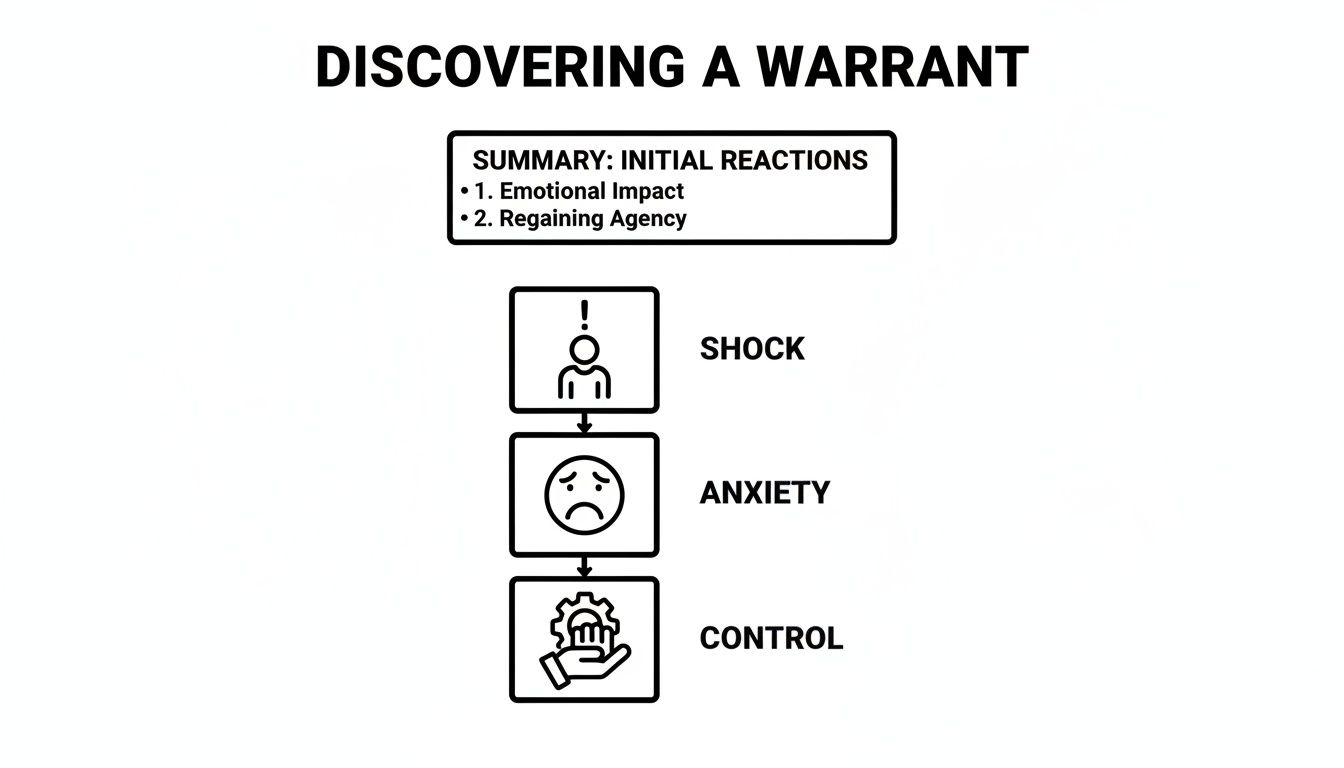
As you can see, the only productive path forward is to face the problem head-on. Ignoring it only makes things worse.
Search Warrants for Evidence Collection
Finally, there is the search warrant. This type of warrant doesn’t authorize your arrest. Instead, it gives law enforcement the legal green light to search a specific place for specific evidence of a crime. Just like an arrest warrant, it must be supported by probable cause and signed by a judge.
The most important detail about a search warrant is its specificity. The warrant must clearly describe the exact place to be searched (like "123 Main Street, Houston, TX") and the particular items they are looking for (such as "a stolen 65-inch television" or "cocaine and associated paraphernalia"). Police can't just use a warrant for a stolen TV to start a massive fishing expedition for anything illegal they might find.
Comparing Common Texas Warrants
To make it easier to see the differences at a glance, here’s a quick breakdown of how these warrants stack up against each other.
| Warrant Type | Issued For… | Key Trigger | What It Authorizes |
|---|---|---|---|
| Arrest Warrant | Suspected criminal offenses, from misdemeanors to felonies. | A police affidavit showing probable cause of a new crime. | A peace officer to arrest you anywhere, at any time. |
| Bench Warrant | Failure to comply with a direct court order. | Missing a court date, not paying a fine, or violating probation. | A peace officer to arrest you and bring you before the judge. |
| Search Warrant | Collection of evidence related to a specific crime. | An affidavit showing probable cause that evidence exists at a location. | Police to search a specific place for specific items. |
Understanding which type of warrant you're facing is the first step. Each requires a unique legal strategy, whether it’s negotiating a surrender, fighting the underlying charge, or challenging the evidence.
How Warrants Get Issued and Executed in Harris County
It's easy to picture a warrant just appearing out of thin air, but the process is a specific legal path that must be followed. Understanding how this system operates in Harris County can pull back the curtain on a confusing situation and show you exactly why having an experienced criminal lawyer is so critical.
The life of a warrant starts with a law enforcement officer, such as a deputy from the Harris County Sheriff’s Office or an officer with the Houston Police Department. They prepare a sworn statement, known as an affidavit, that outlines all the evidence they’ve collected against you.
The Role of Probable Cause
Next, the officer takes that affidavit to a neutral judicial officer—usually a magistrate or a judge. The judge’s entire job at this stage is to act as a check on police power. They must carefully review the affidavit to decide if it establishes probable cause.
So what is probable cause? It’s a reasonable, trustworthy belief, based on facts, that a crime has been committed and that you are the one who committed it. This is a fundamental legal standard outlined in the Texas Code of Criminal Procedure.
If the judge agrees the evidence is strong enough, they'll sign the warrant. The moment that signature hits the paper, it becomes an active order for any peace officer in Texas to find you and take you into custody. It’s not a request—it's a legal command.
Where Are Warrants Issued in Houston?
The system for handling warrants in Houston TX isn't just one big office. It’s a network of different courts and judicial officers, each with its own jurisdiction. Harris County coordinates a massive warrant management system that tracks everything issued by these different courts.
- Municipal Courts: These courts, like the one at 1400 Lubbock Street in Houston, handle violations of city ordinances. This is where you’ll see thousands of warrants for things like unpaid traffic tickets or other minor infractions inside city limits.
- Justice of the Peace Courts: Often called JP courts, they handle Class C misdemeanors that happen anywhere in their specific precinct within Harris County. Think traffic violations, disorderly conduct, and similar offenses.
- County and District Courts: This is where the more serious charges come into play. Warrants for felonies and serious misdemeanors like DWI, assault, or major theft are typically issued from these higher-level courts.
One of the most important things to realize about this system is that it never sleeps. In a county as huge and busy as ours, crime doesn't clock out at 5 p.m. To handle this reality, magistrates are available 24 hours a day, 7 days a week.
This round-the-clock availability ensures that law enforcement can get time-sensitive warrants signed at any hour, day or night. As laid out in the Texas Code of Criminal Procedure § 15.01, these judicial officers are legally required to find probable cause before signing anything. To see the local system in more detail, you can learn more about Harris County's warrant processes and the various courts involved.
The warrant process is built for speed. The 24/7 availability of magistrates means a warrant can be issued at any moment, turning a police officer's suspicion into a legal directive for your arrest almost instantly.
An attorney who knows the judges, prosecutors, and procedures of the Harris County court system can analyze how your warrant was issued and find any legal weaknesses to challenge on your behalf.
How to Discreetly Check for Warrants in Houston TX

The thought of an active warrant is terrifying, but living with the uncertainty can be just as draining. Finding out if a warrant exists is your first step toward resolving the issue, but how you check matters immensely. Your goal is to get information without accidentally alerting law enforcement.
Many people’s first instinct is to search for their own name on public websites. While Harris County and the City of Houston do offer online portals to search for court case information, using them yourself can come with significant risks. These searches can sometimes leave a digital footprint, and if you find a warrant, you’re left alone to figure out what to do next.
Official Online Portals and Their Risks
Houston and Harris County provide public access to court records, which is where you would look for information on active warrants. The two main resources are:
- Harris County District Clerk's Office: This portal allows you to search for records related to felony and misdemeanor cases filed in Harris County.
- Houston Municipal Courts: This website is where you would look for warrants related to Class C misdemeanors, such as traffic tickets or city ordinance violations issued within Houston city limits.
While these tools are available, searching for your own name could potentially be monitored. The bigger risk, however, is what happens when you confirm a warrant exists. Panicked decisions can make a bad situation worse.
The Safest Way to Check for Warrants
The most discreet and strategic way to check for warrants in Houston TX is to have an experienced criminal defense attorney do it for you. This approach offers several key advantages that you simply can’t get by going it alone.
An attorney acts as a protective shield between you and law enforcement. We can perform a warrant search on your behalf through professional channels that do not raise red flags. This process is completely confidential.
Having a lawyer check for you isn't just about discretion; it's about strategy. If we find a warrant, we are already in a position to start negotiating a favorable resolution immediately, often before you ever have to interact with the police.
If a warrant is active, our first call isn't to you to cause panic—it's to the court or prosecutor to begin solving the problem. We immediately start working to arrange a favorable surrender or a "walk-through" bond. This process allows you to post bail and be processed without ever being placed in a jail cell, turning a potential arrest into a manageable administrative procedure.
This proactive step changes the entire dynamic. Instead of waiting for an officer to knock on your door, you are taking control of the situation on your own terms. It shows the court you are taking the matter seriously, which can be a huge factor in achieving a better outcome.
You Have a Warrant—What Are Your Options Now?
Finding out you have a warrant for your arrest is a scary moment. Your first instinct might be to panic, but what you need right now is a clear head and a solid plan. You have choices, and the absolute worst thing you can do is ignore the warrant and hope it just goes away. It won’t.
Ignoring an active warrant in Houston, TX, is a recipe for disaster. It almost guarantees you’ll be arrested at the most inconvenient and humiliating time possible—during a routine traffic stop, at your job, or even at home in front of your family. Taking control of the situation now puts you back in the driver’s seat.
Do Not Ignore the Warrant
The legal system in Harris County is stretched thin. As of 2021, there were a staggering 50,672 open arrest warrants in the county, with about half of those for serious felony charges. While it's true that fewer than 10% of people with warrants were being arrested each month at that time, law enforcement is always looking. You can read the full report about Harris County's warrant backlog to get more context on this massive challenge for local authorities.
This reality means a surprise arrest isn't a matter of "if," but "when." So, let’s focus on the smart legal options to handle this head-on.
Your Best Legal Options for Resolving a Warrant
With an experienced criminal defense attorney on your side, you can often resolve a warrant without ever setting foot inside a jail cell. We use specific legal strategies designed to make this process as smooth and painless as possible. Here are the most common approaches we take:
A ‘Walk-Through’ or ‘Non-Arrest’ Bond: This is one of the most effective tools for handling a warrant. We coordinate directly with the court and a trusted bail bondsman to have you post bail before you are ever formally taken into custody. You’ll be booked and processed administratively, then released right away—often within just a few hours. It turns a potentially traumatic arrest into a simple, procedural event.
Filing a Motion to Recall the Warrant: This strategy is especially powerful for bench warrants, which are typically issued when someone misses a court date. As your Houston criminal lawyer, we can file a formal motion with the judge, asking them to withdraw or "recall" the warrant. We’ll explain the circumstances that led to your failure to appear. If you’ve missed court, it’s critical to act fast. You can check out our guide on what to do if you miss a court date for more detailed advice on this.
A Coordinated Surrender: In some cases, a walk-through bond might not be an option. But we won’t let you just walk into a police station alone. We will arrange a specific time and place for you to turn yourself in. Having your attorney present ensures your rights are protected from the very first moment, speeds up the process, and shows the court you are taking responsibility.
The goal is to show the court that you are not a flight risk and are willing to handle your legal obligations. A proactive approach negotiated by your attorney can significantly influence how the judge and prosecutor view your case from the very beginning.
It’s natural to wonder about the costs involved when hiring a lawyer. To help you plan, you can explore a complete guide on how much lawyer consultation fees typically run. Remember, our firm offers a free and confidential initial consultation to discuss the specifics of your case.
These proactive strategies transform you from a target waiting for an inevitable arrest into an active participant in your own defense. The moment you hire an attorney to handle your warrant, you send a clear message to the court: you are serious about resolving this.
Clearing Your Name and Your Record After a Warrant
Dealing with an active warrant is a huge weight off your shoulders. But once the immediate crisis is over, a new question almost always pops up: "Will this follow me around forever?" It's a valid concern. The good news is that Texas law offers powerful ways to protect your future. Resolving a warrant and the case it’s tied to doesn't have to mean a permanent black mark on your name.
The Warrant vs. The Charge: What Really Matters for Your Record
Think of a warrant as the key an officer uses to bring you into the courthouse. It gets you through the door, but it’s what happens inside that courtroom that truly defines your future. The warrant itself is just a procedural tool. The real battle is the criminal charge behind it—the DWI, the assault, the theft. Whether you can clear your record depends entirely on how that underlying charge gets resolved.
Your Options for a Truly Clean Slate
Texas law provides two primary ways to handle a criminal record after a case is over: expunction and an order of non-disclosure. Each has its own strict rules and offers a different level of relief. It’s critical to understand which one might apply to your situation, as these remedies aren't automatic. You must formally petition the court and prove you meet the legal requirements.
Expunction: Erasing the Record Completely
An expunction is the gold standard of record clearing. Under the Texas Code of Criminal Procedure, an expunction legally destroys every government record related to your arrest. It’s as if it never happened.
You may be eligible for an expunction if your case ended in one of these ways:
- Your case was dismissed by the prosecutor.
- A judge or jury found you "not guilty" at trial.
- You were arrested but never formally charged with a crime.
When a judge grants an expunction, every agency is ordered to destroy its files. From that point on, you can legally deny the arrest ever occurred on job applications, housing forms, or loan documents. You can learn more about how to get a record expunged in Texas.
An expunction doesn't just seal your record; it obliterates it. This is the most powerful tool available, allowing you to genuinely move on with a truly clean slate.
Orders of Non-Disclosure: Sealing the Record from Public View
What if your case wasn't dismissed? If you successfully completed a deferred adjudication probation, you may be eligible for an order of non-disclosure. This is different from an expunction—it doesn’t destroy the record, but it does seal it from the public.
With a non-disclosure order in place, private employers, landlords, and the general public won't see the offense on a standard background check. However, law enforcement and certain government licensing agencies can still access the information. To qualify, you must have successfully finished your deferred adjudication and meet other specific waiting periods and criteria.
Taking action to clear your name after dealing with warrants in Houston TX is the final, crucial step in putting the whole ordeal behind you. An experienced lawyer can review your case's outcome and walk you through the complex process of filing for either an expunction or an order of non-disclosure.
Frequently Asked Questions About Warrants in Houston
When you find out there's a warrant with your name on it, your mind probably races with questions. The uncertainty can be overwhelming. We hear these same concerns from clients every day, so we’ve put together straightforward answers to give you some clarity.
How Long Does a Warrant Stay Active in Texas?
Let's clear up a common myth right away: warrants in Texas do not expire. A warrant will remain active and in the system indefinitely. It won’t simply “fall off” your record after a few years. The only way to resolve it is to be arrested, turn yourself in, or have an attorney convince a judge to recall it.
Can I Be Arrested for a Very Old Traffic Ticket Warrant?
Yes, and it happens more often than you'd think. Warrants from unpaid traffic tickets or a failure to appear in court are some of the most common ones issued by municipal and Justice of the Peace courts all over the Houston area. Police can—and absolutely will—arrest you on these warrants, often at the worst possible time, like during a routine traffic stop for something as minor as a broken taillight.
What Happens If I Have a Harris County Warrant but Get Stopped in Another County?
Law enforcement agencies all across Texas share a statewide database. If you have an active warrant from Harris County and an officer stops you in Dallas, San Antonio, or a small town in the middle of nowhere, they will see it. The officer will arrest you on the spot. You’ll be held in that local county jail until you can be transported back to Harris County to see a judge. This process can drag on for days, sometimes even weeks, leaving you stuck far from home.
An outstanding warrant is a statewide problem, not a local one. No matter where you are in Texas, an active warrant from Houston can lead to your immediate arrest.
Having an experienced attorney to navigate these issues is crucial. For law firms creating informative guides like this one, it's essential to understand strategies for making legal content discoverable to reach individuals searching for assistance. Each of these questions highlights why taking proactive steps with a legal professional is the best way to protect your freedom.
If you’ve been charged with a crime in Texas, call The Law Office of Bryan Fagan, PLLC for a free and confidential consultation. Our defense team is ready to protect your rights. https://texascriminallawyer.net