Being arrested in Texas can be terrifying. One minute you're going about your day. The next, you're in a holding cell and your family is scrambling to figure out what happens at a bond hearing, when it will happen, and whether you'll be able to come home.
Few people walk into this process calm and informed. They walk into it scared, tired, embarrassed, and unsure who to trust. That's normal.
A bond hearing is one of the first important moments after an arrest. It can affect whether you stay in custody or return home while your case moves forward. If you're facing a DWI, assault, theft, drug possession, or another charge, understanding the hearing can lower your stress and help you make better decisions quickly.
A lot of anxiety comes from not knowing what the courtroom will be like. Clients often worry about the wrong things. They ask if the judge already thinks they're guilty, whether their clothes matter, whether their family can speak, or whether a high bond means the case is hopeless. In most situations, the answer is more reassuring than they expect.
Your Guide Through the Texas Bond Hearing Process
The first hours after an arrest often feel unreal. Your phone may be gone. Your family may only know you're in jail, not what comes next. If you've never been through the system before, it's easy to assume the hearing will be like a trial. It won't.
Think of a common example. A person is arrested for DWI after a late-night traffic stop in Harris County. By morning, their spouse is calling the jail, missing work, and trying to understand whether a judge will let them out. The person in custody is worried about losing a job, missing a child exchange, or violating a lease because they can't get home. Those concerns are real, and they matter.
A Texas bond hearing is where the court decides the terms of release while the criminal case is pending. The judge isn't deciding guilt. The judge is deciding whether you can be released, on what conditions, and at what cost if any.
That distinction matters because it changes how you should think about the hearing. This isn't the time to argue every detail of the police report. It's the time to show the court that you're reliable, that you have roots in the community, and that fair release conditions will work.
Practical rule: A bond hearing is often your first chance to show the court you're a person with a job, a family, a home, and responsibilities. Not just a charge on a docket.
If you're reading this for yourself or a loved one, focus on three things right away:
- Stay calm: Panic leads to bad decisions and bad conversations on recorded jail phones.
- Gather basics: Full name, date of birth, jail location, charge, and booking information.
- Prepare support: Employment details, address history, family contacts, and anything that shows stability.
Understanding the Purpose of a Bond Hearing
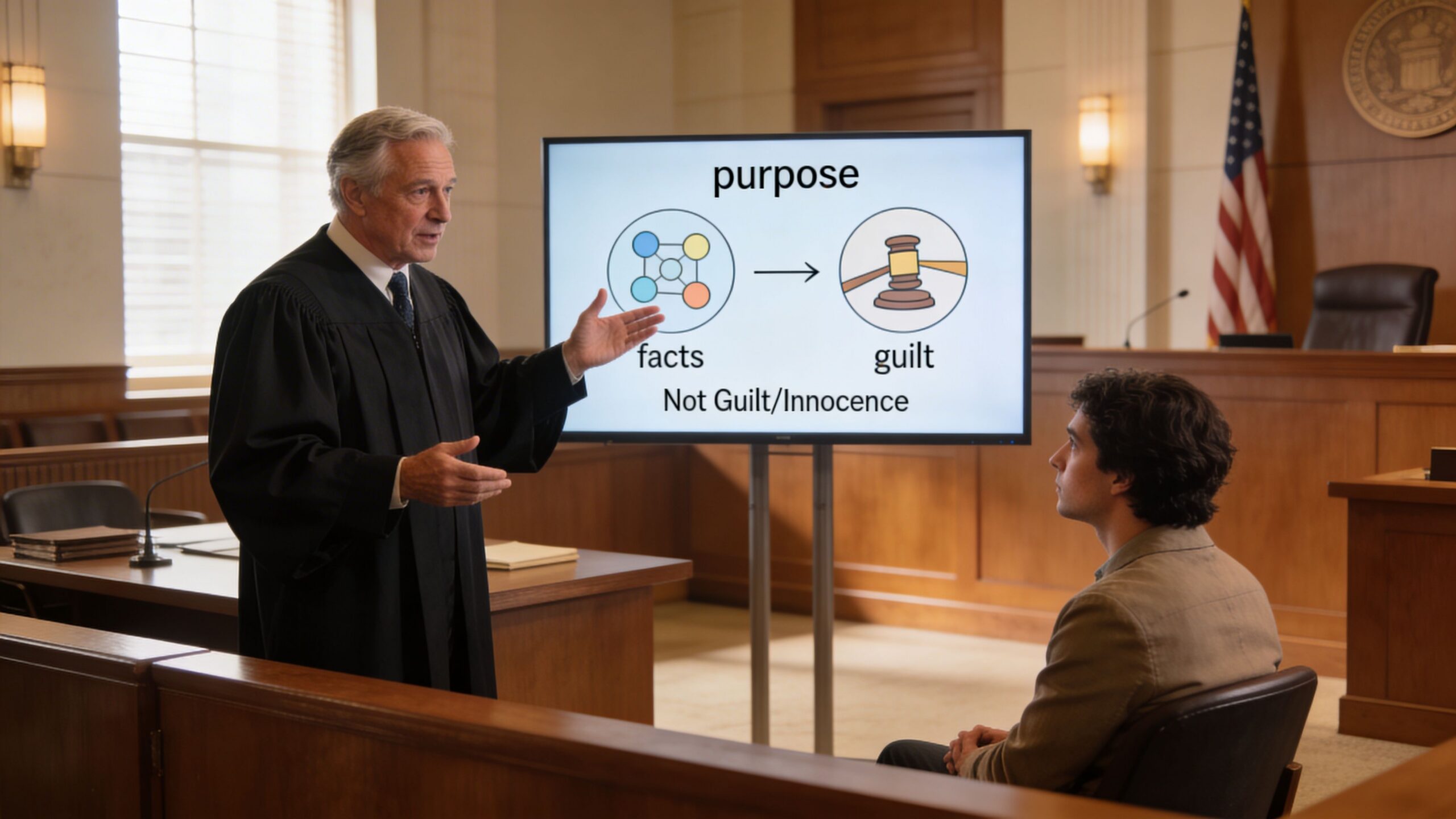
A bond hearing has a narrow purpose. It is not a mini-trial. It is not the point where the court decides whether you committed the offense. It is a hearing about release.
Bail and bond are related but not identical
People use the terms interchangeably, but they aren't quite the same.
Bail is the amount or security the court requires for release. Bond is the mechanism used to secure that release. A simple way to think about it is this:
| Term | Plain-English meaning |
|---|---|
| Bail | The amount or condition the court sets |
| Bond | The promise or financial arrangement used to satisfy that requirement |
If the court sets a financial amount, you may satisfy it in different ways depending on the judge's order and local practice. If the court grants release on a personal bond, you may not have to pay money up front, but you still must follow the court's rules.
If you want a broader overview of release options, this guide on bail and bond in Texas and what to expect helps connect the hearing to the bigger criminal process.
What the court is trying to decide
Texas courts generally use bond hearings to answer two practical questions:
- Will you come back to court?
- Can you be released without creating an unacceptable safety concern?
That's why judges care about matters like your residence, work history, family support, and prior record. Those facts help the court assess risk. They also help your lawyer tell a fuller story than the arrest report does.
The law also matters. In Texas, the right to bail exists in many cases, but not every case is treated the same. Some charges, prior histories, or allegations can lead the State to ask for stricter conditions or even denial in limited circumstances. That doesn't mean release is impossible. It means the hearing becomes more important.
What the hearing means for you
From your perspective, the hearing is about one thing. Can you get out and return to your life while defending your case?
That matters because being out of custody changes almost everything:
- You can help with your defense: Meeting your lawyer is easier outside jail.
- You can protect your job: Missed shifts often become lost employment fast.
- You can support your family: Childcare, housing, and bills don't pause because a case started.
- You can make better decisions: People think more clearly when they aren't exhausted and locked up.
The judge isn't deciding whether you're a good person. The judge is deciding whether release can work.
That is why preparation matters. If you understand what happens at a bond hearing, you stop treating it like an unpredictable event and start treating it like a problem that can be addressed with facts, planning, and careful advocacy.
The Bond Hearing Procedure What to Expect Step-by-Step
A bond hearing often begins before your family has caught its breath. You may still be in jail clothes, your phone call may have been brief, and the people who want to help you are trying to figure out where you are and what happens next. The process moves quickly, but it is not random. If you know the order of events, the hearing becomes easier to prepare for and less frightening to face.
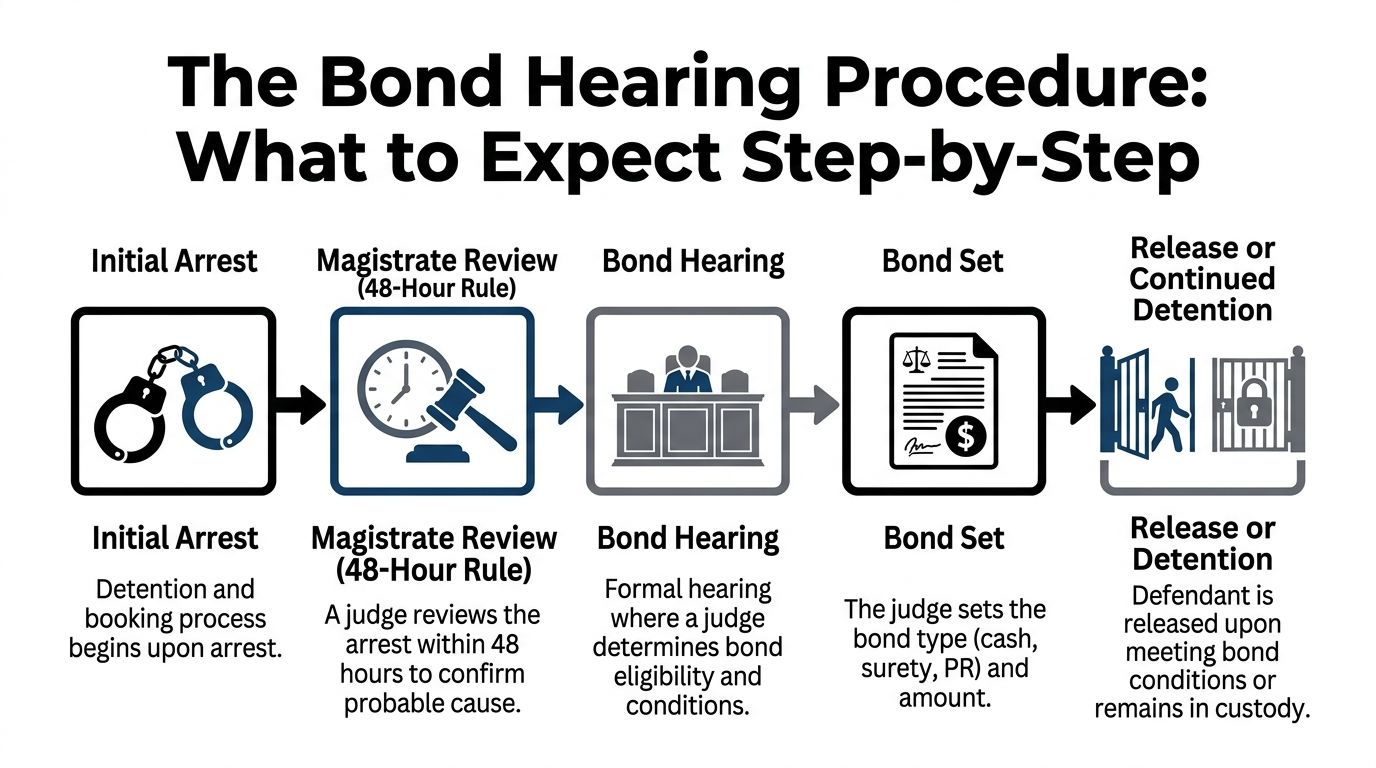
Under Article 15.17 of the Texas Code of Criminal Procedure, a magistrate usually sees an arrested person within 48 hours of arrest, as discussed in an analysis of Article 15.17 procedures and hearing practices at Ahmad R. Crews.
Step one after arrest
First comes booking. Officers record identifying information, take fingerprints and photographs, enter paperwork, and place you in custody. That part can feel mechanical, but it affects what happens later because the jail and court are building the file the judge will see.
For families, this is usually the moment panic sets in. A better approach is to treat the first few hours like gathering tools before a repair. The court will want basic facts that show stability and reliability.
If you can reach family, keep the message short and practical:
- Say where you are: Name the jail or county facility.
- Say what you were told the charge is: Even a simple description helps.
- Ask them to gather useful information: Work schedule, employer contact, home address, medical needs, and names of people who can speak for you.
If your family may appear in court, they should dress neatly and conservatively. Clean, ordinary clothing is enough. The goal is to show the court that you have serious people in your corner, not to put on a performance.
Step two at the magistrate review
At the first appearance, the magistrate or judge handles several basic issues. The court may tell you the accusation, review probable cause, address your right to counsel, and decide whether bond will be set and on what terms.
This part often feels one-sided at first. The State usually starts with police paperwork, often affidavits or offense reports, so the judge hears the accusation in a condensed form before hearing much about you as a person.
That is why preparation matters. A police report may describe the arrest, but it rarely explains that you have worked the same job for years, care for a child, need medication, or have family ready to make sure you return to court. Your lawyer's job is to put those missing facts in front of the judge quickly and clearly.
A short video can also help you picture the setting and pace of a bond hearing:
Step three when each person speaks
A bond hearing is usually brief, and each person has a specific role. It works a bit like a focused business meeting. The judge is there to make a limited decision, not to hear the whole case.
| Person | Role at the hearing |
|---|---|
| Judge or magistrate | Decides release terms and conditions |
| Prosecutor | Argues the State's position, often focusing on risk |
| Defense attorney | Presents reasons for lower bond or better conditions |
| Defendant | Usually remains respectful and lets counsel do the legal arguing |
The prosecutor may point to the charge, prior record, missed court dates, or facts that suggest a risk of harm or nonappearance.
The defense should answer with specifics, not general promises. Stable housing. A job to return to. Family support. Medical treatment. School enrollment. Military service. Long residence in the county. Those details help the judge see whether release can work in real life.
Clients often ask whether they should speak. Usually, less is safer. A respectful posture matters. Interrupting, arguing with the judge, or trying to explain the whole case can hurt more than help. If your lawyer wants you to answer a question, do it directly and stop there.
Step four when the court decides bond
After hearing from both sides, the court decides whether to release you and under what conditions. The judge may set a dollar amount, order a personal bond, add restrictions, or in limited cases deny bond if the law allows it.
Families are often surprised to learn that this is not only about the charge. It is also about whether the release plan makes sense. The court may want to know where you will live, how you will get to court, whether someone can supervise or assist you, and whether treatment or monitoring conditions would address the judge's concerns.
The court may:
- Set a personal bond
- Set a cash or surety bond
- Impose conditions
- Deny bond in circumstances allowed by law
This is also the stage where practical preparation pays off. If your lawyer can show proof of residence, employment, treatment, childcare responsibilities, or other stabilizing facts, the request for a lower bond becomes much stronger.
Step five after the ruling
A favorable ruling does not always mean immediate release. Jail staff still have to process paperwork, confirm the bond type, and complete the release procedure. If a bondsman is involved or family is posting money, that adds another layer of waiting.
This delay frustrates families because it can feel like the hearing did not change anything. It did. The legal decision comes first, and the physical release follows after the system catches up.
If bond is set higher than expected, do not assume the situation is hopeless. Your lawyer may be able to seek a bond reduction, challenge conditions, gather better supporting documents, or present stronger information at a later hearing.
The first hearing is important, but it is not always the last chance to improve the result. Good preparation helps at every stage.
Key Factors the Judge Considers When Setting Bond
At this stage, the judge is asking a practical question: if you are released, what gives the court confidence that you will come back and follow the rules? In Texas, that decision is guided by Article 17.15 of the Texas Code of Criminal Procedure. The law sets the frame. The judge then applies it to the specific facts of your life, your charge, and any risk the court believes needs to be addressed.

The legal factors in plain English
A bond hearing often feels personal because it is. The judge is not only looking at a case number. The judge is deciding whether release is realistic and, if so, under what terms. In plain English, the court usually focuses on questions like these:
- How serious is the allegation? A DWI, assault, theft, or drug possession case is treated differently depending on its specific facts.
- How much bond is needed to encourage a return to court? The amount has to matter enough that missing court carries consequences.
- Would the amount be unfairly high? Bond is not supposed to be pretrial punishment.
- What happened in the alleged offense? Allegations involving injuries, threats, weapons, or repeated conduct often draw more concern.
- Can you pay the amount? Ability to pay can be part of the discussion.
- Would release create a safety concern? Judges may look closely at alleged danger to a person or the community.
- What does your record look like? Prior arrests, prior convictions, and prior bond history can affect the result.
- How rooted are you here? A stable home, job, family support, and local ties can help show that you are not likely to disappear.
One way to understand this is to compare bond to a set of balancing scales. On one side, the court places concerns about appearance and safety. On the other, the defense places facts that show stability, responsibility, and a workable release plan. The more proof your lawyer has, the less the judge has to rely on assumptions.
What tends to matter in the courtroom
Judges hear promises every day. They are more persuaded by details they can verify.
A steady job matters because it shows routine. A local address matters because it shows connection. Family responsibilities matter because they show people are counting on you. If there is a treatment issue, proof that you are already addressing it can help. If there is a weak spot in your background, your lawyer is usually better off confronting it directly and explaining it than pretending it does not exist.
As noted in a Texas bond discussion by Hill Duvernay, courts and lawyers often pay close attention to factors such as work history, prior convictions, and whether non-cash release can still produce strong court appearance rates. The broader point is simple. Judges are often looking for signs that release can be managed safely without setting an amount so high that it becomes punishment in practice.
What your family can do before the hearing
Families often ask, "What can we bring that helps?" The answer is paperwork and people who add credibility, not drama.
Helpful materials may include:
- Proof of employment: Recent pay stubs, a letter from a supervisor, a work schedule, or records showing self-employment
- Proof of residence: A lease, mortgage statement, utility bill, or other mail showing a stable local address
- Family responsibilities: Documents or information showing childcare duties, elder care, or support for a dependent
- Treatment records: Proof of counseling, testing, or enrollment in a program when that fits the facts of the case
- Character support: Short letters or testimony that give specific facts, such as how long the person has known you and what responsibilities you regularly meet
Clothing and presentation can matter too. If family members attend, they should dress neatly, stay calm, and avoid interrupting. A respectful courtroom appearance does not decide the case, but it helps reinforce that there is structure and support waiting on the outside.
What usually works best: Specific facts carry more weight than general praise. "She has worked the early shift at the same nursing home for three years" helps more than "She is a wonderful person."
How judges may view common charges
The name of the charge matters, but judges usually look one layer deeper. They want context.
A misdemeanor theft allegation may raise different concerns than an an aggravated assault accusation. A first DWI may be presented differently from a repeat DWI with allegations involving a crash or a very high alcohol level. A drug possession case may lead the court to focus on testing, treatment, or supervision rather than only the bond amount.
That is why preparation matters so much here. A good bond argument gives the judge a clear picture of your daily life, not just the allegation in the complaint. When the court can see where you live, how you work, who depends on you, and what safeguards can be put in place, the decision becomes more concrete and more human.
The Different Types of Bonds and Possible Outcomes
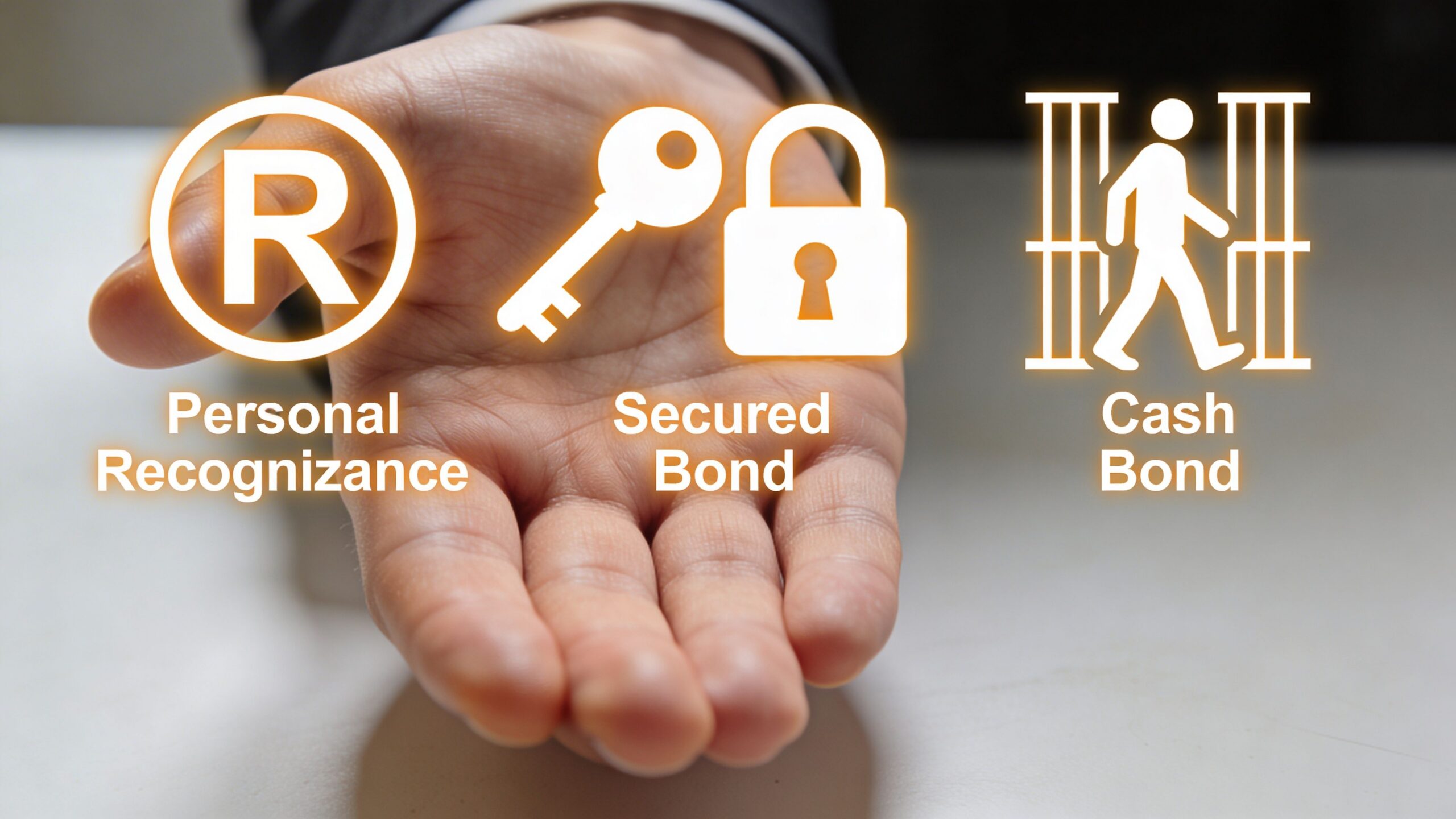
Once the judge rules, the result usually falls into one of several buckets. The label matters because it changes what you and your family have to do next.
A simple comparison of bond outcomes
| Outcome | What it usually means | Practical effect |
|---|---|---|
| Personal bond | Release based on your promise to appear and obey conditions | Least upfront financial burden |
| Cash bond | Money is posted directly with the court | Family needs access to funds |
| Surety bond | A bondsman posts the bond for a fee | Lower upfront payment than full cash amount |
| Bond denial | Release is not granted at that stage | You remain in custody unless relief is later obtained |
Personal recognizance bond
A personal recognizance bond, often called a PR bond, lets you leave custody without paying the full financial amount up front. You are released based on your promise to appear and comply.
This is often the outcome families hope for because it removes the immediate financial pressure. It doesn't mean the case is minor. It means the court believes release can work under the circumstances.
Typical expectations on a PR bond may include:
- Appear in court
- Stay in contact with pretrial services if required
- Follow any special conditions
- Avoid new arrests
Cash bond and surety bond
A cash bond usually means money is paid directly to the court. A surety bond means a bail bond company posts the bond, and the family pays a fee to the bondsman.
For many families, the difference is practical. Cash requires access to substantial money quickly. A surety arrangement may lower the immediate burden, but it adds cost and often paperwork with the bondsman.
If your charge is a DWI, assault, theft, or drug possession case, families often focus only on "How much is the bond?" A better question is, "What kind of bond was ordered, and what conditions come with it?"
Conditions can matter as much as the amount
Many people get caught off guard at this stage. Release is not always simple freedom. The judge may attach conditions that shape your daily life.
Examples may include:
- No-contact orders: Common in assault or family violence allegations
- Curfews: Restricting where you can be during certain hours
- GPS monitoring: Tracking your location
- Drug or alcohol testing: More common in DWI or drug-related cases
- Travel restrictions: Limiting movement outside the county or state
The practical side of bond conditions is often overlooked. As noted in a discussion of bond hearings and release conditions at Dan Mellen Attorney at Law, legal content often fails to explain how defendants can argue that conditions conflict with work or caregiving duties.
That gap matters. A curfew may interfere with a night-shift job. A no-contact condition may affect parenting exchanges if the other parent is the complaining witness. Travel restrictions may disrupt medical treatment or work travel. A condition isn't automatically invalid because it's inconvenient, but courts can sometimes tailor conditions more realistically when the defense raises the issue clearly.
A bond condition should protect the court's concerns without making ordinary life impossible.
Bond denial
Bond denial is the outcome people fear most. It does happen in some cases, especially where the State argues serious danger, repeated noncompliance, or legal grounds for detention.
Even then, the story may not be over. Further review, new evidence, or a later request for modification may still be available depending on the case posture and the county.
How Your Attorney Fights for You at the Bond Hearing
A good bond hearing doesn't start in the courtroom. It starts with preparation.
Before the hearing, your lawyer should identify the facts that matter most to release. That may include employment records, housing proof, treatment history, school enrollment, or family obligations. In a DWI case, your lawyer may emphasize work stability and no history of violence. In an assault case, the focus may shift to disputed facts, local ties, and a realistic safety plan. In a theft or drug possession case, the presentation may highlight your routine, support system, and reliability.
Before the hearing
Your lawyer's early work often includes:
- Screening risk points: Prior cases, pending matters, alleged violations, and anything the prosecutor is likely to stress
- Building a release packet: Documents that humanize you and support a manageable bond
- Coaching family members: Helping them gather useful information instead of flooding the court with emotional but vague statements
When records or statements matter, accuracy matters too. If your defense team is working from interviews, jail calls, or witness accounts, a clean written record can be critical. Tools that help organize spoken information into usable text can save time, and a resource like transcript of deposition, your key to legal testimony gives a practical overview of why accurate transcription matters in legal settings.
During the hearing
In court, your lawyer does more than ask for a lower number. The job is to frame you properly.
That includes:
- Answering the State's risk arguments
- Explaining ability to pay
- Showing the judge how release can function practically
- Asking for reasonable conditions instead of unworkable ones
A strong lawyer also knows when the issue isn't just the amount. Sometimes the problem is the condition attached to release.
After the hearing
If the result is too harsh, your lawyer may seek further relief. If you need more detail on that process, this discussion of how to get bond reduced is a useful next step.
The broader point is simple. Representation changes outcomes. In immigration bond hearings, judges reviewed a significant number of bond hearings during the first nine months of FY 2023, and bond grant rates were notably lower without legal representation compared to those with an attorney, according to TRAC's analysis of immigration bond hearings. That data comes from a different legal system than Texas criminal court, but it underscores a common reality. Having a lawyer present facts, challenge assumptions, and advocate effectively can matter a great deal when your liberty is on the line.
After the Hearing What Are the Next Steps?
Once the judge rules, families often expect the hardest part to be over. Sometimes it is. Sometimes the next few hours are their own challenge.
If bond is affordable
If the amount and conditions are manageable, the next step is to post the bond through the proper channel for that court or to complete the surety process with a bondsman. Then you wait for the jail to process the release.
That delay can be frustrating. It doesn't necessarily mean something is wrong. Release often depends on paperwork, verification, and jail procedures.
When pretrial supervision is involved, local procedures can matter. If your case is in Central Texas, learning how Travis County Pretrial Services works can help you understand reporting obligations and compliance after release.
If bond is too high
A high bond is not always the final word. Texas defendants may seek bond review or modification, but many public guides leave out the details. As noted in the discussion at Lubbock County Criminal District Attorney FAQs, many guides mention bond modification without clearly explaining grounds, timelines, or what counts as a material change in circumstances.
That missing piece causes real confusion. People sit in custody wondering whether they just have to wait. Often, the better question is whether new facts now exist that support another request.
Possible grounds may include:
- New proof of employment or housing
- A clearer release plan with family support
- Changed medical or caregiving needs
- Correction of missing or inaccurate information presented earlier
Keep your focus on compliance
If you're released, protect that release. The court will watch whether you follow rules.
A few basic habits matter:
- Save every court date immediately
- Read bond conditions carefully
- Don't rely on memory
- Tell your lawyer quickly if a condition creates a work or family problem
You should also think beyond bond. Your criminal case is still moving. The next stages may include arraignment, negotiations, motions, trial preparation, and in some cases sentencing. If the case ends favorably, you may later want to ask about expunction, record sealing through nondisclosure, or other post-conviction relief options if applicable. Those remedies depend on the outcome and the offense, but they matter for people trying to rebuild after an arrest.
A bond hearing affects your freedom now. It does not decide the whole case.
Common Questions About Texas Bond Hearings
What should I wear to a bond hearing
Dress as neatly and conservatively as you can. Think job interview, not casual errand. Clean clothes, simple grooming, and a respectful appearance help signal that you'll take the court seriously.
Should I speak during the hearing
Usually, less is better unless your lawyer advises otherwise. Don't interrupt, argue with the prosecutor, or try to explain the whole case on your own. A calm, respectful posture helps more than a long speech.
Can my family speak for me
Usually, family members won't just stand up and address the judge informally. But their help still matters. They can gather records, provide support letters when useful, and help your lawyer verify work, residence, and caregiving responsibilities.
Does a high bond mean the judge thinks I'm guilty
No. Bond is about release conditions, not guilt. A high bond may reflect the court's concern about appearance, safety, prior history, or the allegations presented at that early stage.
What if I missed work, school, or a child exchange because of the arrest
Tell your lawyer right away. Those facts can matter when asking the court for practical conditions that allow you to keep your job, handle custody obligations, and stay compliant.
If you’ve been charged with a crime in Texas, call Law Office of Bryan Fagan PLLC for a free and confidential consultation. Our defense team is ready to protect your rights.