Being arrested for aggravated robbery in Texas can feel like your life stopped in one night. You may be worried about jail, your family, your job, and whether anyone will listen to your side of the story.
That fear is real. But a charge is not a conviction, and an arrest is not the end of your future.
If you're searching for what is aggravated robbery in texas, you probably need straight answers fast. You need to know what the charge means, what the state has to prove, what happens next, and whether there is any real path to a better outcome.
Facing an Aggravated Robbery Charge in Texas? Start Here
Texas treats aggravated robbery as one of its most serious violent felony charges. Under Texas Penal Code §29.03, aggravated robbery is robbery that involves using or exhibiting a deadly weapon, causing serious bodily injury, or harming a protected person. That makes it a first-degree felony, punishable by 5 to 99 years or life imprisonment. In 2023, Texas recorded 21,068 robbery offenses, according to the Texas DPS Crime in Texas report.
That number matters for one reason. Prosecutors see these cases often, and they take them seriously.
Still, every aggravated robbery case turns on facts. What was taken? Was there really a theft? Was anyone injured? Was there a deadly weapon? Did police identify the right person? Those questions can change everything.
Why people panic when they hear this charge
One might hear "first-degree felony" and think the worst is already set in stone. It isn't.
A serious charge creates serious risk, but it also creates a clear need for strategy. The earlier your defense starts, the more chances your lawyer has to challenge weak evidence, address bond issues, and push back before the case hardens.
Practical rule: The first version of the story in the police report is often not the final version of the case.
What you need to focus on right now
If you've been accused of aggravated robbery, your immediate priorities are simple:
- Stay silent about the facts: Don't try to explain your side to police without a lawyer.
- Protect your bond conditions: If the court sets rules, follow them exactly.
- Gather basic information: Save names, messages, receipts, locations, and witness contacts.
- Get help early: Early legal guidance can affect charging decisions, negotiations, and pretrial release.
For many families, the hardest part is knowing how to choose help. If you're comparing firms and trying to understand what matters in finding expert legal representation, focus on whether the attorney handles serious felony defense, explains the process clearly, and can spot issues in the state's proof.
You don't have to solve the whole case today. You just need to take the next right step.
What Exactly Is Aggravated Robbery Under Texas Law?
Aggravated robbery starts with robbery. So the easiest way to understand it is to build up from the base offense.
Under Texas law, robbery is theft combined with force, injury, or fear. It isn't just taking property. It involves taking property while causing bodily injury or placing someone in fear of imminent bodily injury or death.
Then Texas adds one more layer. If one aggravating factor is present, the charge becomes aggravated robbery.
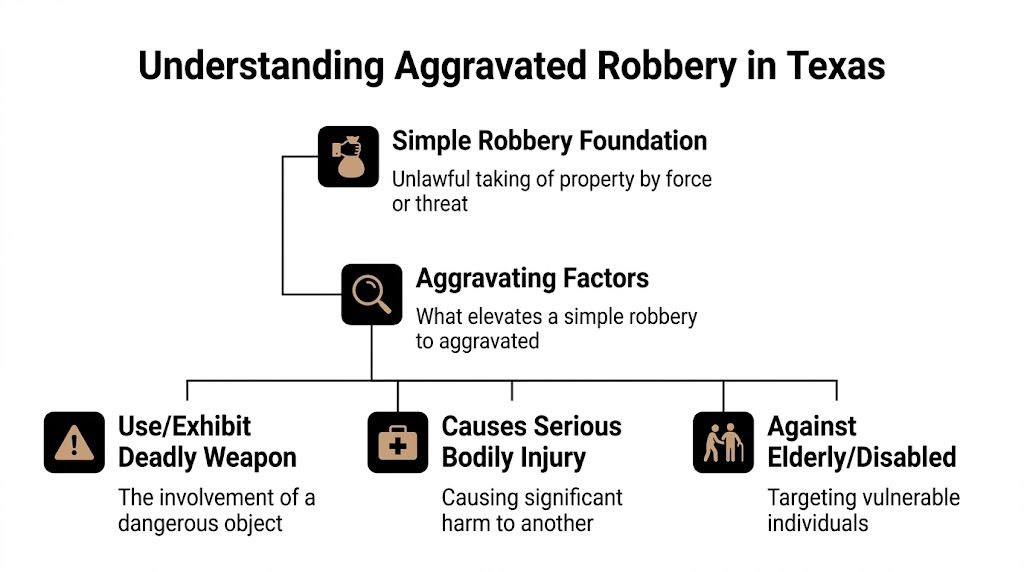
The robbery foundation
Robbery involves two ideas happening together:
- A theft or attempted theft: The state must show there was an intent to take or keep control of property.
- Force or fear tied to that theft: The state must also show injury or a threat of imminent harm during the theft.
If you'd like a deeper breakdown of the base charge, this guide on the elements of robbery in Texas helps explain the underlying offense.
A lot of confusion starts here. People sometimes think any fight during a theft is automatically aggravated robbery. It isn't. The state still has to prove robbery first, then prove an aggravating factor.
The three aggravating factors
Under Texas Penal Code §29.03, prosecutors must prove one of three aggravating factors beyond a reasonable doubt, as explained in this discussion of aggravated robbery under Texas law.
Serious bodily injury
This is more than a minor injury.
Texas uses the term serious bodily injury to mean an injury that creates a substantial risk of death or causes protracted loss of bodily function. In plain language, the injury must be severe enough to go beyond bruises, soreness, or temporary pain.
Examples can include injuries that permanently change someone's body or keep part of the body from working properly for a long time.
Use or exhibit a deadly weapon
This is the aggravating factor people hear about most often.
A deadly weapon can be a firearm, knife, or another object if the way it was used made it capable of causing death or serious bodily injury. The word exhibit is important. The state does not have to prove the weapon was fired, stabbed with, or physically used. Displaying it during the robbery can be enough.
That surprises many people. They assume "I never used it" is the end of the issue. It isn't if the state claims it was shown to threaten or control the victim.
Victim age or disability
A robbery can also become aggravated if the alleged victim was 65 or older or was a disabled person, and the case involves bodily injury or a threat of imminent harm.
This part of the law exists because Texas gives added protection to people considered more vulnerable.
A prosecutor doesn't have to prove all three aggravating factors. Proof of one can be enough to raise the charge to aggravated robbery.
What the prosecutor must prove
The state carries the burden. That means prosecutors must prove:
- A theft occurred or was attempted
- Force, injury, or fear was used during that theft
- At least one aggravating factor was present
If the evidence falls short on the aggravating factor, the defense may argue for a reduction to robbery or another lesser charge. If the evidence falls short on robbery itself, the defense may challenge the entire case.
That distinction matters because legal labels follow proof, not assumptions.
Robbery vs Aggravated Robbery vs Aggravated Assault
These charges sound similar, but they are not the same. The difference often comes down to one key issue: Was there a theft element?
If there was no alleged theft, the case may be assault-based rather than robbery-based. If there was a theft plus force or fear, robbery comes into play. If that robbery also includes a qualifying aggravating factor, the charge becomes aggravated robbery.
Texas crime comparison
| Offense | Key Elements | Felony Level | Punishment Range (Prison Time) |
|---|---|---|---|
| Robbery | Theft plus bodily injury or placing someone in fear of imminent bodily injury or death | Second-degree felony | 2 to 20 years |
| Aggravated Robbery | Robbery plus serious bodily injury, use or exhibition of a deadly weapon, or injury/threat to an elderly or disabled person | First-degree felony | 5 to 99 years or life |
| Aggravated Assault | Assault involving serious bodily injury or a deadly weapon, but not necessarily a theft | Felony charge under Texas law depending on facts | Varies by charge and facts |
Why the theft element matters
Many people find this confusing.
If someone is accused of threatening another person with a weapon during a fight, that may be aggravated assault. If the accusation is that the threat happened while taking property, that pushes the case toward robbery or aggravated robbery.
So two cases may involve the same alleged weapon, the same alleged injury, and very different charges because one includes theft and the other doesn't.
For readers trying to sort out the assault side of the line, this overview of what is aggravated assault in Texas can help.
Why your exact charge changes the defense
Your lawyer doesn't defend every violent felony the same way.
In an aggravated robbery case, the defense may focus heavily on:
- Whether there was intent to steal at all
- Whether property was taken or controlled
- Whether the weapon qualifies as deadly under the facts
- Whether the injury meets the legal threshold
- Whether police identified the right person
In an aggravated assault case, the battle may center more on self-defense, mutual combat, or whether the alleged threat happened at all.
The same incident can produce different charges depending on what the state says your intent was. That's why small factual details matter so much.
Understanding the Penalties for an Aggravated Robbery Conviction
An aggravated robbery conviction carries life-changing consequences in Texas. This offense is a first-degree felony, and the punishment range is 5 to 99 years or life imprisonment, plus a possible fine of up to $10,000.
Those are the formal penalties. The practical consequences often reach much further.

What a first-degree felony means in real life
A first-degree felony is among the most serious levels of criminal charges in Texas. If you're convicted, the court can impose a very long prison sentence even if no one expected the case to reach that point when the arrest first happened.
That is why early defense work matters. Once a case is indicted and the state's theory is set, it can become harder to unwind damaging assumptions.
What people mean by a 3g offense
Aggravated robbery is commonly treated as a 3g offense under Texas law. In practical terms, that label affects probation and parole.
Here is the part most people need explained in plain English:
- Judge-ordered probation is restricted: The court's ability to place someone on probation after a trial conviction is limited.
- Parole comes later than many people expect: Parole eligibility generally doesn't begin until at least half of the sentence has been served.
- A plea decision carries long-term consequences: Two sentences that sound similar on paper can play out very differently in actual time served.
People often hear "eligible for parole" and assume release is automatic. It isn't. Eligibility only means the person may be considered.
The penalties outside the courtroom
Even after a sentence is over, a felony record can continue to affect daily life.
A conviction can create problems with:
- Employment: Many employers hesitate when they see a violent felony.
- Housing: Landlords often run background checks.
- Firearm rights: A felony conviction can affect your ability to lawfully possess firearms.
- Professional licensing: Some careers become harder to enter or keep.
- Reputation and stability: Family, finances, and future plans can all take a hit.
A criminal case doesn't only decide punishment. It can shape where you live, how you work, and what options you have years later.
What about expunctions or record sealing
This is an area where people need realistic advice.
If a case is dismissed, if you're found not guilty, or if the prosecution never moves forward in a way that leads to conviction, some people may later pursue expunction or record sealing depending on the exact outcome and eligibility rules. But a conviction for aggravated robbery usually does not lead to the kind of clean slate people hope for.
That is one more reason to treat the front end of the case seriously. Protecting your record often starts long before sentencing.
Common Defense Strategies for Aggravated Robbery Cases
The law is harsh, but that doesn't mean every aggravated robbery charge stays where it starts. In real courtrooms, lawyers challenge facts, attack weak proof, file motions, and negotiate from pressure points in the evidence.
That practical reality matters. In major Texas jurisdictions like Harris County, approximately 35 to 40 percent of aggravated robbery indictments result in plea deals to lesser felonies, according to this discussion of aggravated robbery plea bargaining in Texas. A reduction can open the door to outcomes that may avoid the harshest penalties.

The defense starts with the elements
A strong defense often begins by pulling the charge apart piece by piece.
If the state has to prove robbery plus an aggravating factor, the defense asks where that proof is weak.
Some common pressure points include:
- Identity problems: Eyewitnesses can be mistaken, especially during stressful events.
- Intent disputes: The state has to show intent tied to theft, not just presence at the scene.
- Deadly weapon challenges: Not every object automatically qualifies under the specific facts.
- Injury disputes: Not every injury rises to serious bodily injury.
- Credibility issues: Conflicting witness accounts can create reasonable doubt.
Challenging the deadly weapon allegation
This issue often drives the whole case.
If prosecutors claim a weapon was used or exhibited, the defense looks closely at what witnesses saw, how they described it, whether police recovered anything, and whether the object legally fits the deadly weapon standard in the way it was allegedly used.
That can matter a lot in plea negotiations. If the state is less confident about the weapon allegation, the case may become more negotiable.
Challenging serious bodily injury
The phrase sounds broad, but the law applies a higher threshold than many people think.
A person can be hurt without the injury qualifying as serious bodily injury. Medical records, treatment notes, photographs, and expert opinions may all matter here. If the defense can show the injury was real but not legally "serious" in the required way, that can change the level of the charge.
Here is a short explanation of how defense lawyers approach these cases in practice.
Plea bargaining is not surrender
Many clients hear the words "plea bargain" and think it means giving up. That's not how experienced defense work operates.
A plea negotiation can be a strategic way to reduce risk. If the evidence is mixed, a lawyer may push for a reduction from aggravated robbery to robbery, or in some cases to another offense that carries less exposure and better probation possibilities.
That work usually depends on timing. The earlier a lawyer can gather records, interview witnesses, and frame weaknesses in the case, the more sway they may have.
What legal help can actually do
A defense lawyer can't erase a charge by force of personality. What counsel can do is test the state's case aggressively and use procedure to your advantage.
That may include:
- Reviewing discovery: Police reports, videos, statements, and forensic material
- Filing motions: To suppress illegal evidence or challenge identification methods
- Preparing mitigation: School records, work history, treatment records, and family support
- Negotiating reductions: Based on evidentiary weaknesses or personal circumstances
- Trying the case: If the state refuses a fair resolution
The Law Office of Bryan Fagan PLLC handles felony defense work across Texas, including robbery-related allegations, plea negotiations, and post-conviction matters such as record-focused relief where available.
A better outcome often comes from details the police report left out, not just the details it included.
What to Expect After an Arrest for Aggravated Robbery
The process after an arrest can feel confusing because several things happen fast, then the case may slow down. Knowing the order helps you stay calmer and make better choices.
Arrest, booking, and the first hours
After arrest, police book you into jail. That usually means fingerprints, photographs, basic identification, and formal entry into the system.
This is also the stage where many people make damaging mistakes. They talk to officers, cellmates, friends, or family on recorded lines and try to explain what happened.
Don't do that. Your words can become evidence.
Bond and release decisions
For someone facing these charges, the immediate concern is often securing release from jail. Bond conditions can be strict in robbery cases, and they may limit contact, travel, or other daily activities.
If you're dealing with questions about release conditions, this explanation of robbery bond restrictions in Texas gives helpful background.
At this stage, your lawyer may argue for:
- A lower bond amount
- Reasonable bond conditions
- Release terms that let you keep working
- Protection against unnecessary restrictions
Charging and indictment
In a felony case, the prosecutor usually presents the matter to a grand jury. If the grand jury returns an indictment, the formal felony case moves forward in district court.
That can sound dramatic, but an indictment is not a finding of guilt. It means the prosecution cleared an early procedural step.
Arraignment and court settings
At arraignment or an early court appearance, the charge is formally addressed and the case is set on the court's calendar. From there, the case often goes through repeated settings while both sides review evidence and discuss possible resolution.
Your lawyer may appear with you, advise you on how to plead, and start shaping the defense in a more focused way.
Discovery and pretrial motions
Significant legal work often occurs at this stage.
The defense reviews the state's evidence. That may include body camera footage, surveillance, witness statements, medical records, property records, and lab material if any exists.
Then your lawyer may file motions such as:
- A motion to suppress evidence if police violated your rights
- A challenge to identification procedures if witnesses were influenced
- A request for additional records the state has not fully produced
- A motion in limine or other trial-related request to limit unfair evidence
Some of the most important wins in a felony case happen before a jury is ever selected.
Plea offer or trial
Many aggravated robbery cases end in negotiation. Others go to trial because the facts are disputed or the state's offer is too harsh.
If you receive a plea offer, your lawyer should explain:
- what charge you'd plead to
- what punishment range applies
- whether probation is legally possible
- what collateral consequences may follow
- what risks you face if you reject the offer
If the case goes to trial, the state must prove every required element beyond a reasonable doubt. Your lawyer can cross-examine witnesses, challenge exhibits, and argue that the evidence falls short.
Sentencing and what comes after
If there is a conviction, sentencing follows. That can happen after a plea or after trial.
After sentencing, the case may still involve important next steps, including:
- Appeal issues: If legal errors happened
- Post-conviction relief: In limited situations
- Record review: To determine whether any future relief may be available
- Reentry planning: Work, family, treatment, and compliance issues
Even at this late stage, your choices matter. A criminal case is a process, not one single moment.
Frequently Asked Questions About Aggravated Robbery in Texas
Can a first-time offender be charged with aggravated robbery?
Yes. A person does not need a prior record to face this charge. What matters most is what the state alleges happened during the robbery, such as a weapon, serious injury, or a protected victim.
A clean record can still matter. It may help in bond arguments, plea discussions, and mitigation.
Does someone have to be badly hurt for the charge to be aggravated?
No. One path to aggravated robbery involves serious bodily injury, but another path involves using or exhibiting a deadly weapon, and another involves harm or threats against an elderly or disabled person.
So the charge can be filed even when the state does not claim catastrophic injury.
What does "exhibiting" a weapon mean?
In plain language, it means showing the weapon in a way tied to the robbery. The state may argue that displaying it was enough to threaten or control the other person.
That is different from firing or striking with it. The legal fight often turns on the facts, witness descriptions, and whether the object qualifies as a deadly weapon under the circumstances.
Can aggravated robbery charges be reduced?
Yes, in some cases they can. That usually happens through investigation, motions, and negotiation that target weak parts of the state's proof.
Common areas for reduction arguments include the weapon allegation, the injury level, and whether the evidence really proves robbery as opposed to some other offense.
What if I was there but didn't take anything?
Presence alone is not supposed to equal guilt. But prosecutors may still argue participation, assistance, or shared intent depending on the facts.
That is why you should be careful with statements. A casual attempt to "clear things up" can accidentally help the state build a party-liability theory against you.
Can this charge be dismissed?
Sometimes, yes. Dismissals may happen because of weak evidence, witness problems, legal violations, or successful negotiations.
No lawyer can promise a dismissal. But many cases are more defensible than they first appear.
Can an aggravated robbery record be sealed or expunged later?
That depends on how the case ends.
If the case is dismissed or you are found not guilty, you may have options for expunction or record sealing depending on the exact outcome and your eligibility. If there is a conviction, those options are usually much more limited.
Should I talk to the alleged victim to fix the situation?
No. Do not contact the alleged victim unless your lawyer specifically tells you it is lawful and strategically wise. Contact can violate bond conditions, create new allegations, or hurt negotiations.
What's the most important thing to do right now?
Get legal advice quickly, stay off social media about the case, follow all bond rules, and stop discussing the facts with anyone except your lawyer.
Small mistakes early can become big problems later.
If you’ve been charged with a crime in Texas, call Law Office of Bryan Fagan PLLC for a free and confidential consultation. Our defense team is ready to protect your rights.