Skip to content
Being arrested in Texas can be terrifying—but you don’t have to face it alone. When you're caught in the criminal justice system, you expect everyone to play by the rules. But what happens when the state's attorney—the prosecutor trying to convict you—doesn't? This is prosecutorial misconduct, and it occurs when a prosecutor breaks the rules to win a case instead of seeking justice.
This isn't just a minor slip-up; it's a serious violation of your constitutional right to a fair trial. Prosecutorial misconduct can range from hiding evidence that proves your innocence to knowingly putting a liar on the stand to testify against you. If you're facing charges for a DWI, assault, or drug possession, understanding your rights is the first step toward protecting your future.
Understanding the Prosecutor's True Role
When you're facing criminal charges, you are up against the full power of the State of Texas. The prosecutor leading that charge has a special duty that goes far beyond just trying to win. Their primary obligation, as outlined in the Texas Penal Code and professional ethics, is to ensure that justice is done. This means they must follow strict legal rules designed to protect every citizen, including those accused of a crime.
But sometimes, a prosecutor’s focus shifts from fairness to winning at any cost. When that line is crossed, they engage in misconduct. This is a serious violation of their professional responsibility, and it can—and does—lead to wrongful convictions. The consequences are devastating, not just for you, but for the integrity of our entire legal system.
And it happens more often than most people think.
The Impact of Unfair Tactics
Prosecutorial misconduct is a massive factor in wrongful convictions across the country. According to the Center for Prosecutor Integrity, an astonishing 43% of wrongful convictions stem directly from misconduct by prosecutors and other officials.
Digging deeper, the National Registry of Exonerations reports that official misconduct is a contributing factor in about half of all exoneration cases. These numbers paint a troubling picture: the very people we trust to uphold the law sometimes break it themselves, with life-altering results for the accused.
A prosecutor's interest in a criminal prosecution is not that it shall win a case, but that justice shall be done. As such, he is in a peculiar and very definite sense the servant of the law. – Berger v. United States, 295 U.S. 78 (1935)
This core principle means that while a prosecutor has the authority to charge you with a crime—a power known as prosecutorial discretion—that power isn't unlimited. Knowing the difference between a prosecutor's lawful decisions and actual misconduct is the first step in protecting your rights. You can learn more about the legal power of prosecutors in our guide on prosecutorial discretion. An experienced Houston criminal lawyer knows how to spot these violations and hold the state accountable when they cross the line.
Common Signs Of Prosecutorial Misconduct To Watch For
Navigating the Texas criminal justice system after an arrest is overwhelming. Trying to spot prosecutorial misconduct while you're in the thick of it can feel downright impossible. But knowing what to look for is one of the most powerful things you can do to protect your rights. Certain actions are major red flags.
It’s easy to forget that a prosecutor’s job isn’t just to win cases—it’s to see that justice is done. The moment their focus shifts from that core duty to simply getting a conviction at all costs, the door to misconduct swings wide open.
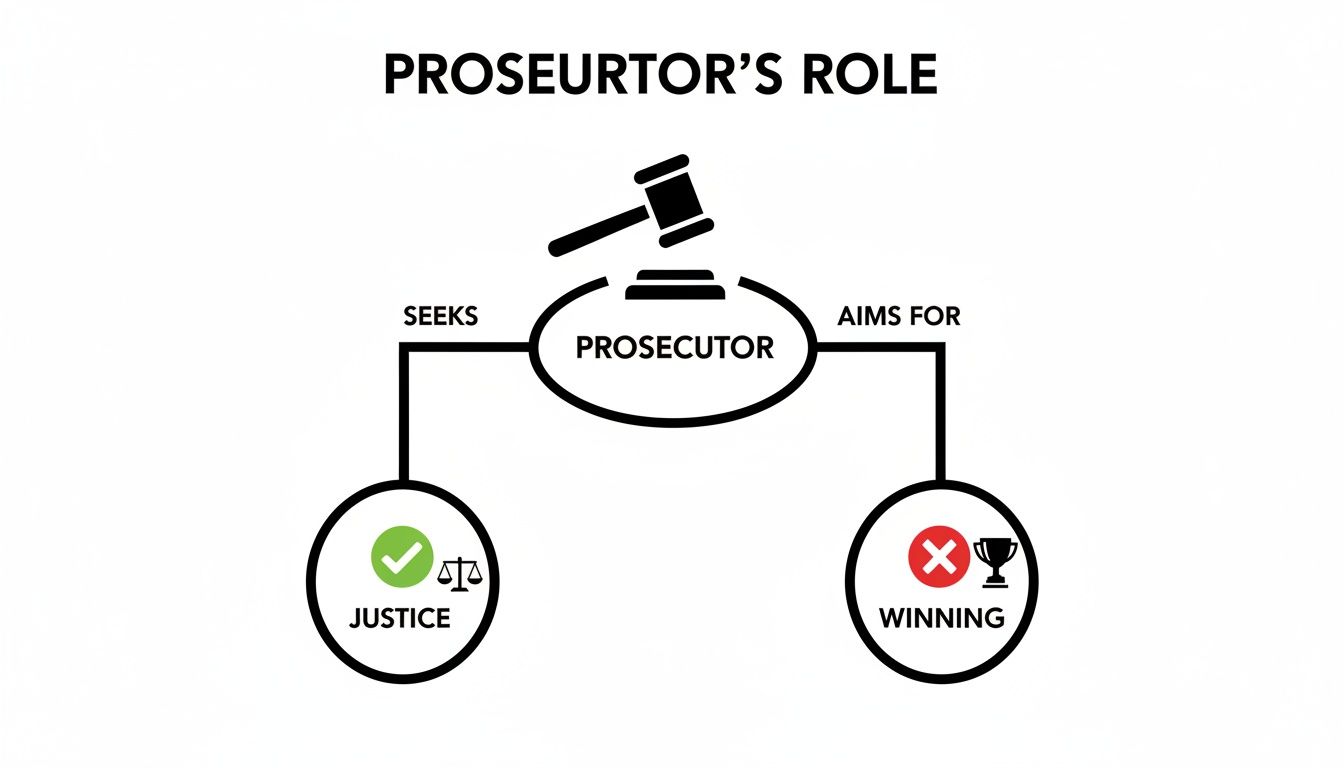
When the scales of justice are tipped in favor of winning, your fundamental right to a fair trial is put in jeopardy. Here are some of the most common ways that happens.
Withholding Favorable Evidence
One of the most damaging and common forms of misconduct is a Brady Violation. This happens when a prosecutor deliberately hides or fails to turn over evidence that could help your defense. This isn't a simple clerical error; it’s a direct violation of your constitutional rights.
Imagine the state has a witness statement that completely contradicts their theory of the crime. Or a lab report with inconclusive results that pokes holes in their narrative. If the prosecutor buries that evidence, your defense team can’t build the strongest possible case for you. It’s like being forced into a fight with one hand tied behind your back.
"A prosecutor hides exculpatory evidence because he is more interested in winning a case than he is in seeing justice done." – Attorney Gerry Spence
This kind of behavior completely undermines the truth-seeking purpose of a trial. Your attorney has a legal right to see everything the state has, whether it helps or hurts their case against you.
Using False Testimony Or Evidence
Another blatant abuse of power is when a prosecutor knowingly uses false testimony to secure a conviction. This can mean coaching a witness to lie on the stand, or simply standing by silently when they know a witness is not telling the truth.
This specific misconduct, addressed in the landmark Supreme Court case Napue v. Illinois, is a clear violation of due process. A conviction built on a foundation of lies is no conviction at all. Even if the false testimony only attacks a witness's credibility, it can be enough to get a verdict overturned because it fundamentally taints the jury's ability to judge the facts fairly.
Improper Arguments And Inflammatory Remarks
When a prosecutor stands before a jury, there are strict rules about what they can and cannot say. Their job is to argue the facts and the evidence, not to appeal to prejudice, passion, or fear.
Some classic examples of improper arguments include:
- Stating a personal belief that you are guilty.
- Mentioning evidence that was never admitted in court.
- Making inflammatory comments about your character, race, or background.
- Deliberately misstating the law to confuse the jury.
These tactics are designed for one purpose: to unfairly sway the jury with emotion instead of proving their case beyond a reasonable doubt. According to the Death Penalty Information Center, improper arguments were a factor in 33% of sentences reversed in one of their major studies, which shows just how often this happens. You can dig deeper into their findings in the center's detailed report on misconduct.
To help you put all this together, here’s a quick reference table that breaks down what these actions might look like in a real case.
Recognizing Prosecutorial Misconduct In Your Case
| Type of Misconduct | What It Looks Like | How It Affects Your Rights |
|---|---|---|
| Withholding Evidence | The prosecutor fails to disclose a witness statement that supports your alibi or a lab result that is inconclusive. | Prevents your attorney from presenting a complete defense and violates your right to exculpatory evidence under Brady. |
| Using False Testimony | An informant is coached to lie on the stand, or a prosecutor doesn't correct testimony they know is false. | Taints the jury's perception of the facts and violates your right to due process under Napue. |
| Improper Arguments | During closing arguments, the prosecutor calls you a "monster" or references a prior conviction that wasn't admitted as evidence. | Appeals to the jury's emotions and prejudices rather than the facts, undermining the standard of "proof beyond a reasonable doubt." |
| Witness Tampering | The prosecution threatens a defense witness with charges if they testify or offers an undisclosed deal for favorable testimony. | Interferes with your right to present witnesses in your defense and can lead to a conviction based on coerced statements. |
This table isn't exhaustive, but it gives you a solid idea of the kinds of unethical behavior that can completely derail a fair trial. Being able to spot these signs is the first step toward fighting back.
The Rules Prosecutors Are Required To Follow
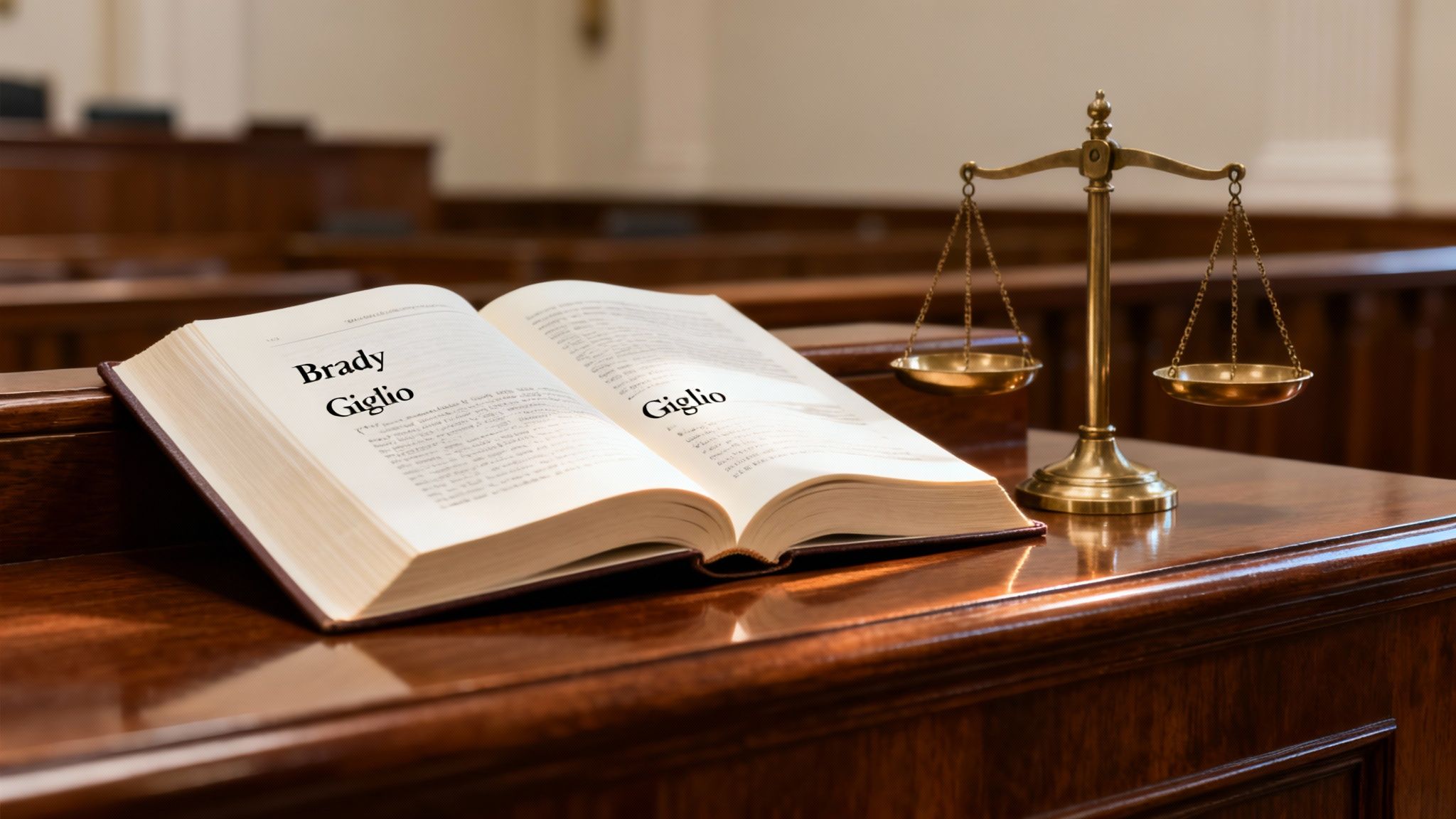
When you're facing criminal charges in Texas, it can feel like the prosecutor is holding all the cards. But they don’t get to operate without a rulebook. In fact, prosecutors are bound by strict legal and ethical duties designed to protect your constitutional rights and guarantee you get a fair trial.
These aren't just suggestions. They are legally enforceable requirements that your defense attorney can—and must—hold the state accountable for. Understanding these core rules helps you see that the system has checks and balances in place to keep the fight fair.
The Brady Rule: Your Right to Favorable Evidence
One of the most powerful rules comes from a landmark Supreme Court case, Brady v. Maryland. This case created what we now call the Brady Rule.
In plain English, the Brady Rule forces the prosecution to turn over any and all evidence they have that is favorable to you, the accused. This is often called "exculpatory evidence." It can be anything that suggests you’re not guilty or that might lead to a lighter sentence.
Imagine this: the state has a witness who told police you were somewhere else when the crime happened. Or maybe a lab test came back inconclusive. They can't just bury that information in a file cabinet and pretend it doesn't exist. Hiding that kind of evidence is a direct violation of your constitutional right to due process.
The Giglio Rule: Keeping Witnesses Honest
Building on the foundation of Brady, another critical case, Giglio v. United States, took it a step further. It established that prosecutors must also disclose any information that could be used to challenge the credibility of their witnesses. We call this impeachment evidence.
This rule covers all sorts of behind-the-scenes information, like:
- Deals with Witnesses: Has a witness been promised a lighter sentence or some other perk in exchange for testifying against you?
- Criminal Histories: Does a key witness have a criminal record that suggests they can't be trusted?
- Prior Inconsistent Statements: Did the witness tell police one story at the scene and a completely different one later?
A jury has the right to know if the state's star witness has a hidden motive to lie or a history of dishonesty. When a prosecutor withholds this information, they're painting a false picture for the jury, and that can easily lead to a wrongful conviction.
Texas-Specific Rules for Prosecutors
On top of these major federal rules, Texas has its own set of standards. The Texas Disciplinary Rules of Professional Conduct, Rule 3.09, lays out the special responsibilities of a prosecutor. This rule reinforces their fundamental duty to seek justice, not just rack up convictions.
The Texas rule explicitly forbids a prosecutor from pursuing a charge they know isn't supported by probable cause. It also requires them to make a timely disclosure of all evidence that tends to negate the guilt of the accused.
Ultimately, these rules exist to level the playing field. An experienced Houston criminal defense attorney knows them inside and out and uses them as a shield to protect your rights at every single stage of your case, from arraignment and plea bargaining to trial and sentencing.
What Happens When A Prosecutor Breaks The Rules
Finding out the prosecutor in your case might have broken the rules is a gut-wrenching feeling. It can make you feel like the entire system is rigged. But it’s critical to understand that this is not the end of the road. The law has specific remedies designed to fix these violations and restore fairness to your case.
This is where a vigilant Texas criminal defense attorney becomes your most important ally. Your lawyer is your first and best line of defense, armed with powerful legal tools to challenge the injustice and protect your rights.
Taking Action Against Misconduct
When evidence of a prosecutor’s misconduct surfaces, your defense attorney doesn’t just take note—they take action. They can use these violations as the foundation for powerful legal challenges aimed at correcting the scales of justice.
Depending on when the misconduct comes to light, these actions can include:
- Motion to Suppress Evidence: If the prosecutor’s misconduct involves evidence that was obtained illegally, your attorney can file a motion to have that evidence thrown out. You can learn more about how a motion to suppress evidence works in our detailed guide.
- Motion for a New Trial: If the misconduct is discovered after you’ve already been convicted, your lawyer can argue that the violation made a fair trial impossible. They’ll formally ask the judge to set aside the verdict and grant you a brand-new trial.
- Motion to Dismiss: In the most severe cases—where the misconduct is so outrageous that it "shocks the conscience"—your attorney can ask the judge to dismiss the charges against you entirely.
- Filing an Appeal: If you were convicted, prosecutorial misconduct is a powerful issue to raise with a higher court. Your lawyer can argue that the legal errors made during your trial demand that your conviction be overturned.
The Troubling Lack of Accountability
Despite the devastating impact misconduct has on thousands of lives, holding prosecutors personally accountable remains a massive challenge. The data paints a disturbing picture of wrongdoing without consequence. According to one landmark study, while prosecutorial misconduct was a factor in over 30% of exoneration cases, fewer than 4% of the prosecutors involved faced any kind of personal or professional discipline.
An extensive investigation that included Texas found 660 identified cases of prosecutorial misconduct. Of those, only one single prosecutor was punished.
These statistics aren't just numbers; they represent shattered lives. This information, detailed in an Innocence Project report on prosecutorial accountability, shows exactly why you can't rely on the system to police itself. It highlights the absolute necessity of having a Texas assault defense attorney who will aggressively fight for you using every legal tool available.
Even if you've already been convicted, there is still hope. Post-conviction relief options, like filing a writ of habeas corpus, can challenge a wrongful conviction based on constitutional violations—and that includes prosecutorial misconduct. These legal avenues, along with options for expunctions and record sealing, provide a roadmap for fighting back and demanding the fair outcome you were denied.
How A Skilled Defense Attorney Protects Your Rights
When you’re up against a prosecutor who might be cutting corners, you don’t just need a lawyer—you need a shield. An experienced Texas criminal defense attorney is your first and best defense against prosecutorial overreach, turning deep knowledge of the rules into decisive action. They don't just react; they get in the ring and actively challenge the state's case at every turn.
This is where the real fight for fairness begins. A dedicated legal team gets to work immediately, digging into every piece of evidence, every police report, and every witness statement the state hands over. The mission is simple: find the inconsistencies, weaknesses, and potential violations that can be used to protect you.
Taking Control with Legal Motions
A sharp Texas DWI attorney never waits for a prosecutor to play fair. Instead, they file targeted discovery motions. Think of these as formal legal demands that force the state to turn over everything it has on your case. This isn’t just about the evidence they plan to use against you; it includes any exculpatory evidence that could help prove you’re innocent.
These motions are a critical tool for holding prosecutors accountable to their constitutional duties under the Brady and Giglio rules. It’s an aggressive, proactive strategy designed to make sure no stone is left unturned.
But it doesn't stop there. A good defense attorney often launches their own independent investigation. This can involve:
- Interviewing witnesses the police might have ignored.
- Hiring expert witnesses to re-examine forensic evidence like DNA or lab reports.
- Visiting the scene of the alleged crime to spot details that don't line up with the state's story.
This independent legwork is vital because it can uncover the very evidence a prosecutor might be trying to bury.
Preserving Your Rights for the Future
During a trial, your attorney is your vigilant advocate in the courtroom. This means making quick, specific objections to improper questions, inflammatory arguments, or evidence that shouldn't be allowed. These objections aren't just for dramatic effect; they create a legal record.
Preserving issues for appeal is a crucial strategy. If you are convicted, these documented objections can become the foundation for a successful appeal based on either judicial error or prosecutorial misconduct.
This kind of forward-thinking ensures every potential injustice is challenged and officially recorded, giving you more options down the road. Beyond their legal expertise, defense attorneys operate within a competitive landscape. To effectively protect their clients' rights and grow their practice, they often employ robust law firm marketing strategies to reach those in need of legal counsel.
Ultimately, an experienced defense attorney does more than just question the state’s evidence—they question the state’s conduct. From investigating potential Miranda Rights violations to filing motions that challenge every piece of the prosecution's case, they are your strongest defense. You can learn more about how we challenge improper police procedure by reading our guide on Miranda Rights violations. Your attorney is your advocate, your investigator, and your shield against an unfair system.
Common Questions About Prosecutorial Misconduct
Facing a criminal charge is confusing enough. When you start to worry the prosecutor isn't playing fair, it's natural to have urgent questions. Let's cut through the legal jargon and give you clear, straightforward answers to the most common concerns.
What Should I Do If I Suspect Misconduct In My Case?
If you believe the prosecutor is acting improperly, the single most important thing you can do is immediately tell your criminal defense attorney. Do not try to confront the prosecutor yourself. That's a quick way to harm your case.
Your lawyer is the only one equipped to handle this. They need every detail you can give them, so be specific.
- Write down exactly what happened. Include dates, times, and who was involved.
- Make a note of anyone who saw or heard what you believe was misconduct.
- Give this information directly to your legal team.
Your attorney will analyze the situation to see if the prosecutor's actions legally qualify as misconduct. From there, they'll figure out the best strategic move to protect your rights.
Can My Case Get Dismissed Due To Misconduct?
While having your case completely dismissed is a possible outcome, it is unfortunately rare. A dismissal is usually reserved for the most extreme and outrageous instances of misconduct—actions that completely destroy any chance you had at a fair trial.
But that doesn't mean misconduct has no consequences. More common remedies can be just as powerful:
- Suppression of Evidence: A judge can rule that any evidence obtained through the prosecutor's bad acts can't be used against you.
- A New Trial: If the misconduct is discovered after you've already been convicted, a judge can set aside the verdict and grant you a brand new trial, free from the original injustice.
- Jury Instructions: The judge might tell the jury to disregard an improper statement made by the prosecutor, effectively erasing it from their consideration.
Each of these outcomes can significantly weaken the state’s case and dramatically improve your chances of a better result.
Is It Hard To Prove A Prosecutor Acted Improperly?
Yes, proving prosecutorial misconduct can be very challenging. The legal bar is set high, and courts often give prosecutors the benefit of the doubt. You generally have to show that the prosecutor's actions weren't just a simple mistake, but were either intentional or grossly negligent. On top of that, you have to prove their behavior actually hurt the outcome of your case.
This is exactly why having an experienced Houston criminal lawyer is so critical. A skilled attorney knows what kind of evidence to look for, how to file the right legal motions to get that evidence, and how to build a powerful argument showing that the prosecutor's actions violated your constitutional rights.
What Is The Difference Between A Mistake And Misconduct?
The line between an honest mistake and actual misconduct often comes down to two things: intent and impact. A prosecutor might make a harmless error during a complicated trial—maybe they accidentally refer to a document not yet in evidence. If it’s a simple slip-up that doesn't unfairly sway the jury against you, it’s not likely to be considered misconduct.
Prosecutorial misconduct, on the other hand, involves a deliberate action or a pattern of gross negligence that violates your rights. It's the difference between an accidental slip of the tongue and purposefully hiding evidence that could prove your innocence. The key is whether the action subverts the fairness of the trial itself.
If you’ve been charged with a crime in Texas, call The Law Office of Bryan Fagan, PLLC for a free and confidential consultation. Our defense team is ready to protect your rights.