Skip to content
Being arrested in Texas can be terrifying, especially when the accusation sounds vague and serious at the same time. Accusations of criminal mischief in Texas often bring worries about jail, fines, a criminal record, and what happens next.
That concern is justified. A criminal mischief charge can range from a fine-only case to a felony, and the details matter. The amount of damage matters. Your intent matters. The type of property matters. In some situations, what looks minor at first can turn into a much more serious case.
If you're facing this charge, you need clear information, not panic. You also need to understand that many people charged with property crimes are also dealing with other allegations at the same time, such as theft, assault, DWI, or drug possession. The court process is still the court process. Your rights still matter, and early decisions can shape the outcome.
Facing a Criminal Mischief Charge in Texas
You get a call from police after an argument with a neighbor, an ex, or a landlord. They say property was damaged, and now you are being accused of criminal mischief. At that moment, the label can sound broader than the facts. That is why the first question is not just, “Was something damaged?” The legal question is whether the State can prove the specific mental state Texas law requires.
Under Texas Penal Code §28.03, criminal mischief generally means damaging, destroying, tampering with, or marking another person's tangible property without effective consent. In plain terms, prosecutors must show more than a bad result. They must show that you acted intentionally or knowingly. That point often gets missed early, and it can make the difference between a case that holds together and one that does not.
Here is the basic idea. An accident is not automatically criminal mischief. A misunderstanding over permission is not automatically criminal mischief either. The State still has to prove who owned the property, whether consent existed, what you did, and what was in your mind when it happened.
That mental-state issue matters because criminal cases are not supposed to punish simple carelessness under this statute. If a person kicked a door in anger, prosecutors may argue intent. If a person backed into a fence during a chaotic parking lot dispute, the defense may focus on whether the damage was accidental. Two damaged objects can look similar in a photo. Legally, they can be very different cases.
Criminal mischief allegations usually fall into a few categories:
- Damage or destruction: breaking a window, denting a vehicle, smashing a phone, or tearing down a fence
- Tampering: interfering with property in a way that causes loss or serious inconvenience
- Marking property: graffiti, paint, inscriptions, slogans, or drawings placed without consent
Another point that worries clients is how a small property case can suddenly become much more serious. The amount of loss matters, but it is not the only issue. Some facts can raise the stakes fast, including the type of property involved or whether the allegation includes interruption of public services. A case that sounds minor in conversation can be filed in a much harsher form once police reports, repair estimates, and witness statements are gathered.
That is one reason early defense work matters. A lawyer is not just looking at a repair bill. A lawyer is also looking for weak spots in proof of intent, disputes about ownership or consent, inflated valuation, and facts that prosecutors may try to use to push the charge higher than it should be.
If you have only been told you are facing a misdemeanor, do not treat that as the final word. Texas misdemeanor levels can still carry serious consequences, and if you want a quick overview of how those categories work, this guide on the classes of misdemeanors in Texas can help. In a criminal mischief case, the charging level often depends on details that are still being argued.
If you have been cited, arrested, or contacted by investigators, the safest approach is to slow things down and get clear about the facts. What happened matters. What you intended matters. Whether the other person gave consent matters. Those are not side issues. In many criminal mischief cases, they are the center of the defense.
How Texas Classifies Criminal Mischief Penalties
You may hear a damage number early in the case and assume that number settles everything. It does not. In Texas criminal mischief cases, the alleged dollar loss often sets the starting charge, but the key dispute often concerns how that number was calculated, whether it is inflated, and whether special facts let the State file a more serious case than you expected.

Penalty levels by damage amount
Texas usually grades criminal mischief by pecuniary loss, which generally means the cost to repair or replace the property, according to Texas criminal mischief penalty ranges by pecuniary loss.
| Pecuniary Loss (Damage Value) | Offense Level | Maximum Fine | Jail/Prison Time |
|---|---|---|---|
| Under $100 | Class C misdemeanor | Up to $500 | No jail |
| $100 to $749 | Class B misdemeanor | Up to $2,000 | Up to 180 days jail |
| $750 to $2,499 | Class A misdemeanor | Up to $4,000 | Up to 1 year jail |
| $2,500 to $29,999 | State jail felony | Up to $10,000 | 180 days to 2 years state jail |
| $30,000 to $149,999 | Third-degree felony | Up to $10,000 | 2 to 10 years prison |
| $150,000 to $299,999 | Second-degree felony | Up to $10,000 | 2 to 20 years prison |
| Over $300,000 | First-degree felony | Up to $10,000 | 5 to 99 years or life |
If you want a simple frame of reference for lower-level offenses, this overview of Texas misdemeanor classes and penalties helps show where a criminal mischief accusation can fit.
The broad split between misdemeanor and felony charges matters for more than jail exposure. It can affect how prosecutors approach the case, how bond conditions are set, and how much pressure you may feel to resolve it quickly. For a wider explanation of offense levels, Felony vs. Misdemeanor Charges in Texas explains how Texas sorts criminal charges.
Why the damage estimate deserves a close look
A repair estimate can look objective on paper. Sometimes it is not.
Owners may rely on rough guesses, replacement bids instead of repair costs, or invoices that include preexisting problems and betterments. A broken fence panel turns into a full fence replacement. A scratched car door becomes a repaint for the whole side of the vehicle. Those details matter because crossing one dollar threshold can raise the case to a higher offense level.
That is often one of the first places a defense lawyer checks. Photos, prior wear, insurance records, competing estimates, and the actual condition of the property can all affect value. If the State cannot prove the amount it alleged, the charge level may not hold.
Special situations that can raise the charge
Some criminal mischief cases become felonies for reasons that do not start with a large repair bill. Texas law treats certain conduct more harshly, including damaging a habitation with a firearm or explosive, impairing livestock fences, damaging a place of worship, or causing the death of certain animals outside accepted agricultural practices, as described in this summary of Texas criminal mischief enhancements and felony triggers.
People often get surprised. A person sees a modest dollar figure and expects a ticket-level case or a low misdemeanor. The statute does not always work that way. The type of property, the way the damage allegedly happened, and the surrounding facts can raise the exposure much higher than the estimate alone suggests.
That is also why penalty charts only tell part of the story. In a real defense, you are not just checking the amount column. You are testing the valuation, the alleged intent, and whether the facts support any enhancement the State may be trying to use.
Common Defenses Against Criminal Mischief Allegations
A charge isn't a conviction. In criminal mischief cases, the State still has to prove each legal element. If the evidence is weak on intent, ownership, consent, identity, or value, the case may be reduced, redirected, or contested at trial.

Intent is often the first pressure point
Texas law requires proof of specific intent or knowledge for criminal mischief under §28.03. If the conduct was only reckless, the issue can fall under §28.04 instead, which is a Class C misdemeanor with no jail time, according to this discussion of intent versus recklessness in Texas criminal mischief cases.
That is more important than commonly believed. Maybe you kicked a gate during an argument but didn't mean to break it. Maybe you backed into a structure while upset, but the evidence doesn't show you meant the damage. Maybe the scene looked intentional, but the facts tell a different story.
A defense lawyer may focus on:
- State of mind: Was it deliberate, knowing, accidental, or reckless?
- Witness reliability: Did anyone see what happened clearly?
- Video context: Does the footage show intent, or only the aftermath?
- Your statements: Did police take words said in stress or anger out of context?
Consent and ownership disputes can change everything
Property cases often come from personal conflict. Roommates argue. Ex-partners fight over belongings. Family members disagree about who owns what. In those situations, consent and ownership can become central issues.
If you had permission to move, alter, remove, or use the property, the State may struggle to prove lack of effective consent. If you reasonably believed the property was yours, that can also affect the case.
If the owner gave permission, or if ownership was genuinely disputed, the case may look very different from the version in the police report.
Here's a useful overview of common defense themes and courtroom strategy:
The damage number is a defense issue too
The prosecution doesn't get a free pass on valuation. If the alleged loss is inflated, the offense level may be inflated too. That's especially important near charging thresholds.
Examples of valuation problems include:
- Repair versus replacement: The owner claims full replacement when repair would have solved it.
- Old damage mixed in: Existing wear is added to the new claim.
- Upgrade pricing: The estimate includes better materials or newer components.
- Sparse documentation: The State relies on rough guesses instead of proof.
People facing criminal mischief in Texas should also think broadly about defense. The same practical caution applies in other cases such as DWI, assault, theft, or drug possession. Don't give detailed statements, don't guess at facts, and don't rush into a plea just to make the case disappear.
The Legal Process After a Criminal Mischief Arrest
After an arrest, individuals often want one thing first. They want to know what happens next. The Texas criminal process can feel cold and confusing, but the path is more manageable when you break it into stages.
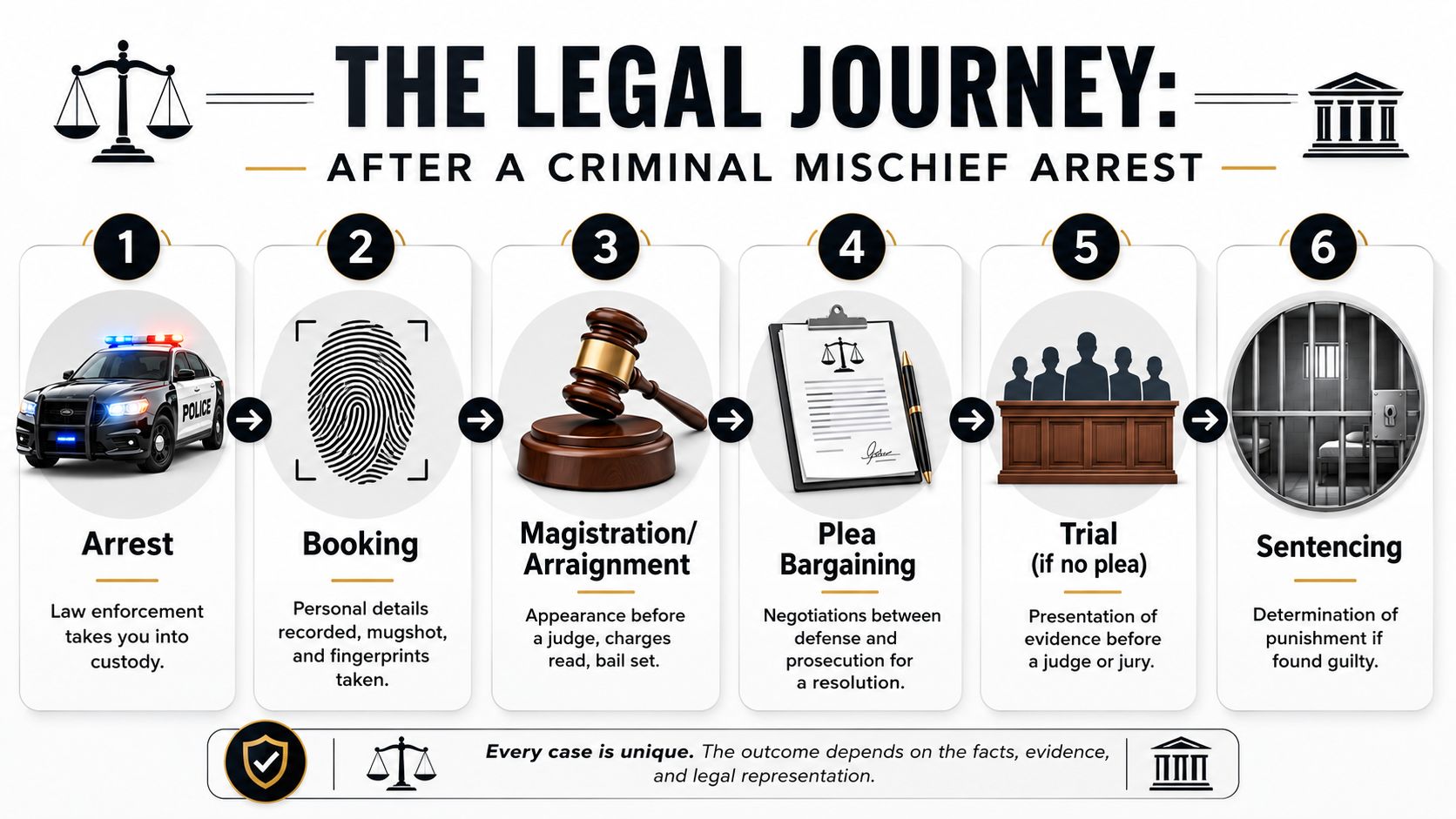
Step one through step three
Right after arrest, the process usually begins with custody, booking, and an appearance before a magistrate or judge.
Arrest and booking
Police take you into custody, collect identifying information, and prepare the initial paperwork. This stage can also include photographs and fingerprints.Magistration or first appearance
A judge reviews the accusation, addresses bail, and may impose bond conditions. Those conditions matter. Violating them can create new problems fast.Release and early case review
Once you're out, your defense work should begin immediately. That includes preserving texts, videos, receipts, photos, and witness information before it disappears.
For a broader overview, this guide to steps in the Texas criminal justice process gives a useful timeline of what happens from arrest through resolution.
Arraignment, discovery, and negotiations
Your next major court stages often include arraignment, discovery, and plea discussions.
- Arraignment: You're formally told the charge and enter a plea, usually guilty, not guilty, or no contest.
- Discovery: Your lawyer gets access to the State's evidence. That can include reports, photographs, body camera footage, repair estimates, and witness statements.
- Plea bargaining: Many cases resolve through negotiation. That may involve a reduction in charge, a better sentencing recommendation, deferred options if available, or dismissal conditions.
This part of the case is where facts become strategy. A misdemeanor property case may be negotiated very differently than a felony tied to a protected location or a disputed damage figure.
Early preparation gives your lawyer more leverage. Waiting until the last minute usually means fewer options.
Trial and sentencing if the case doesn't settle
If the case doesn't resolve, it can go to trial before a judge or jury. The prosecution must prove guilt beyond a reasonable doubt. Your lawyer can challenge the State's witnesses, contest the damage value, question intent, and present your side of the facts.
If there's a conviction or plea, the court moves to sentencing. Depending on the charge level and the facts, sentencing can include a fine, jail or prison exposure, community supervision, restitution, and other conditions.
Important filing deadlines
Timing matters even before a case is filed. In Texas, misdemeanor criminal mischief charges have a two-year statute of limitations, and felony charges generally follow a three-year limitations period, as explained in this summary of Texas criminal mischief filing deadlines and limitations periods.
That doesn't mean you should wait and hope the deadline passes. It means dates should be checked carefully. In some cases, procedural timing becomes part of the defense.
If you're also facing related accusations such as theft, assault, DWI, or drug possession, the process usually follows the same broad stages, even though the legal issues differ. A case involving multiple charges needs a coordinated defense from the start.
Beyond Fines and Jail The Collateral Consequences
A criminal mischief conviction can keep affecting your life after court ends. For many people, the hardest part isn't the immediate sentence. It's what the record does later.
Background checks and daily life
Employers often run background checks. Landlords do too. A property damage conviction can raise concerns about judgment, reliability, or trust, even when the case was a misdemeanor.
That can affect:
- Jobs: Especially positions involving access to property, money, vehicles, or private spaces.
- Housing: Landlords may view any criminal record as a risk.
- School and opportunities: Some programs ask about arrests or convictions.
- Professional licensing: Boards for fields like nursing, teaching, and real estate may review criminal history.
Immigration and reputation concerns
If you aren't a U.S. citizen, any criminal allegation should be reviewed carefully with immigration consequences in mind. Even when the underlying charge seems minor, the long-term impact can be serious.
Your reputation matters too. Property crime allegations can spill into family disputes, custody issues, workplace discipline, or licensing reviews. That's one reason to take a criminal mischief case seriously from day one instead of treating it like “just vandalism.”
A quick plea may end the court date, but it may not end the problem.
This same warning applies across other criminal allegations. A DWI, assault, theft, or drug possession case can create the same kind of lasting barriers. The legal charge may be different, but the need to protect your record is the same.
Clearing Your Record Options for Expunction and Nondisclosure
You finish the case and feel relief for the first time in months. Then a new question hits you. Will this still show up when an employer, landlord, or licensing board runs your name?
For many people, that question matters almost as much as the charge itself.

Texas gives some people a way to clear or limit access to a criminal record, but the result depends heavily on how the case ended. A dismissal, a not guilty verdict, deferred adjudication, and a conviction do not lead to the same record-clearing options. In criminal mischief cases, that difference can be especially important because a charge that looked minor at first may have been filed at a higher level based on alleged damage amount, prior history, or a special protected-property allegation.
Expunction compared with nondisclosure
An expunction is the stronger remedy. It is the legal equivalent of pulling the file out of circulation. If you qualify, the court can order agencies to destroy or return records tied to the arrest or case, and you can usually deny the event occurred in most situations.
An order of nondisclosure is different. It seals eligible records from the public, but it does not erase them. Courts, law enforcement, and certain state agencies may still have access.
If you want a closer explanation of how those two remedies differ, this guide on expungement vs. nondisclosure in Texas breaks down the rules in more detail.
When these options may apply
The outcome of the case controls a lot here. Texas record clearing works less like a reset button and more like a gate with specific entry rules.
In general:
- Dismissed case: Expunction may be available, but timing and the reason for dismissal matter.
- Acquittal at trial: Expunction is often possible.
- Deferred adjudication: Nondisclosure may be available if the offense qualifies and you meet the waiting-period rules.
- Conviction: Expunction is usually not available, and your options become narrower.
This is one place where defense strategy at the front end of the case can affect your options later. For example, the exact wording of the final disposition, whether you receive deferred adjudication, and whether the allegation involves a disqualifying circumstance can shape whether the record can later be cleared or sealed.
Details people often miss
Many clients assume any case that did not end in jail can be wiped away. Texas law does not work that way.
The court looks at the procedural history of the case, not just whether you feel the result was favorable. A dismissal after completing a program may be treated differently from an acquittal. Deferred adjudication can help avoid a conviction, but it does not automatically qualify every person for nondisclosure. Waiting periods, prior record issues, and the type of offense all matter.
That is why it helps to review the paperwork closely. In some criminal mischief cases, the better long-term result is not just avoiding jail. It is securing an outcome that preserves a path to expunction or nondisclosure later.
Post-conviction review and next steps
If you already have an older case on your record, do not assume nothing can be done. It may still be worth reviewing whether you qualify for record sealing, whether the original case was resolved in a way that left room for relief, or whether a prior court order needs correction.
That review becomes even more important if the criminal mischief allegation was tied to a domestic dispute, a business conflict, or another fact pattern that may have affected charging decisions and plea choices. A careful record review can reveal options that are easy to miss if you only look at the penalty level.
For broader help with case analysis, record issues, and defense planning, you can review resources from a Texas Criminal Defense Lawyer.
Local Considerations for Houston Dallas Austin and San Antonio
Texas law applies statewide, but local practice still matters. A criminal mischief case in Harris County, Dallas County, Travis County, or Bexar County may move through similar legal stages while being handled differently in day-to-day practice.
Some offices may be more open to early resolution in lower-level cases. Others may take a harder line if the facts involve graffiti, repeated conduct, or damage tied to a neighborhood complaint. First-time offenders may sometimes have diversion or intervention options, but availability and screening can vary by county and by the facts of the case.
Why local details can change strategy
In big metro areas, prosecutors often look closely at context. Was this a domestic dispute? A business conflict? A prank that caused property damage? Was alcohol involved, as it sometimes is in DWI-related or assault-related incidents? Was there a parallel theft or trespass allegation?
One especially important local issue involves protected community property. Under Texas Penal Code §28.03(d), damage of under $20,000 to a place of worship, human burial site, public monument, or community center is a state jail felony, even if the monetary loss is otherwise small, as explained in this summary of special felony treatment for damage to protected sites in Texas. That means a graffiti allegation involving a church or memorial can be treated far more seriously than people expect.
If your case is pending in Houston, Dallas, Austin, or San Antonio, local court culture, diversion practices, and charging habits should be part of the defense plan. A Houston criminal lawyer or Texas assault defense attorney looking at a related file may approach negotiations differently than counsel handling a straightforward Class C citation in another county.
If you've been charged with a crime in Texas, call Law Office of Bryan Fagan PLLC for a free and confidential consultation. Our defense team is ready to protect your rights.