Skip to content
Being arrested in Texas can be terrifying. If you're not a U.S. citizen, the fear often doubles the moment you hear words like “charge,” “plea,” or “ICE.”
You may be worried about jail, your job, your family, and whether one bad night could cost you your future in this country. Those fears are real. But a Texas arrest does not automatically mean deportation, and it does not mean your case is hopeless.
A lot depends on the exact charge, the exact statute, the exact plea language, and the exact sentence. That last part surprises many people. In immigration law, small wording choices in a criminal case can have life-changing effects. That's why the immigration consequences of criminal charges in Texas should be considered from the first court date, not after a plea has already been entered.
Your Guide Through a Texas Arrest as a Non-Citizen
A common scene plays out like this. You're booked into jail after an argument at home, a traffic stop, or a drug possession arrest. You think the only question is whether the charge is a misdemeanor or felony under Texas law. Then someone tells you, “This could affect your papers.”
That's when panic sets in.
For non-citizens, one criminal case can create two legal problems at once. First, you have the Texas criminal case. Second, you may face immigration consequences tied to the same facts. Those systems don't use the same labels, and they don't always care about the same things.
Why the first decisions matter
In Texas criminal court, the process usually starts with arrest, booking, bail, and a first appearance. After that, your case may move toward arraignment, plea negotiations, motions, trial, or dismissal. Many people feel pressure to “just take the deal” and move on.
That can be dangerous if no one has reviewed the immigration impact.
A plea that looks light in county court can still create removal problems in federal immigration court. Even a deal that avoids jail can be harmful if it lands on the wrong statute or includes the wrong sentence language.
Practical rule: If you are not a U.S. citizen, your lawyer should know that before any plea discussion begins.
What Texas charges often involve
Many cases that raise immigration concerns involve familiar Texas offenses, including:
- Assault charges: Often filed under Texas Penal Code § 22.01.
- Theft allegations: Commonly charged under Texas Penal Code § 31.03.
- Drug possession cases: Often charged under Texas Health and Safety Code Chapter 481.
- DWI cases: These may not fit neatly into one immigration category, but they still deserve careful review.
If you're in Houston, Dallas, Austin, San Antonio, or a smaller Texas county, the core issue is the same. You need a defense strategy that looks beyond fines and probation and asks a harder question: What outcome protects your immigration future too?
How a Texas Criminal Case Impacts Your Immigration Status
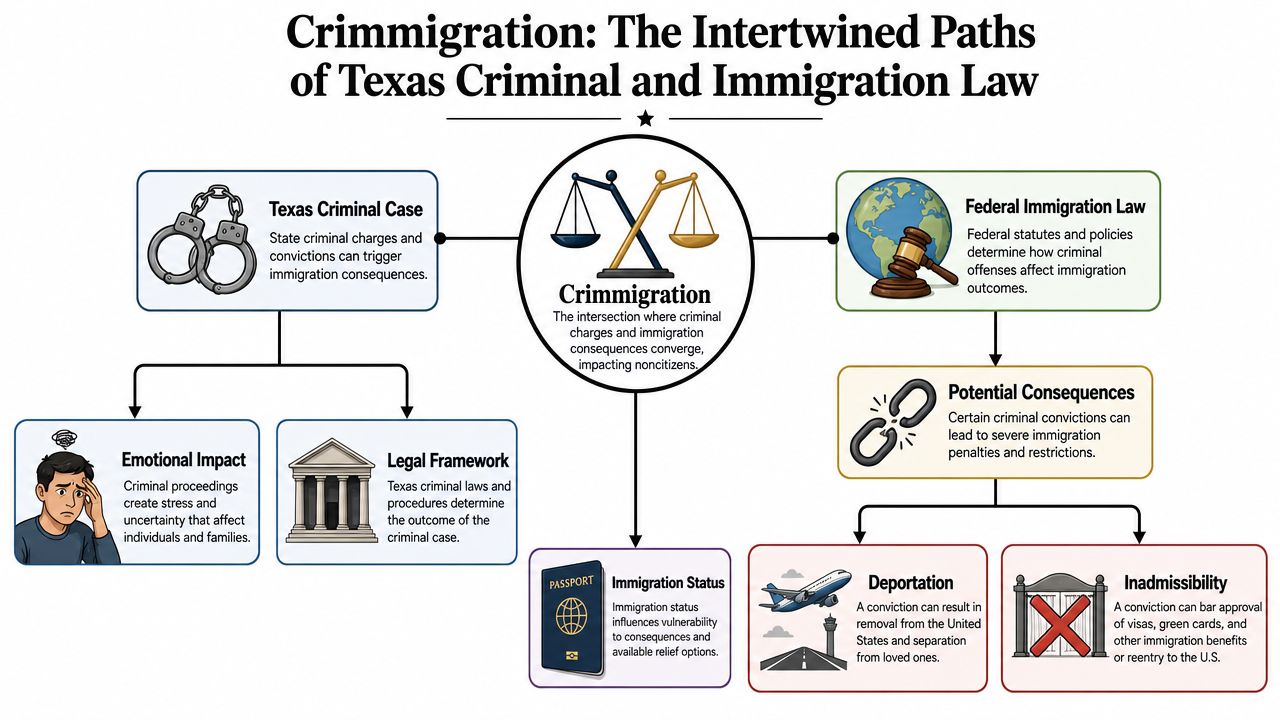
When criminal law and immigration law collide, lawyers often call it crimmigration. That word sounds technical, but the idea is simple. One case in Texas can affect whether you can stay in the United States, leave and come back, or later apply for citizenship.
Deportable and inadmissible are not the same
These two terms get mixed up all the time.
Deportable means the government claims you can be removed from the United States based on a criminal conviction or other ground. Think of it as the government trying to make you leave.
Inadmissible means the government can block your entry or deny an immigration benefit. Think of it as a locked door. Even if you've lived here a long time, inadmissibility can affect travel, green card processing, and other applications.
Here's a simple comparison:
| Term | Plain-English meaning | Why it matters |
|---|---|---|
| Deportable | The government says you can be removed | You may face immigration court |
| Inadmissible | The government says you can't be admitted or approved | Travel and status applications become risky |
| Naturalization problems | A criminal record may hurt your citizenship path | You may be denied or delayed |
For readers dealing with a DACA-related driving case, this Texas guide on DACA and DUI immigration risk gives a more focused look at one common situation.
Three ways a Texas case can hurt your immigration future
A criminal case can create immigration trouble in at least three broad ways:
Removal risk
A conviction may place you in a category that immigration law treats as removable.Benefit and travel problems
Even if you are not immediately removed, the record may block reentry, adjustment of status, or another application.Citizenship obstacles
Some records can interfere with your effort to show the character and eligibility required for naturalization.
A green card is not a shield against all criminal immigration consequences. Lawful permanent residents can still face removal issues.
Why legal labels can mislead you
Texas uses state criminal labels. Immigration law uses federal categories. Those two systems do not line up neatly.
A charge that sounds minor in county court may fit a federal immigration category that carries harsh consequences. On the other hand, a carefully negotiated resolution can sometimes reduce the damage. That's why your defense can't stop at asking, “Can I stay out of jail?” It also has to ask, “What will immigration law call this result?”
Texas Crimes That Put Your Green Card at Risk
You accept a plea in a Texas court because it sounds minor. No jail. Maybe a misdemeanor. Then months later, immigration looks past the label and studies the statute, the sentence, and the wording in the judgment. That is where many non-citizens get blindsided.

The safer question is not only, “How serious is this charge in Texas?” The safer question is, “What federal immigration category could this plea fit into, and can we draft the plea papers to avoid that result?” In many cases, the difference between a damaging outcome and a safer one is hidden in a few words from the Texas Penal Code and a few words in the final paperwork.
Crimes involving moral turpitude
A crime involving moral turpitude, or CIMT, is a federal label for offenses immigration law treats as especially blameworthy. The phrase sounds vague because it is. In plain English, it often covers crimes tied to theft, fraud, dishonesty, or intentional harm.
For Texas defendants, theft is a common trap. A case under Texas Penal Code § 31.03 may look manageable in county court, but theft allegations often raise CIMT concerns because the offense can involve intent to deprive. That is why your lawyer has to examine the exact subsection, the charging language, and whether a plea can be steered toward a non-theft-based resolution when the facts allow it.
Aggravated felonies under immigration law
An aggravated felony is another federal category that causes confusion. It does not depend on whether Texas calls the offense a felony in everyday conversation. Federal immigration law uses its own definitions, and those definitions can be much harsher than people expect.
The practical lesson is simple. A plea bargain is not just about reducing the charge name. The sentence length, the elements admitted, and the wording of the record can all matter. In fraud or violence cases, for example, the wrong plea language can turn a deal that looks acceptable in criminal court into a severe immigration problem later.
Drug offenses and assault charges require careful plea drafting
Drug and assault cases are where strategy matters most.
Under Texas Health and Safety Code Chapter 481, the specific substance, amount, and statutory basis can change the immigration result. A generic deal that leaves the record unclear may help in some cases. In other cases, a plea that names the controlled substance too precisely can create a problem that might have been avoided with better drafting.
Assault cases under Texas Penal Code § 22.01 are similar. A simple assault allegation, an assault-family-violence allegation, and a plea with a one-year sentence can lead to very different immigration consequences. The wording matters because immigration courts often compare the record of conviction to a federal category line by line. If you are facing this kind of case, our Texas assault immigration consequences guide explains why two assault pleas that sound almost identical in state court can lead to very different results in immigration court.
This works like a medical chart. The headline diagnosis matters, but the notes underneath often decide what treatment comes next. In criminal court, those “notes” are the complaint, information, plea papers, judgment, and sentence.
Common Texas charges that need a close review
Some charges deserve immediate immigration screening because small details can change everything:
- Assault under Texas Penal Code § 22.01. Family-violence language can create risk far beyond a standard assault allegation.
- Drug possession under Texas Health and Safety Code Chapter 481. The named substance, amount, and plea wording can affect admissibility and other forms of relief.
- Theft under Texas Penal Code § 31.03. Theft-based elements often trigger CIMT analysis.
- Fraud or deception offenses. Loss amount and record language may matter as much as the offense title.
- DWI cases with added facts. A basic DWI does not always fit the most feared immigration categories, but injuries, child passengers, drugs, or related charges can change the analysis.
One more point gives many clients hope. A damaging immigration outcome is not automatic just because you were arrested or charged. Much depends on how the case is resolved and how the final record is written. For a broader discussion of understanding immigration legal outcomes, it helps to see how criminal and immigration systems can reach different answers about the same event.
If you are not a U.S. citizen, do not accept any Texas plea until your defense lawyer has compared the exact statute, the proposed sentence, and the draft plea language against the federal immigration categories that may apply.
Understanding What a Conviction Means for Immigration
You walk out of a Texas courtroom relieved because the deal sounds manageable. No trial. No prison sentence. Maybe deferred adjudication, probation, or a reduced charge. Then months later, immigration treats that result as a conviction anyway, or uses the plea record to argue that the offense fits a deportation category.
That is the trap.
In plain English, criminal court and immigration court do not always use the same definitions. A result that feels minor in state court can still create serious federal immigration problems. For a non-citizen, the paperwork behind the plea often matters as much as the label on the offense.
A Texas case result can count even when it does not feel like a conviction
People often use the word conviction to mean, “I was found guilty and sentenced.” Immigration law can be broader than that. In some situations, a plea, an admission, or a court-ordered punishment can matter even if Texas procedure gives the outcome a softer name.
That is why deferred adjudication needs careful review before anyone accepts it. In many Texas cases, deferred adjudication is a useful criminal result. For immigration purposes, it can still create damage because federal authorities focus on what you admitted and what the judge ordered, not just the state court label.
A simple way to understand it is this: Texas and immigration law are sometimes reading from different rulebooks.
The plea language can decide the immigration result
This is the part many general articles miss. Immigration consequences do not turn only on the charge name. They often turn on the exact statutory elements and the words placed into the judgment, plea papers, complaint, information, indictment, or factual basis.
For example, a plea under Texas Penal Code § 22.01 may raise very different concerns depending on whether the record refers to bodily injury, offensive contact, family violence, or a specific victim relationship. A theft resolution under Texas Penal Code § 31.03 may look routine in county court, but the way the plea is framed can affect whether immigration sees it as a crime involving moral turpitude. Drug cases can become even more technical because the named substance and the wording in the record may shape how federal law classifies the offense.
That is why I tell clients to slow down at the exact moment the system pushes them to hurry. The question is not only, “Can we get a deal?” The better question is, “Can we get a deal under a safer statute, with safer language, and without unnecessary facts that create immigration trouble later?”
Sometimes the safest solution is a plea to a different subsection. Sometimes it is keeping harmful words out of the record. Sometimes it is avoiding admissions the prosecutor does not need.
Sentencing details matter too
The sentence can matter along with the offense itself. Jail time, suspended time, probation terms, family-violence findings, restitution language, and other details may affect how immigration authorities view the case.
This is one reason two people charged with similar offenses can face very different immigration outcomes. One record may be narrow and carefully drafted. The other may include extra language that gives federal authorities exactly what they need.
A rushed plea can create problems that are hard to fix later.
Clearing the record later may not solve the original problem
Clients often ask whether expunction, nondisclosure, or other post-case relief will erase the immigration issue. Those remedies can still be valuable under Texas law. They can help with employment, housing, and privacy. But they do not automatically erase what immigration considers a conviction or admission.
That is why the smartest time to protect immigration status is before the plea is entered, not after everyone is trying to clean up the file.
If you are trying to sort out why a dismissal, acquittal, or reduced charge does not always end the immigration risk, this article on understanding immigration legal outcomes gives a practical overview.
Before you plead to anything in Texas, make sure your defense lawyer has compared three things side by side: the exact statute, the proposed sentence, and every word the plea record will say about what happened. That review can be the difference between a manageable criminal outcome and an immigration crisis.
Strategic Defenses to Protect Your Immigration Future
A smart defense in these cases is not passive. It doesn't wait for immigration problems to appear after the criminal case is over. It looks for ways to reduce risk at the charging stage, during motions practice, in plea talks, and if needed, at trial.

Start with the exact statute
A crimmigration-aware defense begins by asking what the prosecutor can prove under the charged statute. That means reading the statutory elements closely, reviewing the complaint or indictment, and studying the police report for facts that may or may not need to be part of a plea.
Sometimes the safest result is a dismissal. Sometimes it's a reduction to a different statute. Sometimes the best move is to push for a plea that avoids harmful language about force, family violence, intent to steal, or controlled substances.
That's where a Texas criminal defense attorney can coordinate with immigration counsel or use a focused strategy based on those concerns. Firms including Law Office of Bryan Fagan PLLC handle Texas criminal defense matters such as assault, drug charges, theft, DWI, expunctions, and post-conviction issues, which are all areas where immigration screening can matter.
Plea language can change the result
This is the angle many general guides miss. Plea bargaining is not just about the charge title. It's also about what the final record says.
A prosecutor may offer what looks like a favorable deal, but the written judgment, plea paperwork, or sentence length can still create a federal immigration trigger. Your lawyer may need to negotiate:
- The statute of conviction: A different subsection may matter.
- The factual basis: Avoiding unnecessary admissions can matter.
- The family-violence finding: That language can be critical.
- The sentence imposed: The length can affect immigration classification.
- The record of conviction: Extra wording can do damage later.
A plea bargain is a legal document, not just a handshake in the hallway. Every word can matter.
What happens in the Texas process
The criminal process usually unfolds in stages. Each stage creates opportunities to protect you.
| Stage | What happens | Immigration-aware goal |
|---|---|---|
| After arrest | Bail, booking, first appearance | Flag immigration status early |
| Arraignment | Plea entered, charge addressed | Avoid rushed decisions |
| Plea bargaining | Negotiation with prosecutor | Seek an immigration-safer outcome |
| Trial | State must prove the case | Fight harmful facts and elements |
| Sentencing | Court imposes punishment | Structure sentence carefully |
Don't rely too heavily on cleanup later
Texas offers important rehabilitation tools. In the right case, you may qualify for expunction, record sealing, or a nondisclosure order. Those remedies can help with jobs, housing, and moving forward after an arrest.
But they do not erase the immigration consequences of a bad plea in the same way many people hope. That's why post-conviction relief is a backup strategy, not the primary one. If immigration risk exists, your strongest chance usually comes before the plea is entered.
Exploring Immigration Waivers and Other Remedies
Even after a damaging criminal result, you may still have options. They are often narrow, fact-specific, and difficult to win, but they do exist.
Relief may still be possible
Some non-citizens may seek cancellation of removal in immigration court. Others may need a waiver of inadmissibility, such as an I-601 or I-601A in the proper context. Victims of certain crimes or abuse may have separate forms of protection through U visas, T visas, or VAWA-based relief.
These are not self-help processes. They depend on your full immigration history, your criminal record, your family ties, and the exact ground of removability or inadmissibility involved.
Why the criminal record still matters
A later waiver application often turns on the same criminal documents that were created earlier in state court. That includes the charging instrument, judgment, plea papers, sentence, and any finding that appears in the record.
So even when relief exists, the criminal case still shapes what's possible. That's why criminal counsel and immigration counsel should work from the same set of facts and documents whenever they can.
If your case has already gone badly, you may also need to explore post-conviction avenues alongside immigration remedies. In some situations, that can overlap with broader Texas topics like clemency, release, or related relief. For background on one of those areas, this page on Texas pardon and parole issues may help you understand the separate state-side process.
Some cases can still be helped after conviction. But the path is narrower, slower, and more complex than getting the criminal case right at the start.
Hope and realism can coexist
You deserve honest advice here. Some convictions are extremely difficult to overcome. Others leave room for a waiver, a motion, a better immigration strategy, or a coordinated response in removal proceedings.
The key is speed and coordination. If you wait until immigration court is already underway, some defense opportunities may be gone.
What to Do Immediately After a Texas Arrest
If you've just been arrested, you need a short action plan you can follow under stress.
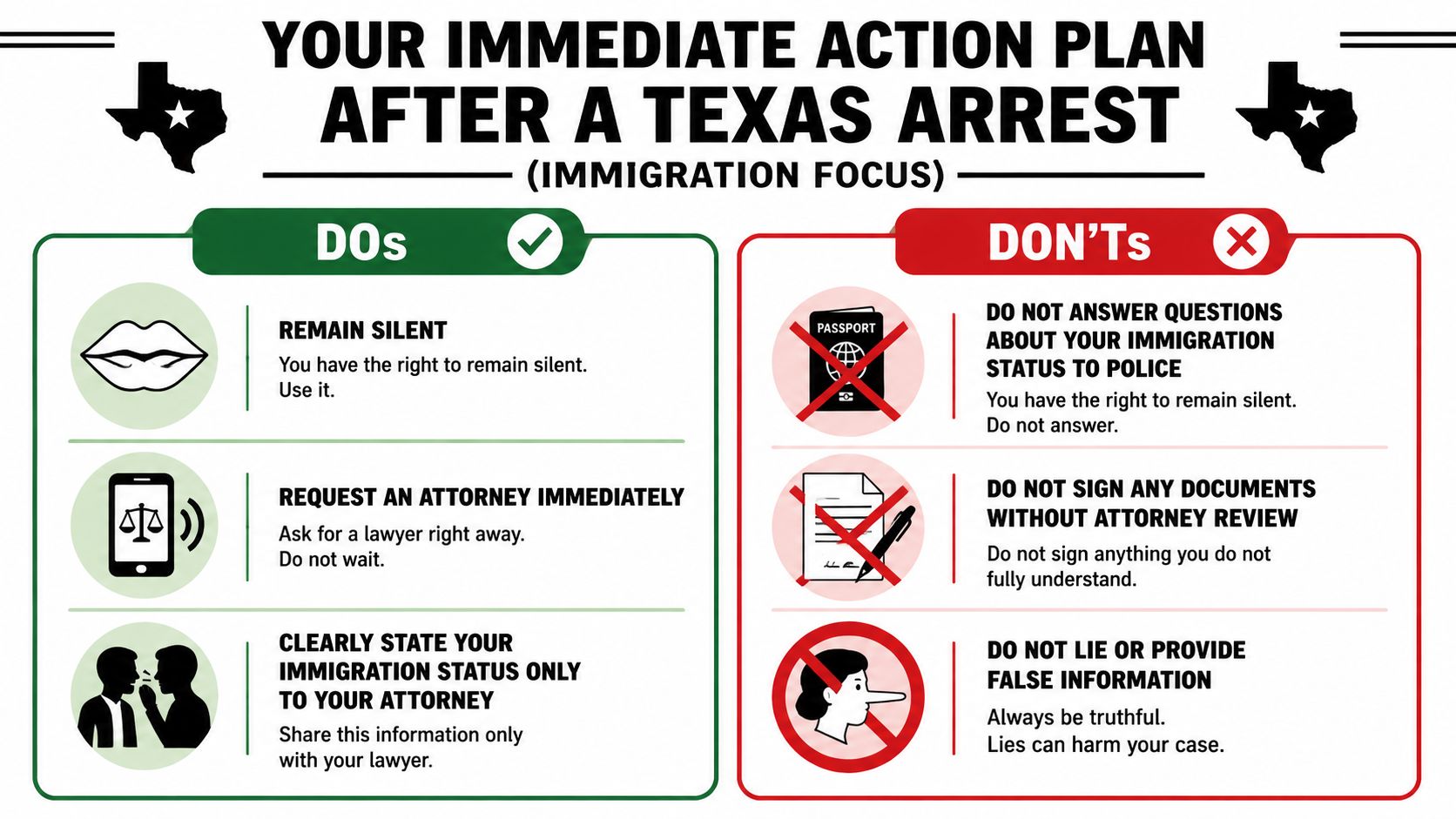
First steps that protect you
Start here:
- Stay silent about the facts of the case: Give your name and basic identifying information if required, but don't explain, justify, or argue.
- Ask for a lawyer immediately: Say clearly that you want an attorney and won't answer questions without one.
- Tell your lawyer your immigration status in private: Green card holder, visa holder, DACA recipient, undocumented, pending case, prior removal, all of it matters.
- Do not sign documents you don't understand: Especially anything involving admissions or waivers.
- Keep your court dates: Missing court creates a second problem fast.
This video gives a helpful starting point for thinking through the legal process after arrest:
What the Texas process usually looks like
Most Texas criminal cases move through these basic stages:
- Arrest and booking
- Bail or bond decision
- First court appearance or arraignment
- Plea discussions, motions, or case setting
- Trial if no agreement is reached
- Sentencing if there is a guilty outcome
If you need to gather paperwork quickly for your lawyer or for court, practical guides on essential steps for document filing can help you stay organized while your attorney handles the legal strategy.
What not to do
Avoid these common mistakes:
- Don't lie about your status: False information can create new problems.
- Don't assume a misdemeanor is safe: Some “minor” cases carry major immigration risk.
- Don't accept the first plea just to get out of jail: Quick deals can have long-term costs.
- Don't skip asking about expunction or sealing later: If your case is dismissed or ends favorably, those tools may help you rebuild.
If you've been charged with a crime in Texas, call The Law Office of Bryan Fagan, PLLC for a free and confidential consultation. Our defense team is ready to protect your rights.
If you're dealing with the immigration consequences of criminal charges in Texas, you don't have to figure it out alone. A careful defense can focus on the charge itself, the plea language, the sentence structure, and the long-term impact on your status. For help evaluating your next step, contact Law Office of Bryan Fagan PLLC to schedule a free and confidential consultation.