Yes, you can refuse field sobriety tests in Texas because they're generally voluntary. That is different from refusing a chemical breath or blood test after a lawful DWI arrest, which can lead to a 180-day license suspension in some circumstances.
Seeing police lights in your mirror can make your stomach drop. You may be replaying what you said, what you drank, and whether one wrong move on the side of the road will make things worse.
If you're asking can you refuse field sobriety tests in Texas, the most important point is this: roadside balance and eye tests are not the same thing as post-arrest chemical testing. That distinction matters because the law treats them differently, and your decision at each stage can change the evidence the State tries to use against you later.
Seeing Flashing Lights Your Rights During a DWI Stop
A common traffic stop starts the same way. An officer walks up, asks where you're coming from, whether you've had anything to drink, and then asks you to step out of the car. That moment often feels like the stop is no longer a conversation. It feels like a test you're already failing.
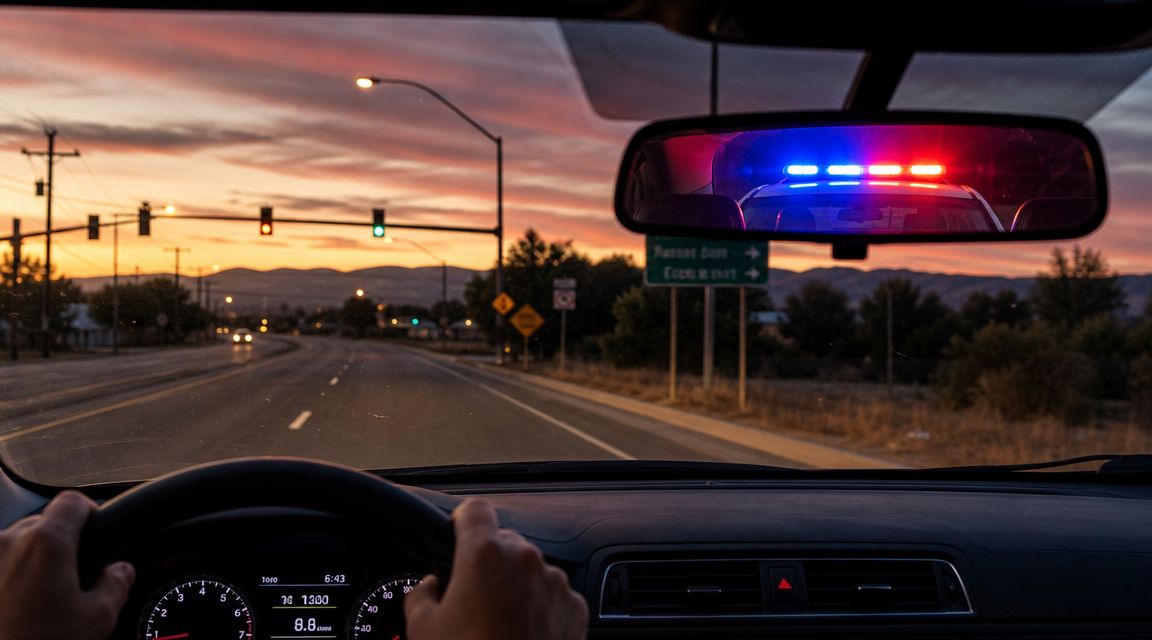
That pressure is exactly why knowing your rights ahead of time matters. You can be polite, calm, and cooperative with basic identification requests while still protecting yourself from giving the officer more evidence than the law requires.
What most drivers don't realize
Many Texans assume every test an officer asks for is mandatory. It isn't. During a DWI investigation, officers often ask for roadside exercises that look routine, but routine doesn't mean required.
Those tests usually include the eye test, the walk-and-turn, and the one-leg stand. On paper, they may sound simple. On the shoulder of a road, at night, with traffic moving and nerves running high, they can become a very different experience.
Bottom line: A DWI stop is an investigation, not a favor to you. Every question, movement, and response can become part of the report.
What you should focus on first
Your first job is safety. Pull over safely, keep your hands visible, and give the officer your license and proof of insurance when asked. After that, think carefully before answering questions about drinking, where you were, or whether you feel fine to drive.
If you want a fuller overview of your options during a stop, this guide on your rights during a Texas traffic stop in criminal cases is a useful companion.
The biggest mistake people make is treating the stop like a chance to talk their way out of suspicion. In practice, that usually gives the officer more statements to write down and more observations to use later.
Field Sobriety Tests vs Chemical Tests Explained
The confusion in most DWI cases starts here. Officers may ask for more than one kind of test, but field sobriety tests and chemical tests serve different purposes and carry different consequences.
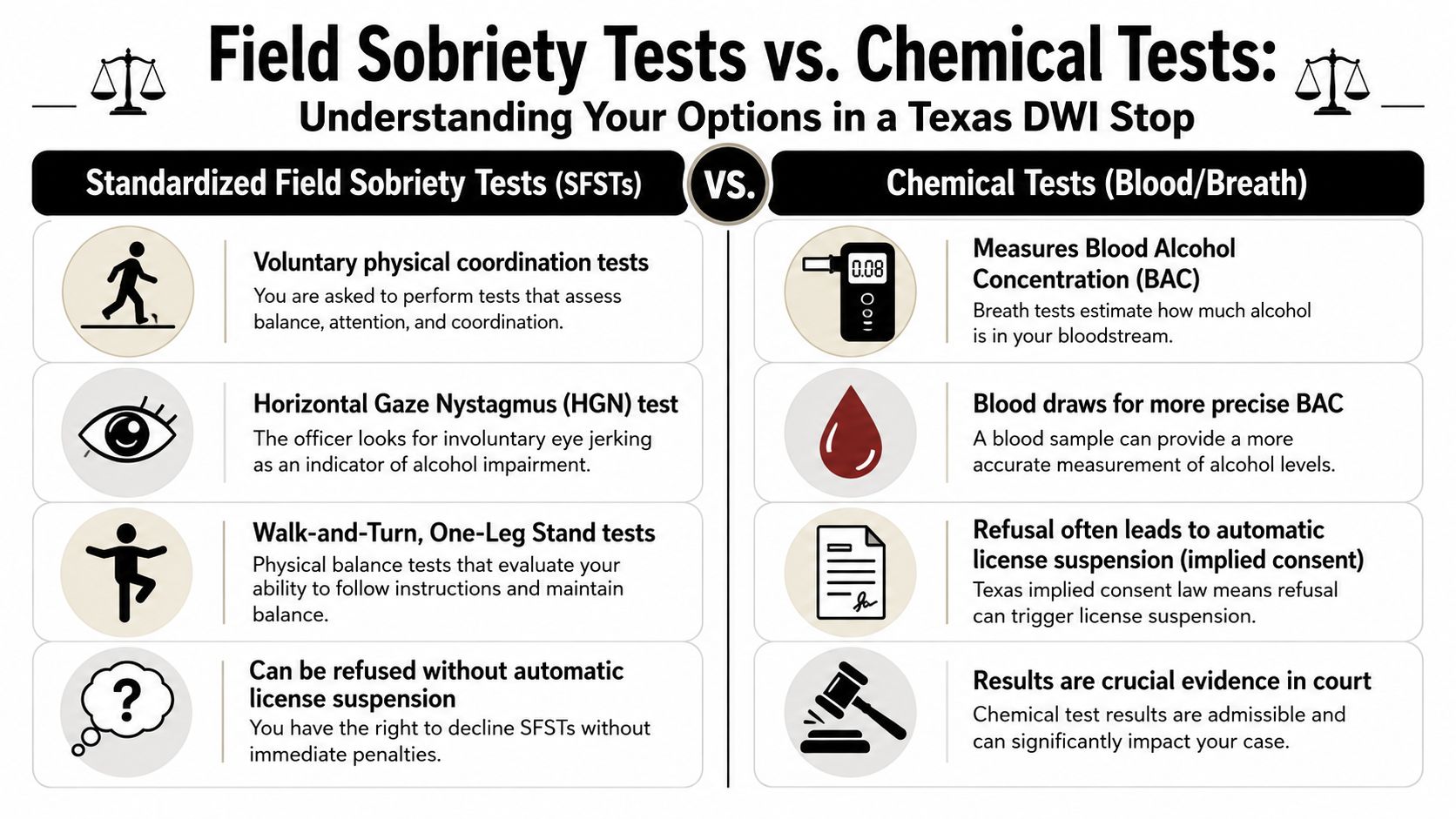
Think of it this way. A roadside field test is more like an optional demonstration. A chemical test after arrest is tied to Texas implied consent rules, which means the legal stakes are much higher.
What field sobriety tests are
Field sobriety tests are roadside exercises used to build an officer's opinion about whether you may be impaired. The most familiar ones are:
- Horizontal Gaze Nystagmus. The officer watches your eyes as you follow an object.
- Walk-and-turn. You're asked to take heel-to-toe steps, turn, and come back.
- One-leg stand. You balance on one foot and follow instructions.
These tests are presented as objective, but the officer is still observing how you move, how well you follow directions, and whether anything looks off. That means the officer is collecting evidence in real time.
Roadside tests often look easier on paper than they feel on the side of a highway.
A person can appear unsteady for many reasons unrelated to alcohol. Footwear, fatigue, anxiety, injuries, age, lighting, traffic, and uneven pavement can all affect performance. From a defense perspective, that's one reason these tests can become a battleground in court.
What chemical tests are
Chemical tests are different. These are breath or blood tests used to measure alcohol in your system after a lawful DWI arrest. Under Texas implied consent law, driving on Texas roads carries legal consequences if you refuse this kind of testing after arrest.
That's why the question is not just whether you can refuse a test. It's which test you're being asked to take.
If you want to understand that part more closely, this article on whether you can refuse a breathalyzer test in Texas walks through the issue in more detail.
Later in a case, lawyers often review whether testing procedures were followed correctly, whether the arrest was lawful, and whether the officer had a proper basis for the investigation. That review may involve the stop itself, body camera footage, dash camera footage, and any search warrant paperwork for blood testing.
For readers who want background on alcohol testing from a recovery and education angle, this explanation of how drug tests detect alcohol adds helpful context about how alcohol may be identified in different testing situations.
Here is the video overview:
Why the distinction matters
If you remember only one thing, remember this:
| Test type | Main purpose | Usually happens when | Legal posture |
|---|---|---|---|
| Field sobriety tests | Officer observations | On the roadside | Generally voluntary |
| Chemical tests | Measure alcohol in breath or blood | After lawful arrest | Refusal can trigger license consequences |
That difference affects strategy. A roadside test can give the State more visual and verbal evidence. A chemical test refusal can create a separate license problem even before the criminal case is resolved.
What Happens if You Refuse Field Sobriety Tests
Refusing field sobriety tests is legal in Texas, but it doesn't end the investigation. The officer may still decide to arrest you based on driving behavior, odor of alcohol, speech, balance, admissions, or other observations.
Texas legal guidance recognizes that field sobriety tests are generally voluntary, and refusing them does not trigger the same automatic administrative penalty tied to refusing a chemical test. By contrast, refusal of breath or blood testing can lead to a 180-day suspension in some circumstances, as explained by True Law Firm's discussion of refusing field sobriety tests in Texas.
What refusal does help you avoid
From a defense standpoint, refusing roadside tests can limit the amount of evidence the State collects at the scene. If you never do the walk-and-turn or one-leg stand, there is no performance for the officer to describe and no roadside test video for a prosecutor to replay in court.
That matters because these tests are designed to generate observations. Once they exist, they are hard to erase. The defense can challenge them, but it's better not to create avoidable evidence in the first place.
What refusal does not do
Refusal does not force the officer to let you go. If the officer believes there is probable cause for arrest, the arrest can still happen. Many drivers are surprised by that because they assume saying no means there is no case.
There can still be a case. It may instead be a case built on different evidence.
Practical rule: Refusing field sobriety tests can reduce the evidence against you, but it won't necessarily prevent handcuffs, towing, booking, or a night in jail.
How prosecutors may frame it
Prosecutors may argue that your refusal shows consciousness of guilt. Defense lawyers answer that in several ways. People refuse for many lawful reasons, including confusion, fear, medical limitations, poor roadside conditions, and a desire not to perform subjective physical tests in a stressful setting.
If your case reaches court, the defense will often examine:
- The stop itself. Did the officer have a lawful reason to pull you over?
- The arrest decision. Did the observations support probable cause?
- The video. Does the footage match the officer's written report?
- Your condition. Was there a medical or physical reason not to perform the tests?
This is where practical defense work matters. A refusal is one fact. It is not the whole case.
The Serious Penalties for Refusing a Chemical Test
The legal risk changes sharply once the officer asks for a breath or blood test after arrest. At that point, implied consent takes effect, and many drivers consequently face an immediate threat to their license separate from the criminal case.
The criminal case and the license case are different
A DWI prosecution and a driver's license suspension issue are not the same proceeding. The criminal case addresses whether the State can prove DWI. The administrative case focuses on your driving privileges.
That means you can be dealing with two fights at once. One is in criminal court. The other involves your license.
The suspension issue drivers need to understand
Texas legal sources note that refusing a chemical test can lead to a 180-day license suspension in some circumstances. That consequence is tied to chemical test refusal, not to refusing roadside field sobriety tests.
Here is the basic comparison the average driver needs to know:
| Offense Status | License Suspension Period |
|---|---|
| Chemical test refusal in some circumstances | 180-day suspension |
The key point is not the table size. It's the legal distinction. Drivers often spend too much time worrying about the roadside balancing tests and not enough time understanding what happens after arrest.
Why this part is more serious
Chemical testing usually becomes a major point in both the license case and the criminal case. If you refuse, the State may pursue the license suspension process. In some situations, officers may also seek a warrant for a blood draw.
That is why a casual roadside decision can have consequences long after the traffic stop is over. It also explains why early legal advice matters. A Texas DWI attorney will usually review the timing of the arrest, the warnings given, the request for testing, and whether every step complied with procedure.
The officer's request may sound like one more step in the stop. Legally, it can be a turning point in your case.
If you're also dealing with other charges, such as drug possession, assault, theft, or probation issues, the stakes can climb quickly because one arrest may affect bond conditions, employment, or prior cases.
How to Interact with Police During a Texas DWI Stop
Knowing your rights is helpful. Knowing how to use them calmly is what protects you.
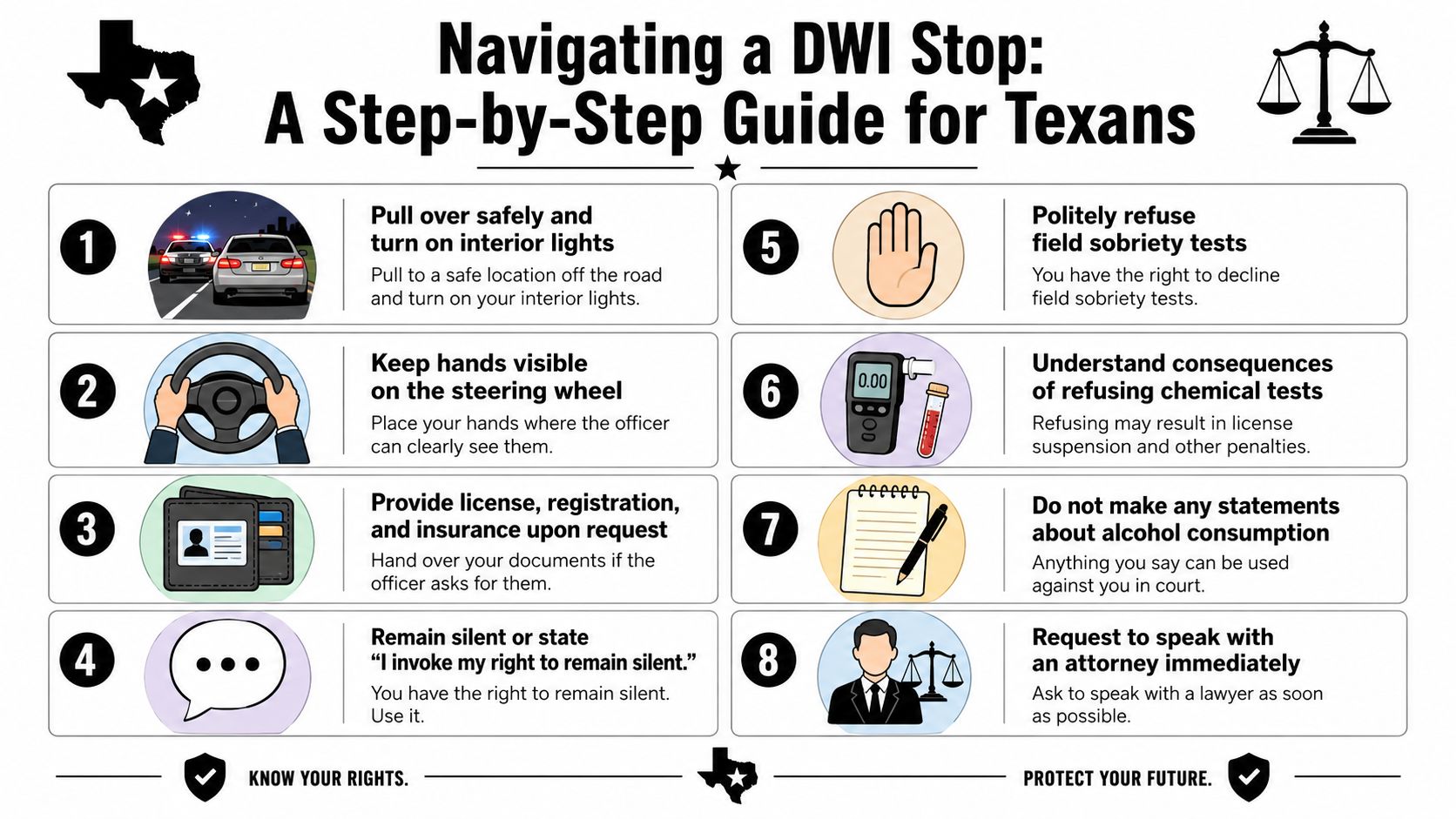
Individuals don't need a speech. They need a short script. The goal is to avoid escalating the stop while also avoiding statements and actions that make the case harder to defend.
A simple roadside script
Use short, respectful sentences. Don't argue on the shoulder of the road. Don't try to persuade the officer that you're fine.
Try language like this:
- For questions about drinking: “Officer, I choose to remain silent.”
- For field sobriety tests: “I respectfully decline to perform any field sobriety tests.”
- For vehicle searches: “I do not consent to any searches.”
- If arrested: “I want to speak with an attorney.”
Those phrases are clear and polite. They don't insult the officer, and they don't volunteer extra information.
What to do with your body and your documents
Your conduct matters almost as much as your words. Keep your movements slow and visible. If the officer asks for identification, tell the officer where it is before reaching.
This basic checklist helps:
- Pull over safely. Use your signal and stop where there is room.
- Turn on interior lights if it's dark. That helps reduce tension.
- Keep your hands visible. The steering wheel is the safest place.
- Provide license and insurance when asked. Don't dig around suddenly.
- Stay calm. Angry explanations rarely help.
What not to say
A lot of damage happens through casual conversation. Drivers often think honesty will make the officer more lenient. Usually, it gives the State admissions it can use later.
Avoid volunteering things like:
- How much you drank
- Where you were drinking
- Whether you feel okay to drive
- Why you were swerving or driving late
If you need legal help reviewing a stop, the Law Office of Bryan Fagan PLLC handles Texas criminal defense matters, including DWI cases, and reviews traffic stop procedures as part of case analysis.
What to Do Immediately After a DWI Arrest
An arrest is not a conviction. It is the start of a legal process, and the first moves after arrest often shape the outcome.
Focus on the next few decisions
Start by contacting a lawyer as soon as possible. Early defense work can include preserving video, reviewing the reason for the stop, checking the arrest timeline, and identifying issues with testing or search procedures.
You should also learn what hearing deadlines may apply to your driver's license. That issue is separate from guilt or innocence, and people often miss it because they're focused on getting out of jail, arranging transportation, or dealing with work and family.
For a broader look at defense strategy, this guide on how to fight a DWI in Texas is a good starting point.
What usually comes next
After arrest, the case may involve release on bond, a first court setting, negotiations with the prosecutor, motions challenging police conduct, and possibly trial. In some cases, there may also be options later involving record sealing, nondisclosure, expunction, or other post-conviction relief, depending on how the case ends and your eligibility.
If you're anxious about arraignment, plea bargaining, or sentencing, that's normal. Those stages feel intimidating until someone explains them in plain English. A defense lawyer's job is not only to challenge the State's evidence, but also to help you understand each step so you can make informed decisions.
The most useful step after a DWI arrest is getting legal advice before you start guessing your way through the system.
If you've been charged with a crime in Texas, call The Law Office of Bryan Fagan, PLLC for a free and confidential consultation. Our defense team is ready to protect your rights.