Your phone lights up with a number you don't know. The caller says he's a detective and wants to “ask a few questions.” Or someone knocks at your door and says they're investigating an assault, a theft, a DWI crash, or possible drug activity. Your heart drops. Such a reaction is common.
That moment feels urgent, personal, and confusing. You may want to explain, smooth things over, or show that you've got nothing to hide. That instinct is understandable. It's also where people often make the mistake that follows them for the rest of the case.
If you're trying to learn how to handle being questioned by detectives in Texas, start with one calming truth. You have rights, and those rights matter most before you start talking. A detective's contact does not mean you must explain yourself on the spot. It does mean you need to slow down and make careful decisions.
This is true whether the issue involves a suspected Texas Penal Code assault offense, a theft allegation under Texas Penal Code Chapter 31, a drug case under the Texas Controlled Substances Act, or a DWI-related investigation under Texas Penal Code Chapter 49. Different charges create different evidence issues, but the rule during questioning is usually the same. Talking freely rarely helps.
An Unexpected Call Your Guide to Facing Detective Questioning
Your phone rings after dinner. A detective says he is looking into a bar fight, a shoplifting report, or a DWI crash, and he wants to hear your side before he "takes the next step." People often treat that as a chance to clear up a misunderstanding. In practice, it is usually the point where a case starts taking shape.
Texas suspects and witnesses still have constitutional protections during police questioning. The Fifth Amendment right against self-incrimination remains the starting point, and the Texas State Law Library summarizes that right and related criminal procedure protections in its overview of criminal law research and procedure resources. In plain English, a detective can ask. You do not have to answer on the spot.
I tell clients the same thing in DWI, assault, and theft cases. The first conversation matters because it gives law enforcement details they did not have before. A harmless guess about timing, a bad estimate about drinks, or a defensive text can become evidence the State tries to fit into its theory.
That happens in ordinary cases every week. In a DWI investigation, the questions may focus on alcohol, driving, or why you left the scene. In an assault case, the detective may say he only wants to know whether you acted in self-defense. In a theft case, the questions often turn to receipts, store video, messages, or why you had access to the property. The wording changes by charge. The goal stays the same: get statements that help build probable cause, lock you into a version of events, or test facts they already learned from someone else.
Silence is often the safer choice.
People worry that asking for a lawyer makes them look guilty. From a defense standpoint, the bigger risk is talking before you know what the allegation is, what evidence exists, and whether the detective is treating you as a witness, a suspect, or both. Good people talk themselves into trouble every day because they want to sound cooperative.
Your job at this stage is simple. Protect your position. Be polite, say little, and do not try to solve the case in the first contact.
First Contact Handling a Detective's Call or Visit
The first few minutes matter. Whether the contact comes by phone, text, at your home, or at work, your goal is simple. Control the interaction without giving facts away.
Public guidance notes that law enforcement questioning can happen by call, invitation to the station, or informal outreach, and that you generally don't have to answer questions unless a judge orders you to. It also matters that texts and calls can be recorded and later used as evidence, as discussed in this overview of what to do if a detective calls.
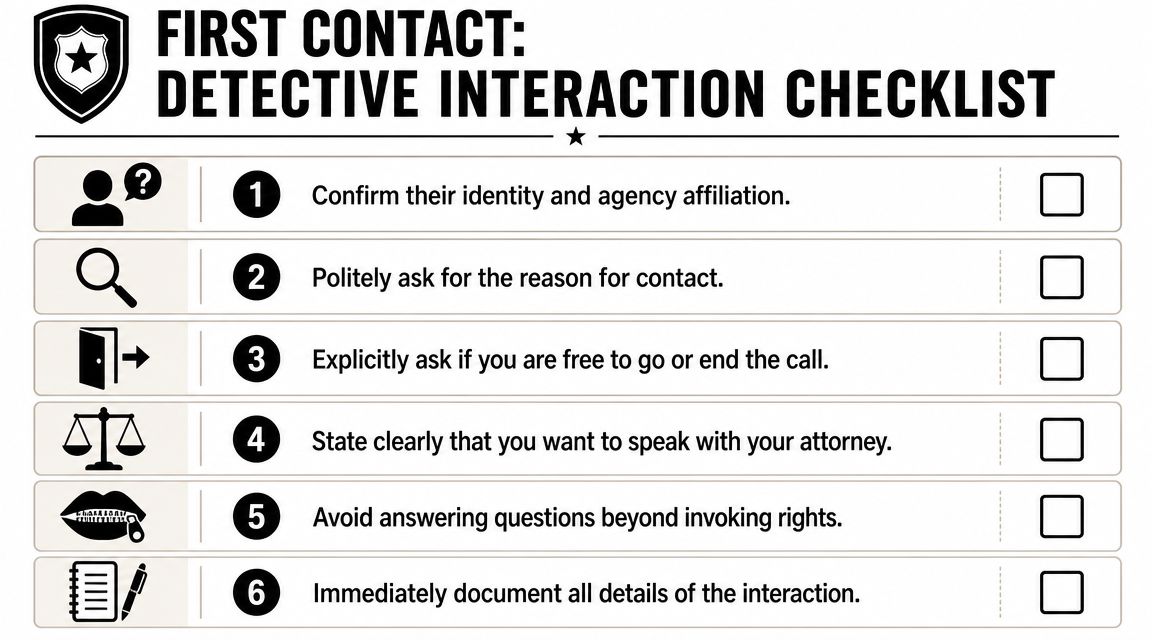
If the contact is by phone or text
Don't start answering questions to seem cooperative. Start by confirming who contacted you.
Use this order:
Confirm identity
Ask for the detective's full name, agency, unit, and callback number.Ask the reason for contact
Keep it short. You're not there to debate facts.Don't explain or deny
“I didn't do anything” can become the start of a long conversation.Don't agree to come in immediately
“Just come by and clear it up” is often how avoidable interviews happen.Save everything
Screenshot texts. Preserve voicemails. Don't delete call logs.
“I'm not going to discuss anything right now. I'll have my attorney contact you.”
That sentence is respectful and useful. It doesn't invite follow-up.
If a detective comes to your home or job
A doorstep visit catches people off guard because it creates social pressure. You may feel rude closing the door or ending the conversation. Protecting yourself isn't rude.
Ask whether you're free to decline speaking. If they want to come inside, don't consent casually. If you're dealing with a home encounter, it also helps to understand when police can enter your home without a warrant in Texas.
A few practical points help:
- Step outside only if you choose to. Don't invite officers into your home out of habit.
- Keep family members from volunteering. A spouse, parent, roommate, or teenager can complicate things fast.
- Don't hand over your phone unless your lawyer advises it.
- Don't consent to a search because “there's nothing to hide.”
The witness problem
Many people get pulled into trouble because they think they're only a witness. In theft, assault, and drug cases, detectives often start broad. They may contact everyone connected to a location, group chat, car, or social event. What starts as “help us understand what happened” can quickly shift if your answer creates suspicion.
That's why first contact should stay narrow. Courtesy is fine. Conversation is dangerous.
Your Rights vs The Detective's Goals
Detectives and suspects enter the conversation with very different goals. You want the matter to go away. The detective wants information that helps move the case forward. Those goals are not the same.
Custody matters, but it is not the whole story
In Texas, a Miranda warning is required only when both custody and interrogation are present, as described in this explanation of police interrogation rights in Texas. That creates a trap for many people. They assume that if nobody read them rights, the interview doesn't count. It can still count.
A non-custodial interview can happen in a station, on the phone, in a patrol car before formal arrest, or at your house. If a court later decides you were free to leave, your statements may still come in. So the question “Did they read me my rights?” is not the first question I'd focus on. The better question is “Why was I talking at all?”
Why detectives phrase questions the way they do
Many agencies use a confrontational approach similar to the Reid technique. That model includes positive confrontation, discouraging denials, maintaining attention, and ending with an alternative question designed to obtain an admission, as outlined in this legislative research summary comparing Reid and PEACE interviewing methods.
That matters because it shows what the interview is for. It is not a neutral fact-finding session. It is a strategic event.
Here's how that can sound in everyday Texas cases:
| Situation | What the detective may say | What the question is really doing |
|---|---|---|
| DWI crash | “Were you only a little over the limit, or were you just shaken up?” | Pushing you to adopt part of the accusation |
| Assault | “Did you mean to hit him, or did things get out of hand?” | Framing contact as admitted |
| Theft | “Did you plan to return it, or were you short on cash?” | Turning possession into intent evidence |
When people hear two choices, they often answer one. They miss the actual option, which is not answering at all.
Free to leave is a real question
If officers want to speak with you in person, ask whether you're free to go. If the answer is yes, leave politely. If the answer is no, the legal stakes go up fast, and that's when you should stop trying to manage the interaction yourself.
This short video helps illustrate how rights and police questioning can play out in practice.
What doesn't work
Several approaches fail over and over:
- Trying to sound harmless by chatting casually
- Correcting every detail because you think precision will save you
- Explaining motive in an assault or theft case
- Volunteering digital evidence without advice
- Believing the detective is there to clear your name
Detectives are allowed to ask questions in ways that create pressure. You protect yourself by reducing the conversation, not by winning it.
The Only Words You Need Invoking Your Rights Correctly
A detective calls about an assault case and says, “I just need your side.” A DWI investigator says they want to clear up a few details about where you were before the crash. A theft detective says this may all be a misunderstanding. In that moment, many people hedge. They say, “I probably need a lawyer,” or “I do not want to get into it right now.” That sounds plain enough in ordinary conversation. In a police interview, it can be too soft.
Courts look for a clear, direct invocation of your rights. Silence by itself can be treated as silence, not as an invocation. If you want the questioning to stop, say so in unmistakable terms.
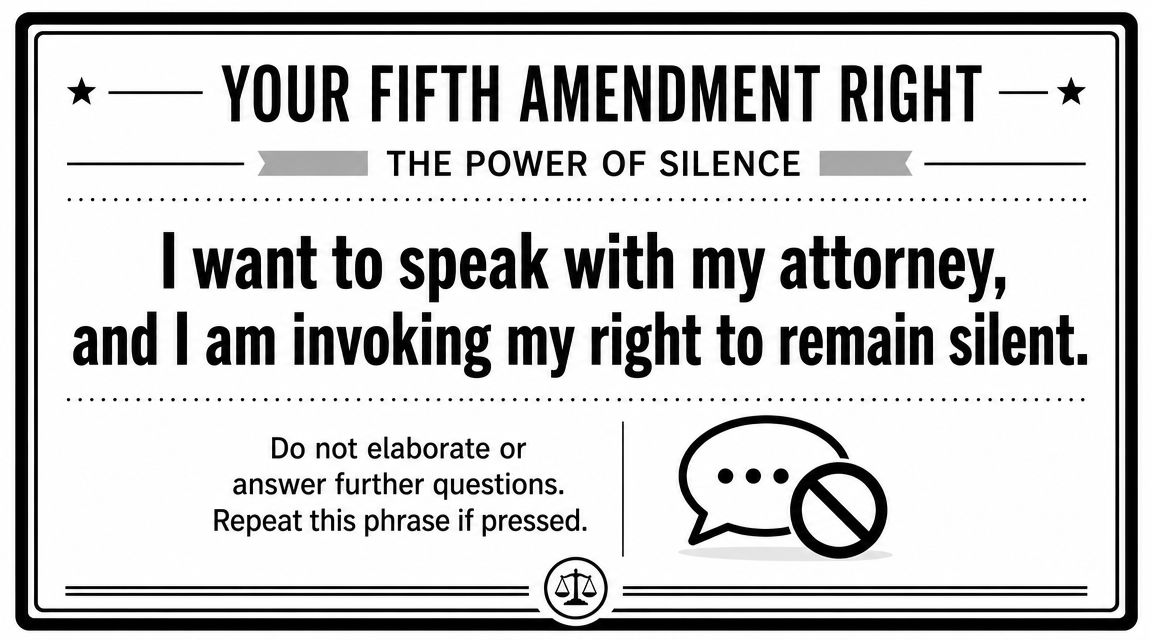
The script to memorize
I am exercising my right to remain silent. I want a lawyer.
This version works too:
I want to speak with my attorney, and I am invoking my right to remain silent.
Keep it short. Clear words are stronger than explanations. Clients sometimes feel rude saying this to an officer. It is not rude. It is how you protect yourself when the facts are still unclear and the detective is trying to pin down admissions.
Use the same script no matter what charge they mention
The details of the case change. Your response should not.
DWI investigation
Do not explain how much you drank, when you stopped drinking, whether you felt fine to drive, or why you left the scene. Those details often become the backbone of the State's timeline.Assault allegation
Do not try to sort out who insulted whom, who pushed first, or whether you only meant to scare someone. People trying to justify themselves often hand over intent, contact, or identity.Theft or fraud accusation
Do not discuss permission, ownership, account access, plans to pay something back, or intent to return property. In these cases, “harmless context” can become evidence of knowledge or intent.
I give clients the same advice in all three situations. Use the script, then stop talking.
Phrases that weaken your position
Some statements invite more questioning or create arguments later about whether you really invoked your rights:
- “I will answer a couple of questions.” You just gave them a lane to keep going.
- “Maybe I need a lawyer.” “Maybe” is not firm enough.
- “I do not need an attorney because I did nothing wrong.” Innocent people get charged every day.
- “I am done talking,” followed by more talking. If you restart the conversation, the State may argue you waived the protection you just tried to claim.
A practical rule helps here. Once you ask for a lawyer, do not fill the silence because it feels awkward. Detectives know silence makes people talk.
If you want a plain-English refresher on protecting your rights during an arrest, that guide lines up with the same problem I see in interview cases. People keep talking after they should have stopped.
Texas cases also turn on whether officers respected the limits after a person invoked rights, and whether later statements can be challenged. This overview of Miranda rights violations in Texas cases explains why those details matter.
Say the words clearly once. If they keep questioning you, repeat the same line and nothing else.
After the Interview Document and Prepare Your Defense
The conversation may be over, but your work isn't. The period right after contact is when details are freshest and mistakes can still be prevented.
Public discussion of police questioning warns that someone who thinks they are only helping can become the focus of an investigation without a clear warning. That's why documenting every detail and getting legal advice quickly matters, as noted in this discussion about witness questioning and shifting investigative focus.

Write down the facts while they are fresh
Make a private record as soon as possible. Include:
Who contacted you
Name, agency, phone number, card, email, badge number if known.How contact happened
Call, text, voicemail, doorstep visit, station request, workplace contact.What was said
Write the detective's questions and your exact answers as best you can remember.Who else saw it
Family members, coworkers, neighbors, or anyone present.What documents or devices were mentioned
Phone, receipts, social media, surveillance, vehicle data, bank records.
This memo can help your defense lawyer spot issues early, including whether the officer blurred the line between a casual conversation and interrogation.
Preserve evidence, don't curate it
People get anxious and start cleaning up their digital life. That can make things worse. Don't delete texts, call logs, emails, location history, photos, or social media messages. Don't ask friends to “fix” group chats. Don't edit posts.
Instead:
- Save screenshots of messages and missed calls
- Export voicemails if your phone allows it
- Keep receipts and schedules that may show where you were
- Store clothing or property if a physical incident is being investigated
If the case later ends favorably, those careful records may also matter for expunction or nondisclosure issues. A clean result is easier to use when the paper trail is organized.
Don't contact the complaining witness
This is one of the most common mistakes in assault and harassment-related cases. A text meant to apologize can be framed as an admission. A message asking someone to “tell the truth” can be called witness tampering. In theft and fraud matters, trying to repay money or explain transactions without counsel can create new evidence.
The best immediate defense move is often quiet preservation, not active damage control.
What to Expect if You Are Arrested in Texas
Even if you handled the questioning well, detectives may still seek an arrest. If that happens, remember this. An arrest is not a conviction. It is the start of the formal court process.
Booking and the first appearance
After arrest, officers usually take you to jail for booking. That typically includes identification information, photographs, fingerprints, and processing. In many cases, the next major event is your first court appearance, where bond or bail issues may be addressed.
If you want a practical overview of the first steps, review what to do immediately after getting arrested in Texas. The key point is simple. Don't use jail calls, holding-cell conversations, or transport talk as a place to explain your side.
How the case moves forward
Once charges are filed, the path often includes:
Arraignment or initial court setting
You are informed of the accusation and the case begins moving through the court.Bond conditions
These may limit travel, contact with certain people, alcohol use, weapons possession, or internet activity depending on the charge.Investigation by the defense
Your lawyer reviews statements, videos, reports, witness accounts, and digital evidence.Plea negotiations
Some cases resolve by agreement. Others should not.Trial preparation and trial
If the State can't prove the case or offers a bad resolution, trial may be the right move.Sentencing, if there is a conviction
This can involve jail, prison, probation, fines, treatment, classes, or other conditions depending on the offense.
Charge-specific concerns
A few examples help show why early silence matters later:
| Charge type | What often becomes key evidence |
|---|---|
| DWI | Driving facts, crash details, statements about drinking, timing |
| Assault | Self-defense claims, injuries, prior texts, witness credibility |
| Theft | Intent, ownership, consent, value, digital records |
| Drug possession | Knowledge, control, location of contraband, search issues |
After the criminal case, some people may qualify for expunction, record sealing, or other post-conviction or post-dismissal relief. Those options depend on the outcome and the charge, but they matter for jobs, housing, and reputation. Good defense work doesn't just aim at the next hearing. It protects your future after the case ends.
If detectives are contacting you now, treat that moment seriously. What you do before charges are filed often shapes everything that comes after.
If you've been charged with a crime in Texas, call Law Office of Bryan Fagan PLLC for a free and confidential consultation. Our defense team is ready to protect your rights.